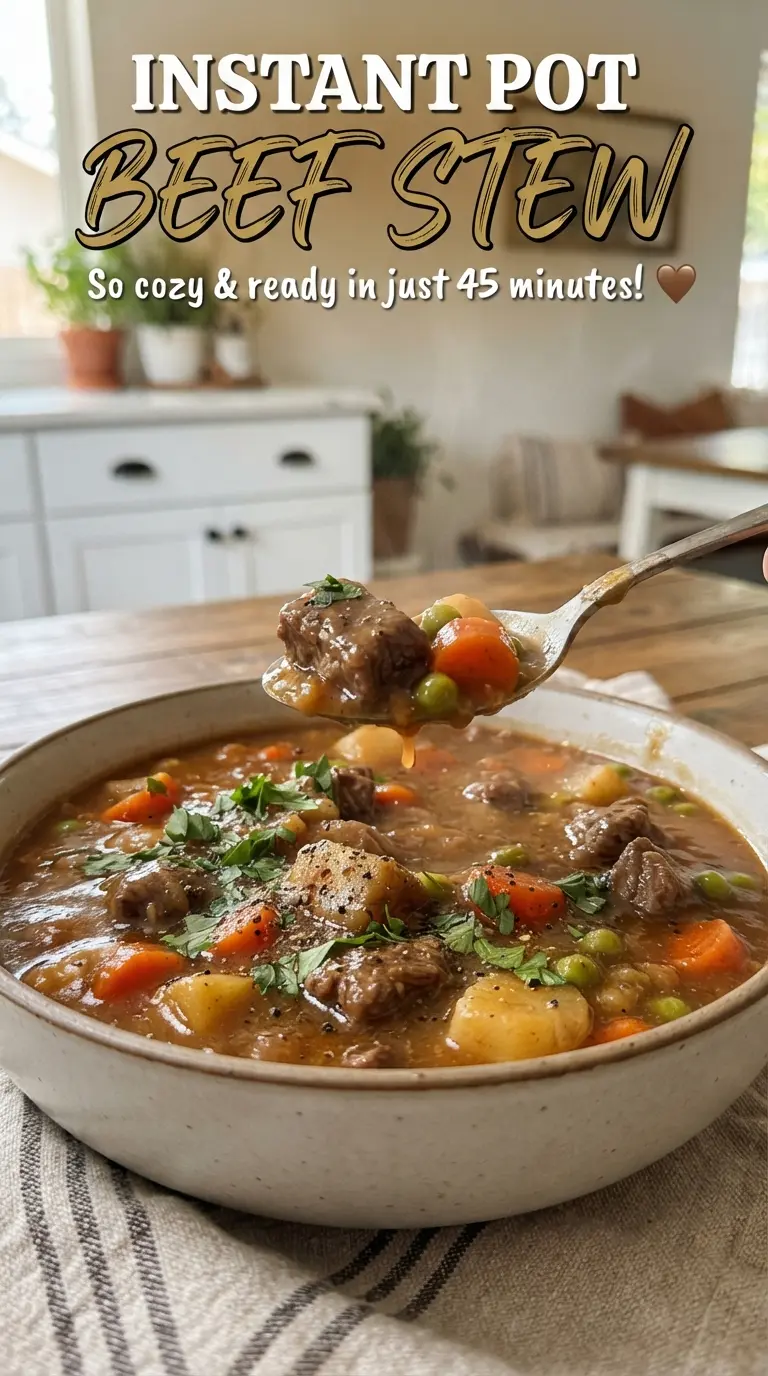
Instant Pot beef stew comes out with tender chunks of chuck, soft carrots and potatoes, and a gravy that tastes like it simmered all afternoon. The pressure cooker does the long braise part fast, but the flavor still has depth because the beef gets browned first and the tomato paste cooks down before the liquid goes in. That step matters. It’s the difference between a stew that tastes flat and one with a real browned-beef backbone.
The other thing that makes this version work is the order. The pot gets deglazed before pressure cooking, which lifts the flavorful bits from the bottom instead of leaving them behind. Then the stew finishes with a cornstarch slurry and frozen peas, so the broth turns glossy at the end instead of muddy and overcooked. The vegetables hold their shape, and the beef stays spoon-tender without falling apart.
Below, I’ll walk through the part that keeps the pot from throwing a burn warning, the ingredient choices that matter most, and a few smart swaps if you want to adjust the stew for what you have on hand.
The gravy thickened up beautifully, and the potatoes held their shape instead of turning to mush. I did the deglazing step carefully, and the Instant Pot never gave me a burn notice.
Save this Instant Pot beef stew for a deep, glossy gravy and fork-tender beef on busy nights.
The Browning Step That Keeps the Stew from Tasting Flat
Pressure cooking is fast, but it doesn’t build flavor on its own. The browned bits from the beef and the cooked tomato paste are what give this stew its deep, savory base. If you rush that part or crowd the pan, the meat steams instead of searing, and the stew tastes thinner even after an hour in the pot.
After the onion softens and the garlic and tomato paste cook briefly, the broth goes in just enough to scrape up the bottom of the pot. That’s the insurance policy against a burn warning. Those stuck-on bits need to dissolve into the liquid before you seal the lid, because they’re flavor now and trouble later if they stay glued to the pot.
What Each Ingredient Is Actually Doing in This Stew
- Beef chuck — This cut has enough marbling and connective tissue to turn tender under pressure. Lean stew meat can work, but it doesn’t give you the same rich texture or gravy.
- Tomato paste — A small amount adds body and a deeper cooked flavor. Let it darken for a minute with the onion and garlic so it loses that raw edge.
- Worcestershire sauce — It adds salt, tang, and a background savoriness that makes the broth taste rounded. There isn’t a perfect one-for-one substitute, but soy sauce with a splash of vinegar gives you a similar effect in a pinch.
- Yukon gold potatoes — They hold together better than russets in pressure cooking and give the stew a creamier texture. Cut them into even cubes so they cook at the same rate as the carrots.
- Cornstarch slurry — This is what turns the cooking liquid into gravy at the end. Stir it in after pressure cooking, with the pot on sauté, so it thickens smoothly instead of clumping.
Getting the Beef Tender and the Gravy Thick Without a Burn Warning
Browning in Batches
Season the beef first, then brown it in a single layer with enough space around each piece for steam to escape. If you pile it all in at once, the surface moisture has nowhere to go and the meat turns gray instead of developing the dark crust you want. That crust carries flavor into the stew and gives the broth more depth later.
Building the Flavor Base
Once the beef is out, cook the onion until it turns translucent and starts to soften at the edges. Add the garlic and tomato paste and stir them long enough for the paste to darken slightly. Then pour in part of the broth and scrape the bottom hard with a wooden spoon; if anything is still stuck down there before pressure cooking, that’s where the burn warning usually starts.
Pressure Cooking the Stew
Add the beef back in with the remaining broth, Worcestershire, thyme, bay leaf, potatoes, and carrots. Lock the lid and cook on high pressure for 35 minutes, then let it natural release for 10 minutes before opening the valve. That short rest helps the meat relax and keeps the broth from erupting when you vent it too fast.
Finishing the Gravy and Adding the Peas
Switch to sauté and stir in the cornstarch slurry. The liquid should turn glossy and lightly thickened within a couple of minutes, not pasty. Stir in the peas at the end so they stay bright and barely sweet instead of turning dull and wrinkled, then pull out the bay leaf before serving.
How to Adapt This Stew When You Need a Different Version
Gluten-Free Version
This stew is already close to gluten-free as written, but check the Worcestershire sauce and broth labels. If you need to be strict, use certified gluten-free versions of both. The texture stays the same because the thickening comes from cornstarch, not flour.
No Tomato Paste on Hand
You can leave it out, but the stew will taste a little less deep and the broth will be lighter in color. If you have it, add a teaspoon of soy sauce or a splash more Worcestershire to bring back some of that cooked savory note.
Swap for Sweet Potatoes
Sweet potatoes will make the stew a little sweeter and softer, and they break down faster than Yukon golds. Cut them larger than you think you need and expect a silkier, less classic stew texture at the end.
Storage and Reheating
- Refrigerator: Store for up to 4 days. The gravy thickens as it chills, and the potatoes soften a bit more.
- Freezer: Freezes well for up to 3 months, though the potatoes will be slightly softer after thawing. Cool it completely before freezing in airtight containers.
- Reheating: Warm gently on the stove or in the microwave with a splash of broth if needed. Heat it slowly so the beef stays tender and the gravy loosens instead of getting gluey.
Answers to the Questions Worth Asking
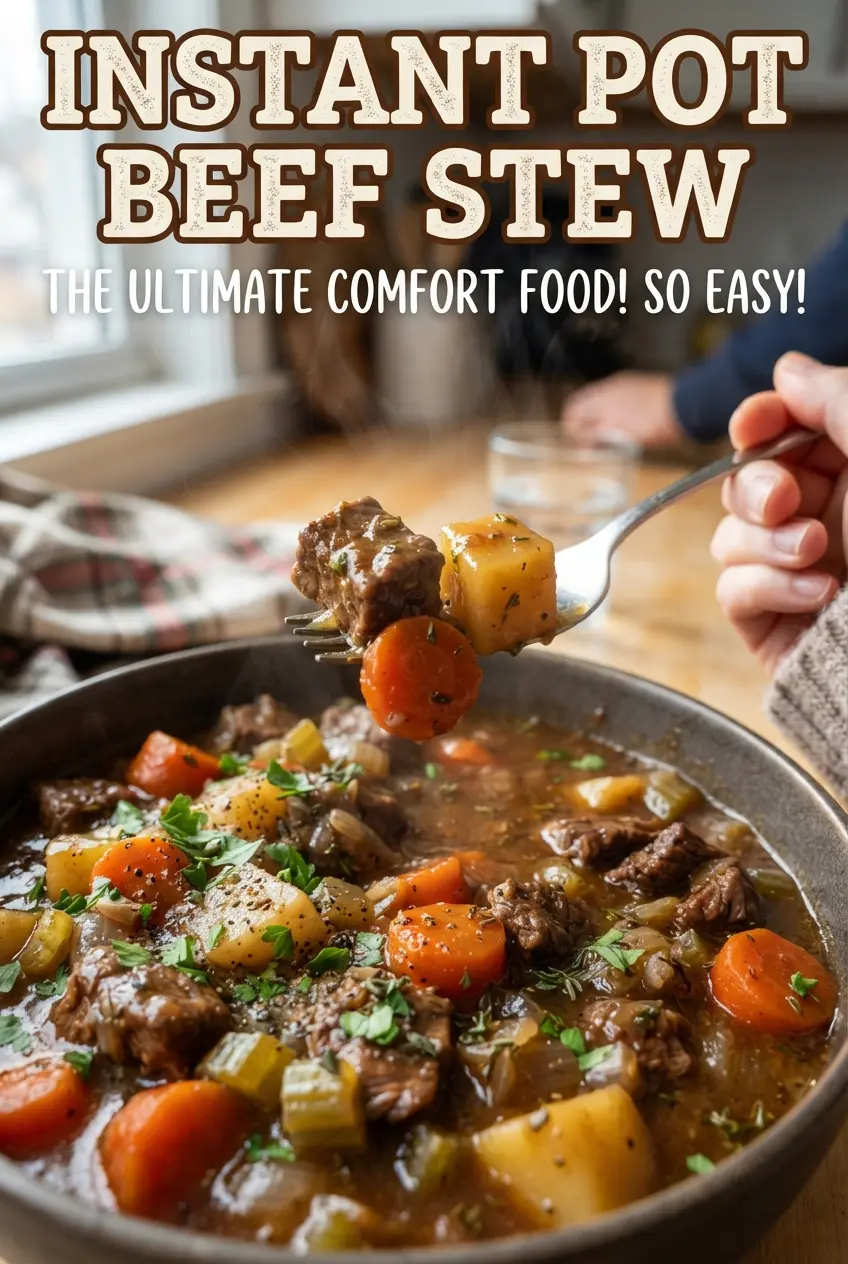
Instant Pot Beef Stew
Ingredients
Equipment
Method
- Season beef chuck with salt and black pepper. Brown in olive oil on SAUTE in batches until well-browned, adding more oil if the pot seems dry.
- Cook the diced onion on SAUTE for 3 minutes until softened. Add the minced garlic and tomato paste and cook briefly until fragrant.
- Pour in 1/2 cup of beef broth to deglaze, scraping the bottom of the pot to release browned bits. Keep scraping until the pan looks clean.
- Add beef, remaining beef broth, Worcestershire sauce, dried thyme, bay leaf, cubed Yukon gold potatoes, and carrots to the pot. Spread items out so the liquid level covers the bottom ingredients.
- Seal the Instant Pot and cook on HIGH pressure for 35 minutes. Do not force quick release after the cycle ends.
- Let the pressure come down with a natural release for 10 minutes. Wait until the pin drops before opening.
- Switch to SAUTE and stir in the cornstarch mixed with water slurry. Simmer until thickened and the gravy coats the back of a spoon.
- Stir in frozen peas and cook just until heated through. Remove the bay leaf before serving.