Deep, slow-simmered beef stew earns its place in the rotation because it gives you tender chuck, a rich red wine broth, and vegetables that hold their shape instead of dissolving into the pot. The beef turns spoon-tender without tasting stringy, and the sauce gets that glossy, savory finish that only happens when the browned bits from the pan are used properly.
This version leans on a few smart moves: dredging the beef in flour gives the broth body, browning in batches builds flavor instead of steam, and the wine goes in before the broth so it can lift every bit of fond off the pot. The carrots, potatoes, and peas are added with intention, not all at once, so each one keeps its own texture and taste.
Below, I’ll walk through the part that matters most: how to build a stew that tastes deep and balanced instead of flat or muddy. I’ve also included the substitutions I trust when you need to work with what’s in the pantry.
The beef came out tender and the broth thickened just enough after that final simmer with the peas. I loved that the carrots and potatoes stayed intact instead of turning mushy.
Save this Ina Garten beef stew for a red wine dinner that turns chuck, carrots, and potatoes into a rich one-pot meal.
The Browning Step That Gives This Stew Its Depth
The biggest mistake with beef stew is crowding the pan. If the meat goes in all at once, it steams and turns gray before it ever gets a proper crust. Browning in batches takes a little longer, but it’s what gives the finished stew that dark, savory backbone you can taste in every spoonful.
The flour on the beef does two jobs here. It helps the surface brown, and it also thickens the broth as the stew cooks. You don’t want a raw flour taste, though, which is why the meat needs enough time in the oven to fully simmer and meld with the wine and broth. The pot should be scraped clean after the wine goes in; those browned bits are not optional.
What Each Ingredient Is Doing in the Pot
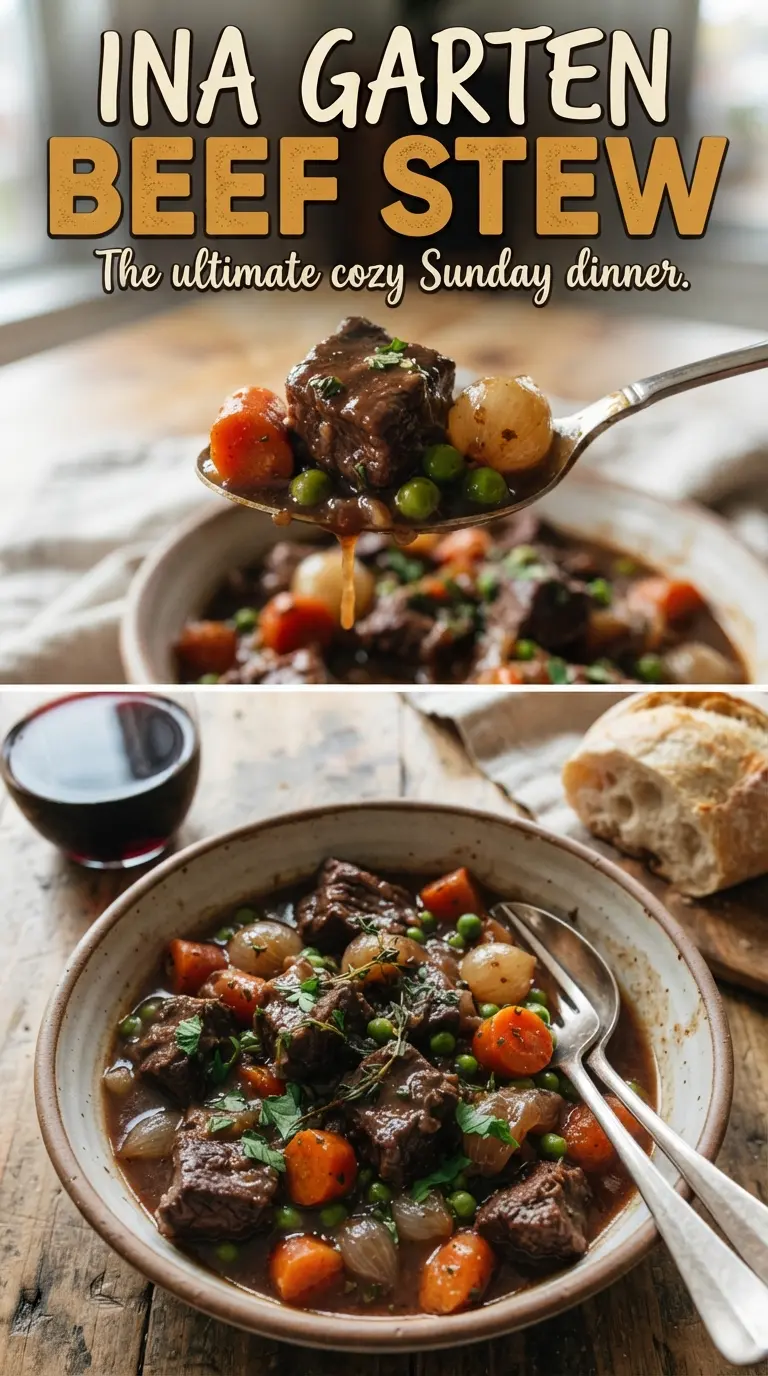
- Beef chuck — This is the right cut because it has enough connective tissue to turn tender during the long bake. Leaner stew meat can work, but it usually dries out before the sauce gets the depth you want.
- Dry red wine — Use something you’d drink. It doesn’t need to be expensive, but it should taste clean and dry, not sweet. The wine lifts the browned bits and gives the broth its deep, rounded flavor.
- Tomato paste — This adds concentration and a little acidity, which keeps the stew from tasting heavy. It’s a small amount, but it does a lot of quiet work in the background.
- Yukon Gold or small waxy potatoes — The recipe calls for small potatoes, and that shape matters because they hold together better than starchy russets. If you only have larger potatoes, cut them into even chunks and keep them on the larger side so they don’t fall apart.
- Frozen peas — They go in at the very end for color and freshness. Add them earlier and they lose both their bright flavor and their pop.
Building the Stew So the Vegetables Stay Intact
Start with a Deep Sear
Get the olive oil hot before the beef goes in, then leave the cubes alone long enough to develop a brown crust. If you move them too soon, the flour coating sticks and tears instead of searing. Work in batches and keep the cooked beef moving to a plate so the pan stays hot.
Use the Wine to Clean the Pot
Once the beef is out, pour in the wine and scrape the bottom with a wooden spoon. That’s where the flavor lives. Let the wine bubble for a minute or two before adding the broth and tomato paste so the stew doesn’t taste sharp or alcoholic.
Bake Until the Beef Gives Without Falling Apart
The covered Dutch oven should go into a 300°F oven and stay there until the beef is tender enough to cut with a spoon but still holds its shape. If the meat is still tight after two hours, it needs more time, not more heat. A hotter oven can make the liquid reduce too fast and leave the beef stringy.
Finish With the Peas at the End
Stir in the peas after the rosemary comes out and the stew has finished braising. They only need a few minutes on the stove, just long enough to heat through and turn bright green. If they sit in the oven for the full cook time, they go dull and mealy.
How to Adapt This Stew Without Losing What Makes It Good
Gluten-Free Version
Swap the all-purpose flour for a gluten-free all-purpose blend that includes starch, or skip the dredge and dust the beef lightly with cornstarch right before browning. You’ll lose a little of the classic roux-like body, but the stew still thickens well as the potatoes break down slightly and the liquid reduces.
Dairy-Free and Naturally Rich
This stew is already dairy-free, which is part of why it feels so substantial without any cream or butter. Don’t add a dairy finish at the end; the combination of browned beef, wine, broth, and tomato paste gives you all the richness you need.
Make It a Little Heartier
If you want a thicker, more spoon-coating stew, mash a few potato pieces against the side of the pot after baking and stir them back in. That gives the broth more body without turning it pasty the way extra flour can.
Storage and Reheating
- Refrigerator: Store covered for up to 4 days. The stew thickens as it chills, so expect a denser texture the next day.
- Freezer: It freezes well for up to 3 months. Cool it fully first, then freeze in airtight containers, leaving a little room at the top for expansion.
- Reheating: Warm it gently on the stove over low heat with a splash of broth or water if needed. Don’t boil it hard, or the beef can tighten and the potatoes can break apart.
Answers to the Questions Worth Asking
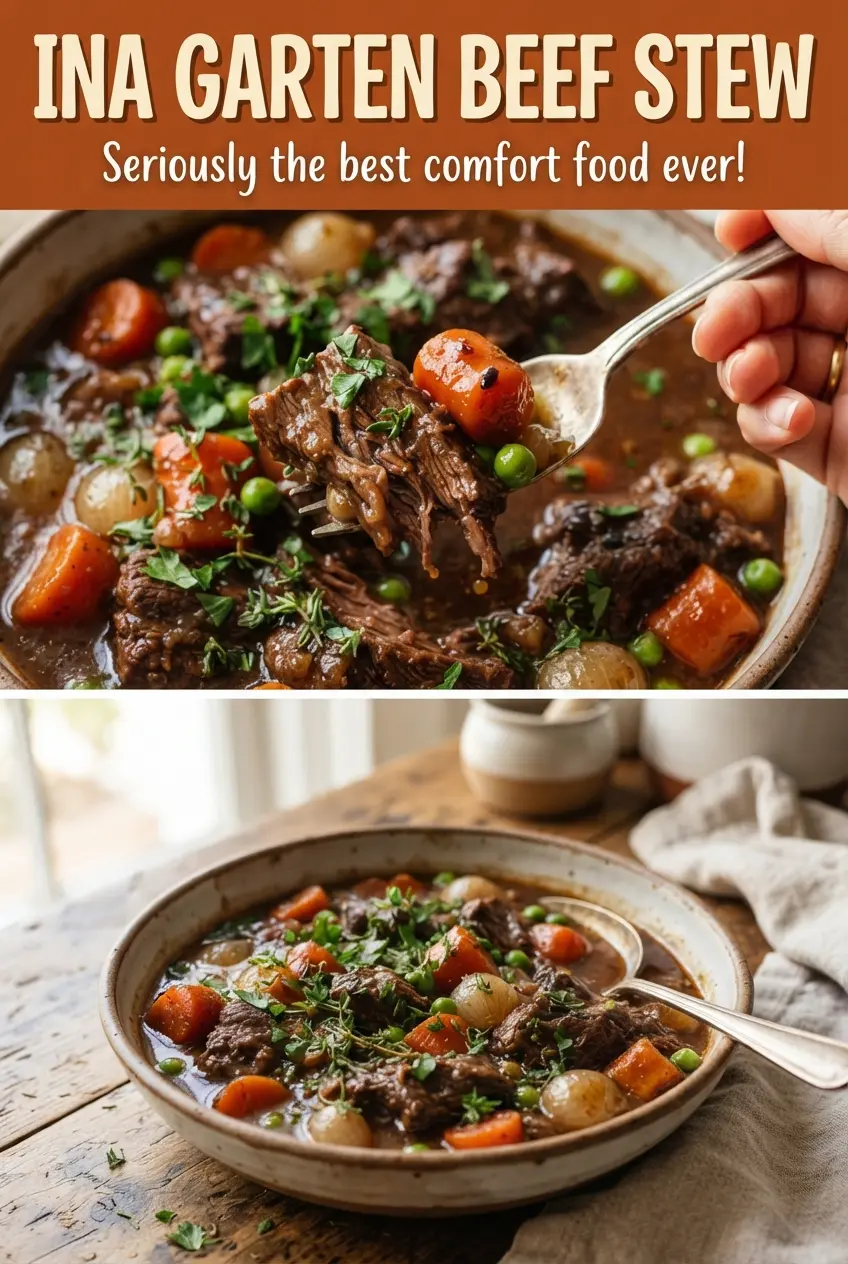
Ina Garten-Style French-Inspired Beef Stew (Dutch Oven)
Ingredients
Equipment
Method
- Preheat the oven to 300°F. In a bowl, toss the beef with the flour, kosher salt, and black pepper until evenly coated.
- Heat the olive oil in a Dutch oven over medium-high heat, then brown the beef in batches. Cook until well-browned on the outside, using a visual cue of deep golden-brown crust.
- Add the dry red wine to the pot and scrape up the browned bits from the bottom. Stir until the liquid loosens and looks glossy, about 1 to 2 minutes.
- Stir in the beef broth, tomato paste, Worcestershire sauce, and minced garlic. Mix until the tomato paste dissolves and the sauce looks uniform.
- Return the browned beef to the pot, then add the chopped onions, carrot chunks, halved small potatoes, rosemary sprig, and fresh thyme leaves. Distribute everything evenly so vegetables sit in the liquid.
- Bring the stew to a simmer on the stovetop, then cover and transfer to the oven at 300°F. Bake for 1 3/4 to 2 hours until the beef and vegetables are tender, with a visible bubbling edge around the perimeter.
- Remove the rosemary sprig and stir in the frozen peas. Mix until the peas turn bright green, about 2 to 3 minutes.
- Simmer on the stove for 5 minutes and season to taste. The stew should look thicker and cohesive, with steady gentle bubbles.