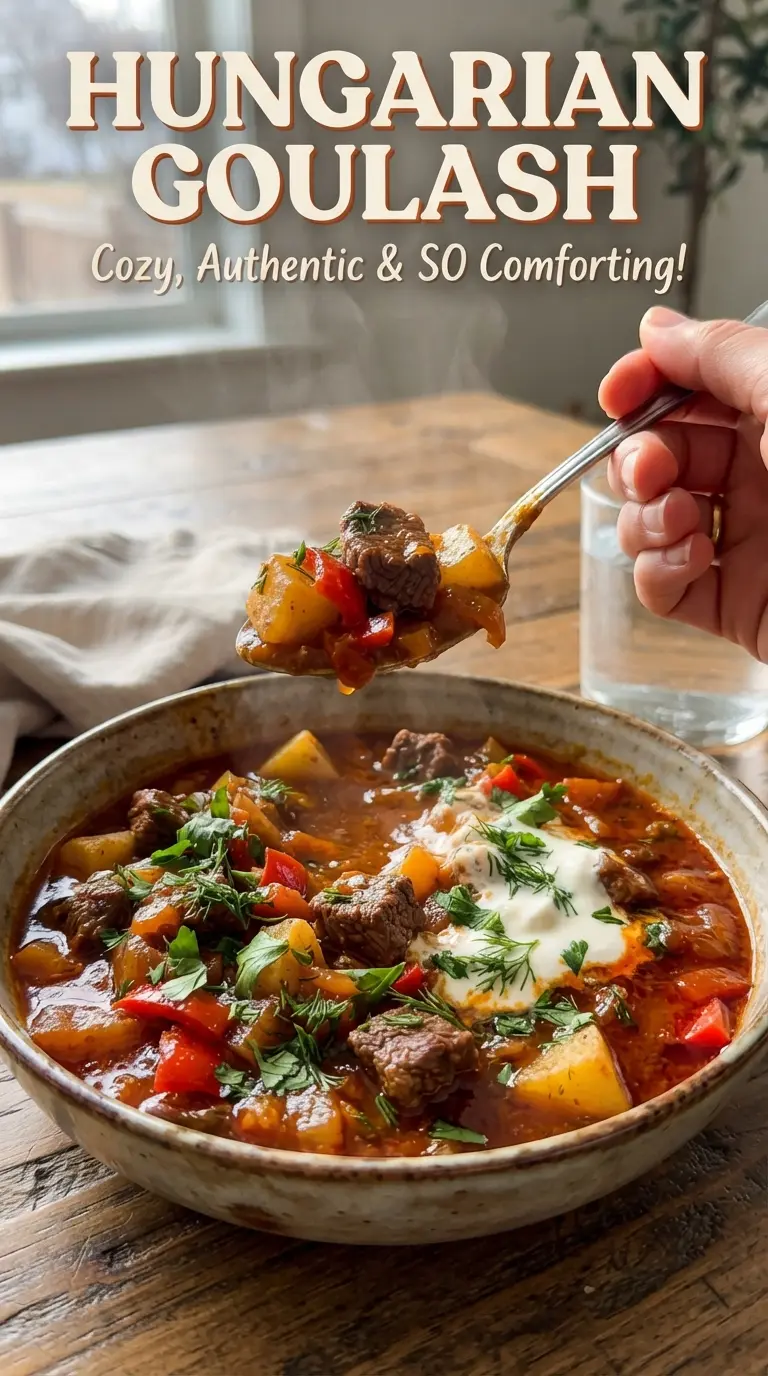
Hungarian goulash earns its place at the table because the broth turns deep red and silky while the beef goes tender without falling apart. It’s not a thick, floury stew trying to imitate itself; it’s a paprika-forward pot of slow-cooked onions, beef, peppers, and vegetables that tastes fuller than the ingredient list looks on paper.
The difference here starts with the onions. They’re cooked until golden before the paprika goes in, which gives the stew a sweeter base and keeps the spice from tasting raw or bitter. Pulling the pot off the heat before stirring in the paprika and caraway matters too. Paprika burns fast, and once it scorches, the whole pot takes on a harsh edge that no amount of simmering can fix.
Below, I’ve included the small details that make this version work: when to add the potatoes so they hold their shape, what to look for when the beef is ready, and the easiest way to adjust the consistency if you want the broth a little thicker or a little looser.
The onions got so sweet and the paprika never turned bitter. I added the potatoes later like you said, and they held their shape while the beef turned completely tender.
Save this paprika-rich Hungarian goulash for the nights when you want tender beef, soft onions, and a broth that tastes slow-cooked from the first spoonful.
The Step That Keeps the Paprika from Turning Bitter
The biggest mistake in goulash is letting paprika sit over direct heat long enough to scorch. Sweet Hungarian paprika has a lot of flavor, but it’s delicate; once it burns, the whole pot can taste dusty and sharp. That’s why the onions need to be cooked first, and why the pot comes off the burner before the paprika and caraway go in.
That little pause does two things at once. It protects the spice, and it lets the fat from the onions coat it evenly so the color blooms into the stew instead of clumping in one place. When the beef goes back in, every cube picks up that seasoned base before the liquid goes in. The result is a broth that tastes rounded, not flat.
What Each Ingredient Is Actually Doing in This Goulash
- Beef chuck — This cut has enough connective tissue to turn spoon-tender over a long simmer. Lean stew meat can work, but it won’t give you the same soft, rich texture.
- Sweet Hungarian paprika — This is the backbone of the dish, so use a fresh jar if yours has been sitting in the cupboard for years. Hot paprika can be used for a little heat, but keep most of it sweet or the stew loses its classic balance.
- Onions — They break down into the base of the broth and help thicken it naturally. Don’t rush this step; pale onions give you a thin, flat goulash.
- Tomato paste — Just enough to deepen the color and add a little acidity without making the stew taste like tomato soup. Cook it briefly with the meat so it loses the raw edge.
- Potatoes and carrots — These turn the pot into a full meal and soak up the paprika broth. Add them later so they stay intact instead of turning mushy.
- Sour cream — It’s not just garnish. A spoonful at the end softens the paprika and adds a cool, tangy finish that makes each bite taste fuller.
Building the Pot in the Right Order
Cooking the Onions Until They Turn Sweet
Start with the lard or oil and cook the diced onions over medium heat until they turn golden, about 10 minutes. You want them softened and lightly colored, not browned hard at the edges. If they’re still crunchy when the paprika goes in, the stew will taste sharp instead of rounded. Add the garlic for just a minute at the end so it smells fragrant but doesn’t toast too far.
Blooming the Paprika Off the Heat
Pull the pot off the burner before adding the paprika and caraway seeds. Stir them into the hot onion mixture for a few seconds so the fat takes on that deep red color. This is the part that protects the flavor. If the paprika darkens too much before the broth goes in, it turns bitter fast, and there’s no fixing that later.
Letting the Beef and Broth Simmer Slowly
Add the beef and stir until every piece is coated, then go back to medium heat and cook it for a few minutes before adding the broth and vegetables. Once the liquid goes in, keep the simmer gentle. A hard boil tightens the beef and muddles the broth; a lazy simmer gives you tender meat and clear, concentrated flavor. After the first hour, the beef should be starting to soften but still need time.
Adding the Potatoes and Carrots at the End
The potatoes and carrots go in after the beef has had a head start, not at the beginning. That keeps them from dissolving while the chuck finishes tenderizing. Simmer until the potatoes yield easily to a knife and the beef pulls apart with a fork. If the broth looks thin at the end, leave the lid off for the last 10 minutes so it tightens naturally.
Three Ways to Keep the Goulash True to Itself
Make It Lighter with Oil Instead of Lard
Vegetable oil works fine if you don’t use lard. You lose a little of the old-school richness, but the paprika still blooms properly as long as you cook the onions first and keep the heat low when the spice goes in.
Skip the Dairy for a Clean, Brothy Finish
Leave off the sour cream and the stew becomes a little sharper and more brothy, which is a good fit if you need a dairy-free version. You can still get a creamy-looking finish by stirring in a spoonful of mashed potato from the pot, but the flavor will stay more rustic than tangy.
Use Sweet Paprika Plus a Pinch of Hot Paprika
If you want a little heat, add a small pinch of hot paprika along with the sweet paprika. That keeps the base flavor intact while giving the broth a slow warmth instead of a sharp burn. Go easy; this dish should taste paprika-rich, not spicy in the chile-pepper sense.
Make It Ahead for Deeper Flavor
This stew tastes even better the next day because the paprika, beef, and onions settle into each other overnight. Reheat it gently and add a splash of broth if the potatoes have absorbed too much liquid. The flavor gets deeper, not muddier, as long as you don’t boil it hard a second time.
Storage and Reheating
- Refrigerator: Store in an airtight container for up to 4 days. The broth thickens as it sits and the potatoes soften a bit more.
- Freezer: It freezes well for up to 3 months, but the potatoes will be softer after thawing. For the best texture, freeze before adding the potatoes if you know you’ll be storing a batch.
- Reheating: Warm it slowly over low heat on the stove with a splash of broth or water. A hard boil can break the potatoes and make the beef stringy.
Answers to the Questions Worth Asking

Hungarian Goulash
Ingredients
Equipment
Method
- Heat lard or vegetable oil in a Dutch oven over medium heat and cook the diced onions for 10 minutes, until golden. Keep them moving so they soften evenly.
- Add the minced garlic and cook for 1 minute. Stir constantly so it becomes fragrant without browning.
- Remove the pot from the heat and stir in the sweet Hungarian paprika and caraway seeds. This off-heat step prevents the paprika from burning.
- Add the beef chuck cubes and stir to coat them in the paprika mixture. Return to medium heat and cook for 5 minutes.
- Stir in the tomato paste, diced red and green bell peppers, beef broth, salt, black pepper, and bay leaf. Cover the pot and simmer on low for 1 hour.
- Add the cubed potatoes and sliced carrots, then cover again and simmer for 45 minutes, until the beef and potatoes are tender. Skim off any foam if it forms near the surface.
- Remove the bay leaf before serving. Ladle the goulash into bowls.
- Top each serving with sour cream. Serve hot with crusty bread if desired.