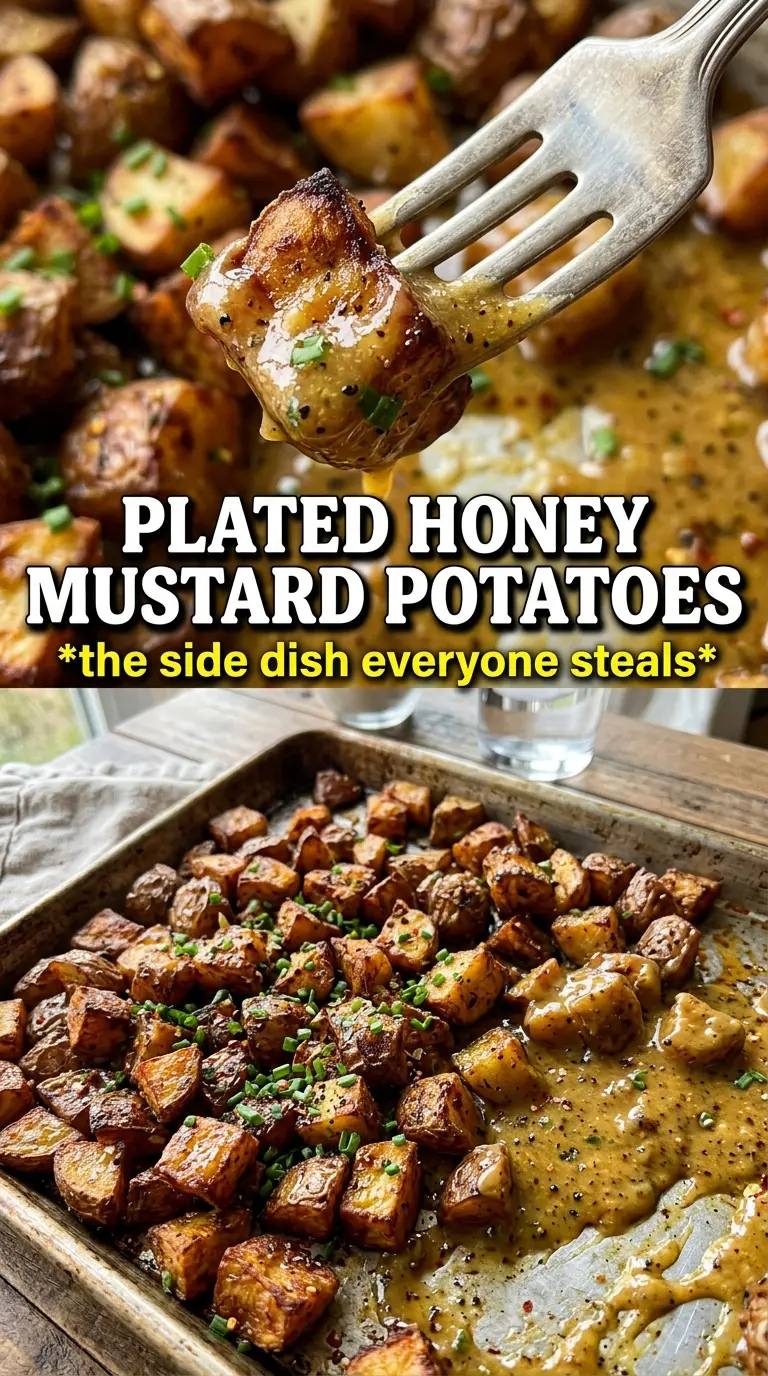
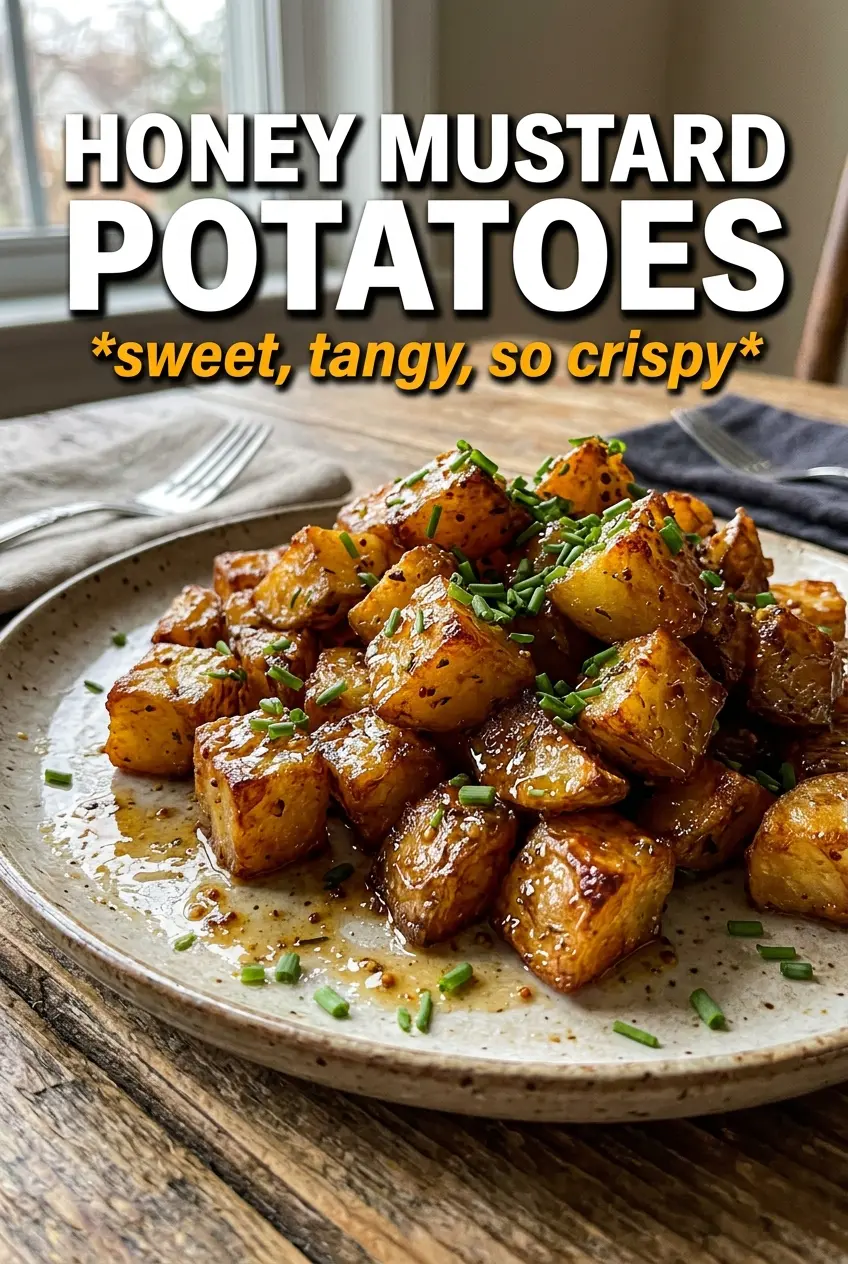
Golden, caramelized honey mustard potatoes hit the table with crisp edges, creamy centers, and a tangy glaze that clings to every wedge instead of puddling on the pan. The honey browns in the oven, the Dijon sharpens the sweetness, and the whole grain mustard leaves little pops of texture that make each bite feel a little more finished than your average roasted potato side.
The trick is getting enough coating on the potatoes without drowning them. A mix of Dijon and whole grain mustard gives the glaze body, while a little olive oil and vinegar keep it loose enough to toss evenly and roast up instead of burning in spots. Baby potatoes or Yukon golds both work well here, but cutting them into even halves matters more than the exact variety, because the caramelization comes from flat surfaces touching a hot pan.
Below, I’m breaking down the one step that keeps the glaze from turning sticky in the wrong way, plus the swaps that still give you that glossy, savory-sweet finish even when you need to change up the mustard or make the dish dairy-free.
The potatoes came out caramelized and glossy, and the glaze actually stayed on them instead of sliding off. I tossed them halfway through roasting like you said and the edges got those little crispy bits I was hoping for.
These honey mustard potatoes roast up with crisp edges and a sticky glaze that clings to every wedge.
The Mistake That Keeps Honey Mustard Potatoes From Getting Crisp
The biggest issue with glazed roasted potatoes is trying to treat the sauce like a marinade. If the potatoes sit in too much liquid, they steam before they brown, and you lose the crisp edges that make this dish worth repeating. The honey mustard mixture here is meant to coat, not soak, so the potatoes should look glossy and lightly covered, not swimming.
The other thing that matters is pan space. When the wedges crowd each other, the moisture coming off the potatoes gets trapped and the bottoms soften. Spread them out in a single layer and toss them halfway through roasting so the cut sides have a chance to meet the hot pan twice.
- Even potato halves — Cut the potatoes into similar sizes so they finish at the same time. Big chunks stay pale while smaller pieces burn at the edges.
- Dijon mustard — This is the backbone of the glaze. It brings sharpness and helps the honey emulsify with the oil, which keeps the coating from separating in the bowl.
- Whole grain mustard — The seeds add texture and a little extra mustard bite. If you only have Dijon, the dish still works, but the glaze will taste smoother and less rustic.
- Apple cider vinegar — The acid keeps the honey from tasting flat and helps the glaze stay balanced after roasting. Lemon juice can stand in if that’s what you have, but it will taste brighter and less round.
What Each Ingredient Is Actually Doing in This Recipe
- Primary ingredient (the star) — Quality matters most. Choose the best you can find.
- Cooking medium (oil, butter, or broth) — This carries flavors and prevents dryness.
- Seasonings (salt, pepper, spices, herbs) — Layer flavors so nothing overpowers. Build depth gradually.
- Aromatics (garlic, onion, herbs) — Cook with fat to bloom flavors. Become the foundation.
- Supporting ingredients — Complement the main ingredient without overpowering it.
- Sauce or liquid (if applicable) — Brings flavors together. Balance richness with acid.
- Acid (lemon, vinegar, wine, or other) — Brightens and prevents flat-tasting results.
- Final finish (garnish, glaze, or sauce) — Prevents one-dimensional taste and adds visual appeal.
What Happens in the Oven, Stage by Stage
Building the Glaze
Whisk the Dijon, whole grain mustard, honey, olive oil, vinegar, garlic, rosemary, smoked paprika, salt, and pepper until the mixture looks thick and smooth. You want it spoonable, not watery. If the garlic is chopped too large, it can scorch on the pan, so mince it finely. The glaze should smell sharp, herby, and a little sweet before it ever touches the potatoes.
Coating the Potatoes
Add the halved potatoes and toss until every piece has a thin, even shine. A metal bowl or large mixing bowl gives you the best control here because you can turn the potatoes without crushing them. If there’s a big pool of glaze at the bottom, keep tossing; the potatoes should carry most of it onto the baking sheet. That coating is what caramelizes.
Roasting for Color
Spread the potatoes cut-side down and roast at 425F until the bottoms are deeply golden and the edges look sticky and bronzed, about 30 to 35 minutes. Halfway through, flip and toss them so the other sides catch color too. If the pan is crowded, the glaze will soften instead of set, so use two pans if needed. You’re looking for crisp edges, tender centers, and a few dark caramelized spots on the bottom of the tray.
Finishing So the Glaze Stays Bright
Scatter on parsley and flaky salt as soon as the potatoes come out of the oven. The parsley gives the dish a fresh lift, and the flaky salt sharpens the sweet-savory glaze right at the end. Let them sit for a minute or two before serving so the coating firms up slightly. That tiny pause keeps the potatoes from tasting messy on the plate.
How to Adjust These Honey Mustard Potatoes Without Losing the Point
Dairy-Free and Naturally Vegetarian
This recipe already fits both of those boxes as written. The only thing to watch is your mustard and vinegar labels if you’re serving someone with strict dietary needs, since some specialty condiments can include additives you wouldn’t expect. The texture and flavor stay exactly where they should without any dairy at all.
Swap in Yukon Golds for a Creamier Center
Yukon golds hold their shape and turn buttery inside, which works beautifully with the sharp mustard glaze. Baby potatoes give you more bite-sized pieces, while larger Yukon golds sliced into wedges give you more browned surface area. If you want the crispiest finish, cut them all to a similar thickness so the edges brown before the centers overcook.
Use Maple Syrup Instead of Honey
Maple syrup gives the glaze a deeper, less floral sweetness and still caramelizes nicely. The potatoes will taste a little earthier and the sauce will be slightly thinner, so keep an eye on the pan during the last 10 minutes. If you want the glaze closer to the original, use the same amount and keep the mustard ratio unchanged.
Storage and Reheating
- Refrigerator: Store leftovers in an airtight container for up to 4 days. The potatoes soften a little, but the flavor holds up well.
- Freezer: They can be frozen, but the texture turns softer after thawing, so I only do it if I’m planning to use them in a breakfast hash or chopped skillet dish.
- Reheating: Reheat on a sheet pan at 400F until hot and the edges start to crisp again, about 10 to 15 minutes. Microwaving works in a pinch, but it makes the glaze loose and the potatoes lose the roasted finish.
Answers to the Questions Worth Asking
Honey Mustard Potatoes
Ingredients
Equipment
Method
- Preheat the oven to 425F and line a baking sheet.
- Halve the baby potatoes or Yukon golds so they roast evenly.
- Whisk Dijon mustard, whole grain mustard, honey, olive oil, apple cider vinegar, garlic, rosemary, smoked paprika, salt, and pepper until smooth and glossy.
- Toss the halved potatoes in the honey mustard mixture until well coated.
- Spread the potatoes in a single layer on the lined baking sheet, then roast 30-35 minutes at 425F, tossing halfway, until caramelized and golden.
- Remove from the oven and finish with fresh parsley and flaky salt for serving.