Hobo stew lands in that sweet spot between pantry meal and campfire comfort: a bubbling pot full of tender potatoes, soft carrots, and savory broth that tastes like it’s been cooking all day, even when it hasn’t. The meat gives it backbone, the canned vegetables keep it practical, and the tomatoes pull everything together without making the broth taste flat.
What makes this version work is the order. Browning the meat first builds a deeper base, and adding the broth after the vegetables gives the potatoes and carrots a chance to soak up flavor as they cook. The stew isn’t fussy, but it does need steady simmering so the vegetables turn tender instead of breaking apart before the broth has time to deepen.
Below, I’m sharing the small details that keep this stew hearty instead of watery, plus a few ways to adapt it if you’re cooking with ground beef, making it at home, or stretching it to feed a bigger crowd.
The broth turned rich and the potatoes stayed intact instead of getting mushy. I used ground beef, and by the time it simmered for 40 minutes the whole pot tasted like it had been on the fire for hours.
Save this hobo stew for the next campfire night or chilly evening when you want a one-pot meal with tender vegetables and a rich, savory broth.
The Part Most Hobo Stews Get Wrong: Building Flavor Before the Simmer
The biggest mistake with a stew like this is dumping everything into the pot and hoping the long simmer fixes it. It won’t. If the meat doesn’t get browned first, the broth stays thin and the whole dish tastes boiled instead of savory.
The second place people lose the plot is with the potatoes. Cut them into even cubes so they cook at the same pace as the carrots, and keep the simmer gentle once the pot comes to a boil. A hard boil tears the vegetables apart and clouds the broth faster than you want.
What Each Ingredient Is Actually Doing in This Pot
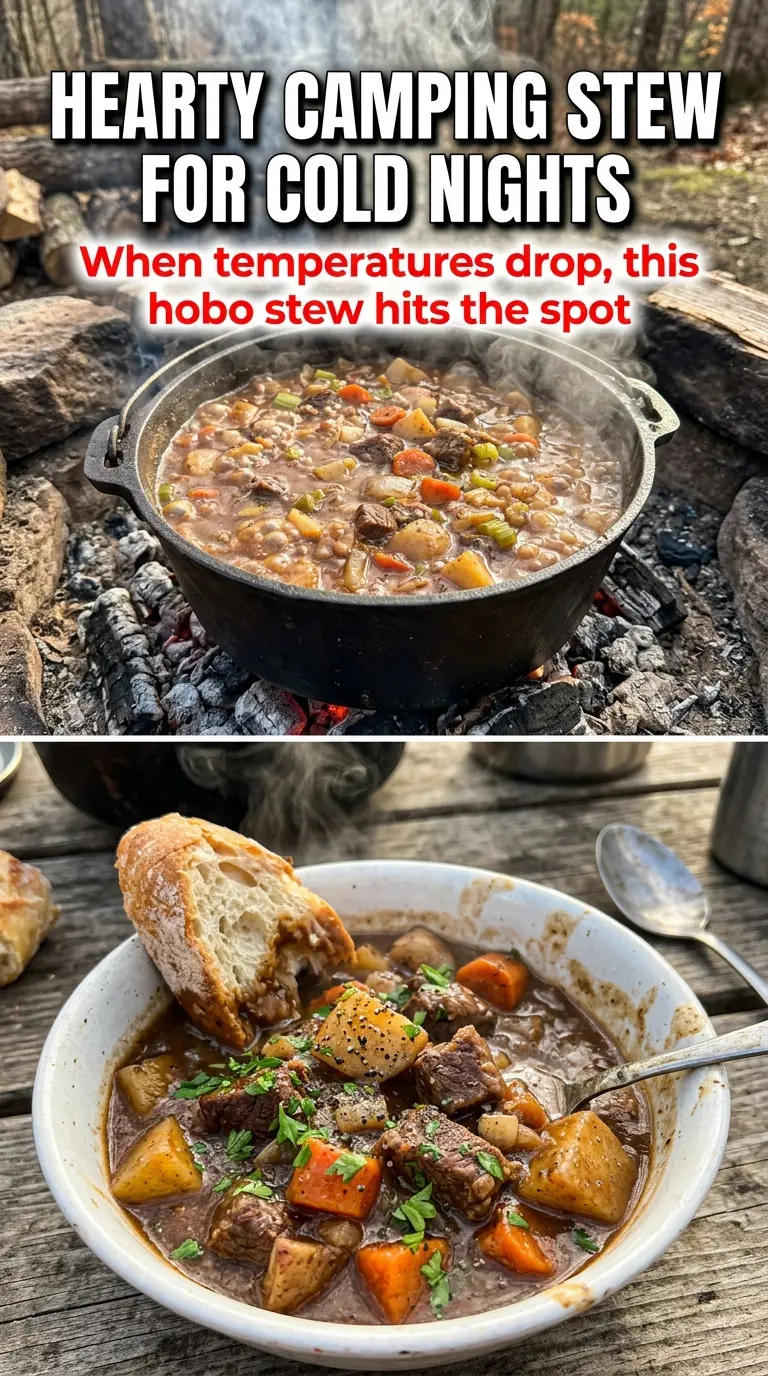
- Stew meat or ground beef — Stew meat brings a deeper, more traditional texture because it simmers into tender pieces, while ground beef gives you a faster, more rustic pot with less chew. If you use stew meat, brown it well for flavor; if you use ground beef, drain off excess fat so the broth doesn’t turn greasy.
- Potatoes — These thicken the stew a little as they cook and give it the stick-to-your-ribs texture that makes this dish feel like dinner instead of soup. Russets break down more, while Yukon Golds hold their shape better.
- Carrots, onion, corn, and green beans — The fresh onion and carrots build the base, while the canned vegetables add convenience and a mix of soft and firm bites. If you swap in frozen vegetables, add them near the end so they don’t go mushy.
- Diced tomatoes and beef broth — The tomatoes brighten the broth and keep it from tasting one-note, while the beef broth carries all the seasoning through the pot. Use a broth you actually like tasting, because it’s the liquid that defines the finished stew.
- Garlic powder and paprika — These seasonings give the stew warmth without competing with the simple campfire-style ingredients. Paprika is especially important if you want that gently smoky, old-fashioned depth.
Getting the Pot to a Gentle Simmer Instead of a Watery Boil
Browning the Meat First
Set the Dutch oven over the fire and brown the meat until it has real color on the outside, not just a gray surface. Those browned bits at the bottom are the start of the broth, so don’t rush this part or stir constantly. If you’re using ground beef, break it up as it cooks and stop once there’s no pink left and the edges have picked up color.
Adding the Vegetables in the Right Order
Once the meat is ready, add the potatoes, carrots, onion, corn, green beans, tomatoes, and broth all at once. Stir from the bottom so the browned bits lift into the liquid, then season before the pot comes to a boil. If the pot looks crowded, it’s fine; the vegetables will settle as they heat and release some moisture.
Letting the Stew Simmer Covered
Bring the pot up to a boil, then turn it down to a steady simmer and cover it. You want small bubbles breaking the surface, not a rolling boil, because that keeps the potatoes intact and gives the broth time to thicken slightly. After 35 to 40 minutes, the carrots should be tender and the potatoes should slide off a fork without falling apart.
Serving It Hot
Spoon the stew into bowls while it’s still steaming and the broth is at its fullest. If it sits too long uncovered, the potatoes keep soaking up liquid and the stew can turn heavier than you want. A pinch of salt at the end sharpens everything if the broth tastes a little flat after simmering.
How to Adapt Hobo Stew for a Dutch Oven, a Stove, or a Leaner Pantry
Ground Beef Shortcut
Ground beef turns this into a faster weeknight stew with a softer, more rustic texture. Brown it thoroughly and drain off the extra fat before adding the vegetables, or the broth will taste heavy instead of savory.
Vegetarian Pantry Version
Swap the beef for an extra can of beans or a meatless crumble and use vegetable broth instead of beef broth. You’ll lose some of the deep meaty flavor, so add a little extra paprika and a spoonful of tomato paste if you want the broth to taste fuller.
Using Frozen Vegetables
Frozen corn and green beans work fine, but add them in the last 10 to 15 minutes so they stay bright and don’t turn limp. This keeps the stew tasting fresher and prevents the vegetables from disappearing into the broth.
Make-Ahead and Leftover Storage
- Refrigerator: Keeps for 4 days in a covered container. The broth thickens as it sits, and the potatoes soften a little more, which is normal.
- Freezer: Freezes well for up to 3 months, though the potatoes may turn a touch grainy after thawing. Cool it completely first and leave a little space in the container for expansion.
- Reheating: Warm it gently on the stove over medium-low heat with a splash of broth or water. A hard boil can break the potatoes apart and make the meat tough if you used stew meat.
Answers to the Questions Worth Asking
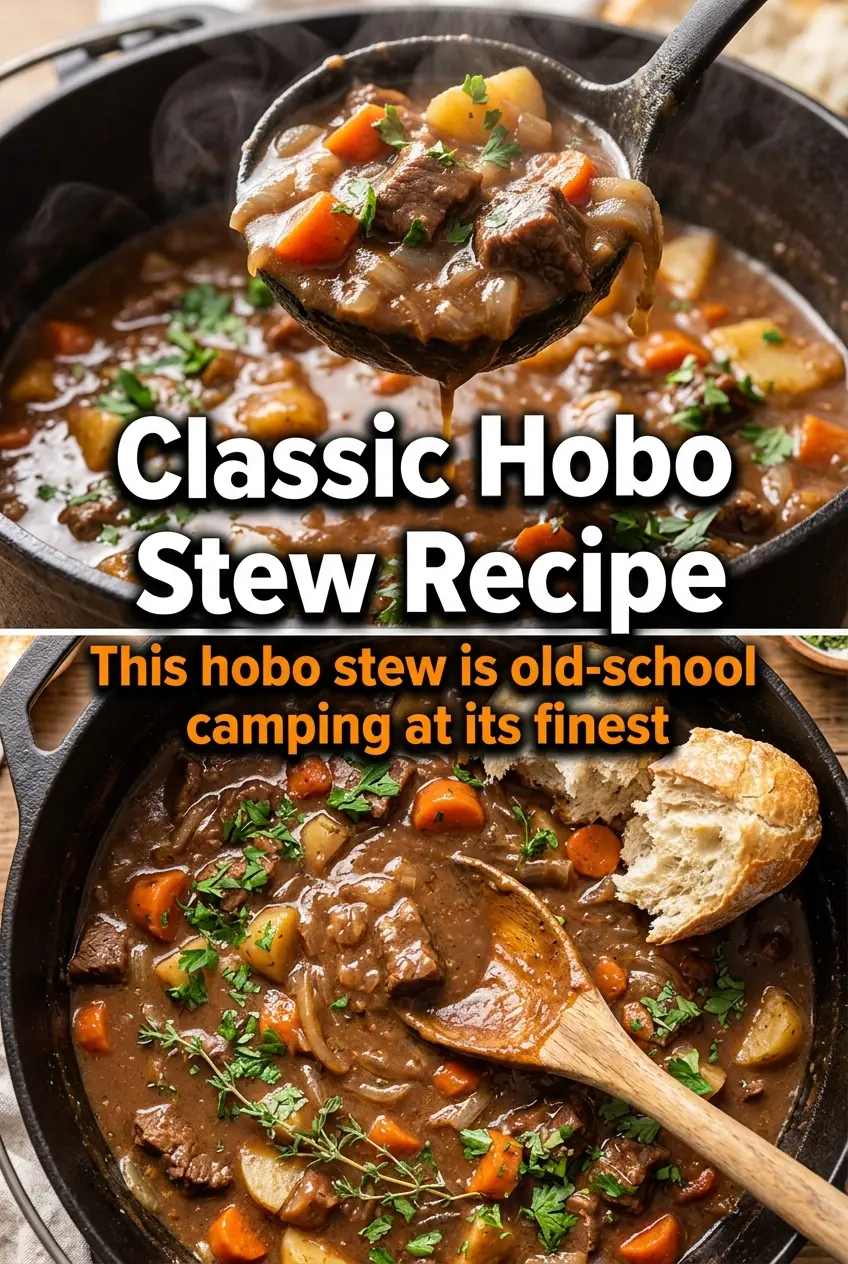
Hobo Stew
Ingredients
Equipment
Method
- Place a Dutch oven over campfire heat and brown the stew meat or ground beef until browned, stirring occasionally until you see fond on the bottom.
- Add potatoes, carrots, onion, corn, green beans, diced tomatoes, and beef broth to the Dutch oven, then stir to combine so the vegetables are coated.
- Sprinkle in garlic powder and paprika, then season with salt and pepper to taste and stir again until evenly distributed.
- Bring the stew to a boil over the campfire, then reduce to a gentle simmer and keep covered.
- Simmer covered for 35-40 minutes, stirring once or twice, until the vegetables are tender and the pot is bubbling around the edges.
- Serve hot in bowls.