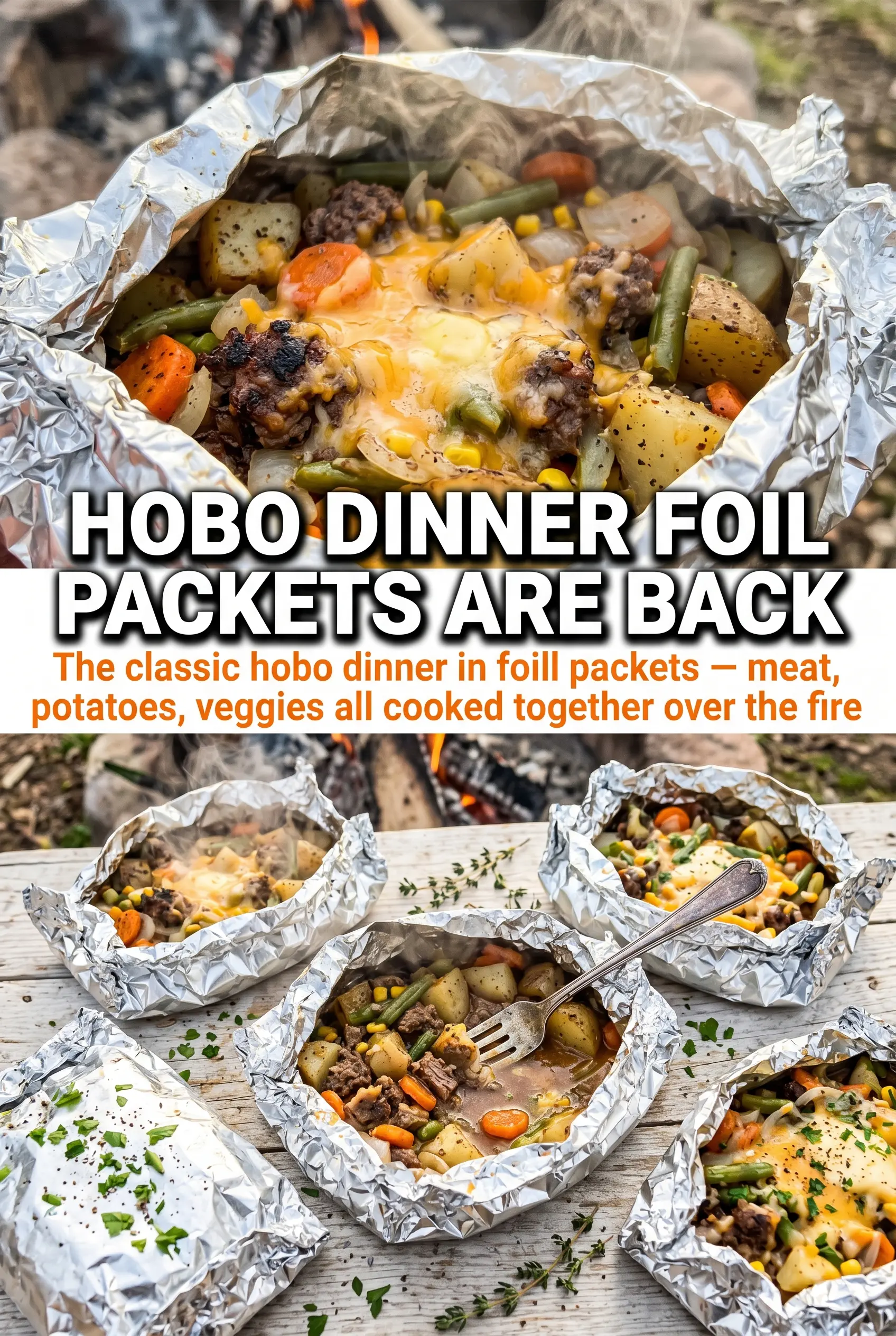
Hobo dinner foil packets turn out the kind of meal people remember from campouts and backyard fires: beef that stays juicy, potatoes that soften without falling apart, and sweet onions and carrots all steaming together in their own juices. The best part is the cleanup, or lack of it. Everything cooks in one packet, and the foil traps enough heat and moisture to finish the vegetables while the beef drips its flavor right into the layers below.
This version works because the potatoes are sliced thin enough to cook through in the same window as the beef, and the butter goes on top where it can melt down through the vegetables instead of disappearing into the foil. Heavy-duty foil matters here. Thin foil tears when you flip the packets or lift them off a grate, and one pinhole is all it takes for steam and juices to escape.
Below you’ll find the little details that keep these packets from turning dry or undercooked, plus a few practical swaps if you’re cooking at camp, on a grill, or straight in the oven.
The potatoes were tender at the same time the beef was cooked through, and the butter kept everything from drying out. I flipped the packets once and they held together perfectly on the camp grate.
Save these Hobo Dinner Foil Packets for a no-fuss campfire meal with beef, potatoes, and buttery vegetables.
The Reason These Packets Cook Evenly Instead of Leaving You With Raw Potatoes
The biggest mistake with foil dinners is stacking everything too thick. Potatoes take the longest, so they need to be sliced thin and tucked into the hottest part of the packet, with the beef sitting on top where rendered juices can run down through the vegetables. If you pile the potatoes in chunky pieces, the meat is done before the vegetables catch up, and that’s when people start opening packets early and losing heat.
Layering also matters more than most camp recipes admit. The butter on top helps carry heat and adds moisture, while the sealed packet traps steam that softens the carrots and onions. If your packets burst during cooking, the edges were not crimped tightly enough or the foil was too thin for flipping.
What Each Ingredient Is Doing Inside the Foil
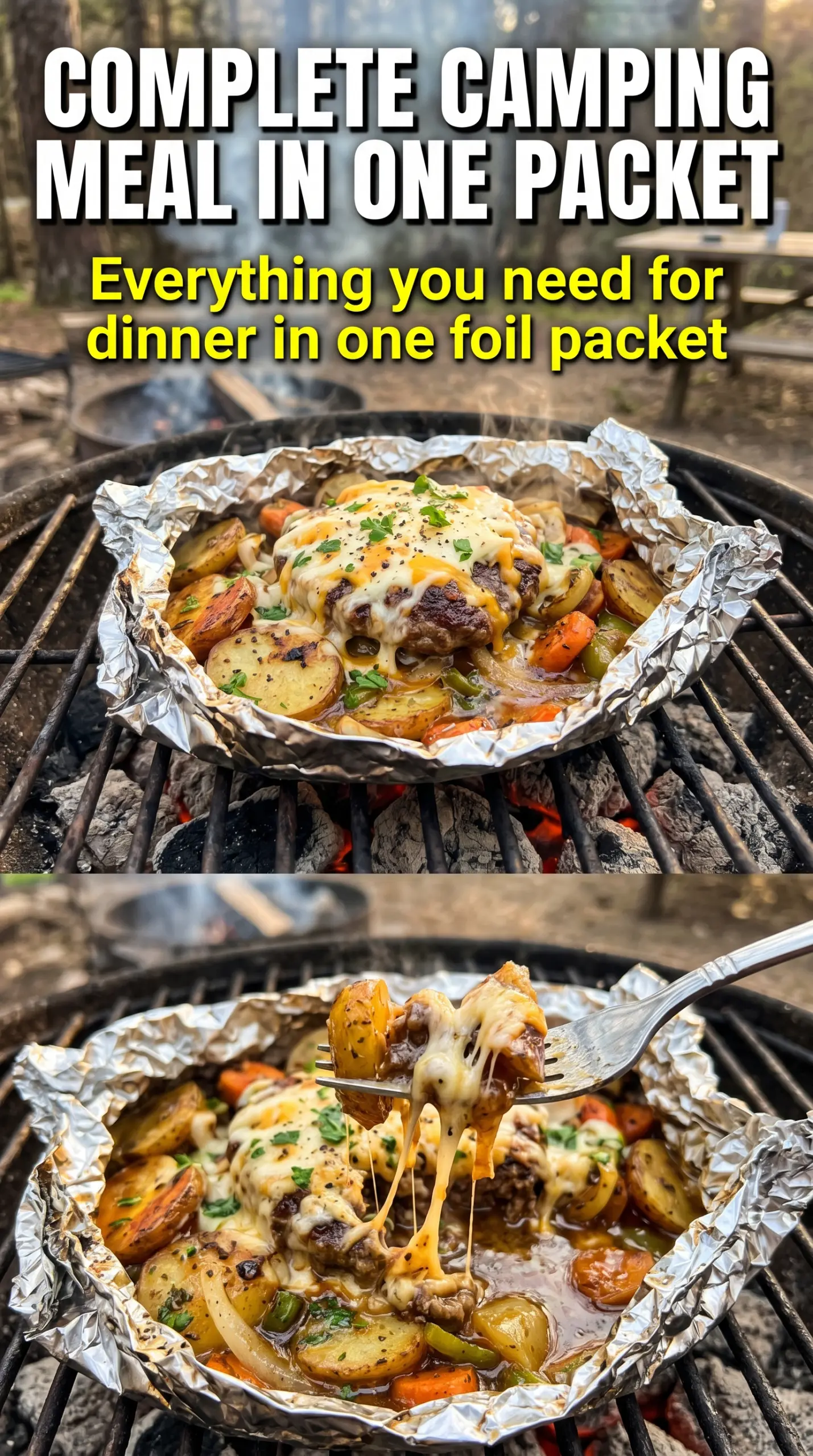
- Ground beef — This is the main source of flavor and the heat engine for the packet. A standard 80/20 blend works well because it stays juicy without flooding the vegetables with grease. Leaner beef works too, but it needs the butter on top to keep the final result from tasting dry.
- Potatoes — These need to be sliced evenly so they finish at the same time. Waxy potatoes hold their shape best, but russets work if you slice them thin. If the slices are uneven, the thicker pieces will stay firm while the thin ones turn soft.
- Carrots and onion — The carrots add sweetness and the onions melt into the beef juices. Slice both thin enough to soften in about 30 minutes over medium campfire heat. Big wedges stay crunchy longer than you want in a packet dinner.
- Butter — This is not just for richness. It keeps the top from drying out and helps seasonings spread through the vegetables as it melts. If you need a dairy-free version, use a good olive oil, but expect a cleaner, less savory finish.
- Heavy-duty aluminum foil — This is the difference between a sealed dinner and a broken packet. Regular foil can work in the oven, but over a grate or fire it tears too easily when you flip or move it. If all you have is thinner foil, double it.
Building a Packet That Stays Sealed Over the Fire
Shaping the Beef Thin
Divide the beef into four even portions and press each one into a thin patty, not a thick burger. Thin patties cook through at the same pace as the potatoes and help the packet heat evenly from top to bottom. If the patties are too thick, the vegetables underneath can overcook before the center of the meat is done.
Stacking in the Right Order
Lay the potatoes down first, then the carrots and onions, then set the beef patty on top. That arrangement lets the vegetables steam in the drippings instead of sitting above the meat where they’d dry out. Keep the layers compact, but don’t pack them so tightly that the steam has nowhere to move.
Crimping for Steam, Not Spills
Fold each sheet into a tight packet and crimp the edges firmly all the way around. Leave a little air space inside so the steam can circulate, but seal the seams well enough that juices stay inside. If a packet opens on the grate, it usually means one side was folded flat instead of tucked and crimped.
Cooking Over Medium Heat
Set the packets over medium heat on a campfire grate and cook for 25 to 30 minutes, flipping once halfway through. You want steady heat, not roaring flames, because fire that’s too hot can scorch the foil before the potatoes soften. Open one packet carefully near the end and check for tender vegetables and beef cooked through before serving the rest.
How to Change These Foil Packets Without Losing What Makes Them Work
Dairy-Free Packet Dinner
Swap the butter for olive oil or a dairy-free butter alternative. Olive oil gives you a lighter finish and keeps the vegetables moist, but it won’t add the same rich beefy coating that real butter does. Use a generous tablespoon per packet so the vegetables still steam instead of drying out.
Ground Turkey Instead of Beef
Ground turkey works, but it needs a little help because it doesn’t bring as much fat or flavor on its own. Add an extra pinch of salt and a small drizzle of oil with the butter so the packet doesn’t taste lean or dry. The cook time stays close to the same, but turkey benefits from checking a few minutes early.
Oven Method for Rainy Days
Bake the sealed packets on a sheet pan at 400°F for about 35 to 40 minutes. Oven heat is gentler and more even than a live fire, so the vegetables soften without the risk of scorching the foil. Open them carefully after a short rest because the steam will still be trapped inside.
Storage and Reheating
- Refrigerator: Store leftovers in an airtight container for up to 3 days. The potatoes soften a bit more after chilling, but the flavor stays good.
- Freezer: These freeze better than you might expect, though the potatoes turn a little softer after thawing. Wrap portions well and freeze for up to 2 months.
- Reheating: Reheat covered in a 350°F oven until hot, or warm gently in a skillet with a splash of water. Don’t blast them in the microwave for too long or the beef gets tough before the center heats through.