Hobo dinner cheeseburgers hit the sweet spot between a burger and a full foil-packet supper: juicy beef, soft potatoes, sweet onions, tender peppers, and melted cheese all in one tidy parcel. When they’re done right, the bottom vegetables pick up the beef drippings and butter, while the top stays sealed enough to steam the burger until it’s cooked through without drying out.
The trick is in the layering. Thin-sliced potatoes go on the bottom because they need the most heat and longest cook time, and the burger sits above them so the juices drip down and season everything underneath. Heavy-duty foil matters here, too; thinner foil tears when you flip the packets or open them to add the cheese. A short rest at the end gives the juices a chance to settle so you don’t lose them the second you cut into the packet.
Below, I’ll walk through the part that keeps the potatoes from staying hard, the ingredient choices that matter most, and a few ways to adapt this for the oven, grill, or a dairy-free plate.
The potatoes came out tender, the burgers stayed juicy, and the cheese melted right over the top after the quick reseal. I used the campfire and flipped them once like suggested — perfect for our camping night.
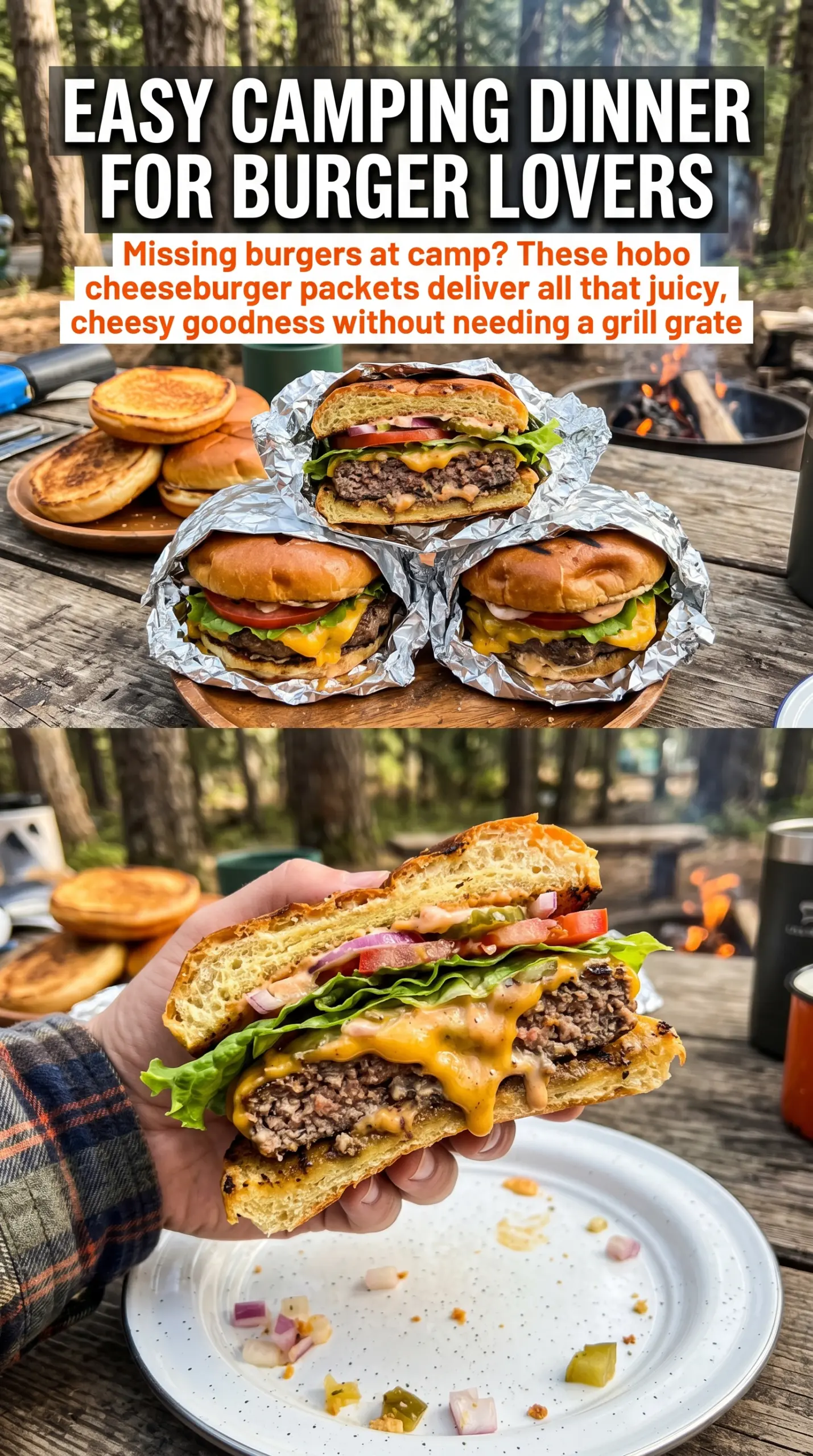
Save these foil packet hobo dinner cheeseburgers for a campfire meal with juicy beef, tender vegetables, and melted American cheese.
The Reason the Potatoes Go Under the Burger, Not Beside It
Foil packet burgers fail when the vegetables and meat are treated like they cook on the same clock. Potatoes need the longest time, onions need a little less, and the burger patty can overcook fast if it’s buried where the heat hits hardest. Putting the sliced potatoes on the bottom gives them direct contact with the hottest part of the packet, while the burger juices drip down and season everything underneath.
The other mistake is packing the foil too tightly. Steam needs a little room to move, or you end up with gray, boiled meat and limp vegetables. A well-sealed packet traps enough moisture to cook the potatoes through, but not so tightly that the contents press into a dense mass. Thin slices are the difference between tender and stubborn here.
What Each Ingredient Is Actually Doing in These Packets
- Ground beef — Use an 80/20 blend if you can. The fat keeps the burger juicy and gives the vegetables something flavorful to soak up. Lean beef works, but the packet will eat a little drier unless you add extra butter.
- Potatoes — Thin slices are non-negotiable. Thick chunks won’t soften in time, and you’ll end up waiting for the potatoes while the burger is already done. A mandoline makes quick work of them, but a sharp knife works as long as the slices are even.
- Onion and bell pepper — These bring sweetness and moisture to balance the beef. Bell pepper is flexible, but onion is what gives the packet that classic campfire-dinner taste. Slice them thin so they soften fully in the same cook time as the potatoes.
- American cheese — It melts fast and blankets the burger cleanly. That texture is harder to get from many sharper cheeses, which can turn oily or clumpy in a hot packet. If you swap it, use a good meltable cheese like cheddar or Monterey Jack.
- Butter — This is what keeps the packet from tasting flat. It helps the vegetables cook evenly and carries the seasoning through the whole bundle. If you skip it, the finished packet tastes noticeably leaner and less rich.
- Heavy-duty foil — Regular foil tears too easily when you flip the packets or open them to add cheese. Heavy-duty foil holds the seal, which matters once the butter melts and the contents start to move around.
Building the Packets So the Center Cooks Through
Season and Shape the Patties
Divide the beef into four portions and shape them into thin patties that are a little wider than you think you need. They shrink as they cook, and a thin patty cooks through at the same pace as the vegetables underneath. Season both sides with salt and pepper right before assembly so the meat doesn’t tighten up too early.
Layer the Vegetables with the Potatoes at the Bottom
Lay each sheet of foil flat, then build a small bed of potatoes first, followed by onion and bell pepper. Keep the pile centered so you have room to fold the packet tightly at the end. If the potato layer is too thick, it won’t soften evenly, so spread it into a loose single layer instead of a mound.
Seal, Flip, and Add the Cheese at the End
Set the burger patty on top of the vegetables, add the butter, and fold the foil into a sealed packet with enough room for steam. Cook over medium campfire heat for 20 to 25 minutes, flipping once halfway through so the bottom doesn’t scorch. Open the packets carefully, add the cheese, reseal for a minute or two, then let them rest for five minutes so the cheese settles and the juices stay inside the packet.
How to Adjust These Foil Packets for Different Kitchens and Diets
Oven-Baked Foil Packet Cheeseburgers
Bake the sealed packets on a sheet pan at 400°F until the potatoes are tender and the burger is cooked through, usually about 25 to 30 minutes. The result is nearly the same as the campfire version, just with a little less smoky edge. Keep the packets on a pan so they stay flat and don’t leak in the oven.
Dairy-Free Version
Swap the butter for olive oil or a plant-based butter and skip the cheese, or use a dairy-free slice that melts well. You’ll lose some richness, but the vegetables still pick up plenty of beef flavor from the packet juices. Add a little extra pepper or smoked paprika to keep the flavor from tasting flat.
Swapping the Cheese
American cheese melts the smoothest, but cheddar, Monterey Jack, or pepper jack all work if you want a sharper or spicier finish. Just know that firmer cheeses may not melt into that same glossy blanket, especially if the packet has cooled a bit before you add them. Keep the reseal tight and give them the full minute or two to soften.
Storage and Reheating
- Refrigerator: Store leftovers in an airtight container for up to 3 days. The potatoes soften a little more after chilling, but the flavor holds up well.
- Freezer: I don’t recommend freezing the finished packets. The potatoes turn grainy and the vegetables lose their texture once thawed.
- Reheating: Reheat covered in a 350°F oven until hot, or warm gently in a skillet with a splash of water to help the potatoes steam back to life. The biggest mistake is blasting them in the microwave, which makes the burger tough and dries out the edges.
Answers to the Questions Worth Asking
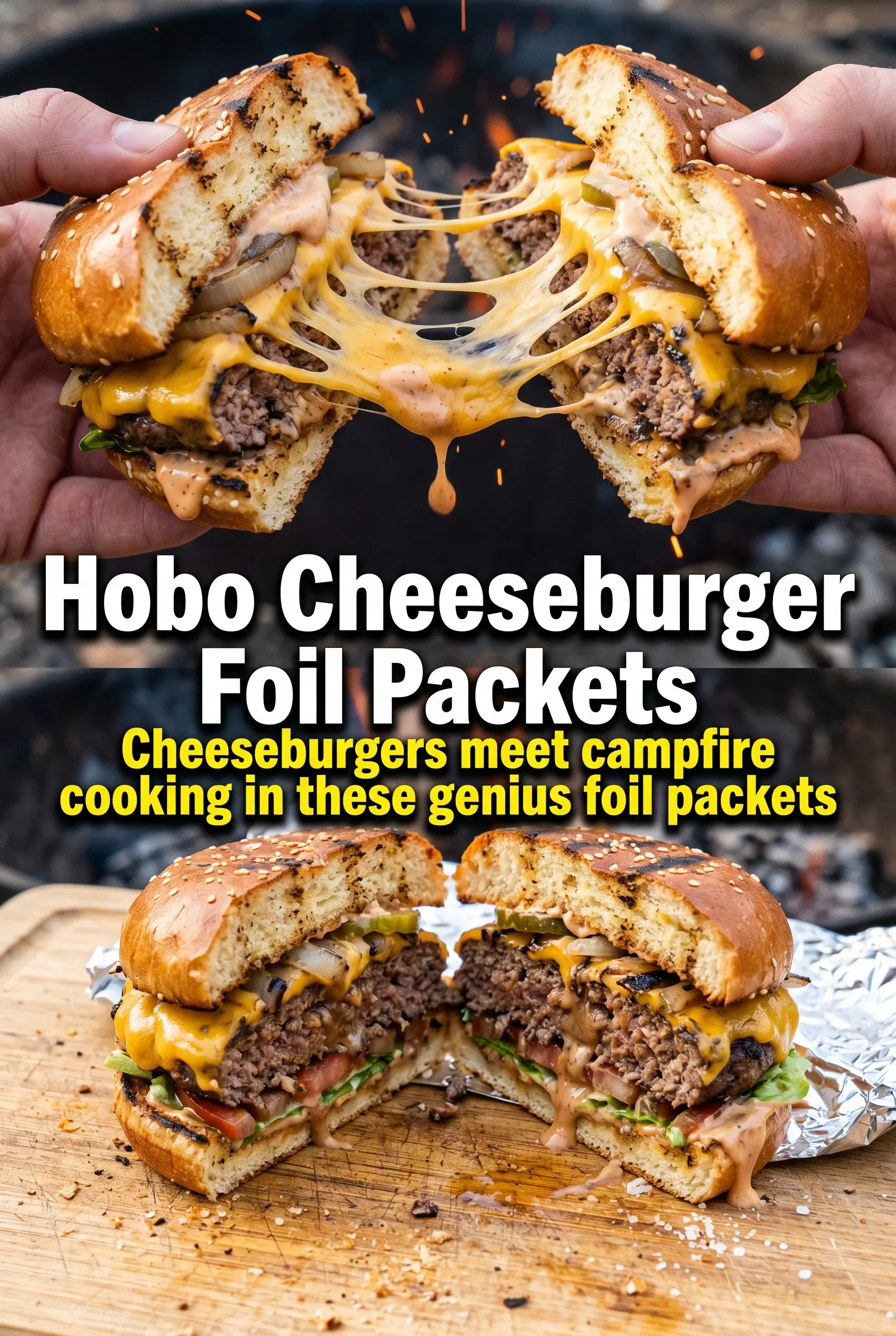
Hobo Dinner Cheeseburgers
Ingredients
Equipment
Method
- Divide the ground beef into 4 portions and form into thin patties, seasoning with salt and pepper.
- Keep patties thin so they cook through in the foil packet on medium heat.
- On each foil sheet, layer the sliced potatoes, onions, and bell peppers.
- Place a burger patty on top of the vegetables and add 1 tablespoon butter.
- Fold foil into sealed packets, pressing edges tightly to prevent leaks.
- Place packets on a campfire grate over medium heat for 20 minutes, flipping halfway.
- Continue until the vegetables are tender and the burgers are cooked through, for a total cook time of 25 minutes.
- Open packets, add cheese slices to burgers, then reseal briefly just long enough to melt the cheese.
- Let cool for 5 minutes before serving from the packets.