Silky tomato soup gets a real upgrade here: it stays bright and comforting, but the extra body from white beans makes it feel like a full meal instead of just a starter. The texture lands somewhere between classic cream of tomato and a heartier blended vegetable soup, with a spoon-coating finish that still tastes clean and tomato-forward.
The beans disappear into the pot once everything is blended, which is exactly what you want. They add protein and thickness without muddying the flavor, and that lets the tomatoes stay in charge. A quick sauté on the onion and tomato paste builds a sweeter, deeper base, while the dairy goes in at the end so it stays smooth instead of splitting.
Below, I’ve included the little details that matter most: how to keep the soup from tasting flat, when to blend for the smoothest texture, and the one garnish that makes each bowl feel finished.
The white beans blended in so smoothly I never would have guessed they were there, and the soup had that rich, creamy texture without feeling heavy. I added grilled cheese croutons on top and my kids cleaned their bowls.
Love this creamy high protein tomato soup? Save it to Pinterest for easy weeknight dinners with a silky texture and a grilled cheese topping.
The Reason the Beans Stay Invisible but the Soup Gets Fuller
The whole trick here is treating the white beans like a texture tool, not a separate ingredient. Once they go into the pot with the tomatoes and broth, they soften enough to blend into the soup completely, which gives you body without the graininess that can happen when people try to add dairy or flour too early.
If your tomato soup has ever tasted sharp, thin, or a little hollow, this is the fix. The onion, tomato paste, and simmer time build sweetness, while the beans round out the body so the soup feels substantial even before the cream or yogurt goes in. Blend it until it’s fully smooth; a few visible bean flecks are fine, but anything coarsely puréed will read as rustic in a way that isn’t flattering here.
What Each Ingredient Is Actually Doing in the Pot

- Whole plum tomatoes — These give the soup its clean tomato flavor and enough acidity to keep the bowl lively. Whole canned tomatoes usually blend smoother than diced tomatoes, which often contain firm pieces that stay a little stubborn even after simmering.
- White beans — This is where the protein comes from, and they’re also what makes the soup feel lush without relying entirely on dairy. Cannellini or great northern beans both work well. Drain them, but don’t rinse too aggressively if you want to keep a little of the starchy cling that helps the soup blend silky.
- Tomato paste — A small amount deepens the color and gives the soup a more cooked, rounded tomato flavor. Let it cook with the onion and garlic for a minute or two so it loses the raw tinny edge.
- Greek yogurt or cream — Stir this in off the heat. That matters. High heat can make yogurt grainy or cause cream to separate a little, especially in a tomato-heavy soup. If you want the lightest tang, use Greek yogurt; if you want the richest finish, use cream.
- Broth — Use vegetable broth for a vegetarian version or chicken broth for a slightly deeper savory base. Since the beans and tomatoes do a lot of the work, you don’t need an especially expensive broth, but it should taste clean and not overly salty.
Building the Soup So It Turns Silky Instead of Flat
Start with the onion and tomato paste
Cook the diced onion in olive oil until it’s soft and translucent, not browned. You want sweetness and moisture here, not caramelization. When you add the garlic and tomato paste, stir constantly so the paste darkens a shade and loses its raw taste without scorching, which would make the whole pot taste bitter.
Simmer long enough for the beans to melt in
Once the tomatoes, beans, broth, and dried herbs are in, let everything simmer for about 20 minutes. That gives the onions time to disappear and the beans time to soften fully, which is what makes the blender do the right job. If you rush this part, the soup can taste like separate pieces instead of one smooth bowl.
Blend until the texture turns velvety
Use an immersion blender right in the pot and keep going until the soup looks glossy and uniform. If you’re using a countertop blender, work in batches and leave the lid vented so steam can escape. Stop only when you’ve lost the last bit of visible bean texture; that’s what gives the soup its creamy body without any chalky finish.
Finish with dairy off the heat
Sweeten with honey or sugar, then take the pot off the burner before stirring in the Greek yogurt or cream. Tomato soup is acidic, and high heat is what causes dairy to curdle or look slightly broken. Once it’s off the heat, the finish stays smooth and the flavor tastes rounder instead of sharp.
How to Adjust This Soup Without Losing the Creamy Body
Dairy-Free and Still Creamy
Skip the Greek yogurt or cream and finish with an extra splash of broth plus a drizzle of olive oil. The soup will be a little lighter, but the blended beans still give it a surprisingly lush texture. If you want a richer dairy-free finish, a spoonful of unsweetened coconut cream works, though it will nudge the flavor slightly.
Make It Vegetarian Without Losing Depth
Use vegetable broth and keep the tomato paste step in place. That little bit of browning in the pot matters more than people think, especially when there’s no chicken broth to lean on. If your vegetable broth tastes thin, add an extra pinch of salt and a little more oregano.
Make It Thicker for a Hearty Lunch
Reduce the broth by 1/2 cup if you want a spoon-thick soup that sits closer to bisque. You can also stir in an extra half can of beans before blending. That thickens the body without changing the tomato flavor much, and it makes the soup even more filling.
Storage and Reheating
- Refrigerator: Keep in an airtight container for up to 4 days. It thickens as it chills, which is normal.
- Freezer: It freezes well without the dairy stirred in. For the best texture, freeze the soup before adding yogurt or cream, then finish with dairy after reheating.
- Reheating: Warm it gently on the stove over low to medium-low heat, stirring often. If you already added dairy, don’t let it boil or the texture can turn grainy. Add a splash of broth if it gets too thick.
Answers to the Questions Worth Asking
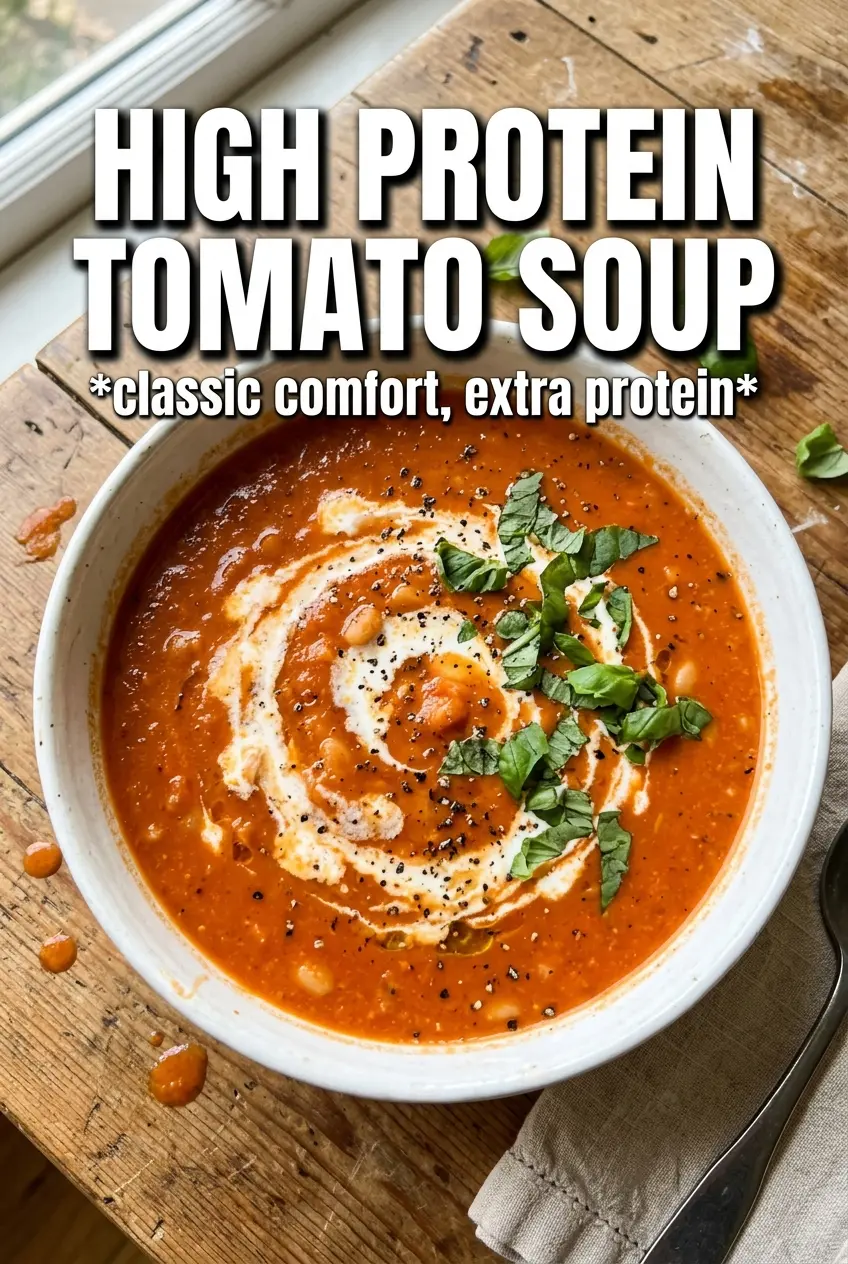
High Protein Tomato Soup
Ingredients
Equipment
Method
- Heat olive oil in a large pot over medium heat and sauté the diced onion for 5 minutes, until softened and slightly translucent.
- Add the minced garlic and tomato paste and cook for 2 minutes, stirring, until fragrant and deeper red.
- Add the whole plum tomatoes, drained white beans, and broth to the pot.
- Stir in dried basil, dried oregano, and red pepper flakes, then bring the mixture to a gentle simmer.
- Simmer for 20 minutes, stirring once or twice, until the tomatoes are very soft and the soup looks thickened.
- Blend completely smooth with an immersion blender until no visible tomato pieces or bean bits remain.
- Stir in honey and season with salt and pepper to taste.
- Remove from heat, then stir in Greek yogurt or cream until fully incorporated and creamy.
- Serve hot with fresh basil on top.