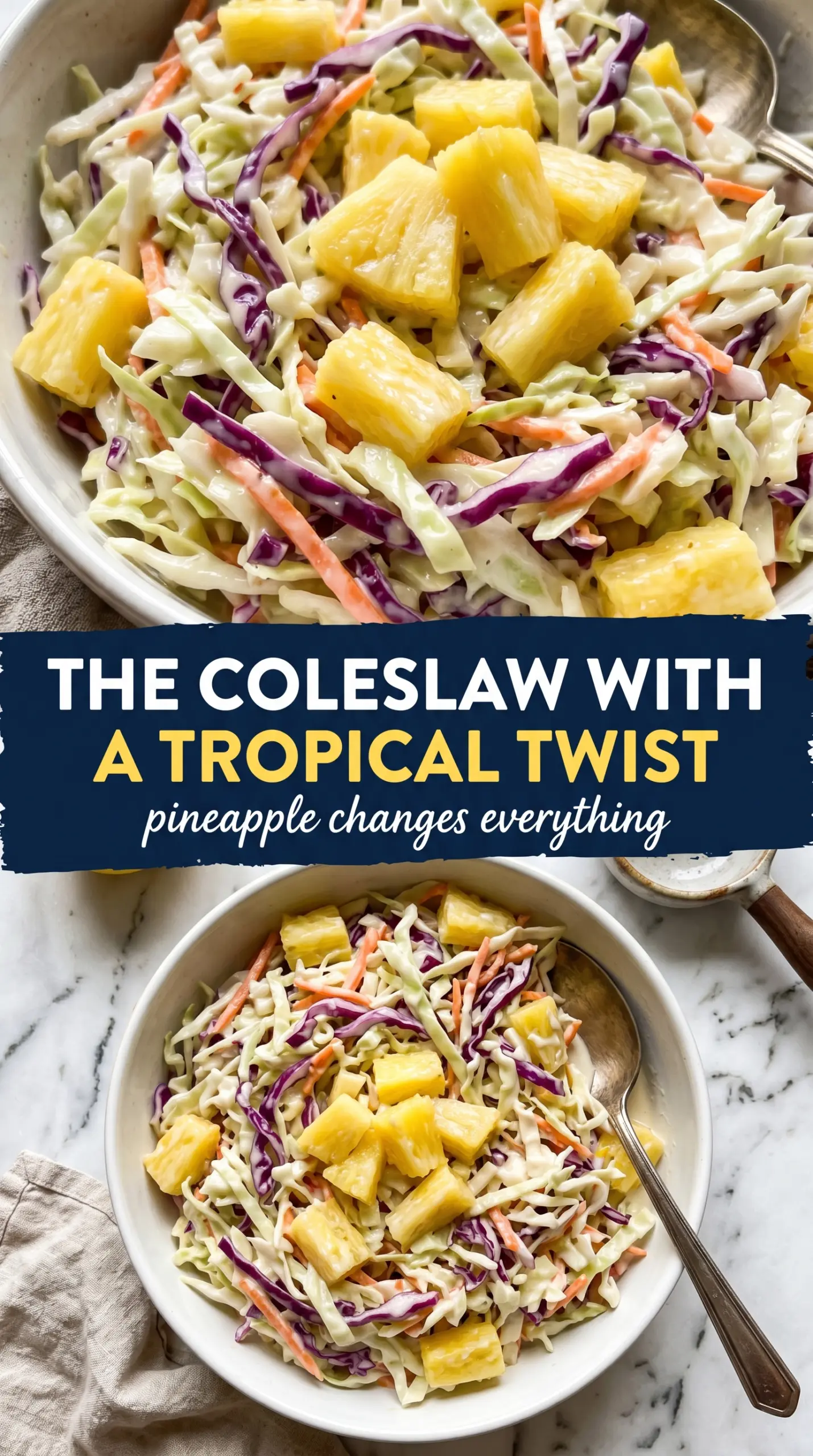
Pineapple coleslaw lands in that sweet spot between crisp and creamy, with enough tang to wake up anything it’s served beside. The cabbage stays snappy, the pineapple gives you little bursts of juice, and the dressing clings to every strand instead of sliding to the bottom of the bowl. That balance is what makes this version worth keeping around for cookouts, pulled pork sandwiches, and any plate that needs a cold, bright side.
The part that matters most here is drainage. Pineapple holds a lot of liquid, and if it goes into the bowl wet, it thins the dressing and softens the cabbage faster than you want. I also like using both green and purple cabbage because the mix gives you better texture and a cleaner look, while a little honey rounds out the vinegar without making the slaw taste candy-sweet.
Below, I’ll walk through the one step that keeps the dressing creamy, the ingredient swaps that still hold up, and the little timing trick that keeps the slaw crisp when you serve it.
The pineapple was drained enough that the slaw stayed creamy instead of watery, and the coconut on top gave it this nice little crunch at the end. I served it with grilled chicken and it held up beautifully after chilling.
Love the sweet-tangy crunch of this Hawaiian pineapple coleslaw? Save it to Pinterest for the next barbecue, pulled pork night, or potluck spread.
The Pineapple Needs to Be Dry Before It Touches the Dressing
Most watery coleslaw problems start with fruit. Pineapple brings a lot of juice, and if that juice ends up in the bowl, it loosens the mayonnaise and keeps the cabbage from ever tasting fully coated. Draining the pineapple well is not enough by itself; press it in a strainer or blot it with paper towels until it stops giving up liquid.
The other place people go wrong is overmixing the cabbage before the dressing is ready. Toss it just enough to coat everything, then let the fridge do the work. That resting time softens the cabbage slightly and pulls the flavors together without turning the slaw limp.
- Pineapple: Canned pineapple is the easiest route here because it’s consistent and sweet enough to balance the vinegar. Crushed pineapple spreads through the slaw more evenly, while chunk pineapple gives you bigger bites; either works as long as it’s very well drained.
- Mayonnaise: This is what gives the dressing body. A full-fat mayo holds up best after chilling, while a lighter version can taste thin once the pineapple juices settle in.
- Apple cider vinegar: This sharpens the sweetness and keeps the slaw from tasting heavy. White vinegar works in a pinch, but it loses that mellow fruitiness that fits the pineapple so well.
- Toasted coconut flakes: These are a garnish, but they change the whole bowl. Toast them only until fragrant and lightly golden; if they’re too dark, they turn bitter fast.
What Each Ingredient Is Actually Doing in This Recipe
- Primary ingredient (the star) — Quality matters most here. Choose the best you can find.
- Cooking medium (oil, butter, or broth) — This carries flavors and prevents the dish from being dry.
- Aromatics (garlic, onion, herbs) — Cook with fat to bloom flavors. They become part of the dish foundation.
- Seasonings (salt, pepper, spices) — Layer flavors so nothing overpowers. Build depth gradually.
- Vegetables or supporting ingredients — Cut to size and layer by cooking time. Everything should finish together.
- Sauce or liquid (the moisture keeper) — This brings flavors together. Balance richness with acid.
- Acid (lemon, vinegar, or wine) — This brightens and prevents flat-tasting results.
- Final finish (garnish, fresh herbs, or pan sauce) — These prevent one-dimensional taste and add visual appeal.
Building the Creamy Tropical Slaw Without Making It Watery
Mix the Crunchy Base First
Start with the green cabbage, purple cabbage, and carrots in a large bowl so the texture is evenly distributed before the dressing goes in. Thin shreds work best because they catch the dressing without feeling bulky. If your cabbage shreds are thick, the slaw tastes more like chopped salad and less like classic coleslaw.
Drain the Pineapple Until It Stops Dripping
Add the pineapple only after you’ve removed as much liquid as possible. Press it in a fine strainer, then give it one more blot with paper towels if needed. If you skip that step, the dressing loosens up by the time the slaw chills, and the bottom of the bowl turns soupy.
Whisk the Dressing Until It Looks Smooth and Loose
Whisk the mayonnaise, apple cider vinegar, honey, garlic powder, salt, and pepper together before it hits the cabbage. You want a glossy, pourable dressing with no streaks of mayo left behind. If it looks separated or grainy, keep whisking for another 10 to 15 seconds; the vinegar and honey need to fully emulsify with the mayo first.
Toss, Chill, Then Finish Fresh
Pour the dressing over the slaw and toss until every strand looks lightly coated. Refrigerate for at least 30 minutes so the cabbage softens just enough and the flavors settle in. Add the toasted coconut flakes and green onions right before serving so they stay crisp and aromatic instead of going soft in the fridge.
How to Adapt It for Different Tables and Different Diets
Make It Dairy-Free Without Changing the Texture
This recipe is already dairy-free as written, which is one reason it’s such an easy side dish for a crowd. Just keep the mayo full-bodied, since that’s what carries the dressing and keeps it creamy after chilling.
Make It Sweeter or Sharper to Match the Main Dish
If you’re serving this with smoky barbecue, add a little more honey for a softer finish. If it’s going next to rich or fried foods, pull back on the honey and add an extra splash of vinegar so the slaw cuts through the plate instead of echoing it.
Use Fresh Pineapple When You Want a Brighter Bite
Fresh pineapple works if that’s what you have, but chop it small and drain it well after cutting. It brings a brighter, less syrupy sweetness than canned pineapple, which changes the balance a little and makes the slaw taste lighter.
Storage and Reheating
- Refrigerator: Keeps for 3 days in a covered container. The cabbage softens a bit each day, but the flavor stays good.
- Freezer: Don’t freeze this slaw. The cabbage loses its crunch and the dressing separates after thawing.
- Reheating: No reheating needed. Serve it cold straight from the fridge, and give it a quick toss before bringing it to the table because a little dressing settles at the bottom.
Answers to the Questions Worth Asking

Hawaiian Pineapple Coleslaw
Ingredients
Method
- Add the thinly shredded green cabbage, purple cabbage, and shredded carrots to a large bowl and toss to combine.
- Drain the crushed or chunk pineapple very thoroughly, pressing out excess liquid, then add it to the cabbage mixture.
- Whisk mayonnaise, apple cider vinegar, honey, garlic powder, salt, and pepper until smooth.
- Pour the dressing over the cabbage and pineapple, then toss until everything is evenly coated.
- Taste the mixture and adjust salt, vinegar, or honey as needed.
- Refrigerate the coleslaw for at least 30 minutes to chill and let the flavors meld.
- Just before serving, top with toasted coconut flakes and sliced green onions.