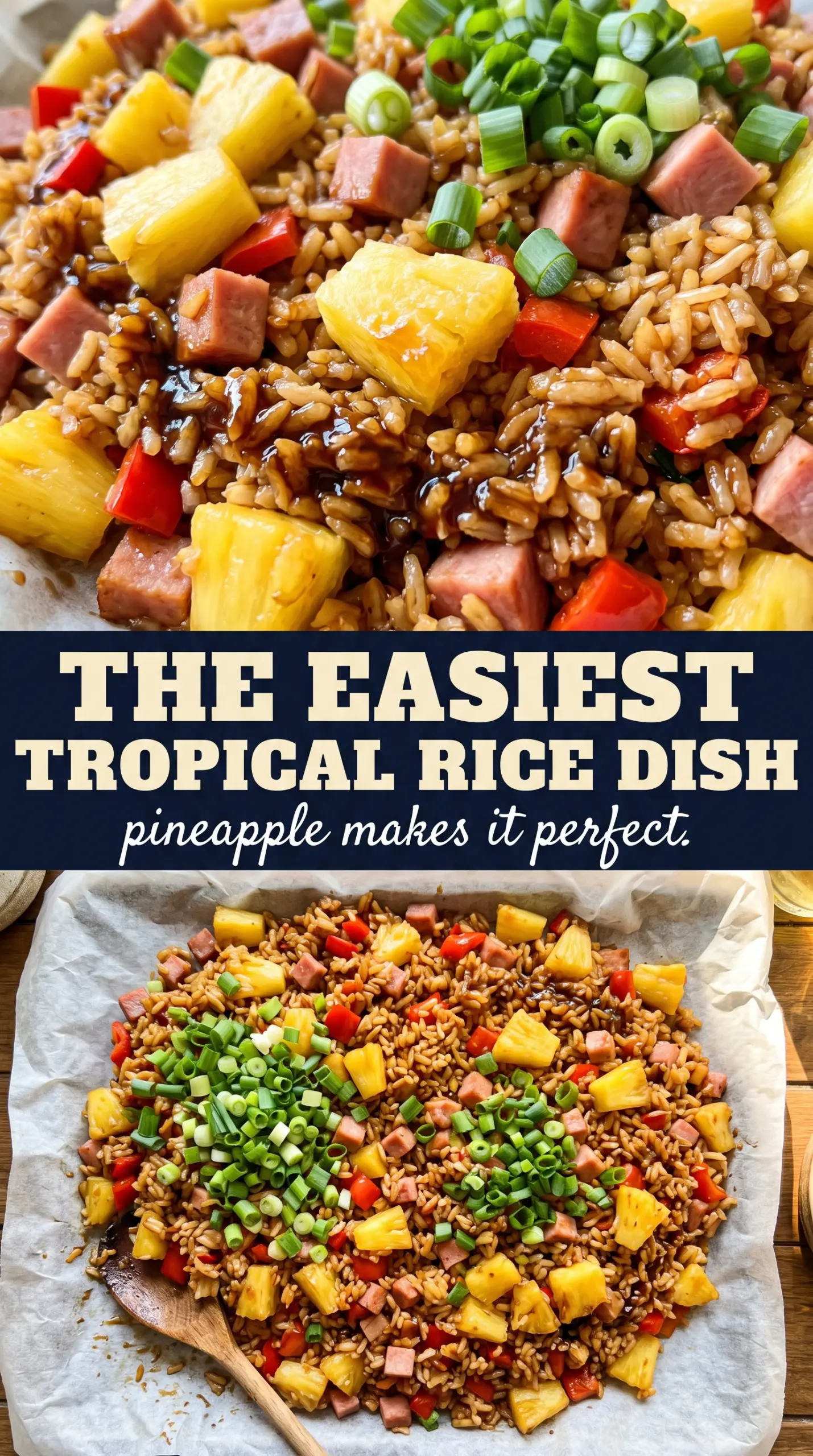
Golden Hawaiian luau rice hits the table with the kind of mix that keeps people going back for another spoonful: salty caramelized spam, juicy pineapple, tender edamame, and rice that picks up just enough crispness at the edges. The glossy soy-sesame coating ties everything together without turning the dish heavy, and every bite lands between savory, sweet, and a little smoky.
The difference between a good fried rice and a soggy one comes down to heat and timing. Day-old rice gives you grains that stay separate, and cooking the spam first builds a deep savory base before anything sweet goes into the pan. Pineapple goes in late so it warms through without melting into the rice, which keeps the texture lively instead of soft and wet.
Below, I’ve laid out the little details that matter most, including how to keep the rice from clumping and what to change if you want a cleaner pantry version or a gluten-free one. If you’ve made fried rice before and had it turn mushy, the process section will help you fix that.
The rice stayed fluffy instead of greasy, and the pineapple got caramelized edges without turning the whole pan sweet. My kids picked out the spam first and then went back for the rice.
Love the sweet-savory balance in Hawaiian luau rice? Save this pineapple-spam rice for a quick side that tastes like it came off the grill.
The Trick to Fried Rice That Stays Separate Instead of Sticky
The biggest mistake with fried rice is starting with rice that still holds too much moisture. Fresh rice steams in the pan and turns pasty; day-old rice has had time to dry out, so each grain can fry instead of collapse. If yours is a little clumped, break it up with your hands before it hits the pan.
High heat matters here, but only after the pan is hot enough to move quickly. The spam needs direct contact with the skillet so the edges brown, and the rice needs a brief undisturbed stretch to pick up that slightly crisp bottom before you stir. That little pause is what gives the dish its fried-rice character instead of just heated rice.
- Day-old white rice — This is the backbone of the dish. Jasmine or medium-grain white rice both work; just keep it cold and break up any hard clumps before cooking.
- Spam — It brings salt, fat, and browning in one ingredient. Turkey spam or another canned luncheon meat can work, but the flavor will be leaner and less caramelized.
- Pineapple — Fresh pineapple gives the best bite, but drained canned pineapple is a smart backup and keeps the dish fast. Drain it well so you don’t flood the pan.
- Sesame oil and oyster sauce — These are the finishers that make the glaze taste rounded instead of flat. If you need a gluten-free version, use certified gluten-free oyster sauce or a gluten-free stir-fry sauce with a little extra salt.
- Edamame — It adds color and a soft pop that keeps the rice from eating like pure starch. Frozen edamame is fine; thaw it first if you can so it doesn’t cool the pan down.
What Each Ingredient Is Actually Doing in This Recipe
- Primary ingredient (the star) — Quality matters most here. Choose the best you can find.
- Cooking medium (oil, butter, or broth) — This carries flavors and prevents the dish from being dry.
- Aromatics (garlic, onion, herbs) — Cook with fat to bloom flavors. They become part of the dish foundation.
- Seasonings (salt, pepper, spices) — Layer flavors so nothing overpowers. Build depth gradually.
- Vegetables or supporting ingredients — Cut to size and layer by cooking time. Everything should finish together.
- Sauce or liquid (the moisture keeper) — This brings flavors together. Balance richness with acid.
- Acid (lemon, vinegar, or wine) — This brightens and prevents flat-tasting results.
- Final finish (garnish, fresh herbs, or pan sauce) — These prevent one-dimensional taste and add visual appeal.
Building the Pan in the Right Order
Brown the Spam First
Start with the diced spam in a hot pan and leave it alone long enough for the edges to color. You want golden sides and a few darker spots, not just warmed-through cubes. If the pan is crowded, the spam will steam and stay pale, so give it room. Pull it out once it’s crisped; that browned fat left behind is part of the flavor base.
Set the Eggs Without Drying Them Out
Add the beaten eggs to the same pan and scramble them over medium-high heat until they’re just barely set. Soft curds are the goal because they’ll get folded back into the rice later. If you cook them until they’re dry in the pan, they turn rubbery by the time the dish is finished.
Fry the Rice Before Adding the Sweet Stuff
Once the garlic and ginger are fragrant, add the rice and spread it out in an even layer. Let it sit undisturbed for about 2 minutes so the underside gets lightly crisp. That short pause matters; stir too soon and the rice just heats without browning. When you do stir, work from the bottom up to loosen any rice sticking to the pan.
Finish With Pineapple and the Sauce
Stir in the pineapple and edamame, then drizzle the soy sauce, sesame oil, and oyster sauce around the pan instead of dumping them all in one spot. That helps the seasoning coat the rice evenly. Return the spam at the end so it stays browned. If you add it too early, the crisp edges soften before serving.
Small Changes That Still Keep the Dish Working
Make It Gluten-Free
Swap in tamari for the soy sauce and use a certified gluten-free oyster sauce or a similar stir-fry sauce. The dish still gets the same savory gloss, but the label check matters because regular soy sauce and oyster sauce often contain wheat.
Use Ham or Leftover Pork Instead of Spam
Diced ham or chopped leftover pork shoulder works if you want a less processed option. You’ll lose some of the salty, buttery spam flavor, so let the meat brown a little longer and taste the rice before adding extra soy sauce.
Make It Vegetarian
Leave out the spam and add extra edamame or diced bell pepper for more body. Use vegetarian oyster sauce or a mushroom-based stir-fry sauce so the rice still has depth; otherwise the pineapple can take over and make the dish taste flat.
What to Do With Leftovers
Refrigerate leftovers in a shallow container so they cool quickly. The rice will firm up in the fridge, which actually helps it reheat better, but the pineapple softens a little by the next day.
- Refrigerator: 3 to 4 days. The rice stays best if it’s cooled fast and packed tightly.
- Freezer: It freezes well for about 1 month, though the pineapple softens after thawing. Freeze in flat portions for quicker reheating.
- Reheating: Reheat in a skillet with a teaspoon of oil over medium-high heat so the rice dries back out and the edges can crisp again. The common mistake is microwaving it covered until it steams, which makes the grains mushy.
Questions I Get Asked About This Recipe
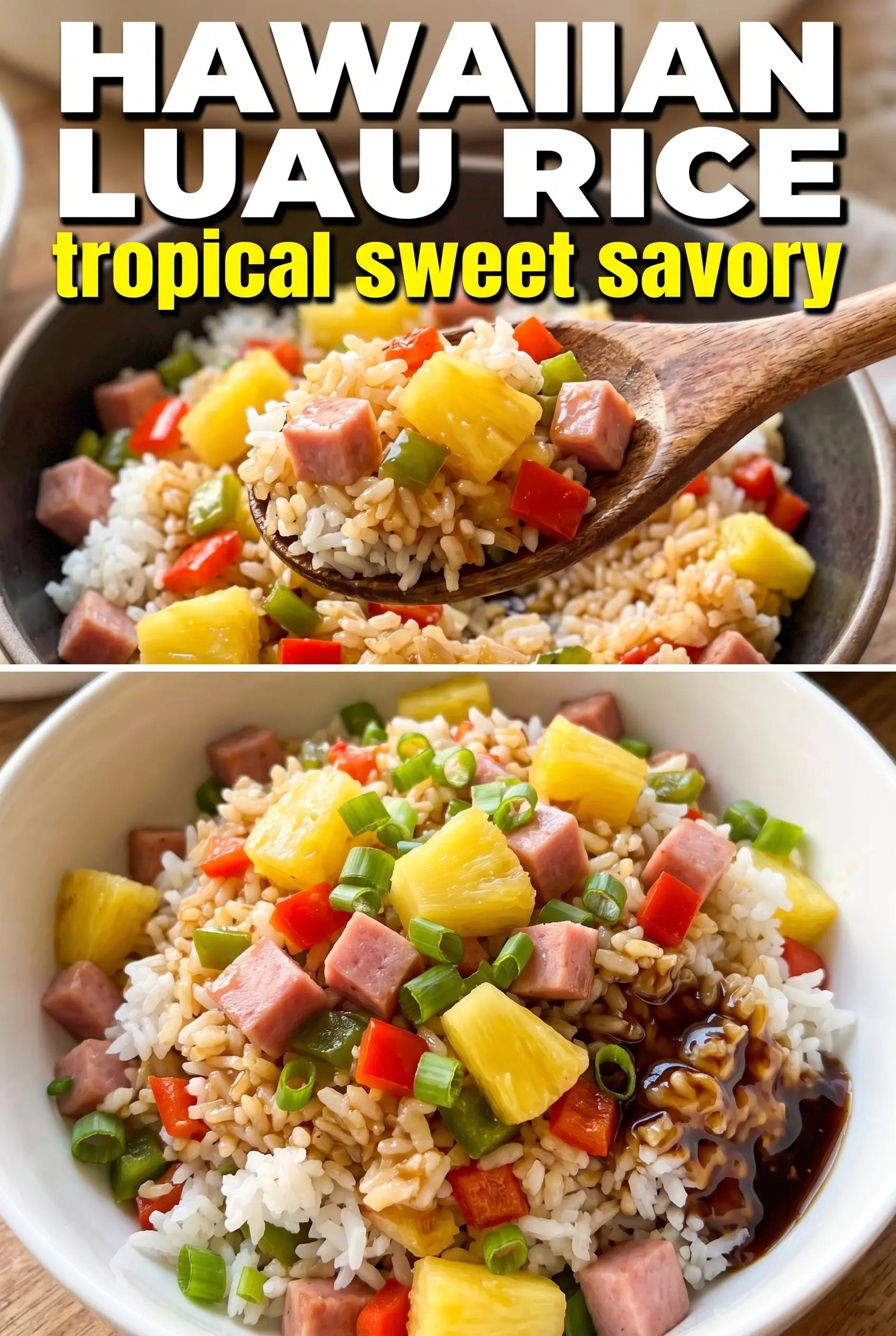
Hawaiian Luau Rice
Ingredients
Equipment
Method
- Heat 1 tbsp vegetable oil in a large wok or skillet over high heat; cook the spam for 3-4 minutes until golden and caramelized, then remove and set aside.
- Add the remaining oil to the pan and scramble the beaten eggs over medium-high heat until just set but still soft; push them to one side.
- Stir-fry the garlic and fresh ginger for 30 seconds, then add the cooked white rice and spread it in an even layer.
- Cook undisturbed for 2 minutes until slightly crispy on the bottom, watching for golden edges.
- Stir to combine the rice and eggs, then add pineapple chunks and edamame and stir-fry for 2-3 minutes until hot throughout.
- Drizzle soy sauce, sesame oil, and oyster sauce over the rice, then toss until every grain looks glossy and evenly coated.
- Return the caramelized spam to the pan, stir to combine, and serve topped with sliced green onions and sesame seeds.