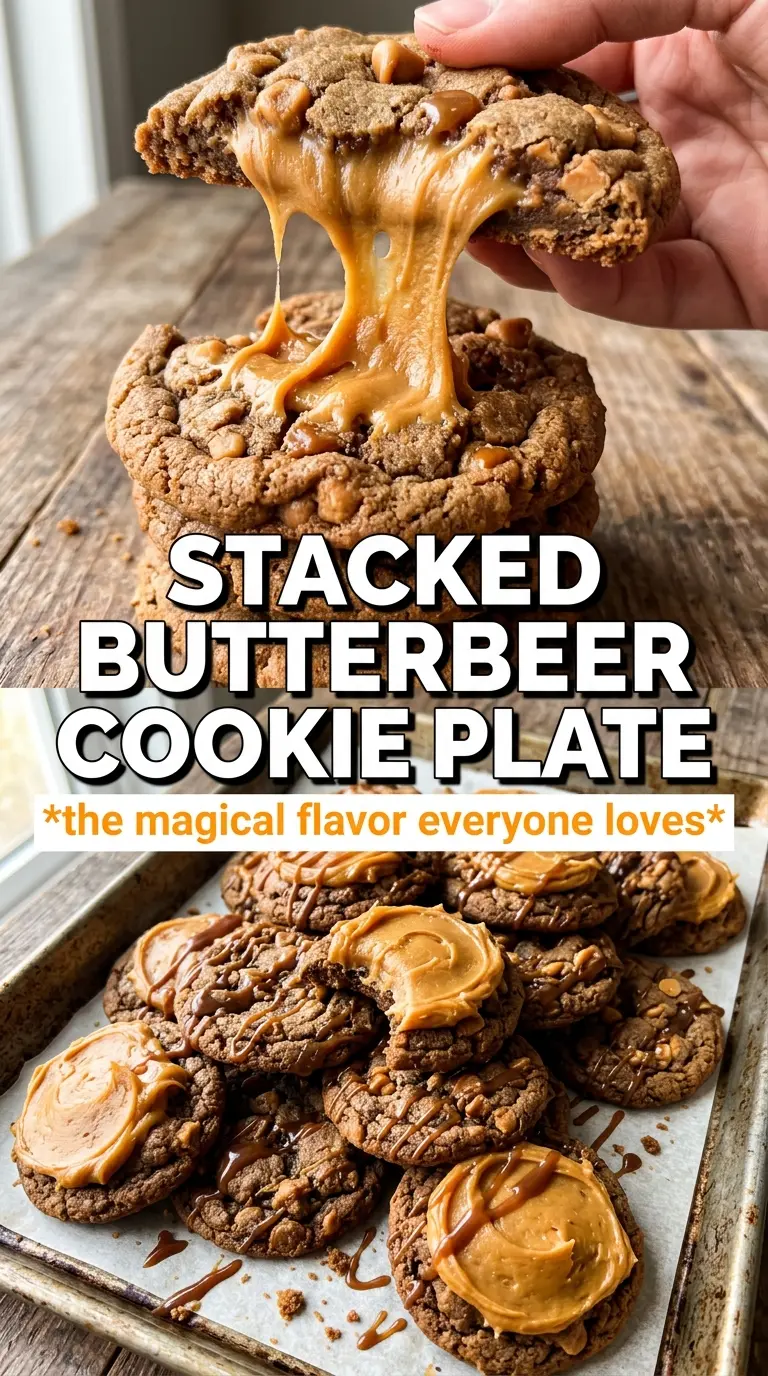
These Harry Potter Butterbeer Cookies bake up soft in the center with lightly crisp edges, and that butterscotch-cream soda combination gives them a cozy, bakery-style flavor that stands out even before the frosting goes on. The cookies stay tender instead of turning cakey, and the butterbeer frosting adds just enough sweetness to make each bite taste like the theme without going overboard.
What makes this version work is the balance: melted butterscotch chips deepen the cookie dough without making it greasy, while a small splash of cream soda keeps the texture plush and the flavor recognizable. The frosting follows the same idea. It uses butter, butterscotch sauce, and just enough cream soda to loosen it into a pipeable finish that still holds its shape.
You’ll find the exact timing for keeping the cookies soft, why the dough should be mixed gently once the flour goes in, and how to get that smooth frosting without making it runny. If you want cookies that look magical and still taste like real dessert, this is the one to keep.
The cookies stayed soft for days, and the frosting set up enough to pipe without sliding off. That cream soda note came through just enough to make them taste like butterbeer instead of plain butterscotch cookies.
Save these Harry Potter Butterbeer Cookies for the soft butterscotch frosting and gold-sprinkle finish that make them feel straight out of the wizarding world.
The One Thing That Keeps Butterbeer Cookies Soft Instead of Dry
The trap with butterscotch cookies is leaning too hard on sugar and flour and ending up with a dry, sandy cookie that tastes more like candy than dessert. These stay softer because the dough gets richness from softened butter and melted butterscotch chips, then just enough cream soda to lighten the crumb without making it wet. That little bit of extra moisture matters more than people think.
The other place cookies go wrong is overbaking. Pull these when the edges are set and the centers still look slightly underdone. They finish on the tray as they cool, and that’s how you keep the middle tender instead of baking all the softness out of them.
- Butter: Use softened butter, not melted butter. Soft butter traps air when you beat it with the sugar, which gives the cookies a lighter texture and keeps them from spreading too fast.
- Butterscotch chips: Melting them into the dough adds a deeper butterbeer flavor than chips stirred in whole. If you skip this step, the flavor stays flatter and the cookie tastes more like brown sugar.
- Cream soda: This is the ingredient that makes the cookies taste like butterbeer instead of just butterscotch. Use the real stuff here if you can, and measure carefully so the dough doesn’t get loose.
- Cinnamon: You won’t taste cinnamon as a separate note, but it rounds out the sweetness and keeps the cookies from reading one-dimensional.
What Each Ingredient Is Doing in the Butterbeer Frosting
- Butter: This is the base of the frosting, so it needs to be fully softened for a smooth finish. Cold butter leaves little lumps that won’t disappear once the sugar goes in.
- Butterscotch sauce: This gives the frosting its main flavor and helps it taste more like butterbeer than plain vanilla buttercream. A thick sauce works best because thin sauce can make the frosting slack.
- Powdered sugar: This brings structure and sweetness. Add it gradually or the frosting will puff into a cloud of sugar dust before it comes together.
- Cream soda: A tablespoon or two loosens the frosting just enough for piping. Add it slowly, because too much turns the frosting runny fast.
- Vanilla: It fills out the butterscotch flavor and keeps the frosting from tasting sharp or candy-like.
Building the Cookies So They Bake Up Tender
Whipping the Butter and Sugar
Beat the softened butter and brown sugar until the mixture looks fluffy and a little lighter in color. That step gives the cookies their structure, so don’t rush it. When you add the melted butterscotch chips, the mixture may look slightly glossy or loose, and that’s fine as long as it stays emulsified before the egg goes in.
Bringing the Dough Together
Once the egg, vanilla, and cream soda are mixed in, add the dry ingredients and stop as soon as the flour disappears. Overmixing here tightens the dough and makes the cookies bake up dense. Scoop 2-tablespoon portions so the cookies are all the same size and bake at the same rate.
Baking Until the Centers Are Just Set
At 375°F, these cookies bake quickly, and the window between done and overdone is small. Pull them when the edges look set and lightly golden, but the centers still look soft. Let them cool on the pan for a few minutes before moving them so they finish setting without drying out.
Making the Frosting Pipeable
Beat the butter, butterscotch sauce, powdered sugar, cream soda, and vanilla until the frosting looks smooth and fluffy. If it’s too thick to pipe, add cream soda a teaspoon at a time. If it starts to look loose, beat in a little more powdered sugar right away; waiting only makes it harder to rescue.
Make Them Without the Frosting
The cookies stand on their own if you want a simpler version. Skip the frosting and finish them with a light sprinkle of gold sugar while they’re still warm, or drizzle them with a little melted butterscotch for a softer finish.
Gluten-Free Butterbeer Cookies
A 1:1 gluten-free baking blend works well here, especially one with xanthan gum already added. The cookies may spread a touch more, so chill the scooped dough for 20 minutes before baking if the dough feels soft.
Extra Butterscotch Finish
For a stronger butterscotch flavor, add a few extra melted chips to the dough and a drizzle of sauce over the frosted cookies. This pushes the cookies further toward candy-like sweetness, so I’d keep the frosting a little less sweet if you go this route.
Storage and Reheating
- Refrigerator: Store frosted cookies in an airtight container for up to 4 days. The frosting stays soft, but the sprinkles may lose a little shine.
- Freezer: Freeze the unfrosted cookies for up to 2 months. Thaw at room temperature, then frost them after they’re fully defrosted so the topping stays smooth.
- Reheating: These cookies are best served at room temperature. If you want to warm an unfrosted cookie, 5 to 8 seconds in the microwave is enough. Anything longer makes them tough.
Questions I Get Asked About This Recipe

Harry Potter Butterbeer Cookies
Ingredients
Equipment
Method
- Beat softened butter and brown sugar until combined and creamy, then mix in melted butterscotch chips. Add the egg, vanilla, and cream soda and beat until the batter looks smooth and glossy.
- Whisk flour, baking soda, baking powder, cinnamon, and salt together, then fold the dry mixture into the wet ingredients until just combined. Scoop 2-tablespoon rounds and place them on a baking sheet with space between.
- Bake at 375°F for 10-12 minutes, until the edges look set and the centers still look slightly soft. Cool on the pan for a few minutes, then transfer to a rack and cool completely before frosting.
- Beat softened unsalted butter with butterscotch sauce until smooth, then gradually add powdered sugar and vanilla. Mix in 2-3 tablespoons cream soda until the frosting is thick but pipeable and holds peaks.
- Pipe or spread frosting onto each cooled cookie, then press gold sugar sprinkles on top. Let the frosting sit until set before serving or stacking.