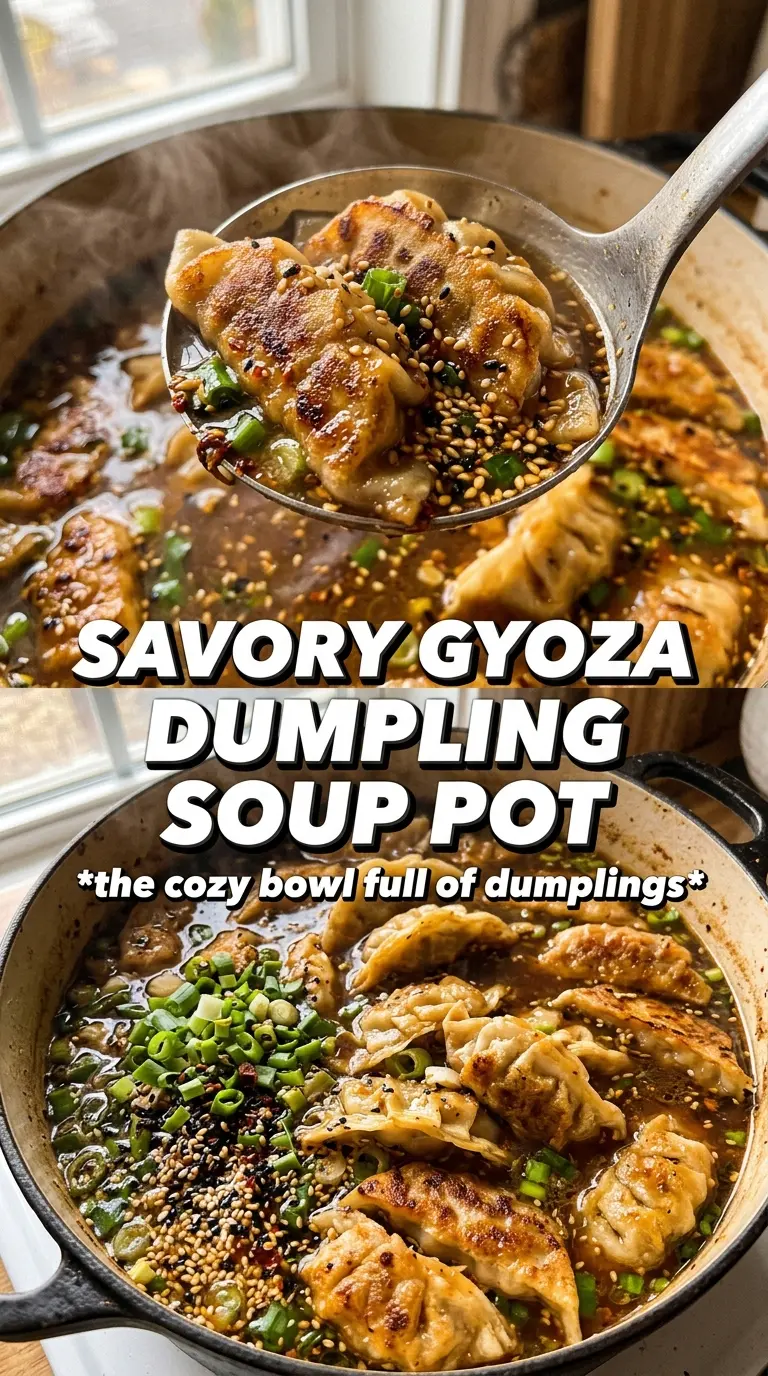
Gyoza soup turns a package of dumplings into a full bowl dinner with almost no extra work, and the payoff is bigger than the ingredient list suggests. The broth stays clear and savory, the gyoza cook right in the pot, and the bok choy and mushrooms give the bowl enough texture to feel complete instead of thin. It’s the kind of meal that tastes light and comforting at the same time, with enough depth from ginger, garlic, soy, and sesame to keep every spoonful interesting.
The trick is building the broth in the right order. Garlic and ginger need a few minutes in the simmering liquid to lose their sharp edge, and the mushrooms go in before the dumplings so they can soften and flavor the broth instead of cooking in a rush at the end. I also like adding the sesame oil after everything is cooked, not before. That keeps its aroma bright instead of burying it under long simmering.
Below, I’ve included the part that matters most: how to keep the dumplings intact, how to avoid cloudy broth, and what to swap if you want to make this with what’s already in the freezer.
The broth stayed clear and the gyoza held together perfectly. I loved how the ginger and sesame oil came through without overpowering the dumplings, and the bok choy was still tender-crisp.
Like gyoza soup with dashi-ginger broth and tender vegetables? Save this bowl dinner for the nights when you want something fast, warming, and built around dumplings.
The Broth Needs a Head Start Before the Dumplings Go In
With soup like this, the biggest mistake is treating every ingredient like it can start at the same time. Dumplings need active simmering liquid and only a few minutes of it, but mushrooms and aromatics need a little breathing room first so the broth tastes layered instead of flat. If you drop the gyoza in too early, they can overcook, split, and cloud the whole pot before the vegetables have even softened.
- Garlic and ginger — These are the backbone of the broth. Fresh ginger matters here because ground ginger tastes dusty in a clear soup. Mince and grate them finely so they bloom fast and don’t hang around in raw, sharp pieces.
- Chicken broth — Use a broth you’d actually drink on its own. If yours is salty, hold back on extra salt until the end. A lower-sodium broth gives you room to adjust after the soy sauce and dumplings have seasoned the pot.
- Frozen gyoza — Frozen dumplings work beautifully here and don’t need thawing. That said, they should go straight from freezer to simmering broth. Thawing first can make the wrappers sticky and fragile.
- Bok choy — Add it near the end so the stems stay lightly crisp and the leaves wilt without collapsing. Baby bok choy is ideal, but chopped regular bok choy works too if the stems get a little extra time.
What Each Ingredient Is Actually Doing in This Bowl
- Shiitake mushrooms — They bring a deeper savory note than button mushrooms and help the broth taste fuller. If shiitake are expensive or hard to find, cremini will work, but the soup will be a little less earthy.
- Soy sauce, mirin, and rice vinegar — This trio gives the broth balance: salt, gentle sweetness, and a small acidic lift. Don’t skip the vinegar; it doesn’t make the soup sour, it just keeps the broth from tasting heavy.
- Sesame oil — Add it at the end. It’s there for aroma more than cooking fat, and long simmering flattens that toasted note.
- Chili oil and sesame seeds — These are finishers, not decoration. Chili oil adds heat and a little richness on top, while sesame seeds give you a tiny bit of crunch in an otherwise soft bowl.
Building the Soup in the Right Order
Wake Up the Broth
Bring the broth to a steady simmer first, then add the garlic, ginger, soy sauce, mirin, and rice vinegar. You want the liquid hot enough to perfume the pot, but not boiling hard enough to make the aromatics taste harsh. After about 5 minutes, the broth should smell rounded and savory, not sharp or alcoholic. If the mirin still smells raw, give it another minute before adding the mushrooms.
Cook the Mushrooms Before the Dumplings
Stir in the sliced shiitakes and let them simmer until they soften and release some of their flavor, usually 3 to 4 minutes. This is where the broth starts to pick up body. If you add the dumplings first, the mushrooms never get enough time to contribute, and the bowl tastes less like soup and more like dumplings in hot water. Keep the heat at a gentle simmer so the liquid stays clear.
Poach the Gyoza Gently
Add the gyoza directly to the simmering broth and cook them according to the package directions, usually 5 to 7 minutes. Don’t let the soup boil hard, or the dumplings can burst and thicken the broth with loose wrapper starch. The dumplings are ready when they’re plump and floating, and the filling is hot all the way through. If you’re using fresh gyoza, they may need a minute less than frozen ones.
Finish with Greens and Sesame Oil
Stir in the bok choy and cook just until the stems are tender and the leaves have wilted, about 2 to 3 minutes. Turn off the heat, then stir in the sesame oil and taste for salt. That last off-heat finish keeps the sesame flavor bright and prevents the greens from going dull. Ladle into bowls and top with green onions, sesame seeds, and chili oil right before serving.
How to Adapt Gyoza Soup for Different Dumplings and Diets
Use vegetable gyoza for a vegetarian version
Swap in vegetable dumplings and use a good vegetable broth instead of chicken broth. You’ll still get that same savory, aromatic bowl, but the broth will taste a little lighter, so don’t be shy with the ginger, soy, and mushrooms.
Make it gluten-free with certified GF dumplings and tamari
Use gluten-free gyoza if you can find them, then replace the soy sauce with tamari. Check the broth label too, because some store-bought broths sneak in wheat-based ingredients. The result stays clean and brothy, with the same ginger-sesame finish.
Add tofu or edamame for a more filling bowl
If you want a heartier meal, add cubed silken-firm tofu or shelled edamame near the end. Tofu softens into the broth and makes it feel silkier, while edamame gives the soup extra bite and a little sweetness. Both work best when added after the dumplings are cooked so they don’t break apart.
Storage and Reheating
- Refrigerator: Store leftovers for up to 3 days. The dumplings will soften a bit as they sit, but the flavor stays good.
- Freezer: This soup doesn’t freeze well once the dumplings are in it. If you want to prep ahead, freeze the broth and vegetables separately, then cook fresh gyoza when you’re ready to serve.
- Reheating: Warm gently over low heat until just steaming. A hard boil can split the wrappers and make the broth cloudy, so keep the heat calm and stir only as needed.
Questions I Get Asked About This Recipe
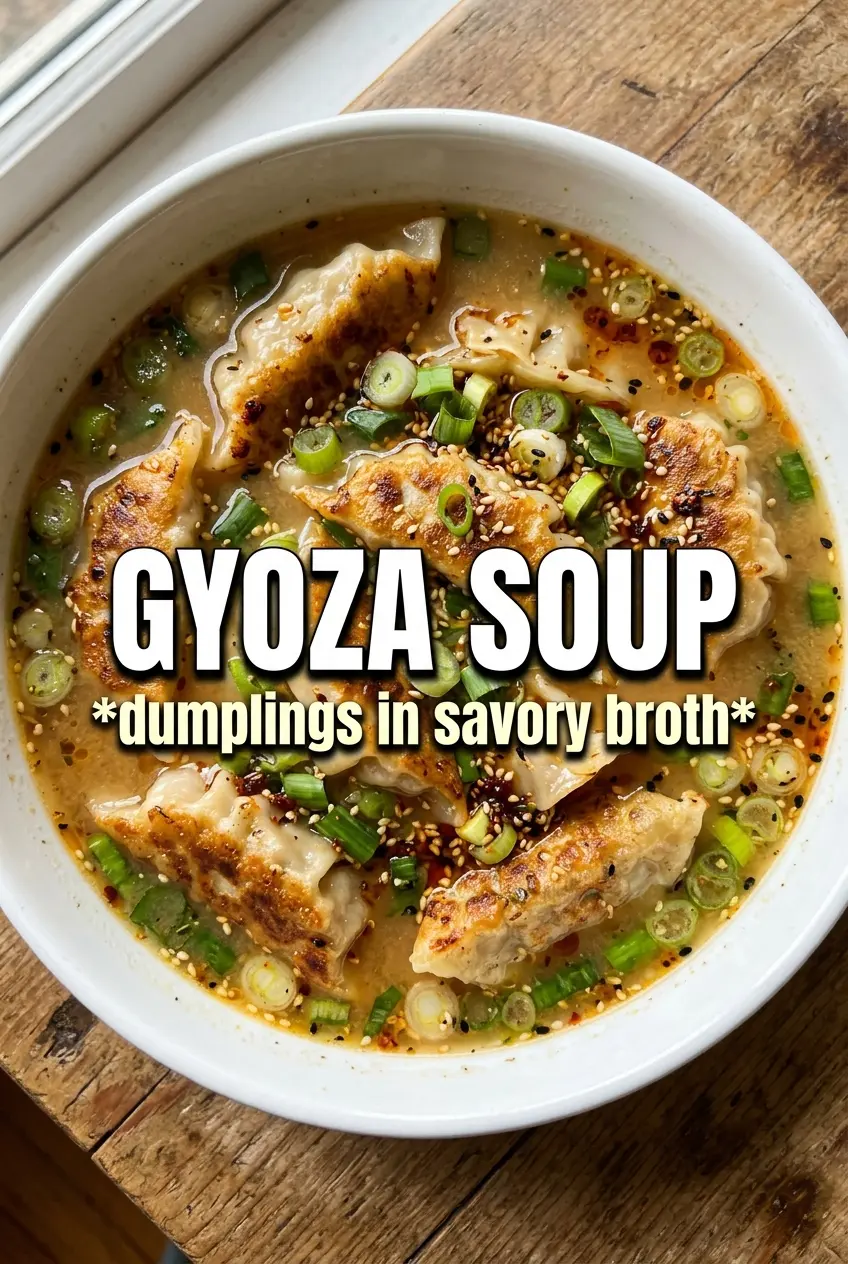
Gyoza Soup
Ingredients
Equipment
Method
- Bring the chicken broth to a simmer in a large pot over medium-high heat. Add the garlic, grated ginger, soy sauce, mirin, and rice vinegar, then maintain a gentle simmer.
- Simmer for 5 minutes so the flavors meld. Keep the surface at a steady simmer with small bubbles, not a hard boil.
- Add the sliced shiitake mushrooms and cook for 3-4 minutes. Look for softened mushrooms and a slightly deeper broth color.
- Add the gyoza directly to the simmering broth and cook per package directions, usually 5-7 minutes. Watch for dumplings to turn cooked through and float/settle as they heat.
- Add the chopped bok choy and cook for 2-3 minutes until wilted. The greens should darken slightly and become tender.
- Stir in the sesame oil and taste the soup. Season with salt to taste so the broth is balanced.
- Ladle into bowls and top with sliced green onions, sesame seeds, and chili oil. Serve immediately while the dumplings are hot.