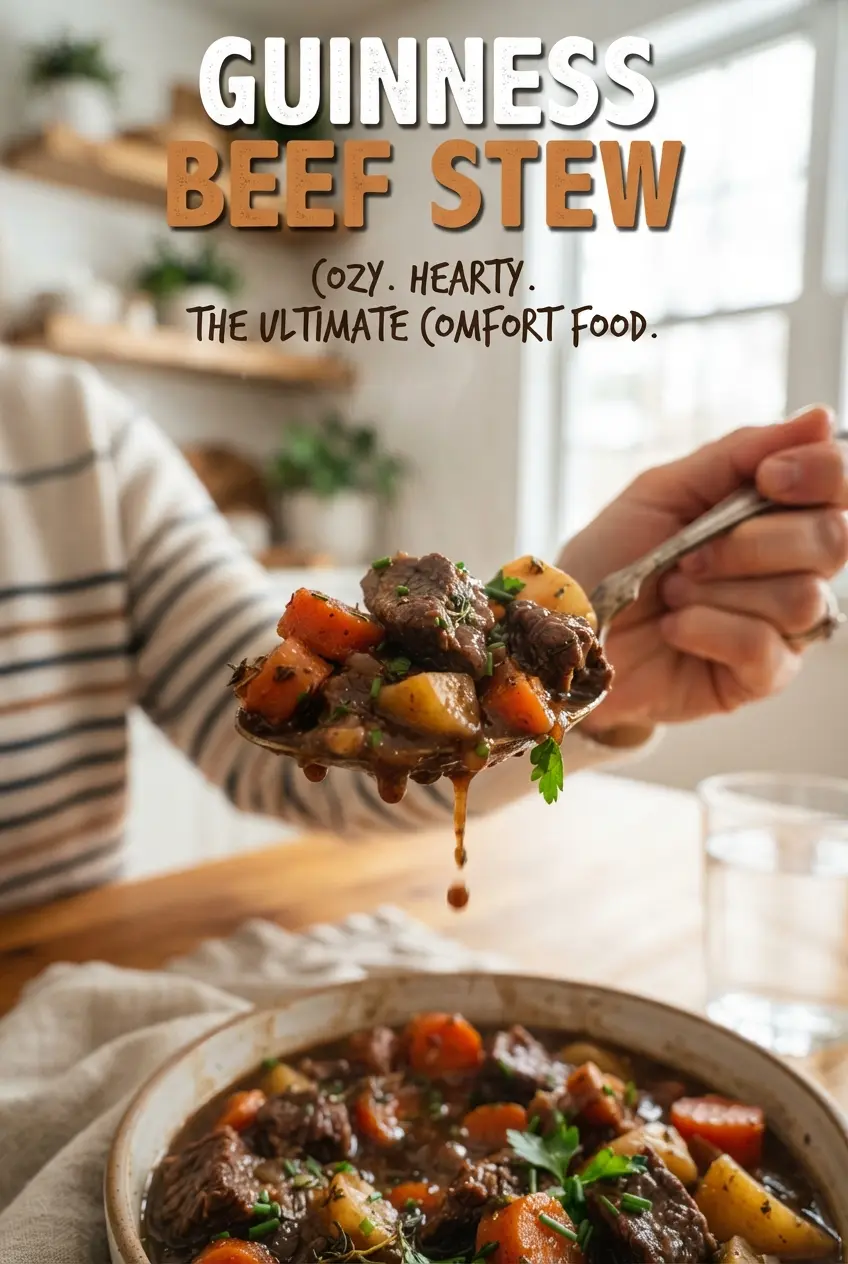
Guinness beef stew turns humble chuck roast into deep, spoon-tender comfort with a broth that tastes rich, dark, and layered instead of just salty and heavy. The beef gives up its toughness during the long simmer, the vegetables hold onto their shape, and the stout adds that unmistakable malty edge that makes every bite taste like it cooked all afternoon for a reason.
The trick is in the order. Browning the beef in batches builds the base, and the tomato paste needs a full minute in the pan to lose its raw edge before the Guinness goes in. Once the stout hits the hot pan, scrape up every browned bit from the bottom; that’s where the stew gets its depth. The flour on the beef helps thicken the broth gradually, so you end up with a glossy stew instead of a thin soup.
Below, I’ll walk through the part that matters most: how to keep the simmer gentle so the beef turns tender without falling apart too early, plus the small ingredient choices that keep the flavor balanced instead of bitter.
The stew turned out beautifully thick and glossy, and the Guinness flavor mellowed into something rich instead of bitter. My husband said the carrots and potatoes held their shape perfectly, and the leftovers were even better the next day.
Save this Guinness beef stew for the kind of night when you want fork-tender beef, root vegetables, and a dark stout gravy that tastes like it simmered all Sunday.
The Part Where Most Stews Stay Thin
The biggest mistake with beef stew is rushing the beginning and expecting the simmer to fix it later. It won’t. If the beef doesn’t get a good brown on the outside, the stew tastes flat; if the onions and tomato paste don’t cook long enough before the liquid goes in, the broth never develops that deep, rounded base. Guinness adds bitterness and richness at the same time, so it needs beef broth, Worcestershire, and a little brown sugar to keep the final flavor balanced instead of harsh.
Keep the simmer low enough that you only see the occasional lazy bubble. A hard boil tightens the meat and turns the broth cloudy. The other place people go wrong is adding the vegetables too early. Potatoes, carrots, and parsnips hold up best when they go in after the beef has already started turning tender, which keeps them from melting into the pot before the stew is done.
What Each Ingredient Is Really Doing in This Guinness Stew

- Beef chuck — This is the cut that wants a long braise. The connective tissue breaks down into the silky texture you want in stew, and no lean substitute will give you the same spoon-tender result.
- Guinness stout — It brings roasted malt, bitterness, and depth. One bottle is enough; more can push the stew into sharp, almost acrid territory. If you need a substitute, use a dark nonalcoholic stout or a mix of beef broth and a teaspoon of molasses, but the flavor will be less layered.
- Flour — Tossing the beef with flour before browning gives the stew body as it simmers. If you need gluten-free, use a gluten-free all-purpose blend or thicken at the end with a cornstarch slurry, though the texture will be a little cleaner and less rustic.
- Parsnips and carrots — Both add sweetness that softens the stout’s bitterness. Parsnips are especially useful here because they taste earthy and a little peppery, which fits the beer base better than using only carrots.
- Tomato paste — This is the quiet backbone of the broth. Cooking it for a minute before adding liquid deepens the color and removes the raw edge that can make a stew taste tinny.
Building the Stew So the Beef Turns Tender, Not Tough
Browning the Beef in Batches
Pat the beef dry, season it well, then toss it with the flour and brown it in small batches in hot oil. If you crowd the pan, the meat steams and turns gray instead of forming a crust. Those browned edges are where the stew gets its savory backbone, so give each batch space and don’t stir too soon. Once a piece releases cleanly, it’s ready to turn.
Cooking the Aromatics and Tomato Paste
After the beef comes out, cook the onions until they’re soft and starting to take on color, then stir in the garlic and tomato paste for about a minute. The paste should darken a shade and smell sweeter, not raw. If it sticks a little, that’s fine; the stout will lift it off the pan in the next step. Burned garlic, though, will stay bitter all the way through the stew, so keep the heat moderate.
Adding the Guinness and Long Simmer
Pour in the Guinness and scrape the bottom of the pot thoroughly. That deglazing step is nonnegotiable; the dark bits dissolve into the broth and give the stew its depth. Add the broth, Worcestershire, brown sugar, thyme, and bay leaves, then return the beef and keep the pot at a gentle simmer for about two hours. The liquid should barely move. If it boils hard, the beef will tighten before it has time to soften.
Finishing with the Root Vegetables
Add the carrots, parsnips, and potatoes once the beef is already on its way to tender. They need enough time to soften and absorb flavor, but not so much that they disappear. Simmer until a fork slides into the potatoes with little resistance and the carrots are cooked through but still hold their shape. Remove the bay leaves before serving and finish with parsley for a fresh edge that wakes up the dark broth.
How to Adapt This Stew Without Losing the Deep, Dark Flavor
Make It Gluten-Free
Swap the all-purpose flour for a gluten-free blend or skip it and thicken the finished stew with a cornstarch slurry. The flavor stays the same, but the broth will be a little lighter and more polished instead of rustic and thick from the start.
Use Lamb for a Different Irish-Style Stew
Lamb shoulder works well if you want a more traditional, slightly gamier version. Keep the simmer gentle and watch the seasoning closely, because lamb carries more flavor on its own and can make the broth taste stronger than beef chuck does.
Skip the Alcohol
If you want the stout note without the alcohol, use a dark nonalcoholic stout or replace the beer with extra beef broth plus a splash of balsamic vinegar and a teaspoon of molasses. You’ll lose some of Guinness’s roasted edge, but the stew will still taste dark and full-bodied.
Storage and Reheating
- Refrigerator: Store covered for up to 4 days. The broth thickens as it chills, and the flavor gets deeper overnight.
- Freezer: It freezes well for up to 3 months. Cool it completely first, then portion it into airtight containers and leave a little space for expansion.
- Reheating: Warm it gently on the stove over low heat with a splash of broth or water if needed. Don’t boil it hard again or the beef can turn dry and the potatoes can break apart.
Answers to the Questions Worth Asking
Guinness Beef Stew
Ingredients
Equipment
Method
- Season the beef chuck cubes with salt and black pepper, then toss with all-purpose flour until evenly coated.
- Heat vegetable oil in a Dutch oven over hot heat, then brown the beef in batches until deep golden on the edges, taking care not to overcrowd the pot.
- Cook the chopped onions for 5 minutes until softened, then add minced garlic and tomato paste and cook for 1 minute.
- Pour in the Guinness stout and scrape up the browned bits from the bottom of the Dutch oven, then stir to combine.
- Add beef broth, Worcestershire sauce, brown sugar, dried thyme, and bay leaves, then return the browned beef to the pot.
- Cover and simmer gently until the beef is tender, about 2 hours, stirring occasionally to keep the heat steady.
- Add the thick-sliced carrots, sliced parsnips, and cubed potatoes to the stew.
- Simmer covered for 45 to 60 minutes, until the vegetables are tender and the stew looks thick and glossy.
- Remove the bay leaves, then sprinkle the stew with chopped fresh parsley just before serving.