Golden chicken, bright lemon, and salty feta land in the same baking dish and turn into one of those dinners that tastes like it took a lot more effort than it did. The skin roasts up crisp at the edges, the tomatoes collapse into their own juices, and the feta softens just enough on top of the hot chicken without melting away completely. That mix of textures is what keeps this dish in regular rotation.
The trick is in the order. The chicken gets a short marinade for flavor, but the real payoff comes from roasting it skin-side up so the fat renders and the top browns instead of steaming. Lemon slices go into the pan with the tomatoes and olives, not on top of the chicken, so they perfume the dish as they caramelize instead of burning before the thighs are cooked through.
Below you’ll find the timing that keeps the chicken juicy, the one ingredient that matters most for getting the right balance of briny and bright, and a few smart swaps if you want to change the pan without losing what makes it work.
The chicken came out with crisp skin, and the lemon slices on the edges turned sweet instead of bitter. I loved how the feta softened on top without disappearing into the pan.
Save this Greek Chicken with Lemon and Feta for a pan-roasted dinner with crisp skin, caramelized lemons, and salty feta.
The Reason the Chicken Stays Juicy While the Top Browns
Bone-in, skin-on thighs are doing the heavy lifting here. They hold onto moisture during the hot roast, and the skin gives you a built-in layer that crisps before the meat dries out. If you swap in boneless pieces, the dish still works, but you lose some of that long, steady browning and the pan will finish faster.
The other thing that keeps this from turning flat is the balance of acid and fat. Lemon juice brightens the marinade, but the olive oil carries the garlic and oregano across the chicken so the flavor doesn’t taste sharp or thin. Roast at a true 425°F and leave space between the thighs; crowded chicken steams, and steamed skin never crisps.
What Each Ingredient Is Actually Doing in the Pan
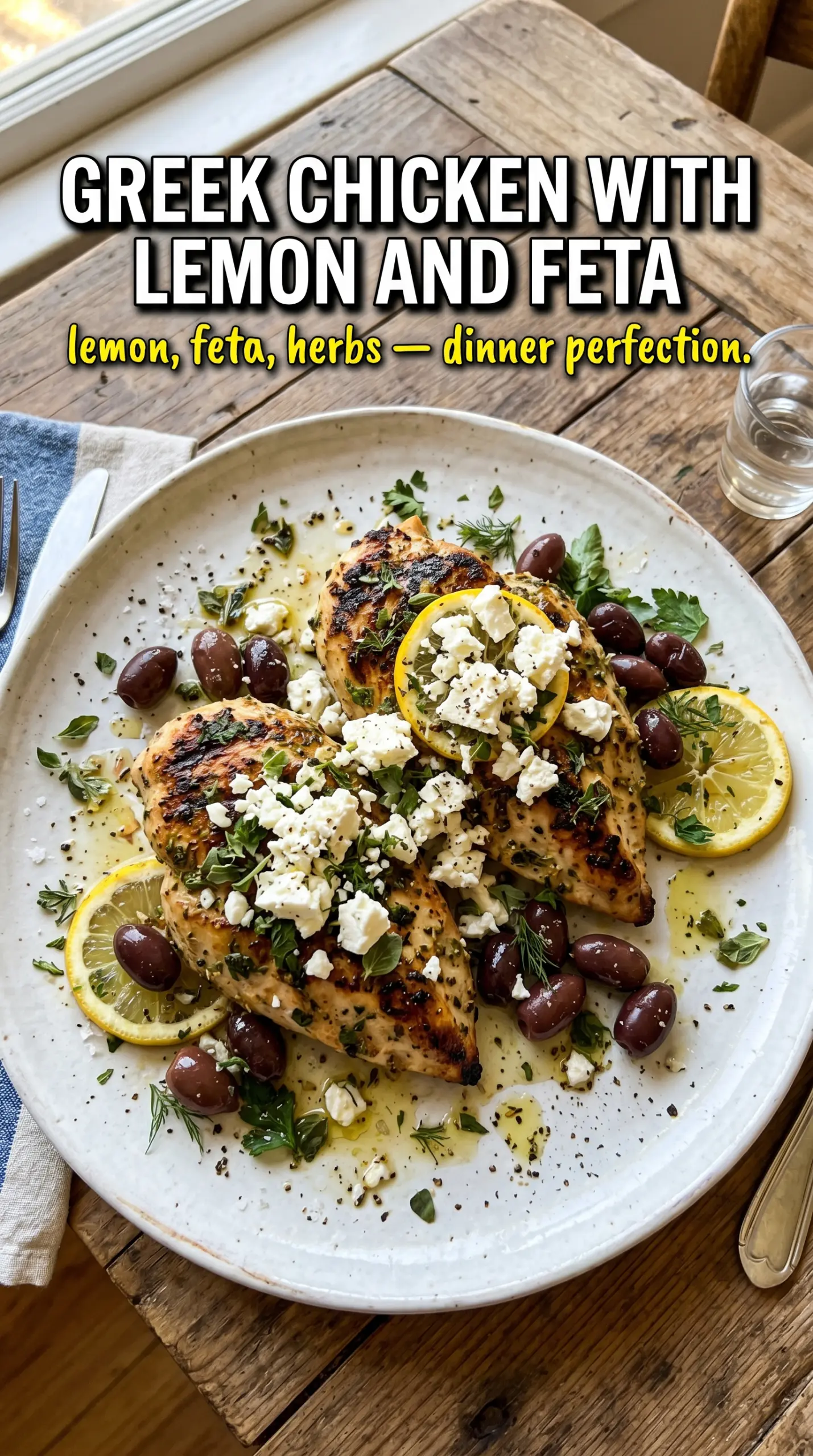
- Bone-in, skin-on chicken thighs — These give you juicy meat and browned skin in the same pan. Boneless thighs will cook faster, but the skin-on pieces are what make the dish feel complete.
- Fresh lemon juice and zest — Juice brings the brightness, while zest carries the stronger lemon aroma. Zest matters here; if you skip it, the dish tastes less fresh even with the same amount of juice.
- Feta — Add it after roasting, while the pan is still hot. If it goes in too early, it breaks down and disappears into the juices instead of sitting in salty little pockets on top.
- Kalamata olives — They add the briny edge that makes the whole dish taste more Greek and less like plain lemon chicken. If you only have black olives, the flavor will be milder and a little less punchy.
- Cherry tomatoes — They burst into the pan sauce as they roast, which keeps the dish from feeling dry. Larger tomatoes can work, but cut them so they release enough juice to coat the chicken.
How to Roast It So the Skin Stays Crisp
Building the Marinade
Whisk the olive oil, lemon juice, zest, garlic, oregano, smoked paprika, salt, and pepper until the mixture looks slightly thickened and the garlic is evenly suspended. Coat the chicken and let it sit for at least 30 minutes. That short rest is enough to season the meat without giving the lemon juice so long in contact with the chicken that the surface turns chalky.
Arranging the Pan
Set the thighs skin-side up in a baking dish with a little space between each piece. Scatter the tomatoes, olives, and lemon slices around, not under, the chicken so the skin can roast directly against the heat. If the chicken sits in a pile of vegetables, the bottom stays wet and the top won’t brown properly.
Roasting to the Right Finish
Roast until the skin is deep golden and the thickest part of the chicken reaches 165°F, usually 25 to 28 minutes. The tomatoes should be collapsed and glossy, and the lemon slices should look caramelized at the edges. If the skin is pale when the chicken is done, move the pan to a higher rack for the last few minutes instead of cooking longer and drying out the meat.
Feta and Garnish
Pull the pan from the oven and crumble the feta over the hot chicken right away. The residual heat softens it just enough to make it creamy at the edges without melting it into the sauce. Finish with fresh oregano, which gives the whole dish a clean herbal note that keeps the lemon from tasting too sharp.
How to Change the Pan Without Losing the Character of the Dish
Use boneless chicken thighs for a faster dinner
Boneless thighs cook faster and stay tender, but they won’t give you quite the same crisp skin or pan drama. Start checking them around 18 to 20 minutes so they don’t overcook, and keep the marinade the same.
Make it dairy-free
Leave off the feta and finish with a little extra oregano and a drizzle of olive oil. You’ll lose the salty creaminess, so add a few more olives or a pinch of flaky salt at the table to keep the dish balanced.
Swap the olives if you need to
Green olives give a sharper bite, while black olives soften the briny edge. Either works, but Kalamata olives bring the best balance of salt and fruitiness for this style of chicken.
Storage and Reheating
- Refrigerator: Store leftovers in an airtight container for up to 4 days. The skin will soften, but the flavor gets even better after a night in the fridge.
- Freezer: The chicken freezes well for up to 2 months, though the tomatoes and feta lose some texture. Freeze in a sealed container with a little of the pan juices to keep the meat from drying out.
- Reheating: Warm it covered in a 325°F oven until heated through. A microwave makes the skin rubbery and can turn the feta grainy, so use the oven if you want the best texture.
Questions I Get Asked About This Recipe

Greek Chicken with Lemon and Feta
Ingredients
Equipment
Method
- Whisk together olive oil, lemon juice, lemon zest, garlic, dried oregano, smoked paprika, salt, and pepper until evenly combined. Add the chicken thighs and marinate at least 30 minutes for the flavors to soak in.
- Preheat the oven to 425°F. Arrange the marinated chicken skin-side up in a large baking dish (or sheet pan).
- Scatter cherry tomatoes, Kalamata olives, and lemon slices around the chicken. Nestle everything so it roasts in the pan juices.
- Roast at 425°F for 25-28 minutes, until the chicken skin is golden and the internal temperature reaches 165°F. Look for caramelized lemon edges and a lightly burst tomato look.
- Remove from the oven and immediately crumble feta over the hot chicken and vegetables. The feta should soften slightly from the heat and start to melt at the edges.
- Garnish with fresh oregano and serve right away. Plate with warm pita or alongside orzo if desired.