Golden-seared Greek chicken tenders hit that sweet spot between fast and satisfying: crisped edges, juicy centers, and a lemon-oregano crust that tastes bright without turning sour or sharp. The short marinade does the heavy lifting here, giving the chicken enough time to pick up flavor while still keeping the texture tender and clean, not mushy.
What makes this version work is balance. Lemon juice and zest bring the lift, garlic and oregano give it the Greek backbone, and a little smoked paprika plus cumin round out the edges so the chicken tastes seasoned all the way through. The trick is a brief marinade and a hot pan; let the chicken sit too long in the acid and the exterior can get soft before it ever hits the skillet.
Below you’ll find the exact timing that gives you browned, not steamed, chicken, plus a few smart swaps if you’re serving these with different sides or need to adjust for what you have on hand.
The marinade gave the chicken so much flavor in just 20 minutes, and the tenders browned beautifully without drying out. I served them with tzatziki and pita, and my husband kept saying the lemon-oregano combo tasted like something from a good restaurant.
Save these Greek chicken tenders for the nights when you want a lemony, skillet-seared dinner with minimal prep and a big tzatziki finish.
The Part Most People Get Wrong With Lemon Chicken
With chicken tenders, the biggest mistake is treating them like full chicken breasts and giving them too much time in acid. Lemon juice is great for flavor, but if the chicken sits in it for hours, the surface can start to turn chalky and lose that clean bite. Twenty minutes is enough here. The seasoning gets into the chicken, the garlic perfumes the marinade, and the tenders still cook up juicy.
The other trap is crowding the pan. These need direct contact with heat if you want that golden crust the hero plate promises. If the skillet is packed, the chicken releases moisture and steams instead of searing. Work in batches if your pan looks crowded, and let the pieces sit long enough to develop color before you flip them.
What Each Ingredient Is Actually Doing in These Chicken Tenders
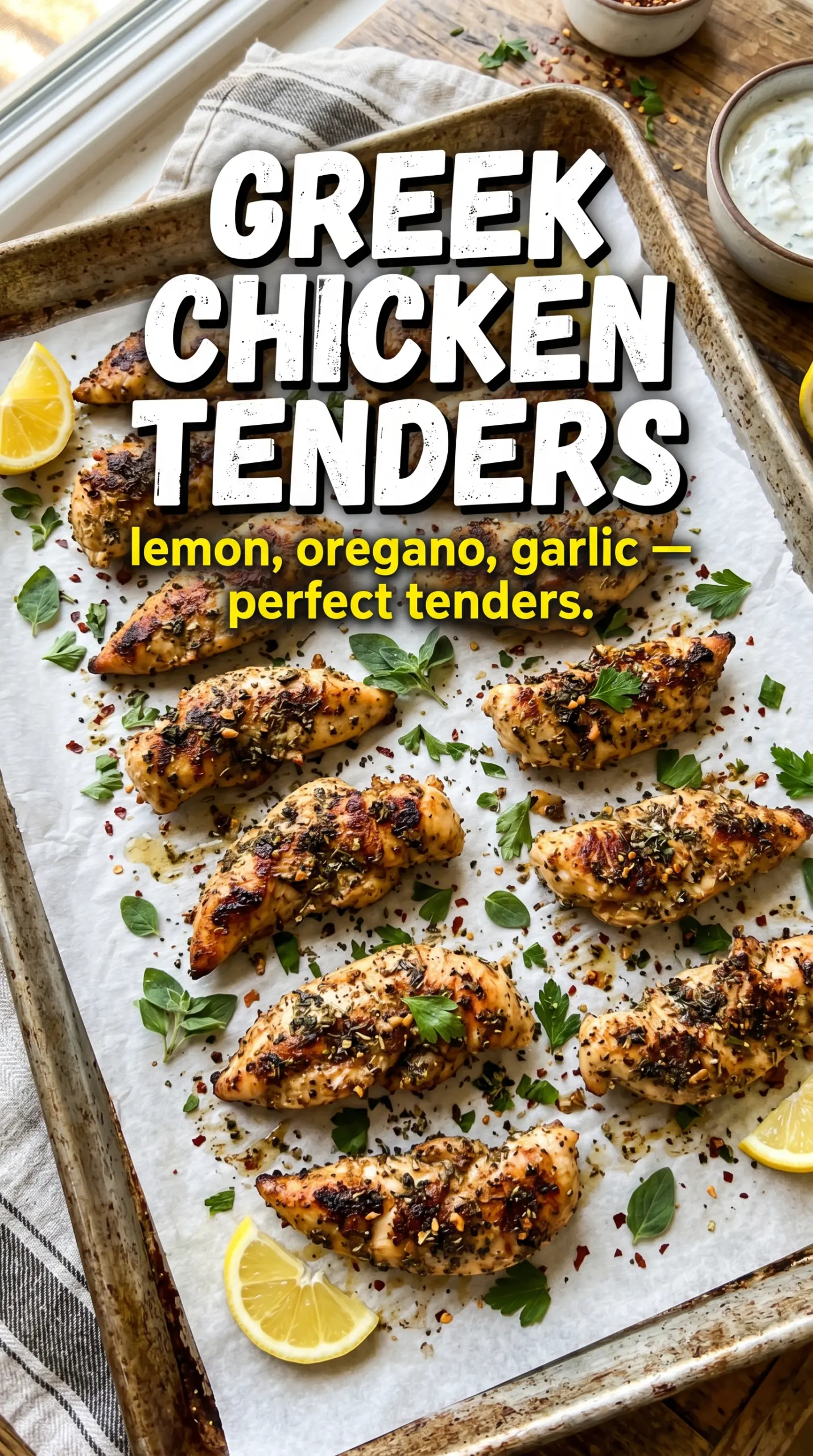
- Chicken tenders — These cook fast and stay tender when handled correctly, which makes them ideal for a quick marinade and hot skillet. If you swap in chicken breast strips, cut them to an even thickness so they finish at the same time.
- Olive oil — It carries the seasoning and helps the surface brown instead of drying out. Use a decent one, but this isn’t the place for your most expensive bottle.
- Fresh lemon juice and zest — The juice brings brightness, while the zest gives you the deeper lemon aroma that doesn’t disappear in the pan. Don’t skip the zest; it’s what keeps the flavor from tasting flat.
- Garlic, oregano, smoked paprika, and cumin — This is the core of the seasoning. Oregano gives you the Greek note, paprika adds color and a faint smokiness, and cumin rounds it out so the lemon doesn’t feel too sharp.
- Tzatziki, feta, olives, cucumber, and dill — These are finishing ingredients, not garnish for the sake of garnish. The cool, creamy tzatziki balances the hot chicken, while feta and olives bring salt and contrast.
Getting a Fast Marinade to Act Like a Longer One
Whisking the Marinade Until It Looks Unified
Start by whisking the olive oil, lemon juice, zest, garlic, oregano, paprika, cumin, salt, and pepper until the mixture looks slightly thick and speckled, not separated. That helps the garlic and spices cling to the chicken instead of sinking to the bottom of the bowl. If the marinade looks broken, whisk again before adding the chicken so every piece gets the same coating.
Coating the Tenders Without Overworking Them
Add the chicken and toss until every tender has a glossy coating. You don’t need to massage it for minutes; the marinade is short, and rough handling won’t improve the flavor. Let it rest for 20 minutes at room temperature so the chicken loses the chill and cooks more evenly in the pan. Any longer and the lemon starts working on the texture more than you want.
Cooking Over Medium-High Heat for Color, Not Dryness
Heat the skillet or grill pan before the chicken goes in, then add just enough oil to keep the surface from grabbing. The tenders should sizzle right away. Cook 3 to 4 minutes per side and look for browned edges, opaque sides creeping up the middle, and an internal temperature of 165°F. If the pan smokes hard, the heat is too high and the garlic in the marinade can scorch before the chicken finishes.
Serving on Tzatziki While the Chicken Is Still Warm
Spread the tzatziki on the platter first, then arrange the chicken over it and finish with feta, olives, cucumber, dill, and lemon wedges. The warm chicken softens the cool sauce just enough to make each bite taste fuller. If you plate the chicken and let it sit too long before serving, the crust loses some of its edge, so get it out while it’s still hot.
How to Adapt These Greek Chicken Tenders Without Losing the Point
Dairy-Free Serving Bowl
Skip the feta and use a dairy-free tzatziki or a thick cucumber-herb sauce. You keep the cool contrast that makes the dish work, but the finish will be a little lighter and less salty.
Gluten-Free Dinner Plate
The chicken itself is naturally gluten-free, so the only thing to watch is the sides. Serve it with rice, roasted potatoes, or certified gluten-free pita and you’re set.
Make It Into Chicken Bowls
Slice the cooked tenders and pile them over rice, couscous, or chopped romaine with cucumbers and olives. This stretches the chicken farther and turns the same flavors into a meal-prep lunch without changing the seasoning at all.
Use Chicken Breasts Instead
Cut chicken breasts into even strips and keep the cook time close, but watch them carefully because the thicker pieces can dry out if you walk away. The flavor stays the same; the texture lands a little firmer than tenders.
Storage and Reheating
- Refrigerator: Store the cooked chicken for up to 3 days. The crust softens a bit after chilling, but the flavor holds well.
- Freezer: Freeze the cooked tenders in a single layer, then transfer to a bag for up to 2 months. The texture is better than you’d expect, though the fresh herb notes are a little less bright after thawing.
- Reheating: Warm in a skillet over medium-low heat with a tiny splash of water or olive oil, just until heated through. The mistake is blasting them in the microwave, which tightens the meat and makes the edges rubbery.
Answers to the Questions Worth Asking
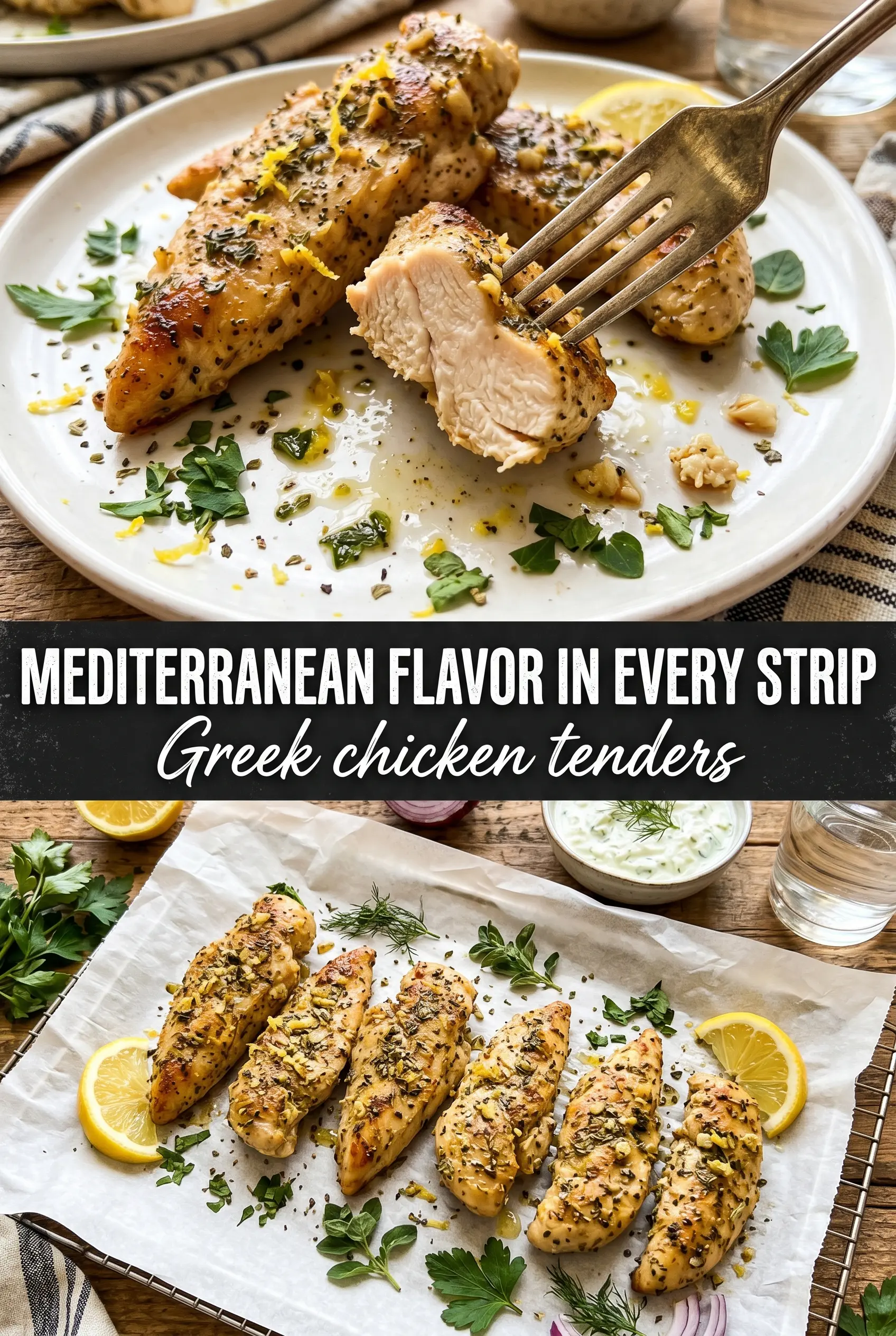
Greek Chicken Tenders
Ingredients
Equipment
Method
- Whisk together olive oil, lemon juice, lemon zest, garlic, oregano, smoked paprika, cumin, salt, and pepper in a bowl until combined, then toss the chicken tenders in the marinade.
- Cover and rest the marinated chicken for 20 minutes to let the flavors sink in (visual cue: chicken looks lightly coated and fragrant).
- Heat a large cast iron skillet over medium-high heat until hot, then add a drizzle of olive oil (visual cue: oil shimmers but does not smoke).
- Add chicken tenders in a single layer and cook for 3-4 minutes per side until golden, flipping once (visual cue: deep golden crust forms).
- Continue cooking until the thickest piece reaches 165°F in the center (visual cue: juices run clear and meat is no longer pink).
- Spread tzatziki on a serving platter in a smooth pool (visual cue: creamy base covers the bottom evenly).
- Arrange chicken tenders over the tzatziki, then scatter crumbled feta, Kalamata olives, cucumber slices, and fresh dill around the chicken (visual cue: bright green dill and red-purple olives add contrast).
- Serve immediately with warm pita and lemon wedges for squeezing over top.