Goat cheese with honey, fig, and pistachios lands on the table looking elegant, but what keeps it in rotation is how fast it disappears. The cheese goes from firm and tangy to soft and spreadable with just a short rest on the counter, then the figs, honey, and pistachios turn each bite into something creamy, sweet, and a little nutty. It’s the kind of appetizer that looks deliberate without asking you to do much at all.
The little details matter here. Room-temperature goat cheese spreads more cleanly and tastes less chalky, and a quick press into a thick round gives the toppings a better place to settle instead of rolling off the sides. Orange zest wakes up the honey and keeps the whole plate from tasting one-note, while thyme adds a quiet herbal edge that makes the fruit taste brighter.
Below, you’ll find the small finishing touches that make this platter work every time, plus the swaps I’d use when figs are out of season or you want to lean it in a different direction.
The goat cheese softened just enough to spread under the figs, and the orange zest made the honey taste brighter instead of just sweet. I served it with crackers and the plate was empty in minutes.
Like this goat cheese with honey, fig, and pistachios? Save it for the next time you need a five-minute appetizer with creamy cheese, juicy fruit, and a crisp crunchy finish.
The Trick to Keeping the Honey from Sliding Off the Cheese
The biggest mistake with a cheese plate like this is piling everything on a cold log and expecting it to hold its shape. Cold goat cheese stays firm, which sounds helpful until the toppings bounce off and the honey runs straight to the plate. Let it sit out for about 15 minutes, just until the surface softens enough to press without crumbling. That short rest is the difference between a neat centerpiece and a messy puddle.
Pressing the log into a thick round gives you a wider surface for the figs and pistachios, and it helps the honey cling in little glossy streaks instead of disappearing underneath. You’re aiming for soft, not sloppy. If the cheese gets too warm, it loses its clean edges and starts slumping before the platter even reaches the table.
What Each Topping Is Doing in This Appetizer
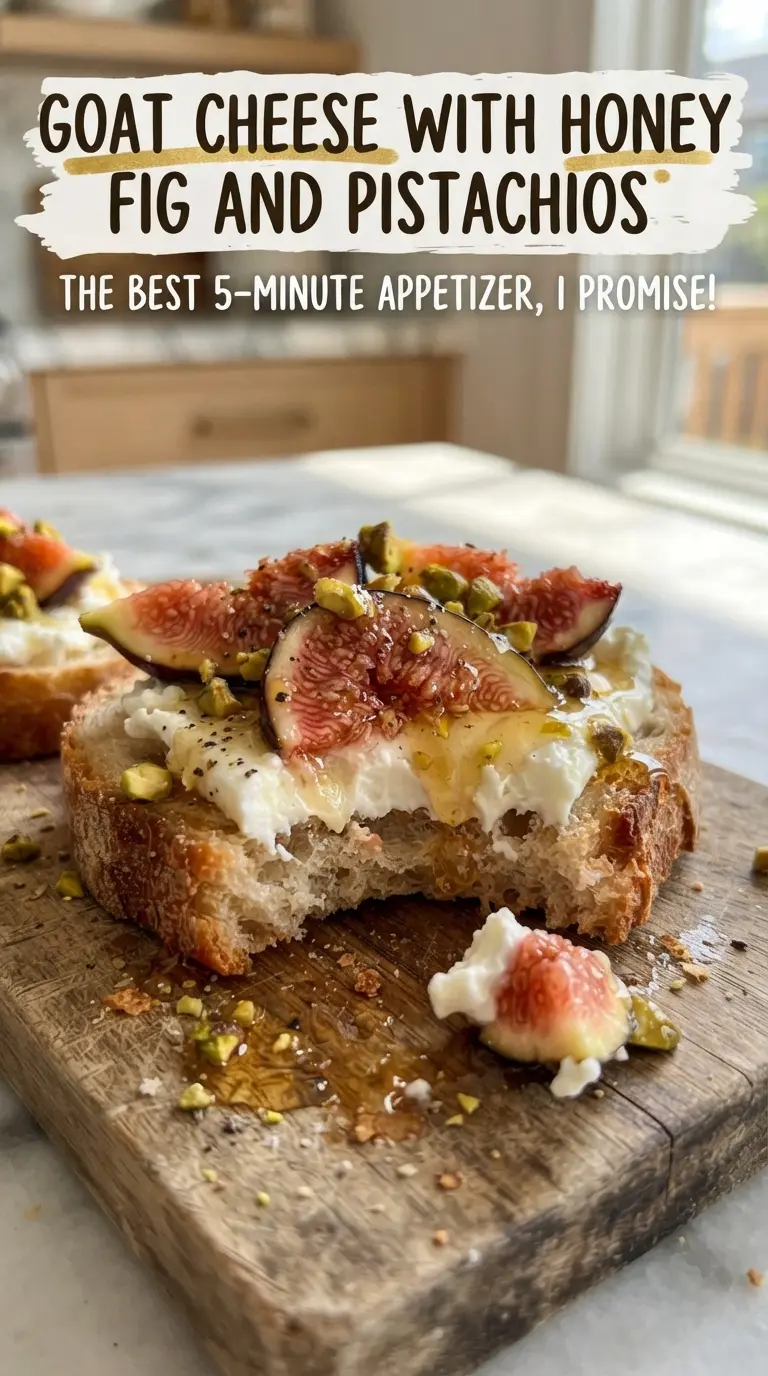
- Goat cheese — This is the base, so the quality matters. Use a log you like eating plain, because the tang is front and center. A softer chèvre spreads best; a very crumbly one works, but it won’t give you the same smooth surface for the toppings.
- Fresh figs — Fresh figs bring the jammy sweetness and soft texture that make each bite feel complete. Quarter them so they sit nicely on the cheese and don’t slide off. If figs aren’t available, ripe pears or halved grapes can work, but they’ll taste brighter and less floral.
- Pistachios — These add crunch and a little savory depth that keeps the honey from taking over. Chop them roughly so you get noticeable pieces. Salted pistachios are fine if that’s what you have, but reduce any extra flaky salt at the end.
- Honey, thyme, and orange zest — Honey binds the whole platter together, thyme adds an herbal note, and orange zest cuts through the richness with citrus oil. Use a honey you enjoy, since there’s no cooking to mellow it out. The zest is worth the few extra seconds because it lifts the entire dish.
Putting the Platter Together Without Making a Mess
Start with a Softened Base
Set the goat cheese on your serving plate and let it warm just enough that it’s pliable. Press it lightly into a thick round with your fingers or the back of a spoon. If you press too hard, it’ll smear across the plate; if you skip the flattening, the toppings tend to slide down the curved sides.
Layer the Fruit Before the Drizzle
Arrange the fig quarters around and over the cheese so some pieces nestle into the surface. This gives the cheese a little support and creates pockets where the honey can pool. Add the pistachios, thyme, and orange zest before the honey so the dry toppings stick instead of bouncing away.
Finish with Honey and Salt at the End
Drizzle the honey generously in a slow back-and-forth ribbon. The flaky salt goes on last, after the honey, because it needs to sit on top to give you those little sharp pops against the sweet fruit. Serve right away with crostini or crackers; the plate looks best and the cheese stays at the right texture while it’s still cool-soft.
How to Adapt This Platter for Different Seasons and Diets
No fresh figs
Use very ripe pears, sliced peaches, or halved seedless grapes. Pears give you a gentle sweetness and a firmer bite, while grapes add juiciness and hold up well on the cheese. The platter loses a little of the fig’s floral depth, but it still tastes polished and balanced.
Dairy-free version
Swap in a plant-based soft cheese log with a tangy edge. The texture should be spreadable rather than sliceable, or the fruit won’t settle on top the same way. You’ll still get the sweet-salty balance, though the flavor will be less sharp than goat cheese.
Nut-free option
Replace the pistachios with toasted pumpkin seeds or sunflower seeds. You’ll still get crunch, but the flavor will read a little more earthy and less buttery. Toast them first so they taste deliberate, not like a last-minute substitution.
Make-ahead timing for a party
You can quarter the figs, chop the pistachios, and mix the zest with the thyme a few hours ahead. Hold back the honey and assemble the cheese right before serving so the fruit stays bright and the platter doesn’t turn watery. If you need to prep the cheese early, keep it covered in the fridge and let it sit out before plating.
Storage and Reheating
- Refrigerator: Leftovers keep for 2 days, though the figs soften and the crackers will lose their crunch. Store the cheese separately if you can.
- Freezer: Don’t freeze this platter. Goat cheese changes texture after thawing, and the figs become watery.
- Reheating: No reheating needed. For leftovers, let the cheese sit out 10 to 15 minutes before serving again so it regains some spreadability.
Answers to the Questions Worth Asking
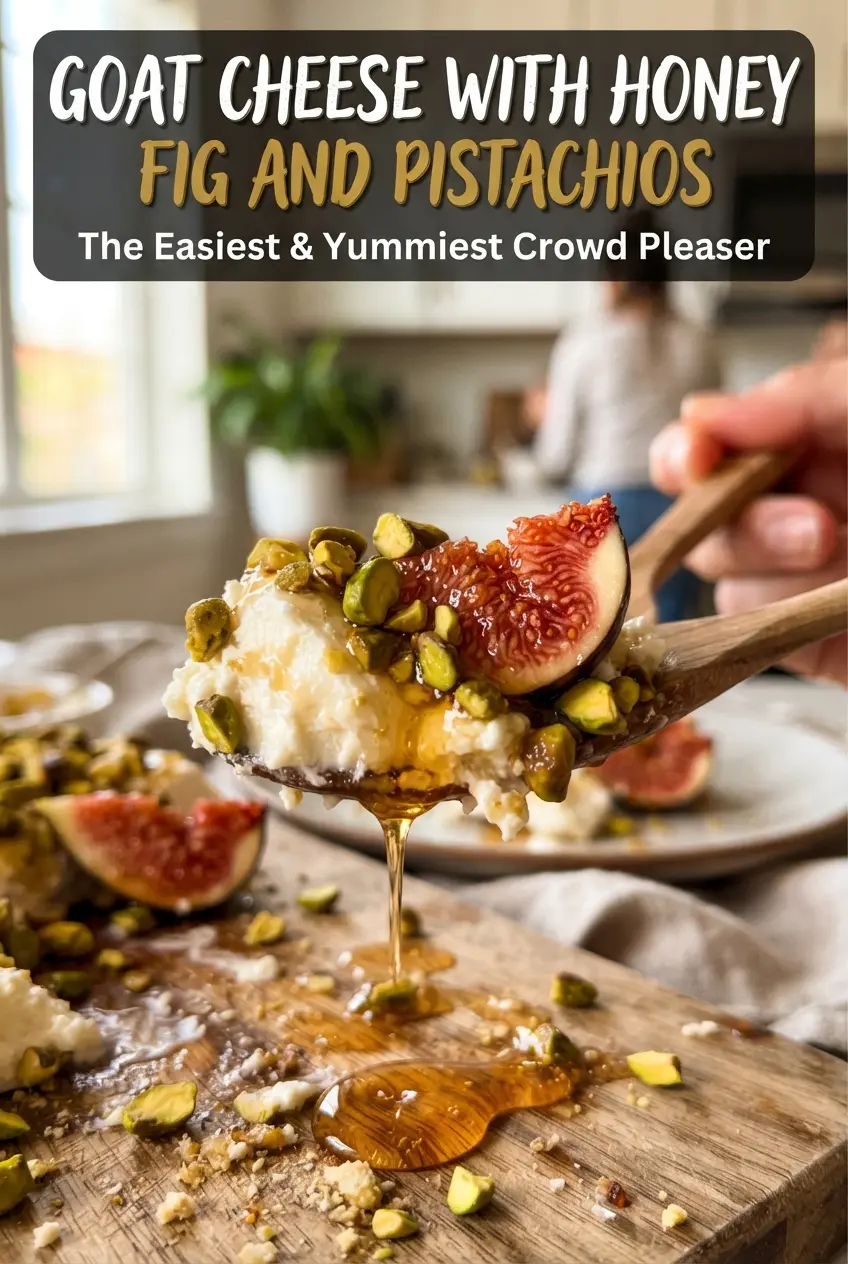
Goat Cheese with Honey Fig and Pistachios
Ingredients
Method
- Let the goat cheese sit at room temperature for 15 minutes to soften slightly, so it’s easier to press into a thick round; look for a softened, pliable texture at the surface.
- Place the goat cheese on a serving plate and press gently to flatten into a thick round, keeping an even thickness so toppings stay put; aim for a wide disc shape.
- Arrange the quartered fresh figs around and over the cheese, distributing them so each bite gets fruit; press lightly so they adhere to the surface.
- Sprinkle the chopped pistachios, thyme leaves, and orange zest on top, creating a speckled green-and-gold layer; make sure the seasoning reaches the center.
- Drizzle generously with honey to create golden streaks down the sides, then finish with a pinch of flaky sea salt; serve immediately while the honey looks glossy.
- Serve with crostini or crackers for scooping and dipping; add them around the platter so they’re ready to grab.