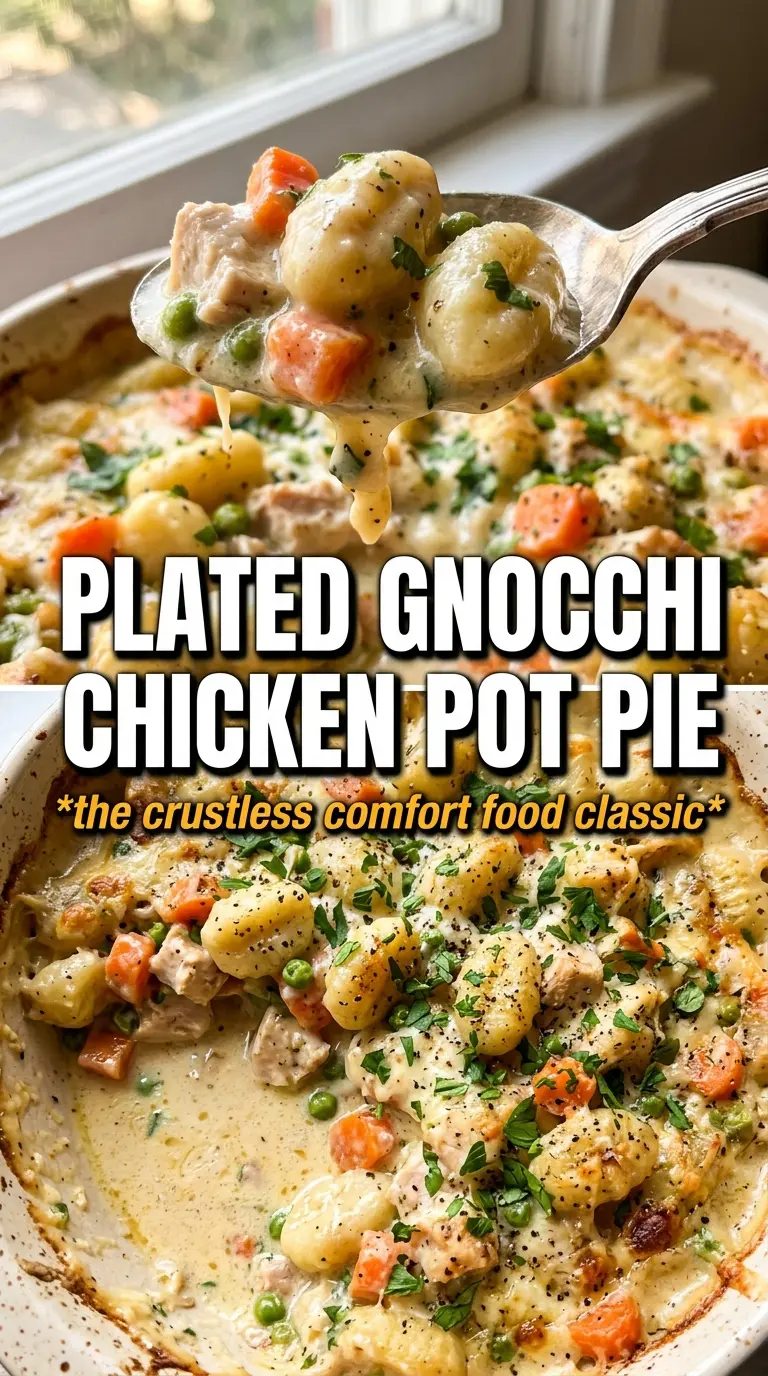
Gnocchi chicken pot pie lands in that sweet spot between cozy and substantial: creamy filling, tender chicken, soft little dumplings, and a golden top that cracks when you spoon into it. The gnocchi take the place of a traditional crust on the inside, which means every bite has that potato comfort without the extra step of making pastry from scratch. It eats like a weeknight shortcut, but it tastes like you spent a lot longer on it.
The key is building the sauce before the gnocchi go in. If you add them too early, they soak up too much liquid and turn heavy instead of pillowy. A quick simmer thickens the broth and cream into a gravy that clings to the chicken and vegetables, then the uncooked gnocchi finish in the oven so they stay tender and hold their shape.
Below, I’ve included the exact texture cues I watch for so the filling doesn’t end up thin or gluey, plus a few swaps that still keep the dish in pot-pie territory. If you’ve ever wanted the comfort of chicken pot pie with less fuss, this version earns its place on repeat.
The filling thickened up beautifully and the gnocchi stayed tender instead of turning mushy. I used biscuits on top and my husband went back for seconds before I even sat down.
Save this gnocchi chicken pot pie for the nights when you want creamy filling, a golden top, and one baking dish doing all the work.
The Trick to Keeping the Gnocchi Tender Under the Crust
Pot pie fillings fail in one of two ways: they stay soupy, or they thicken up so much that the inside eats like paste. The balance here comes from cooking the flour into the butter first, then adding the broth and cream slowly so the sauce can thicken without turning grainy. Once that base is glossy and lightly coating the spoon, the gnocchi only need the oven to finish cooking.
Uncooked gnocchi are the right choice here because they absorb enough of the sauce to taste integrated, but they still hold their soft, dumpling-like texture. If you boil them first, they can go too far in the oven and lose that gentle bite. You want the filling to look a little looser than you think before it bakes; the gnocchi and vegetables will drink up some of the liquid as the dish heats through.
- Chicken broth — Use a broth with enough salt and body to taste like actual chicken pot pie, not just warm liquid. Low-sodium works well because you can control the seasoning at the end.
- Heavy cream — This gives the filling its round, velvety finish. Half-and-half can work in a pinch, but the sauce will be thinner and a little less stable after baking.
- Puff pastry or biscuits — Puff pastry gives you a flaky lid that feels classic and elegant. Biscuits give you a more rustic, breadier top. Both work; pick the one that matches the texture you want more than the one that seems easiest.
- Fresh thyme — Fresh thyme brings a cleaner, woodsy note that stands up to cream. Dried thyme can replace it, but use less because the flavor concentrates quickly.
What Each Ingredient Is Actually Doing in This Recipe
- Primary ingredient (the star) — Quality matters most. Choose the best you can find.
- Cooking medium (oil, butter, or broth) — This carries flavors and prevents dryness.
- Seasonings (salt, pepper, spices, herbs) — Layer flavors so nothing overpowers. Build depth gradually.
- Aromatics (garlic, onion, herbs) — Cook with fat to bloom flavors. Become the foundation.
- Supporting ingredients — Complement the main ingredient without overpowering it.
- Sauce or liquid (if applicable) — Brings flavors together. Balance richness with acid.
- Acid (lemon, vinegar, wine, or other) — Brightens and prevents flat-tasting results.
- Final finish (garnish, glaze, or sauce) — Prevents one-dimensional taste and adds visual appeal.
Building the Filling So It Bakes Up Creamy, Not Soupy
Softening the Vegetables First
Start with the onion, carrots, and celery in butter and cook them until the onion turns translucent and the carrots lose their raw edge. That first five-minute sauté does a lot of work; it builds sweetness and keeps the vegetables from staying crunchy in the finished pie. If the pan looks dry before the vegetables soften, the butter may have absorbed into the onions, so let them keep moving in the pan instead of cranking the heat.
Making the Sauce in the Same Pan
Stir in the garlic and thyme just long enough to smell them, then whisk in the flour and cook it for about a minute. That brief cook removes the raw flour taste and helps the sauce stay smooth. Add the broth slowly while whisking so the flour disperses instead of clumping, then pour in the cream and let the mixture simmer until it coats the back of a spoon.
Folding in the Chicken and Gnocchi
Once the sauce thickens, fold in the chicken, peas, and uncooked gnocchi and season well. The filling should look saucy enough to spread easily in the baking dish, not stiff or mound-like. If it seems too thick at this stage, add a small splash of broth; once the gnocchi go in, you want room for them to soften without pulling every bit of moisture from the pan.
Baking Until the Top Turns Deep Gold
Spread the filling into the baking dish, top with puff pastry or biscuits, and brush the top with egg wash so it browns instead of drying out. Bake until the crust is deeply golden and the filling is visibly bubbling around the edges. That bubbling matters more than the clock — it tells you the center has heated through and the sauce has finished setting.
How to Adapt This Without Losing the Pot-Pie Comfort
Gluten-Free Version
Use gluten-free gnocchi and thicken the filling with a cup-for-cup gluten-free flour blend instead of all-purpose flour. The sauce will still be creamy, but it may need an extra minute or two on the stove to lose any chalky taste from the starch.
Dairy-Free Swap
Use olive oil or dairy-free butter for the base and replace the cream with full-fat canned coconut milk or an unsweetened dairy-free cooking cream. The result will be slightly less rich and a little different in flavor, but it still bakes into a proper creamy filling.
Vegetable-Heavy Version
Add mushrooms, corn, or chopped green beans along with the carrots and celery. Keep the total volume reasonable so the sauce still has room to coat everything; if you overload the pan, the filling turns crowded instead of creamy.
Using Rotisserie Chicken
Rotisserie chicken works beautifully here and saves a step, as long as you shred it into bite-size pieces and remove any overly dark or heavily seasoned skin. Because it’s already cooked, it only needs to warm through in the sauce.
Storage and Reheating
- Refrigerator: Store covered for up to 4 days. The gnocchi will absorb a little more sauce as it sits, so the filling gets thicker.
- Freezer: Freeze the filling without the pastry or biscuit topping for best results. The texture holds better if you add the top fresh before baking.
- Reheating: Reheat in a 350F oven until hot in the center. The biggest mistake is microwaving it hard and fast, which can make the sauce split and the gnocchi rubbery.
The Questions That Come Up Before the First Bite
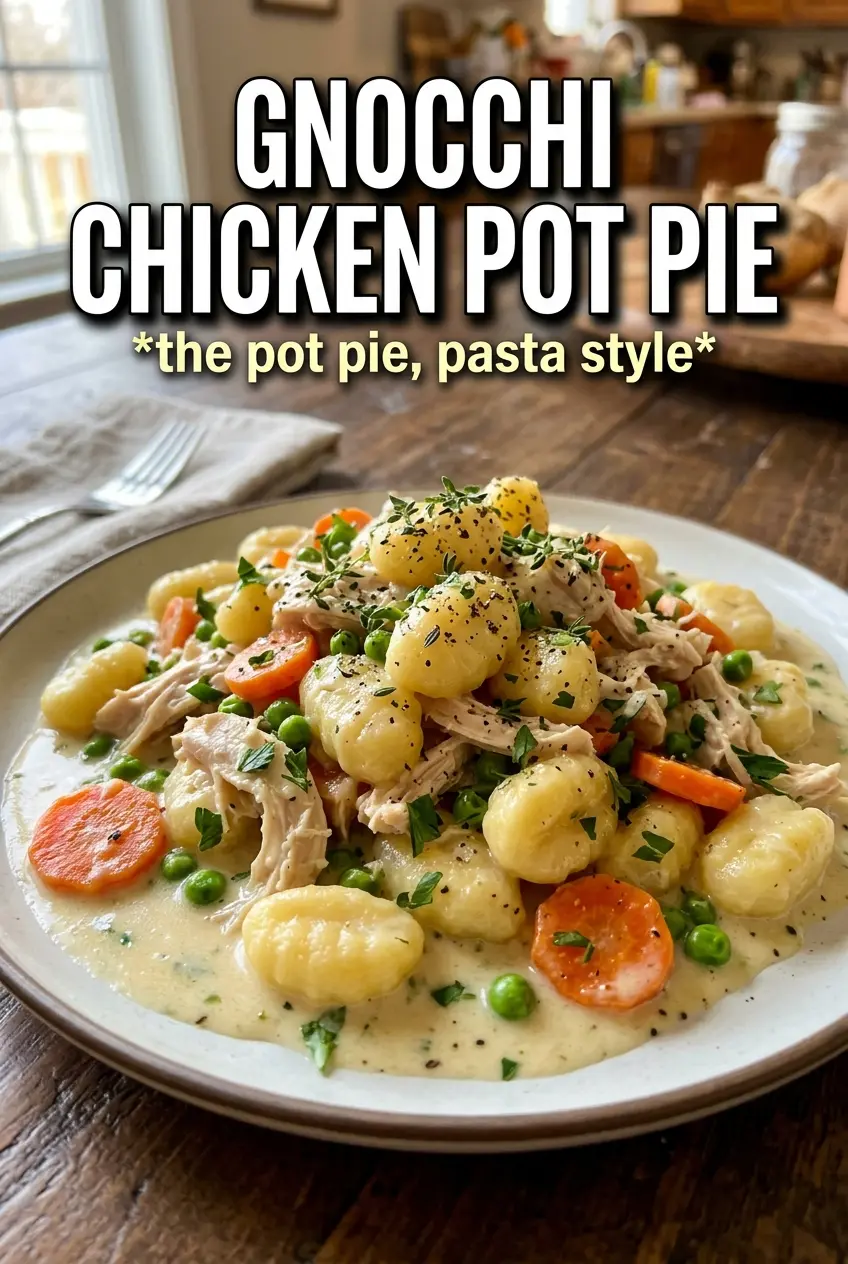
Gnocchi Chicken Pot Pie
Ingredients
Equipment
Method
- Preheat oven to 400F. Sauté onion, carrots, and celery in butter for 5 minutes, stirring until the vegetables soften and look glossy.
- Add garlic and thyme and cook for 30 seconds until fragrant. Whisk in flour and cook for 1 minute, stirring constantly so it looks slightly thickened.
- Gradually add chicken broth and heavy cream, whisking as you pour. Simmer until thickened, about 3–5 minutes, until the sauce coats the back of a spoon.
- Fold in shredded chicken, frozen peas, and potato gnocchi, then season with salt and pepper. Stir until evenly distributed and the gnocchi starts to look glossy.
- Pour the mixture into a baking dish and top with puff pastry or refrigerated biscuits. Press lightly so the topping sits evenly over the filling.
- Brush the top with egg wash. Bake at 400F for 25–30 minutes until golden and bubbly, with visible steam from a vent area in the center.