Deep, dark, and spoon-tender, this German beef stew settles into the bowl with the kind of richness that makes bread feel less like an extra and more like a requirement. The beef turns soft enough to cut with a fork, the potatoes pick up the beer-braised broth, and the carrots keep just enough shape to give each bite a little sweetness. It’s the sort of stew that tastes like it spent all afternoon becoming itself.
What gives this version its depth is the balance: beef chuck for body, German dark beer for maltiness, tomato paste and paprika for color and roundness, and a small hit of vinegar and mustard at the end to keep the broth from tasting flat. Browning the beef in batches matters here. Crowded meat steams, and steamed meat never builds the kind of base a stew like this needs. The onions also need time to cook down until they’re golden, because that slow sweetness is what keeps the beer from tasting sharp.
Below, I’ve included the small details that make a difference, from when to add the potatoes so they hold their shape to how to adjust the broth if you want it a little thicker or a little more rustic.
The broth turned out rich and glossy, and the beef was tender after the full simmer without falling apart. I loved how the mustard and vinegar kept the beer flavor balanced instead of heavy.
Save this German beef stew for the nights when you want a dark beer broth, tender chuck, and thick-cut potatoes in one pot.
The Reason This Stew Tastes Deep Instead of Flat
The flavor here comes from layering, not from dumping everything into the pot at once. Beef chuck needs that floury sear because the browned coating helps both the crust and the final body of the broth. If you skip the browning or crowd the pan, you lose the fond on the bottom, and that fond is what gives the stew its dark, savory backbone.
The other piece that matters is the order of the aromatics. Onions need time to soften and color before the beer goes in, because beer can taste sharp if it hits raw onion. The tomato paste, paprika, and caraway need that short minute in the fat to bloom and lose their raw edge. That little pause is what makes the broth taste rounded instead of boozy.
What Each Ingredient Is Doing in the Pot

- Beef chuck — This is the cut that turns lush after a long simmer. Leaner beef will dry out before the broth develops.
- German dark beer — It adds malt, color, and a little bitterness that balances the richness. Use a beer you’d actually drink; cheap beer can go thin and metallic in the pot.
- Tomato paste — It deepens the broth and helps the stew taste cooked all the way through. Let it fry briefly with the spices so it loses its raw edge.
- Caraway seeds — They bring the unmistakable rye-bread, German-style note that makes this stew taste specific instead of generic. Don’t overdo them; a teaspoon is enough to perfume the whole pot.
- Potatoes and carrots — Adding them later keeps them from collapsing. If they go in at the start, they’ll turn mealy and muddy the broth.
Building the Braise So the Beef Stays Tender
Getting the First Sear Right
Pat the beef dry before it hits the flour, then brown it in batches in the hot fat. You want a deep crust on several sides, not gray cubes sitting in pooled moisture. If the pan looks crowded, stop and split the batch. The meat should release easily when the crust forms; if it sticks, it needs another minute.
Cooking Down the Onion Base
Once the beef is out, add the onions and let them cook until they’re golden at the edges and soft all the way through. This takes a real 8 to 10 minutes, sometimes a touch more, and it matters because the sweetness of the onion steadies the beer later. Stir in the garlic, tomato paste, paprika, and caraway just long enough for the kitchen to smell warm and toasty. If the paste darkens too fast, lower the heat and keep it moving.
Letting the Beer and Broth Take Over
Pour in the beer and scrape the pot until the bottom is clean. That’s where the flavor lives. Add the broth, mustard, vinegar, and bay leaves, then return the beef and bring the pot to a low simmer. Keep it at a bare bubble, not a hard boil, or the chuck will seize up before it turns tender.
Adding the Vegetables at the End
Potatoes and carrots go in after the beef has already had time to soften. This keeps the vegetables intact and lets them soak up the broth without disappearing into it. Simmer until a knife slides into the potatoes with no resistance and the carrots are tender but still shaped. Pull the bay leaves before serving, then finish with parsley for a fresh top note.
How to Adjust This Stew for Your Table
Make It Gluten-Free Without Losing Body
Skip the flour on the beef and brown the cubes plain, then stir in a small slurry of cornstarch and cold water near the end if you want the broth thicker. The stew will still be rich, just a little more broth-forward and less velvety.
Use an Alcohol-Free Braise
If you don’t want beer in the pot, replace it with extra beef broth plus 1 to 2 teaspoons of molasses or a splash more vinegar for depth. You’ll lose the malt flavor, but the stew will still have a dark, savory finish.
Add Root Vegetables for a Heavier Winter Pot
Turnips or parsnips can stand in for part of the potatoes if you want a sharper, earthier stew. Add them at the same time as the potatoes, since they need that final simmer but not the full braise.
Storage and Reheating
- Refrigerator: Keeps 4 days. The broth thickens as it chills, and the potatoes soak up more liquid overnight.
- Freezer: Freezes well for up to 3 months, though the potatoes soften a little after thawing. Cool it completely before freezing in airtight containers.
- Reheating: Warm gently on the stove over low heat with a splash of broth or water. A hard boil can break down the potatoes and make the beef stringy.
Answers to the Questions Worth Asking
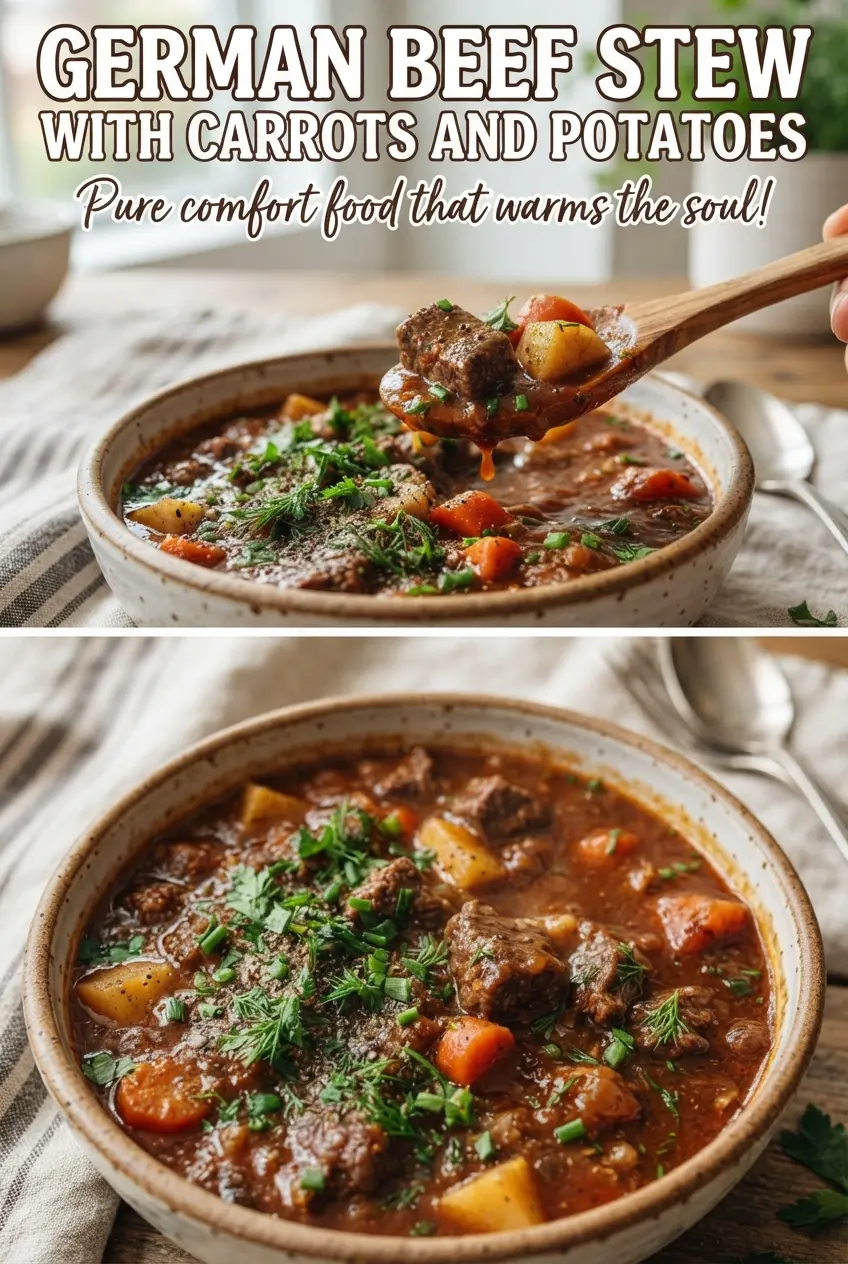
German Beef Stew with Carrots and Potatoes
Ingredients
Equipment
Method
- Season the beef cubes with salt and black pepper, then toss with the all-purpose flour until lightly coated. Brown the beef in batches in butter over medium-high heat, letting the pieces develop deep color.
- In the same Dutch oven, cook the sliced onions for 8-10 minutes over medium heat until golden. Stir in the garlic, tomato paste, sweet paprika, and caraway seeds and cook for 1 minute, until fragrant.
- Pour in the German dark beer and scrape up the browned bits from the bottom of the pot. Add the beef broth, Dijon mustard, red wine vinegar, and bay leaves.
- Return the browned beef to the pot, cover, and bring to a simmer. Simmer for 1 1/2 hours, so the beef becomes fork-tender and the broth reduces slightly.
- Add the cubed potatoes and thick-sliced carrots, then cover and simmer for 45-60 minutes until tender. Keep the liquid at a gentle simmer for consistent cooking.
- Remove the bay leaves, then top the stew with chopped fresh parsley. Serve hot with the thick, beer-braised gravy clinging to the beef and vegetables.