Pork chops baked under a thick garlic parmesan crust come out with the kind of contrast people remember: a savory, browned top that cracks a little when you cut into it, then juicy meat underneath. The coating isn’t fussy, but it does need the right balance of moisture and heat so the cheese can brown before the pork dries out. That’s what makes this version worth keeping in rotation.
The mayonnaise and Dijon work like a thin, clingy glue, which means the parmesan mixture stays put instead of sliding off the chops in the oven. Panko keeps the crust from turning dense, and the garlic goes in two ways — fresh for sharp flavor, garlic powder for depth that holds up to baking. A hot oven does the rest. You get a deep golden crust in about 20 minutes, which is exactly the sweet spot for boneless chops that are 1 inch thick.
Below, I’ll show you how to keep the crust crisp instead of soggy, which ingredient you can swap without losing the whole dish, and what to do if your pork chops are thinner or thicker than the ones listed here.
The crust stayed on the pork chops instead of sliding off, and the parmesan got beautifully browned without burning. I followed the timing exactly and the chops were juicy all the way through.
Save these baked garlic parmesan pork chops for a fast dinner with a crisp, browned crust and juicy center.
The Trick to Keeping the Parmesan Crust Stuck to the Pork
The main failure in baked crusted pork chops is simple: the coating slides, steams, or burns before the meat is done. This recipe avoids that by using a thin mayo-Dijon layer instead of egg wash or dry flour alone. The mixture gives the crust something tacky to hold onto, but it also browns in the oven, which helps the parmesan turn deeply golden instead of pale and dusty.
The other thing that matters is pressure. When you press the parmesan mixture onto both sides of the chops, don’t just sprinkle it on top and hope for the best. Firm contact is what keeps the crust intact when the pork releases a little moisture as it bakes. If your chops are wet from the package, pat them dry first or the coating will loosen fast.
What Each Ingredient Is Actually Doing in This Dish
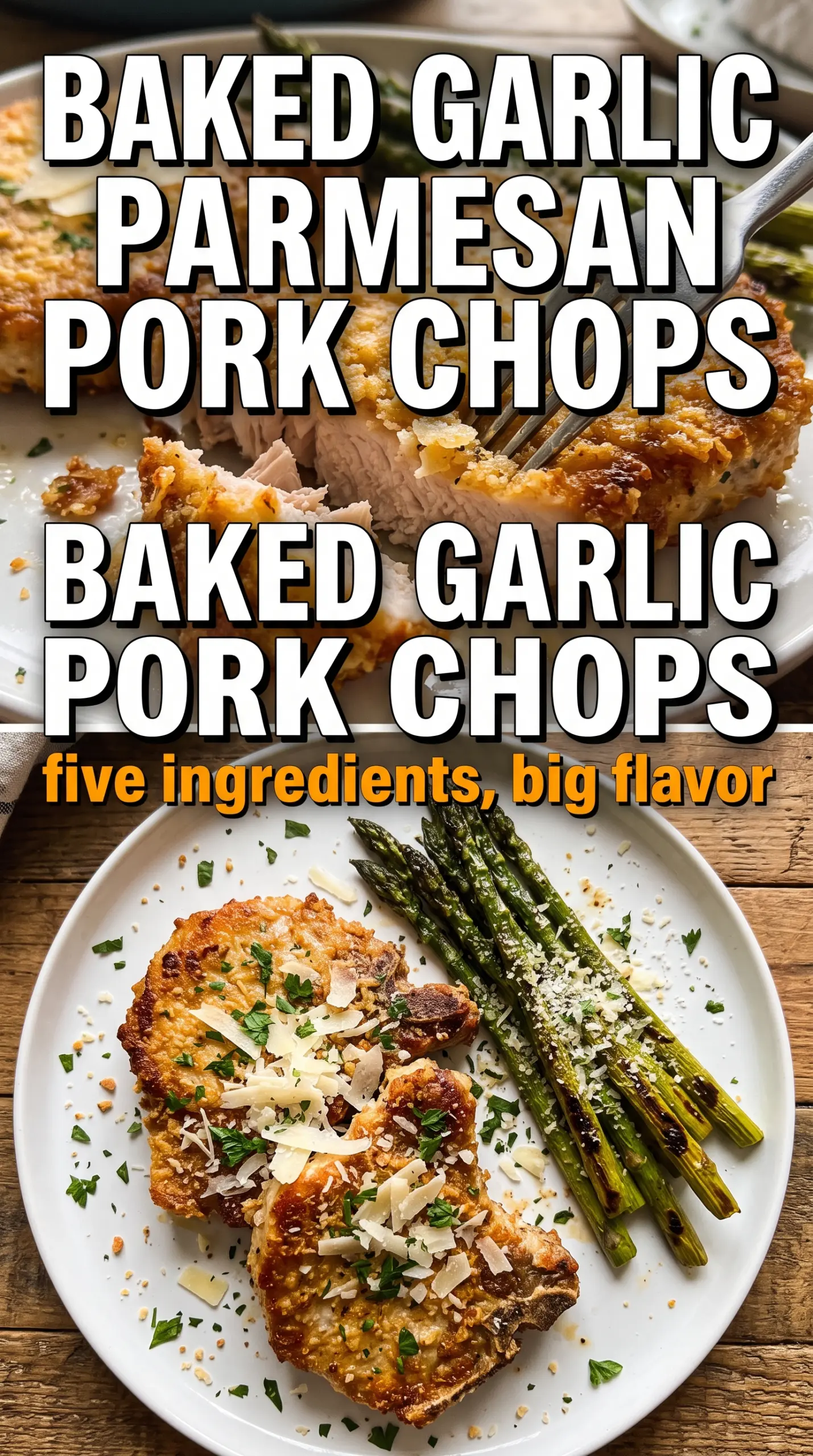
- Boneless pork chops — A 1-inch chop gives you enough time for the crust to brown without overcooking the center. Thinner chops dry out faster, while thicker ones need more time and may benefit from a quick sear before baking.
- Mayonnaise — This is the moisture and fat that helps the crust cling and brown. Egg can work in a pinch, but mayo spreads more evenly and gives a better oven-browned finish.
- Dijon mustard — It doesn’t make the pork taste mustardy; it sharpens the garlic and cuts through the richness. Regular yellow mustard is harsher and less balanced here.
- Parmesan — Grated parmesan is the backbone of the crust. Freshly grated melts and browns better than shelf-stable shredded cheese, which can stay gritty or clump unevenly.
- Panko breadcrumbs — These keep the crust light and crisp. If you use fine breadcrumbs, the coating gets denser and can go past crunchy into paste-like.
- Fresh garlic and garlic powder — Fresh garlic brings the bold bite, and garlic powder keeps that flavor steady through baking. Using only fresh garlic can leave you with burnt specks before the pork is done.
Baking the Pork Chops So the Crust Browns Before the Meat Overcooks
Getting the Oven Hot Enough
Preheat the oven to 425°F and line the baking sheet with parchment so the cheese crust has a dry surface to brown on. A cooler oven gives the pork more time to release juices, which softens the coating before it can set. You want the crust to start to firm up almost right away.
Coating the Chops Evenly
Stir the mayonnaise and Dijon together until smooth, then spread a thin layer over both sides of each chop. Use enough to coat, not enough to look thick or gloopy. If the layer is too heavy, the crumbs slide and the finished crust can feel greasy instead of crisp.
Pressing on the Crust
Mix the parmesan, panko, garlic, Italian seasoning, garlic powder, salt, and pepper, then press it firmly onto the pork. Don’t bury the chops in the mixture; pat the coating on so it adheres in an even layer. Any bare patches will bake up unevenly and can turn into weak spots where the crust lifts off.
Knowing When They’re Done
Bake for 18 to 22 minutes until the crust is deep golden and the internal temperature hits 145°F. If the top is browning too fast, move the pan to a lower rack for the last few minutes. Let the chops rest for 3 minutes before serving so the juices settle and the crust has time to set instead of smearing the second you cut into it.
How to Adapt These Garlic Parmesan Pork Chops for Different Kitchens
For a gluten-free crust
Swap the panko for gluten-free panko or crushed gluten-free crackers. The texture stays crisp, but crackers will brown a little faster, so watch the last few minutes closely.
For a dairy-free version
Use a dairy-free parmesan-style topping that melts and browns well. You’ll lose some of parmesan’s sharpness, so add a small pinch of extra salt and a little more garlic powder to keep the crust bold.
For thicker chops
Use the same coating, but expect the bake time to stretch past 22 minutes. Thicker chops need the same hot oven, just a little more time for the center to reach 145°F without scorching the crust.
Storage and Reheating
- Refrigerator: Store leftovers for up to 3 days. The crust softens a bit, but the flavor holds well.
- Freezer: Freeze cooked chops tightly wrapped for up to 2 months. The coating won’t stay as crisp after thawing, but they reheat better than you’d expect if wrapped well.
- Reheating: Warm in a 350°F oven on a rack or parchment-lined sheet until hot through. Skip the microwave if you want the crust to stay intact; it turns the topping soft and can make the pork rubbery.
Answers to the Questions Worth Asking
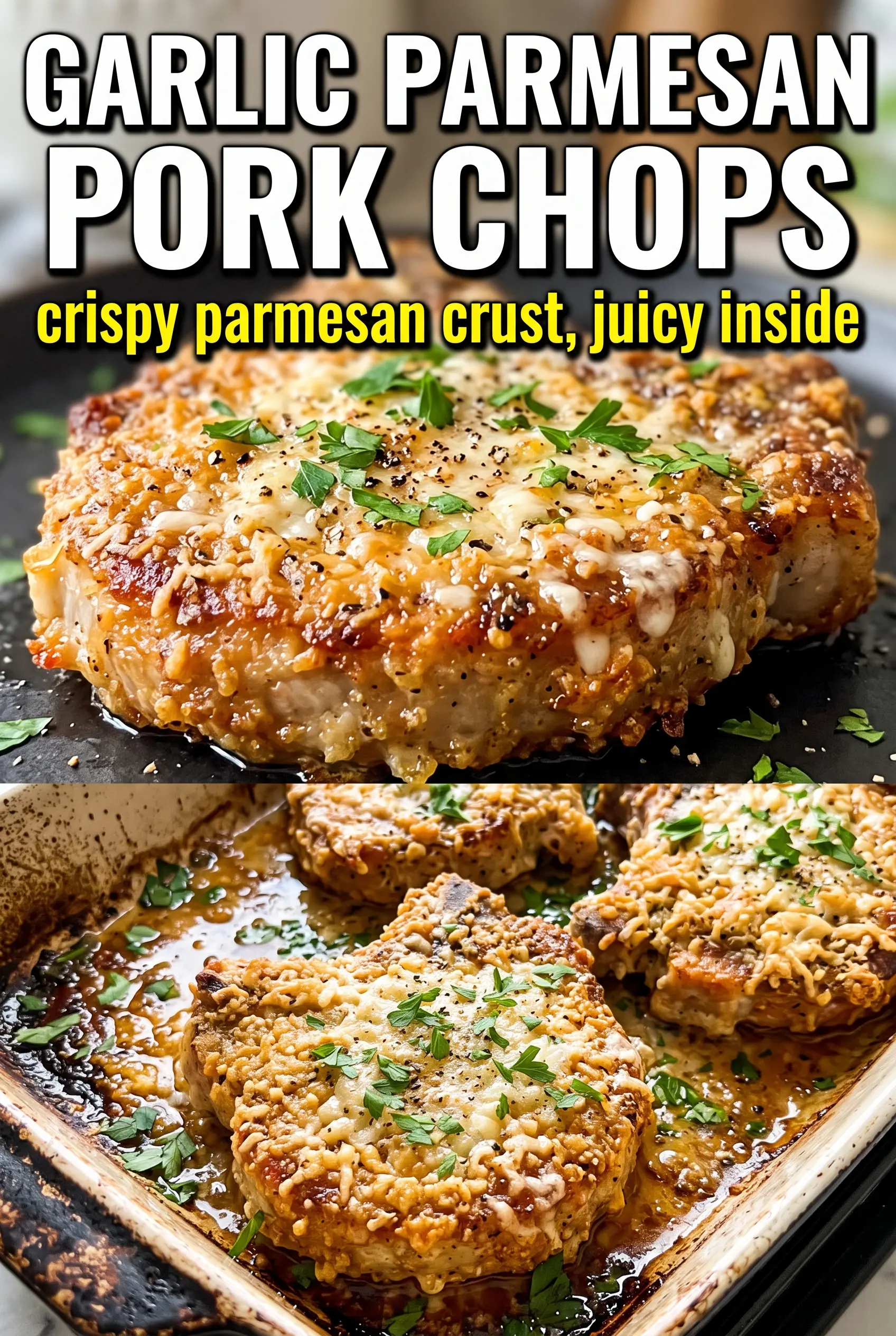
Baked Garlic Parmesan Pork Chops
Ingredients
Equipment
Method
- Preheat the oven to 425°F and line a sheet pan with parchment, so the pork chops won’t stick and the crust can brown evenly (visual cue: parchment should be fully laid flat).
- Mix the mayonnaise and Dijon mustard, then spread a thin even layer over both sides of each pork chop (visual cue: surfaces look glossy and coated).
- Combine the parmesan, panko, minced garlic, Italian seasoning, garlic powder, salt, and pepper until evenly mixed (visual cue: the mixture looks crumbly and speckled).
- Press the parmesan mixture firmly onto both sides of each pork chop (visual cue: crumbs adhere in a thick, even layer with no bare patches).
- Bake for 18–22 minutes at 425°F until the crust is deep golden and the pork reaches 145°F internally (visual cue: parmesan crust is visibly browned and crackly, not pale).
- Rest the pork chops for 3 minutes, allowing juices to redistribute (visual cue: crust stays set and the meat looks slightly less wet on the surface).
- Garnish with fresh parsley and serve with lemon wedges (visual cue: bright green herbs and yellow wedges add contrast on top).