Garlic Parmesan crockpot chicken and potatoes comes out with the kind of dinner-table payoff that makes the slow cooker feel like a smart move instead of a shortcut. The chicken turns tender under a buttery garlic coating, the potatoes soak up the broth and drippings underneath, and the Parmesan forms a salty, savory crust that clings to the skin instead of disappearing into the pot. It’s hearty without feeling heavy, and everything lands on the plate with built-in flavor.
What makes this version work is the order. The potatoes go in first so they catch the juices from the chicken as it cooks, and the chicken sits on top where the skin has a better chance of staying intact. The butter, oil, garlic, and seasonings get mixed before they touch the meat, which helps the spices spread evenly instead of clumping in one spot. A short broil at the end matters more than people think; that’s what turns the top from pale and soft into something worth serving.
Below, I’ve included the small details that keep the potatoes tender, the chicken juicy, and the skin from turning limp. There’s also a storage note for leftovers and a few variations if you want to change the seasoning or swap the potatoes.
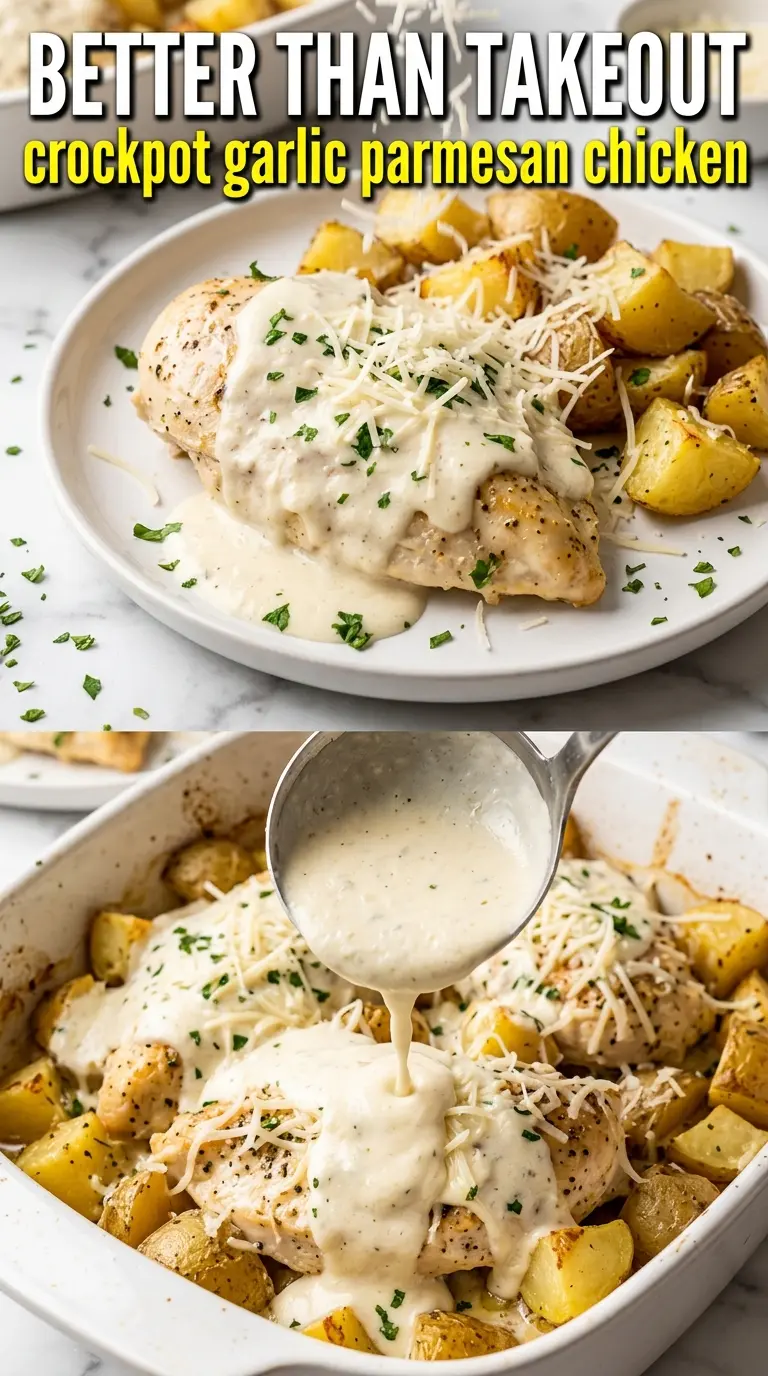
The potatoes picked up all the garlic butter under the chicken, and broiling the thighs at the end gave the skin a crisp finish I didn’t expect from a crockpot meal.
Like this garlic Parmesan crockpot chicken and potatoes? Save it for a slow-cooker dinner with crispy broiled skin and buttery potatoes.
The Broiler Finish That Keeps Crockpot Chicken Worth Serving
The slow cooker handles the tender part of this dish, but it doesn’t give you the skin you actually want to eat. That’s why the broil at the end is not optional in my kitchen. Without it, the Parmesan melts into the surface and the chicken stays soft on top. With it, the skin tightens, the cheese freckles, and the whole pan looks like dinner instead of leftovers.
The other detail that matters is keeping the chicken above the potatoes. If the thighs sit directly in the broth, the skin steams instead of seasoning and the coating slides off. The potatoes underneath catch the fat and seasoning as it drips down, which is exactly what makes them taste like they were cooked in a separate pan even though they weren’t.
What the Garlic Butter, Parmesan, and Potatoes Are Each Doing Here
- Bone-in, skin-on chicken thighs — These stay juicier than boneless pieces over a long cook, and the skin gives you something worth crisping under the broiler. Chicken breasts can work in a pinch, but they dry out faster and won’t give you the same rich result.
- Baby Yukon Gold potatoes — Yukon Golds hold their shape and turn creamy inside without falling apart. Red potatoes also work well. Avoid russets here; they can break down too much and turn the bottom of the slow cooker starchy and soft.
- Butter and olive oil — Butter carries the garlic and spices, while olive oil helps the coating spread more evenly over the chicken. If you only use butter, the mixture can set up too quickly when it hits the meat. If you only use oil, you lose some of that round, savory finish.
- Parmesan cheese — Grated Parmesan gives you the salty crust on top. Finely grated cheese melts more tightly than big shreds, so use the smaller grate if you want it to cling. Freshly grated is best because it melts cleaner and tastes sharper.
- Chicken broth — Just enough broth keeps the potatoes from scorching and gives the slow cooker a little steam to work with. Don’t add more than needed, or the bottom layer gets watery and the seasonings dilute.
Building the Layers So the Chicken Stays Juicy and the Potatoes Taste Seasoned
Starting with the potatoes
Spread the halved potatoes in an even layer on the bottom of the slow cooker and pour the broth over them. That bottom layer does two jobs: it protects the potatoes from drying out and catches the seasoned drippings from the chicken. If you pile them too high, the top pieces cook unevenly, so keep the layer as even as you can. The potatoes should look lightly coated and settled, not submerged.
Coating the chicken before it goes in
Stir the melted butter, olive oil, garlic, Italian seasoning, garlic powder, onion powder, paprika, salt, and pepper together until the garlic is evenly dispersed. The goal is a loose, spoonable paste that clings to the thighs instead of pooling in the bowl. Rub it all over the chicken, including the sides, because the seasoning left on top is what becomes the crust. If the butter starts to solidify while you work, warm it for a few seconds so the mixture stays fluid.
Slow cooking without washing away the crust
Set the coated chicken on top of the potatoes and spoon any extra garlic butter over the thighs. Sprinkle the Parmesan over each piece, then cover and cook until the meat reaches temperature and the potatoes are fork-tender. If you lift the lid too often, you add time and drop the heat, which can leave the potatoes oddly firm at the center. The chicken is done when it pulls apart easily and the juices run clear near the bone.
Broiling for the final texture
Move the chicken to a sheet pan or place the slow cooker insert under the broiler only if it’s broiler-safe. Broil just until the skin darkens in spots and the Parmesan turns deeply golden, which usually takes only a few minutes. Walk away for thirty seconds and it can go from crisp to burnt fast, especially if the cheese is close to the heating element. Garnish with parsley right before serving so it stays bright.
Three Ways to Adjust This Chicken Without Losing the Point
Swap in boneless chicken thighs for a shorter cook
Boneless thighs shave off some cook time and are easier to serve, but they won’t give you quite the same rich pan juices or broiled skin. Use them if you want a softer, less rustic finish and start checking early so they don’t overcook.
Make it gluten-free without changing the method
This recipe is naturally gluten-free as written as long as your chicken broth and Parmesan are certified gluten-free. The cooking method doesn’t need any adjustments, which makes this one of those rare slow cooker dinners that fits easily at a mixed table.
Swap the potatoes for carrots or cauliflower
Carrots hold up beautifully and bring a sweeter note, while cauliflower cuts the carbs but softens faster, so it needs less cook time and a gentler hand. If you use cauliflower, add it later in the cooking process or it will turn mushy and lose its shape.
Add a little heat without changing the structure
A pinch of crushed red pepper or a little cayenne slips into the butter mixture easily and plays well with the Parmesan. Keep it light; the garlic and cheese should still taste like the main event.
Storage and Reheating
- Refrigerator: Store leftovers in an airtight container for up to 4 days. The potatoes will firm up a little, but the flavor gets even better overnight.
- Freezer: The chicken freezes fairly well, but the potatoes soften after thawing. If you plan to freeze it, pull the meat off the bone first and freeze the chicken and potatoes in separate containers for the best texture.
- Reheating: Reheat covered in a 325°F oven until hot, or warm smaller portions in a skillet over low heat with a splash of broth. The biggest mistake is blasting it in the microwave until the chicken turns dry and the potatoes go mealy.
Answers to the Questions Worth Asking

Garlic Parmesan Crockpot Chicken and Potatoes
Ingredients
Equipment
Method
- Add the halved baby Yukon Gold potatoes to the bottom of the slow cooker and pour the chicken broth over them.
- Mix the melted butter, olive oil, minced garlic, dried Italian seasoning, garlic powder, onion powder, paprika, salt, and black pepper until evenly combined.
- Coat the chicken thighs with the butter mixture and place them on top of the potatoes in an even layer.
- Sprinkle the Parmesan cheese generously over each chicken thigh.
- Cook on LOW for 6–7 hours, or on HIGH for 3–4 hours, until the chicken is cooked through and the potatoes are fork-tender.
- Broil the chicken for 3–4 minutes to crisp the skin, watching closely to avoid burning the Parmesan.
- Garnish with fresh parsley and extra Parmesan, then serve hot.