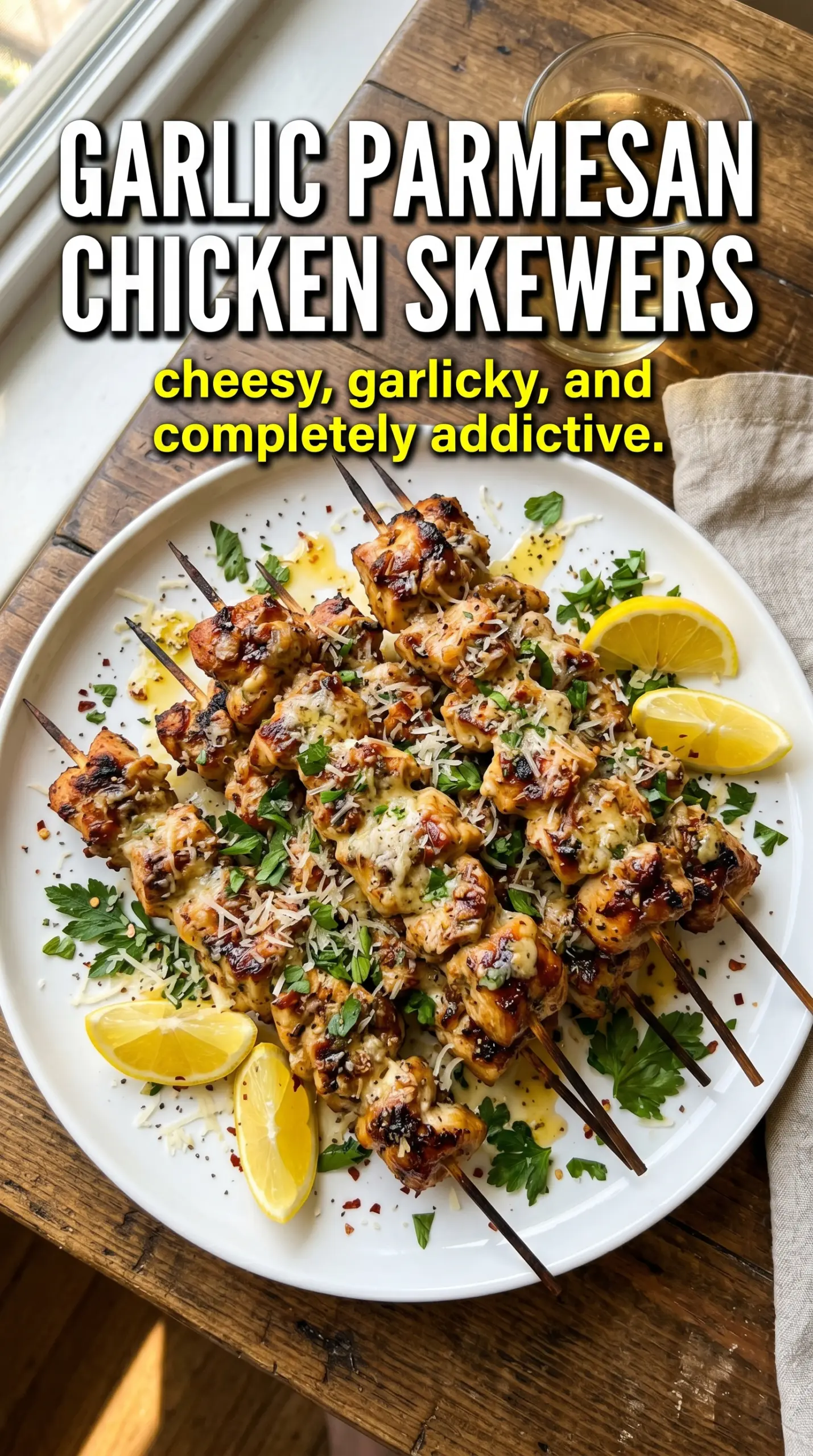
Garlic Parmesan Chicken Skewers come off the grill with crisp, caramelized edges, juicy centers, and that salty, nutty cheese coating that clings instead of falling into the flames. The garlic softens just enough in the marinade to turn mellow and fragrant, while the quick hit of high heat gives the chicken the kind of browned spots that taste like you worked harder than you did.
What makes this version worth keeping is the balance. The Parmesan goes into the marinade and again at the end, so you get both flavor inside the chicken and a fresh hit on the outside after grilling. A little lemon juice wakes everything up, and the butter drizzle at the end gives the skewers that glossy finish that makes the whole plate feel finished, not just cooked.
Below, I’ve included the small details that matter most here: how to keep the chicken from drying out, why the grill needs to be properly hot, and the easiest way to get a good char without losing the cheese. If you’ve had grilled chicken skewers turn pale, bland, or tough before, this version fixes that.
The chicken stayed juicy, and the Parmesan got these little crispy edges on the grill that made it taste like restaurant food. I added the butter at the end like you said and it made all the difference.
Save these Garlic Parmesan Chicken Skewers for the next grill night when you want juicy chicken with a garlicky Parmesan crust and no fussy cleanup.
The trick to keeping Parmesan on the chicken instead of the grill
Parmesan chicken can go wrong fast on a grill because cheese behaves differently than plain marinade. If the coating is too wet, it slides right off before the chicken has a chance to set. If the grill isn’t hot enough, the chicken steams, the garlic stays pale, and you lose the charred edges that make these skewers worth grilling in the first place.
The fix is a short marinate, a hot grate, and enough oil in the mixture to help the seasoning cling. The chicken needs that 30-minute rest to pick up flavor, but not hours and hours in acid, or the lemon starts working against the texture. Once the skewers hit the grill, leave them alone long enough to pick up color before turning them. If they stick, they’re not ready yet.
What each ingredient is doing in these skewers
- Chicken breasts — Boneless, skinless breasts stay lean and grill quickly, which matters for skewers. Cut them into even 1.5-inch pieces so they cook at the same rate and don’t dry out before the center reaches temperature.
- Olive oil — This carries the garlic and herbs, helps the Parmesan coat the meat, and keeps the surface from drying out on the grill. A good everyday olive oil is fine here.
- Freshly grated Parmesan — This is the ingredient that changes the texture. Pre-grated cheese can be drier and dustier, while freshly grated Parmesan melts into the marinade and browns better on the grill.
- Garlic and lemon juice — Garlic gives the skewers their main savory note, and lemon keeps the richness from feeling heavy. Don’t push the lemon much higher unless you want the chicken to start tasting cured instead of marinated.
- Italian seasoning and basil — These round out the garlic-Parmesan flavor so the skewers taste complete, not just salty. If your Italian seasoning is old, replace it; dried herbs lose a lot of impact once they’ve sat around too long.
- Butter — Brushing or drizzling it on at the end gives the chicken a glossy finish and carries the last bit of Parmesan across the surface. Don’t add it before grilling or it can encourage flare-ups and wipe out the char.
How to grill the skewers so they brown before they dry out
Build the marinade first
Whisk the olive oil, garlic, Parmesan, lemon juice, Italian seasoning, basil, salt, and pepper until the mixture looks thick and speckled. It won’t be a smooth sauce, and that’s fine. Add the chicken and toss until every piece is coated, then let it sit for 30 minutes. Longer isn’t better here because the lemon starts to tighten the meat if it sits too long.
Thread with the seams in mind
Soak wooden skewers while the chicken marinates, then thread the pieces with just a little space between each one. If the cubes are jammed tightly together, the sides touching the skewer stay pale and soft instead of picking up color. Push each piece on firmly enough that it won’t spin when you turn the skewer, but don’t pack them so tightly that heat can’t move around them.
Let the grill do the work
Preheat the grill to medium-high and oil the grates before the chicken goes on. You want a sizzle the second the skewers hit the surface. Grill for 4 to 6 minutes per side, depending on the size of the cubes and the heat of your grill, until the outside is deeply golden with char marks and the thickest piece reads 165°F. If the chicken sticks when you try to turn it, give it another minute; forcing it too early tears off the browned coating.
Finish with butter and Parmesan
The moment the skewers come off the grill, drizzle them with melted butter and scatter on the remaining Parmesan. The heat from the chicken helps the cheese melt into the surface instead of sitting in dry clumps. Finish with parsley and lemon wedges so each bite gets a little freshness to cut through the salt and garlic.
How to adapt these skewers without losing the grilled character
Dairy-free version
Skip the Parmesan in the marinade and finish with a dairy-free herb oil instead of butter. You’ll lose the salty, nutty crust, but the chicken still grills beautifully if you lean harder on garlic, lemon, and herbs. A spoonful of nutritional yeast can help bring back some of that savory depth.
Chicken thighs instead of breasts
Boneless thighs give you a juicier, slightly richer skewer and they’re more forgiving if your grill runs hot. Cut them into the same size cubes and grill until they hit 165°F, knowing they can handle a little extra browning without drying out.
Oven or broiler version
If grilling isn’t an option, place the skewers on a foil-lined rack and broil them, turning once, until browned and cooked through. You won’t get the same smoky edge, but a hot broiler still gives you good caramelization if the chicken isn’t crowded.
Extra-herby finish for serving
Add chopped parsley, a little basil, or even a pinch of red pepper flakes to the melted butter before drizzling. It won’t change the base recipe, but it sharpens the finish and makes the skewers feel brighter on the plate.
Storage and Reheating
- Refrigerator: Store leftovers in an airtight container for up to 3 days. The Parmesan coating softens a bit, but the flavor holds up well.
- Freezer: Freeze cooked chicken off the skewers for up to 2 months. Wrap tightly so the garlic butter doesn’t pick up freezer flavor, and thaw in the refrigerator before reheating.
- Reheating: Warm gently in a 300°F oven or in a covered skillet with a splash of water. High heat dries out the chicken fast and can make the cheese turn rubbery.
Answers to the questions worth asking

Garlic Parmesan Chicken Skewers
Ingredients
Equipment
Method
- Whisk together olive oil, garlic, 1/4 cup Parmesan, lemon juice, Italian seasoning, basil, salt, and cracked black pepper until combined, and the garlic is evenly distributed. Add the chicken cubes and toss thoroughly to coat.
- Cover and refrigerate the chicken to marinate for 30 minutes, so the coating clings and turns fragrant.
- Soak the wooden skewers in water for 30 minutes to prevent scorching, then drain well.
- Thread the marinated chicken onto the skewers, leaving a little space between pieces for even browning.
- Preheat the grill to medium-high heat and oil the grates, then place the skewers on the grill with space between them.
- Grill for 4-6 minutes per side until deeply golden with visible char marks and the center reaches 165°F (74°C), flipping once for steady caramelization.
- Remove the skewers from the grill and drizzle with the melted butter while the surface is hot so it melts and glazes.
- Scatter the remaining Parmesan over the hot skewers, and let it cling and lightly toast for a Parmesan herb crust at the edges.
- Garnish with fresh parsley and serve immediately with lemon wedges for bright finishing juice.