Golden, crackly Parmesan crust on top, juicy chicken underneath — that’s the whole promise here, and this bake delivers it without a lot of moving parts. The topping turns deeply browned and fragrant in the oven, with the garlic butter soaking into the chicken just enough to keep every bite moist. It comes out with the kind of texture that makes people head straight for the crispy edges first.
What makes this version work is the sequence. The chicken gets a quick seasoning layer before the garlic butter goes on, then the Parmesan and panko mixture gets pressed firmly over the top so it actually sticks and bakes into a crust instead of sliding off. Freshly grated Parmesan matters here because the pre-shredded stuff doesn’t melt and brown the same way.
Below, I’ve included the one detail that keeps the coating crisp instead of sandy, plus a few smart swaps for when you need to adjust for what’s in the fridge.
The Parmesan topping browned up into an actual crust, and the chicken stayed juicy instead of drying out. I used the lemon at the end like you suggested and it made the whole dish taste brighter.
Save this Garlic Parmesan Chicken Bake for the nights when you want a crisp, cheesy crust without frying a thing.
The Reason the Crust Stays Crisp Instead of Going Soggy
The biggest mistake with baked Parmesan chicken is letting the topping sit on bare, wet chicken and expecting it to behave like breading. It won’t. The butter acts as the glue, but the panko and Parmesan need to be pressed on firmly so they form one cohesive layer before the dish goes into the oven. That’s what gives you the crackled top instead of a patchy, greasy one.
Thickness matters more than most people think. If your chicken breasts are much thicker on one end, they’ll cook unevenly and the crust on the thinner side can burn before the center is done. A quick pound to even thickness keeps the bake in that 25- to 30-minute window and gives you a cleaner result.
- Panko breadcrumbs — These stay lighter and crunchier than fine breadcrumbs. Regular breadcrumbs work in a pinch, but the topping will be denser and less crisp.
- Fresh Parmesan — Grate it yourself if you can. It melts and browns into a proper crust; the shelf-stable stuff tends to clump and turn dusty.
- Butter — This carries the garlic and helps the topping brown. Olive oil can work, but the crust won’t taste as rich.
- Smoked paprika — It’s subtle, but it gives the crust a little warmth and color without making the dish taste smoky in a heavy way.
What Each Ingredient Is Doing in the Pan
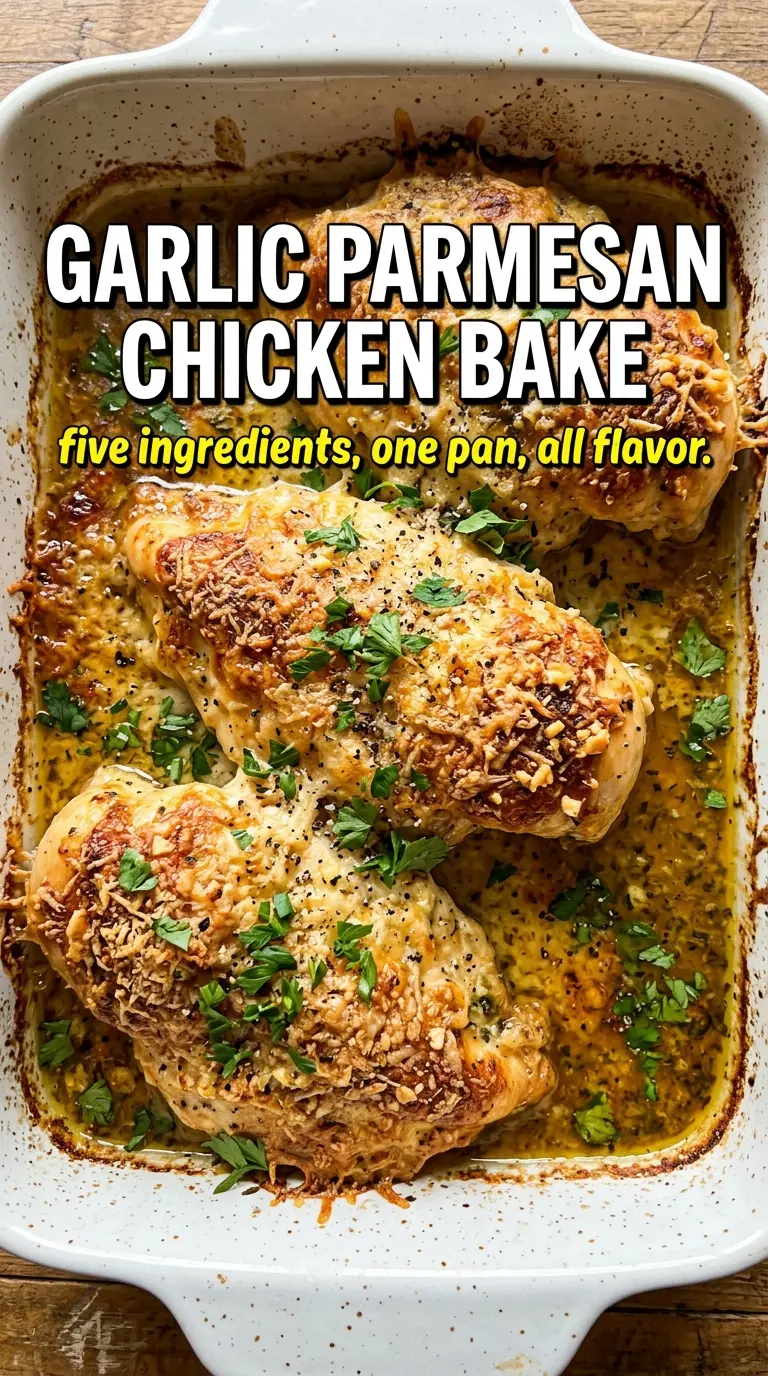
- Chicken breasts — Boneless, skinless breasts keep this weeknight-friendly, but they need even thickness so they finish at the same time. If one end is much thicker, pound it gently before seasoning.
- Butter and garlic — This is the flavor base and the adhesive. Garlic powder in the seasoning and fresh garlic in the butter give you depth instead of a one-note garlic hit.
- Parmesan — This is the backbone of the crust. Use a good wedge if possible, because it melts into those browned, salty bits that make the dish taste finished.
- Panko — It keeps the topping from turning into a solid cheese cap. The crumbs lighten the crust and help it stay crisp after baking.
- Italian seasoning, parsley, and paprika — These round out the topping without stealing the show. Dried herbs work better than fresh inside the crust because they won’t add extra moisture.
Getting the Chicken Covered Without Losing the Crust
Season the Chicken First
Salt, pepper, and garlic powder go directly on the chicken before anything else. That gives the meat its own flavor under the crust, which matters because the topping is rich and salty. Lay the breasts in a greased 9×13 dish with a little space between them so the hot air can move around the edges. If they’re crowded together, they’ll steam and the crust won’t brown as evenly.
Brush On the Garlic Butter
Mix the melted butter with minced garlic and brush it generously over each breast. You want a full coating, not a few streaks, because the butter is what anchors the crust. If the butter starts to firm up while you work, warm it briefly; cold butter won’t spread evenly and the topping can fall off in spots.
Press the Topping, Don’t Sprinkle It
Combine the Parmesan, panko, Italian seasoning, parsley, and smoked paprika, then press the mixture firmly onto the buttered chicken. That pressure matters. A loose sprinkle looks fine going into the oven but often slides off once the cheese melts. The top should look thick and compact before it bakes.
Bake Until the Edges Brown Deeply
Bake at 400°F for 25 to 30 minutes until the crust is deeply golden and the chicken reaches 165°F in the center. Don’t pull it just because the top looks brown; the thickest part of the breast needs to be checked with a thermometer. If the crust browns too fast before the chicken is done, lay a loose piece of foil over the top for the last few minutes.
How to Adapt This for Different Tables and Different Fridges
Gluten-Free Version
Swap the panko for gluten-free breadcrumbs or crushed gluten-free crackers. The crust will still crisp up, but cracker crumbs brown faster, so start checking a few minutes early.
Dairy-Free Adjustment
Use a dairy-free butter and a Parmesan-style vegan cheese that grates finely. The result won’t have quite the same salty melt, but the breadcrumb crust still gives you good texture and a savory finish.
For Chicken Thighs Instead of Breasts
Boneless thighs stay juicier and give you a little more forgiveness on timing. They may need a few extra minutes in the oven, but the crust still browns beautifully and the flavor gets even richer.
Storage and Reheating
- Refrigerator: Store leftovers in an airtight container for up to 3 days. The crust softens a bit, but the chicken stays usable for lunch or dinner.
- Freezer: It freezes, but the topping loses some crunch after thawing. Wrap portions tightly and freeze for up to 2 months if you don’t mind a softer crust.
- Reheating: Warm in a 350°F oven until heated through. The oven brings back more texture than the microwave, which tends to make the topping rubbery and can overcook the chicken.
Questions I Get Asked About This Recipe
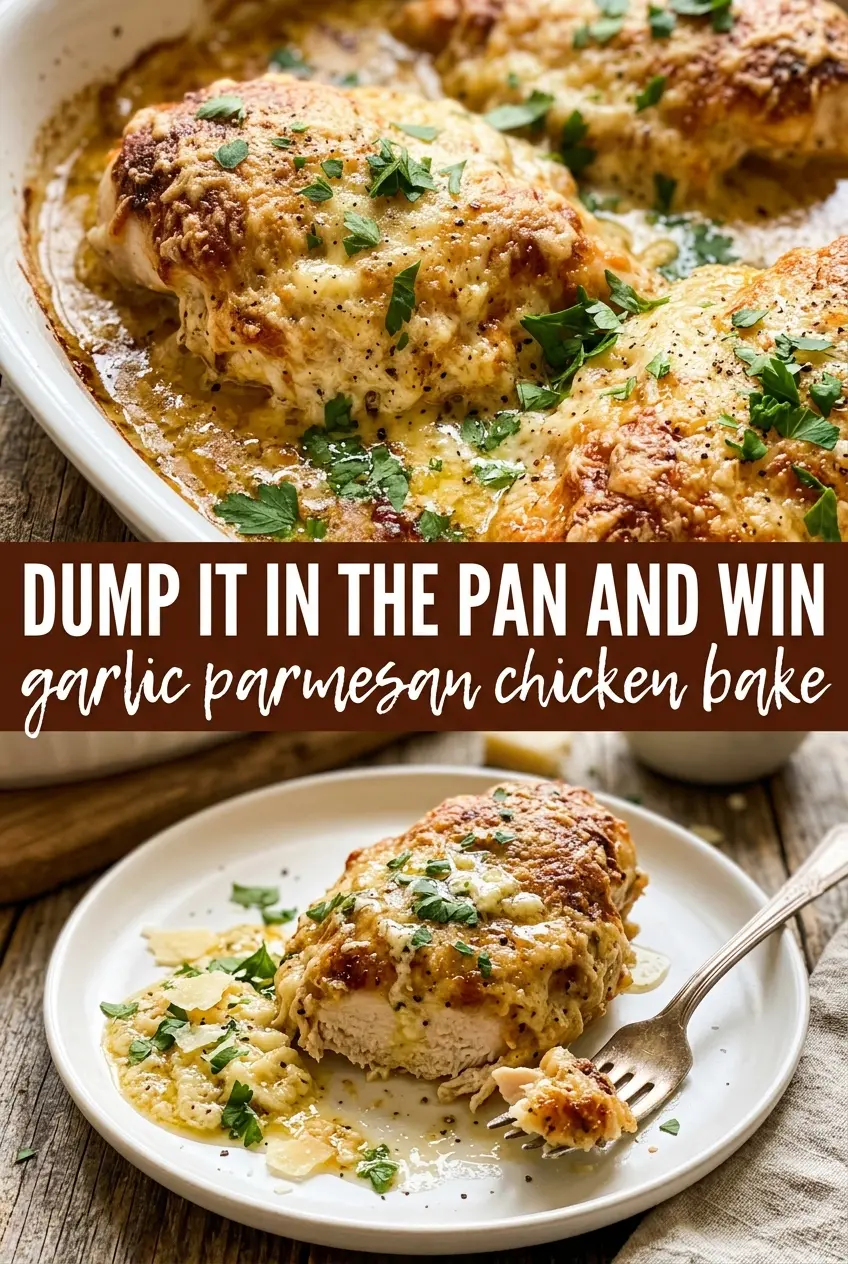
Garlic Parmesan Chicken Bake
Ingredients
Equipment
Method
- Preheat the oven to 400°F and grease a 9x13 baking dish to prevent sticking.
- Season the chicken breasts with salt, pepper, and garlic powder, then place them in the prepared dish.
- Mix the melted butter with the minced garlic, then brush generously over each chicken breast.
- Combine Parmesan, panko, Italian seasoning, dried parsley, and smoked paprika, then press the mixture firmly over the buttered chicken to coat.
- Bake for 25-30 minutes at 400°F until the Parmesan crust is deeply golden and the internal temperature reaches 165°F, with visible browning across the top.
- Garnish with fresh parsley and serve with lemon wedges to brighten the browned, crackled crust.