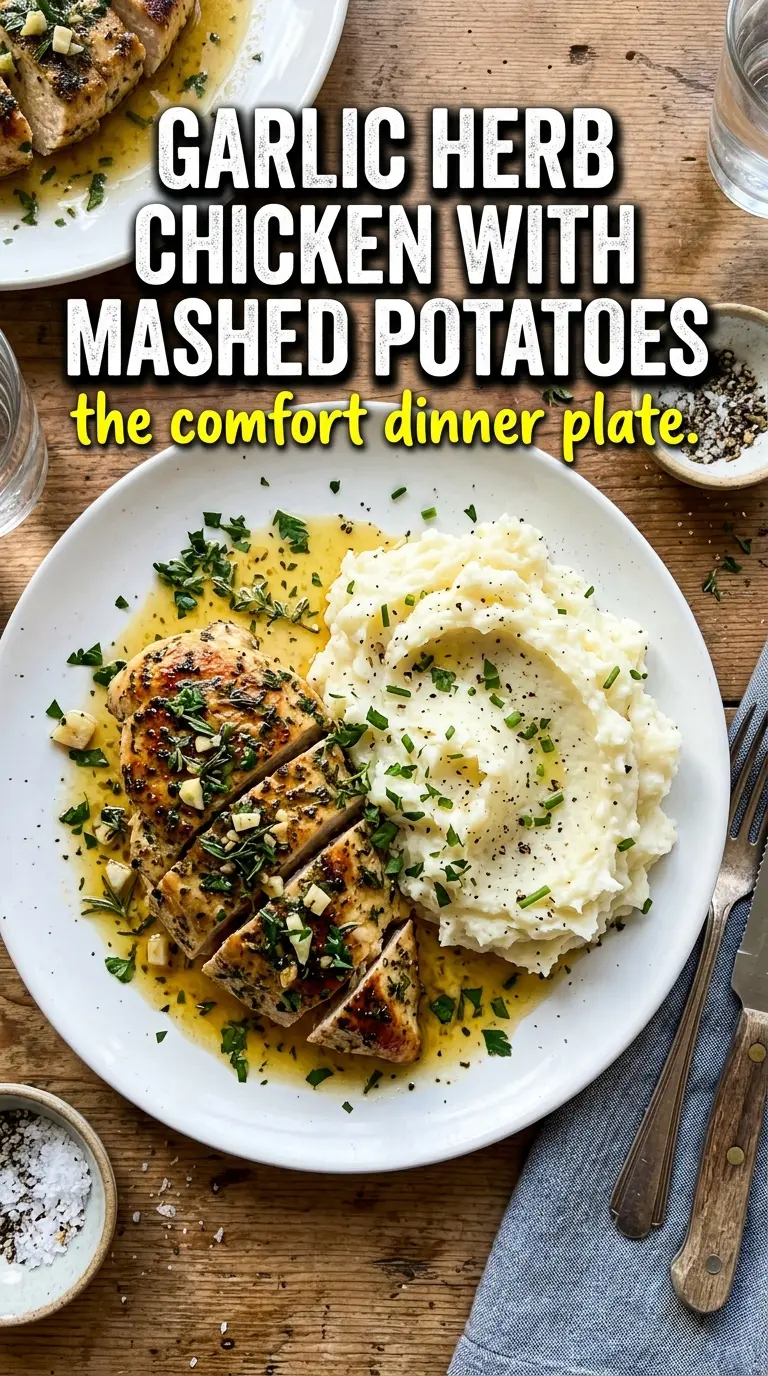
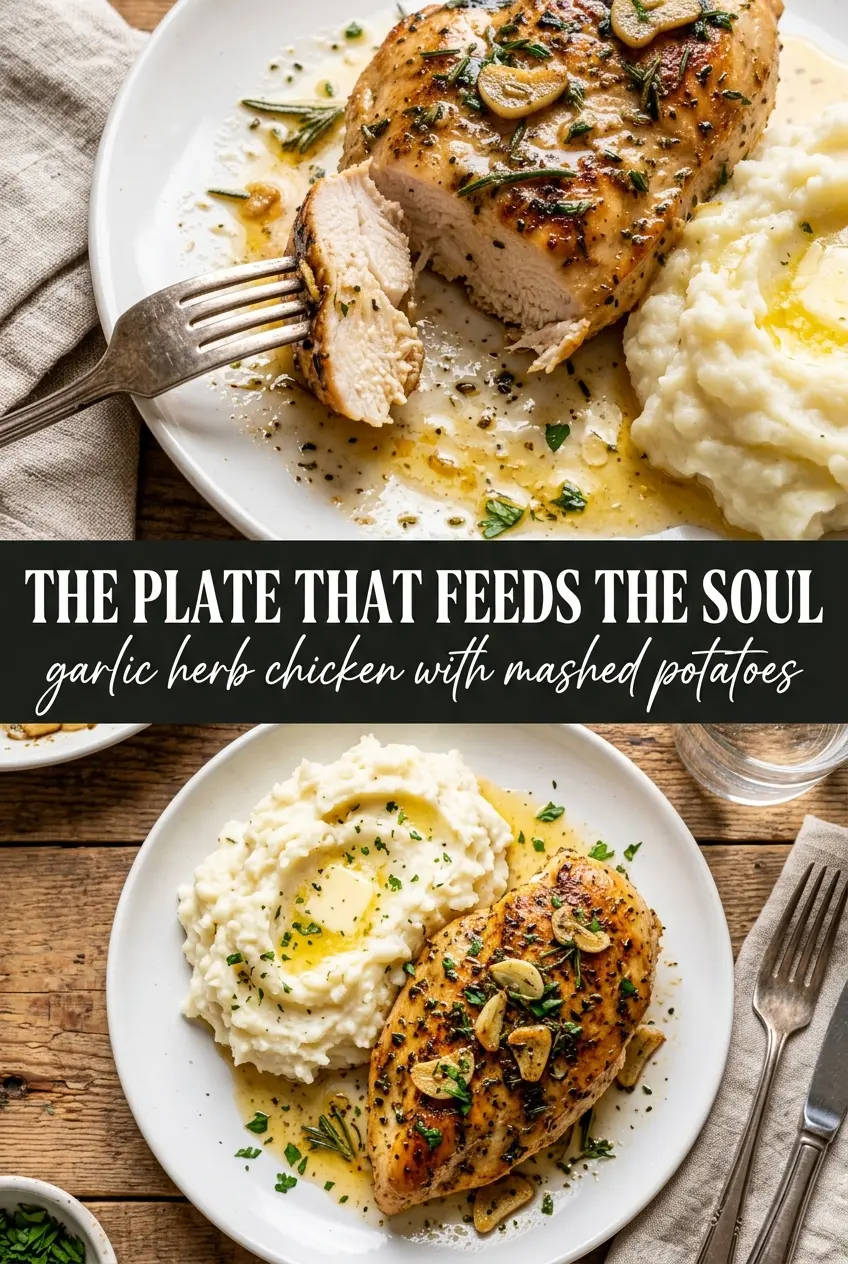
Golden seared chicken breasts over buttery mashed potatoes hit that sweet spot between comforting and polished. The chicken stays juicy because it’s seasoned generously, seared hard enough to build color, then finished just to temperature. The mashed potatoes underneath catch every drop of the garlic herb pan sauce, which turns the whole plate from weeknight dinner into something worth sitting down for.
What makes this version work is the layering. The spice mix goes on the chicken before it ever touches the pan, so the herbs have a chance to bloom in the hot oil instead of disappearing into the sauce. Then the same skillet becomes the sauce base, which means the browned bits from the chicken get lifted into the broth and butter instead of being washed down the drain. Yukon Gold potatoes matter here too because they mash up naturally creamy without turning gluey, especially if you stop as soon as they’re smooth and fluffy.
Below, I’ll walk through the one pan move that keeps the sauce from tasting flat, plus the small mashed potato detail that makes the whole plate feel restaurant-level without adding extra work.
The chicken got such a good crust, and the garlic herb sauce picked up all those browned bits from the pan. I made it on a Tuesday and my husband asked if we could have it again next week.
Save this garlic herb chicken and mashed potatoes for the night you want crisp-edged chicken, creamy potatoes, and a pan sauce that comes together in one skillet.
The Reason the Chicken Stays Juicy Instead of Drying Out
The biggest mistake with chicken breast is chasing color after the meat is already overcooked. Once the pan gets hot enough to sear, the clock moves fast, and the goal is a deep golden crust before the center overcooks. If the breasts are uneven, pound the thicker end slightly so they finish at the same time. That keeps you from slicing into one side that’s done and the other side that still needs heat.
The other piece that matters is resting. Chicken breast keeps cooking after it leaves the pan, and if you cut it too soon, the juices run straight onto the board instead of staying in the meat. A short rest gives you cleaner slices and a better plate. It also gives you a few minutes to finish the sauce without feeling rushed.
What the Potatoes, Butter, and Herbs Are Really Doing Here
- Yukon Gold potatoes — These are the right potato for a mash that tastes rich without needing a ton of extra dairy. They break down smoothly and hold enough structure to stay fluffy instead of turning pasty. Russets work in a pinch, but they’re drier and can go gluey faster if you overmix.
- Butter — This is the backbone of both the mash and the sauce. In the potatoes, it gives body and that silky mouthfeel; in the pan, it carries the garlic and picks up the browned bits. Use real butter here. This dish leans on it.
- Heavy cream or whole milk — Warm it before stirring it into the potatoes so you don’t cool everything down and end up with a stiff mash. Heavy cream gives the most luxurious texture, but whole milk still works well if you want something lighter. Cold dairy is what makes mashed potatoes seize up.
- Fresh garlic in the sauce — The minced garlic gets cooked just long enough to lose its raw bite. If it browns, it turns bitter fast, so keep it moving and add the broth as soon as it smells fragrant.
- Dried thyme and rosemary — These herbs need the heat of the skillet to wake up. Fresh herbs can be used, but the dried version sticks better to the chicken before searing and gives you a more even herb crust.
Building the Skillet Sauce Without Losing the Pan Magic
Boiling the Potatoes to the Right Point
Start the potatoes first so they’re ready when the chicken is done. Salt the water well, then cook until a fork slides in with no resistance but the cubes still hold their shape. If they fall apart in the water, they’ve gone too far and can absorb more liquid than you want. Drain them thoroughly so the mash doesn’t turn watery.
Getting a Real Sear on the Chicken
Pat the chicken dry before seasoning it. Moisture on the surface is the fastest way to lose browning. Add the oil to a hot skillet, then lay the chicken in and leave it alone until it releases cleanly and the underside is deep golden. If you keep moving it, you’ll smear the crust instead of building one.
Turning the Drippings Into Sauce
Take the chicken out once it hits 165°F and set it aside to rest. Add the butter to the same pan, then the garlic, and cook just until fragrant. Pour in the broth and scrape the bottom with a wooden spoon so all those browned bits dissolve into the liquid. Let it simmer until slightly glossy and spoonable; if it tastes thin, give it another minute instead of adding more broth.
Mashing and Plating in the Right Order
Mash the potatoes with the butter and warm dairy until they’re smooth and fluffy, then season them while they’re still hot. Spoon them onto the plate first so the sauce has a place to settle. Slice the chicken if you want a more elegant look, or leave the breasts whole for a simpler dinner plate, then drizzle the sauce over the top and finish with parsley. The heat from the sauce wakes up the herbs and ties the whole dish together.
Three Ways to Make This Dinner Fit Your Table
Swap in chicken thighs for more forgiveness
Boneless skinless thighs stay juicier and tolerate a little extra time in the pan, which makes them a good choice if you’re nervous about overcooking breast meat. Keep the same seasoning and sauce, but expect a slightly richer, softer bite.
Make it dairy-free without losing the skillet dinner feel
Use olive oil or a plant-based butter for the sauce and mash, then swap the cream for unsweetened oat milk or a plain dairy-free milk that warms well. The potatoes won’t be quite as rich, but the garlic herb sauce still carries the dish.
Turn it into a lighter plate with cauliflower mash
Replace part or all of the potatoes with steamed cauliflower, then mash it thoroughly so it doesn’t get watery. You’ll lose some of the classic starchiness, but the chicken and sauce keep the plate satisfying.
Use whole milk instead of cream
Whole milk makes the mashed potatoes a touch lighter and still gives a smooth texture if it’s warmed first. Don’t pour it in cold, or the mash will cool down and tighten up before it gets fluffy.
Storage and Reheating
- Refrigerator: Store the chicken, potatoes, and sauce separately for up to 3 days. The potatoes will thicken as they chill.
- Freezer: The chicken freezes well for up to 2 months, but the mashed potatoes can turn grainy after thawing. Freeze only if you don’t mind a looser texture.
- Reheating: Warm the chicken gently in a covered skillet or low oven, and reheat the potatoes with a splash of milk over low heat. The mistake to avoid is blasting everything in the microwave at full power, which dries out the chicken and makes the potatoes stiff.
Answers to the Questions Worth Asking
Garlic Herb Chicken Breast with Mashed Potatoes
Ingredients
Equipment
Method
- Boil Yukon Gold potatoes in salted water for 15-18 minutes until fork-tender, then drain and mash in a pot. Mash until smooth and fluffy with butter, warmed heavy cream or whole milk, salt, pepper, and garlic powder, and keep warm.
- Season chicken breasts with garlic powder, smoked paprika, dried thyme, dried rosemary, salt, and pepper. Heat olive oil in a skillet over medium-high heat and sear for 5-6 minutes per side until golden and cooked through to 165°F, then remove to a plate.
- Melt 2 tablespoons butter in the same skillet, then cook the minced garlic for 1 minute until fragrant. Add chicken broth and scrape up the browned bits, then simmer for 2-3 minutes until a simple pan sauce forms.
- Plate mashed potatoes and place the chicken on top, leaving the potato mound visible. Drizzle the pan sauce over the chicken and garnish with fresh parsley.