Garlic butter steak and potato foil packets come off the grill with everything you want in a hands-off dinner: tender steak, buttery potatoes, and those browned edges where the butter and seasonings concentrate into the best part of the packet. The foil does the work for you, trapping steam so the potatoes cook through while the steak stays juicy instead of drying out over direct heat.
The trick is balancing the cut size and the cook time. Baby potatoes need to be halved so they finish in the same window as 1-inch steak cubes, and the butter mixture needs enough salt, garlic, and paprika to season the whole packet, not just coat the outside. Heavy-duty foil matters here, too, because thin foil can tear when you flip the packets or open them over hot steam.
Below, I’ll show you how to keep the potatoes from turning hard in the center, how to seal the packets so nothing leaks out, and a few easy variations if you want to swap the protein or make this work in the oven.
The potatoes were tender all the way through and the steak stayed juicy. I loved how the garlic butter soaked into everything without making the foil packets soggy.
Save these garlic butter steak and potato foil packets for an easy grilled dinner with juicy steak and buttery potatoes.
The Reason the Potatoes Don’t Stay Hard in the Center
The potatoes are the part that can ruin this dish if they’re cut too large or packed too tightly. Halving baby potatoes gives you a flat side that picks up seasoning and a smaller piece that cooks through in the same amount of time as the steak. If you use full-size chunks, the steak will be done before the potatoes have softened.
The other issue is sealing the packets well enough to trap steam without pressing everything into a tight little brick. You want enough room for heat to circulate inside the foil. That steam is what softens the potatoes, and the butter keeps the steak from tasting dry even after the packets sit for a minute before opening.
What Each Ingredient Is Actually Doing in the Packet
- Sirloin steak — This is a good balance of tenderness and price, and it holds up well in foil packets. Cut it into even 1-inch cubes so it cooks at the same pace as the potatoes. If you swap in a leaner cut, keep a close eye on time because it can dry out faster.
- Baby potatoes — These stay creamy inside and roast up with thin, tender skins. Halving them is non-negotiable here; whole baby potatoes take too long and throw off the timing. Yukon Golds cut into small chunks work too if that’s what you have.
- Butter — Melted butter carries the garlic and spices across every bite and helps the edges brown a little inside the packet. If you use a butter substitute, the flavor will be flatter and you’ll lose some of that rich coating. Salted butter is fine; just ease up a little on the added salt.
- Garlic, parsley, thyme, and paprika — Garlic gives the packet its punch, parsley adds freshness, thyme brings a savory note, and paprika rounds it out with color and warmth. Fresh garlic matters more than jarred here because the packet cooks fast and you want a bright garlic flavor, not a muted one. Dried parsley won’t give the same lift, so keep the fresh parsley for the finish if you can.
The Heat Window That Gives You Tender Steak and Soft Potatoes
Coating Everything in the Garlic Butter
Mix the melted butter with the garlic, parsley, thyme, paprika, salt, and pepper first so the seasonings are evenly dispersed before the food goes in. Toss the steak and potatoes until every surface looks glossy and speckled with herbs. If the butter starts to solidify because the bowl is cold, warm it just enough to loosen again; cold butter clumps and leaves some pieces underseasoned.
Building the Packets
Divide the mixture evenly among four large pieces of heavy-duty foil, keeping the potatoes in a single layer as much as possible. That helps them cook through instead of steaming unevenly in a pile. Crimp the edges tightly, but leave a little air space inside so the steam can move around. A packet that’s sealed too tightly and packed too full can burst when the butter starts bubbling.
Grilling Until the Steam Slows Down
Cook the packets over medium-high heat for 20 to 25 minutes, flipping once halfway through. You’ll know they’re close when the foil is puffed and the packets feel hot and active when you lift them with tongs. If your potatoes are still firm after 25 minutes, close the packets back up and give them a few more minutes rather than cutting the steak open early.
Opening Without Losing the Juices
Let the packets sit for a minute before opening, then peel the foil back carefully because the steam comes out fast. Spoon some of the garlicky butter over the top before serving so you keep the flavor that settled at the bottom of the packet. If you dump everything onto a plate too quickly, you lose the best part of the sauce.
How to Change the Packet Without Losing the Point of the Dish
Oven-Baked Version
Bake the sealed packets on a sheet pan at 425°F for about 25 to 30 minutes. The result is almost the same as the grill, just without the smoky edge. Use the same foil setup and don’t skip the heavy-duty wrap, because oven heat still builds steam quickly inside the packets.
Garlic Herb Chicken Swap
Use boneless skinless chicken thighs cut into bite-size pieces instead of steak. Thighs stay juicy in the packets and can handle the same cook time, but chicken breasts dry out faster and need a stricter eye on doneness. The flavor stays rich and buttery, just a little lighter than the steak version.
Dairy-Free Packet
Swap the butter for a plant-based butter that melts cleanly and tastes savory, not sweet. You’ll still get a coated packet and tender potatoes, though the sauce won’t have the same deep richness as dairy butter. Add a small splash of olive oil if your substitute is on the lean side.
Storage and Reheating
- Refrigerator: Store leftovers in an airtight container for up to 3 days. The potatoes soften a bit more after chilling, but the flavor holds well.
- Freezer: The steak and potatoes can be frozen, but the potatoes will turn softer after thawing. Freeze in portions once cooled, wrapped tightly and sealed in a freezer bag.
- Reheating: Warm in a skillet over medium-low heat with a splash of water or broth, or reheat covered in the oven until hot. Don’t blast it on high heat or the steak will tighten up and the potatoes can dry out before the center warms through.
Answers to the Questions Worth Asking
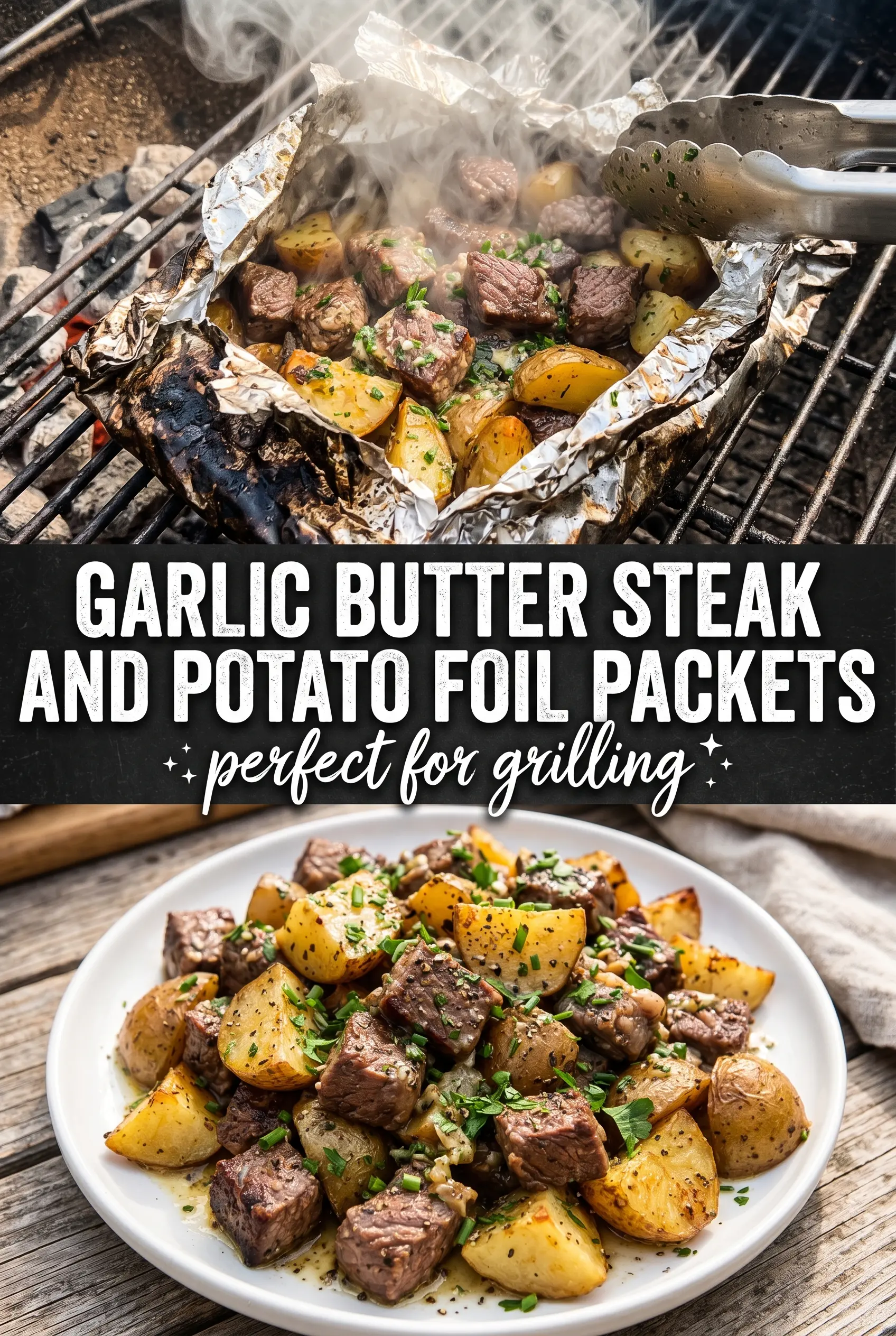
Garlic Butter Steak and Potato Foil Packets
Ingredients
Equipment
Method
- Combine melted butter, garlic, chopped parsley, thyme, paprika, salt, and pepper in a bowl until smooth and evenly mixed.
- Toss steak cubes and potato halves in the garlic butter mixture until well coated and glossy.
- Divide the steak and potato mixture evenly among 4 large pieces of heavy-duty aluminum foil, piling it in the center of each sheet.
- Fold foil into sealed packets, pressing and tightly crimping all edges to prevent steam from escaping.
- Grill packets over medium-high heat for 20-25 minutes, flipping halfway through, until the steak is cooked through and the potatoes are tender.
- Carefully open packets (watch for steam), garnish with fresh parsley, and serve immediately.