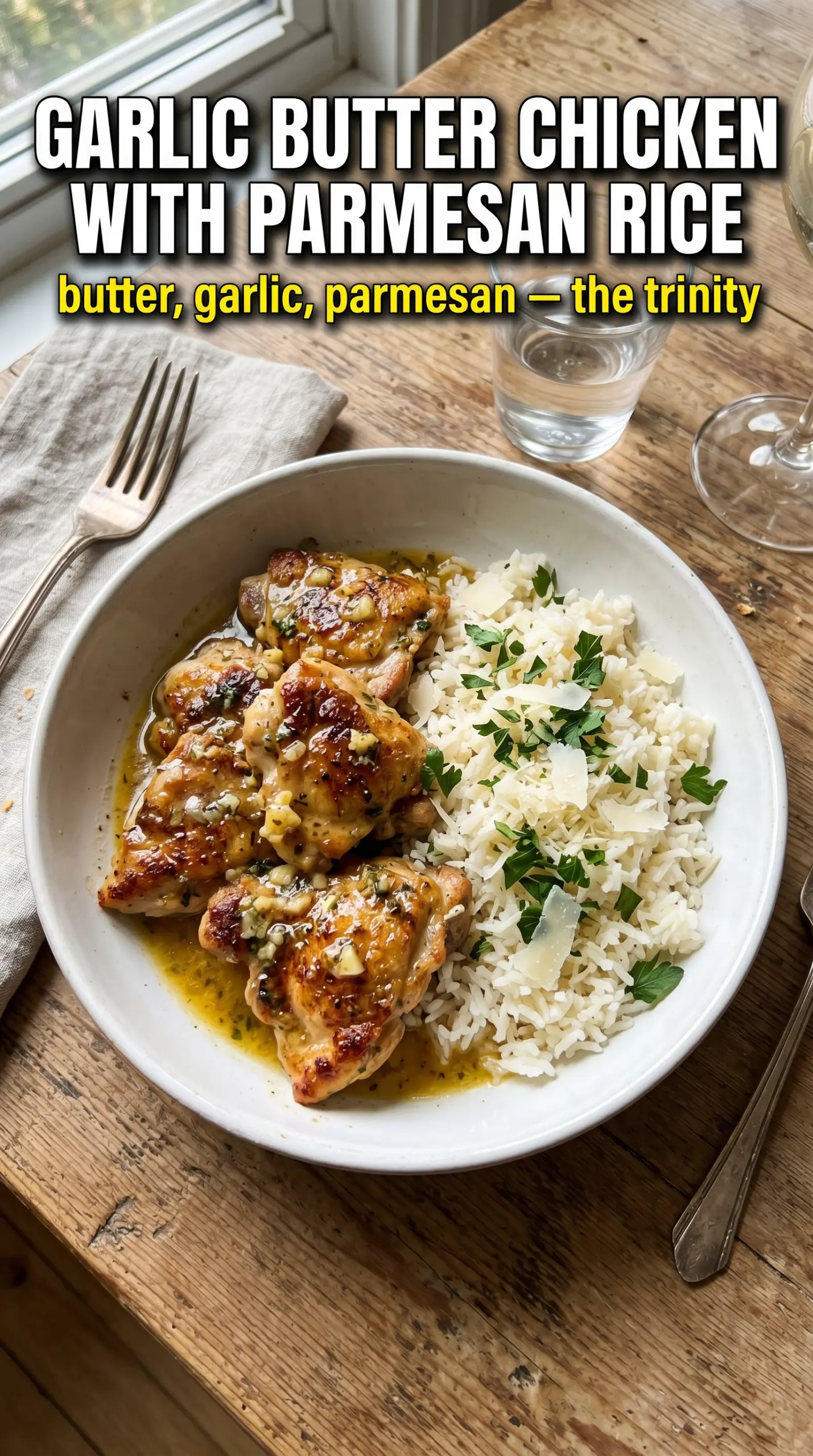
Golden seared chicken thighs over creamy Parmesan rice is the kind of skillet dinner that disappears fast because every bite hits a little differently: crisp edges from the chicken, rich garlic butter in the pan, and rice that soaks up every bit of the drippings. The rice isn’t just a side here. It becomes the sauce holder, which is why this dish feels bigger than the ingredient list.
The trick is building the rice in the same skillet after the chicken comes out. Those browned bits left behind do the heavy lifting, and the garlic only needs a minute in the butter before the rice goes in so it stays fragrant instead of bitter. Parmesan and cream get stirred in at the end, off the hottest part of the heat, which keeps the rice silky instead of gluey.
Below, I’ll walk through the part that matters most: how to keep the chicken deeply browned and the rice creamy without turning it heavy. There’s also a simple storage note and a few swaps that still keep the dish on track.
The chicken stayed juicy and the rice picked up all that garlicky butter from the pan. I was nervous about the Parmesan making it clumpy, but it melted into a creamy sauce right at the end.
Save this garlic butter chicken with Parmesan rice for the nights when you want one skillet, a creamy rice base, and a pan sauce that tastes like you planned ahead.
The Sear Is What Gives the Rice Its Depth
The chicken has to get properly browned before it comes out of the pan. Pale chicken leaves you with plain rice; a deep golden crust leaves the skillet full of flavor before the garlic even goes in. That crust is what keeps this dish from tasting like chicken and rice in separate lanes.
The other thing that matters here is heat control. If the garlic cooks too long, it turns sharp and bitter, and if the rice goes in before the butter is hot enough, it won’t toast and pick up that nutty edge. You want the rice to look glossy and slightly translucent at the edges before the broth goes in.
- Boneless skinless chicken thighs — These stay juicy through the sear and the return to the pan. Breasts work, but they dry out faster and need a shorter cook time.
- Long-grain white rice — This is the right rice for a creamy-yet-separate texture. Short-grain rice gets stickier, and brown rice needs a different liquid ratio and a longer simmer.
- Parmesan — Freshly grated melts in smoothly and gives the rice a savory finish. Pre-shredded cheese can stay grainy because of the anti-caking agents.
- Heavy cream — This is what rounds out the sauce and keeps the rice from tasting thin. Half-and-half can work in a pinch, but the finished dish will be less lush.
- Chicken broth — It seasons the rice from the inside out. Water will cook the rice, but it won’t give you the same depth.
What Each Ingredient Is Actually Doing in This Skillet
- Olive oil plus butter — The oil helps the chicken brown without burning, then the butter carries the garlic flavor into the rice. Using only butter can make the sear more fragile.
- Garlic powder and smoked paprika — These season the chicken from the outside and give it a deeper, more complete flavor than fresh garlic alone. The smoked paprika adds warmth without making the dish taste smoky.
- Dried thyme — A small amount is enough to make the rice taste finished instead of flat. Fresh thyme also works if you use a little more and strip the leaves from the stems.
- Fresh parsley — This is not just garnish. It cuts through the richness at the end and keeps the skillet from tasting heavy.
Getting the Chicken Browned and the Rice Creamy in the Same Pan
Season and Sear the Thighs
Pat the chicken dry, then season it well on both sides. Lay it into the hot oil and leave it alone until the underside turns deep golden and releases from the pan without sticking. If you keep moving it too early, you’ll lose the crust and end up steaming the meat instead of searing it.
Toast the Garlic and Rice
Once the chicken comes out, melt the butter and add the garlic for just a minute. It should smell fragrant and soft, not browned. Stir in the rice and let it toast for about 2 minutes until the grains look coated and glossy; this quick step gives the rice a better texture and helps it hold up when the cream goes in later.
Simmer Without Stirring Too Much
Pour in the broth, bring it to a boil, then drop the heat, cover the pan, and let it cook undisturbed. Lifting the lid too often lets steam escape and throws off the texture. When the rice is tender and the liquid is absorbed, it should still look a little loose at the surface rather than dry and packed down.
Finish With Cheese, Cream, and the Chicken
Stir in the Parmesan, cream, and thyme off the strongest heat so the cheese melts smoothly. If you add Parmesan to a pan that’s ripping hot, it can clump instead of turning silky. Nestle the chicken back into the rice so the juices settle into the skillet, then finish with parsley right before serving.
How to Adapt This for What You Have on Hand
Make It Gluten-Free Without Changing the Texture
This recipe is naturally gluten-free as long as your chicken broth is certified gluten-free. The rice, cheese, cream, and seasonings all work as written, so there’s no texture penalty here.
Swap in Chicken Breasts for a Leaner Version
Chicken breasts work if that’s what you have, but they need less time in the skillet and can dry out faster. Pull them as soon as they hit 165°F and let the rice finish the rest of the meal without overcooking the meat.
Use Half-and-Half Instead of Heavy Cream
Half-and-half will still give you a creamy finish, but the sauce won’t feel as rich or cling as tightly to the rice. Keep the heat low when you stir it in so it doesn’t thin out or separate.
Add Mushrooms or Spinach for a Fuller Pan Dinner
Sauté sliced mushrooms after the chicken comes out, then build the rice in the same pan. If you want spinach, stir it in at the very end so it wilts without watering down the sauce.
Storage and Reheating
- Refrigerator: Store leftovers in an airtight container for up to 3 days. The rice will thicken as it sits, and the chicken stays best when it’s not sliced until reheating.
- Freezer: It freezes, but the rice gets softer after thawing. For the best texture, freeze in portions for up to 2 months and expect a looser, less creamy finish when reheated.
- Reheating: Warm it gently on the stove or in the microwave with a splash of broth or water to loosen the rice. High heat dries out the chicken and tightens the dairy, which is how leftovers turn grainy.
Questions I Get Asked About This Recipe
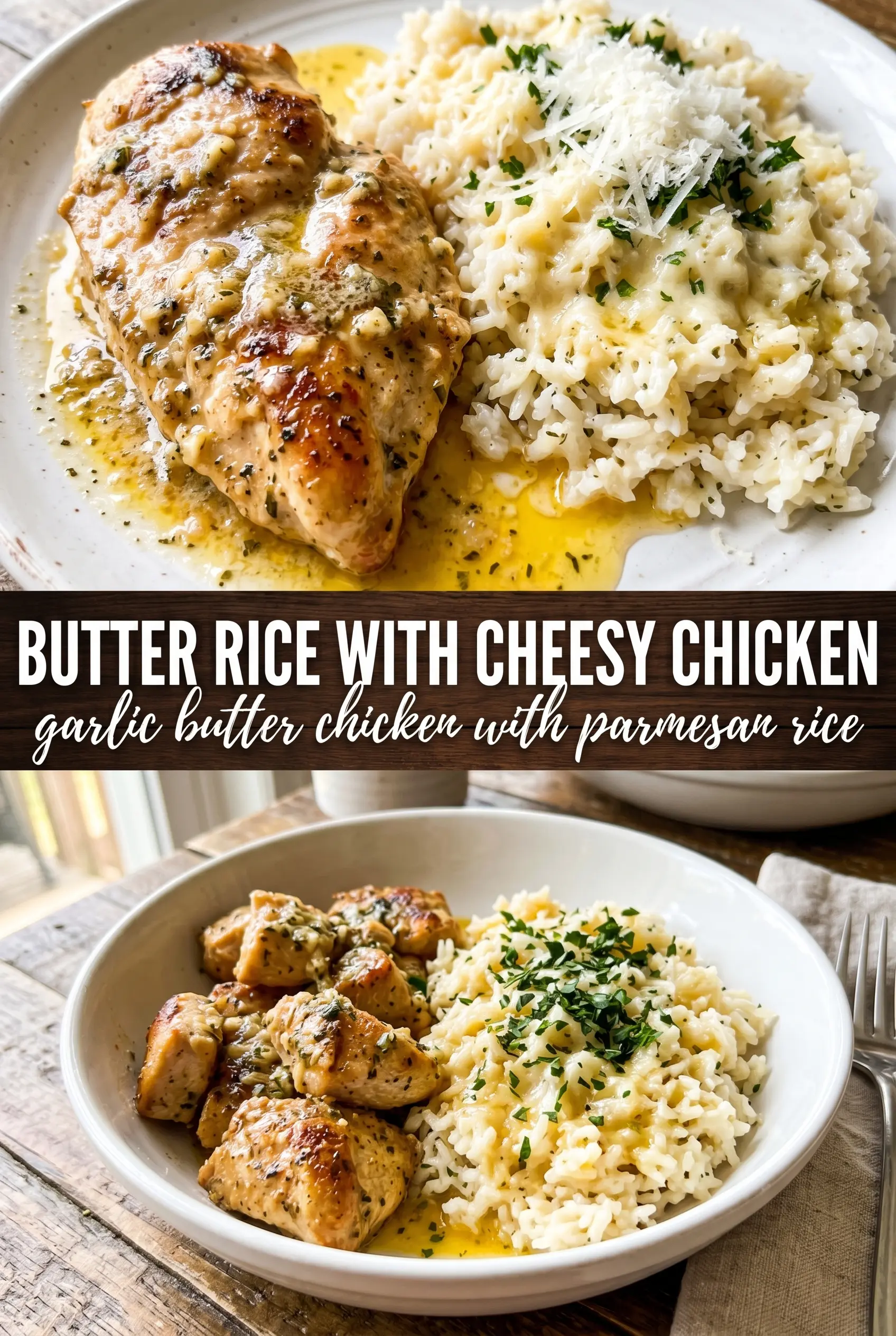
Garlic Butter Chicken with Parmesan Rice
Ingredients
Equipment
Method
- Season the chicken thighs all over with salt, pepper, garlic powder, and smoked paprika. Make sure each side is evenly coated for consistent browning.
- Heat the olive oil in a large skillet over medium-high heat until shimmering. Sear the chicken for 5-6 minutes per side until golden and cooked through to 165°F, then transfer to a plate.
- Melt the butter in the same skillet over medium heat. Cook the minced garlic for 1 minute, stirring, until fragrant but not browned.
- Add the long-grain white rice to the skillet and toast for 2 minutes. Stir to coat the grains so they pick up buttery garlic flavor.
- Pour in the chicken broth and bring to a boil. Cover and simmer over low heat for 18 minutes, until the rice is tender.
- Stir in the Parmesan cheese, heavy cream, and dried thyme. Cook just until the rice turns creamy and saucy, scraping up any browned bits from the bottom of the pan.
- Nestle the seared chicken thighs back into the Parmesan rice. Let everything sit in the pan briefly so the drippings soak into the rice.
- Garnish with fresh parsley and serve. Plate with extra sauce from the skillet so every bite is creamy.