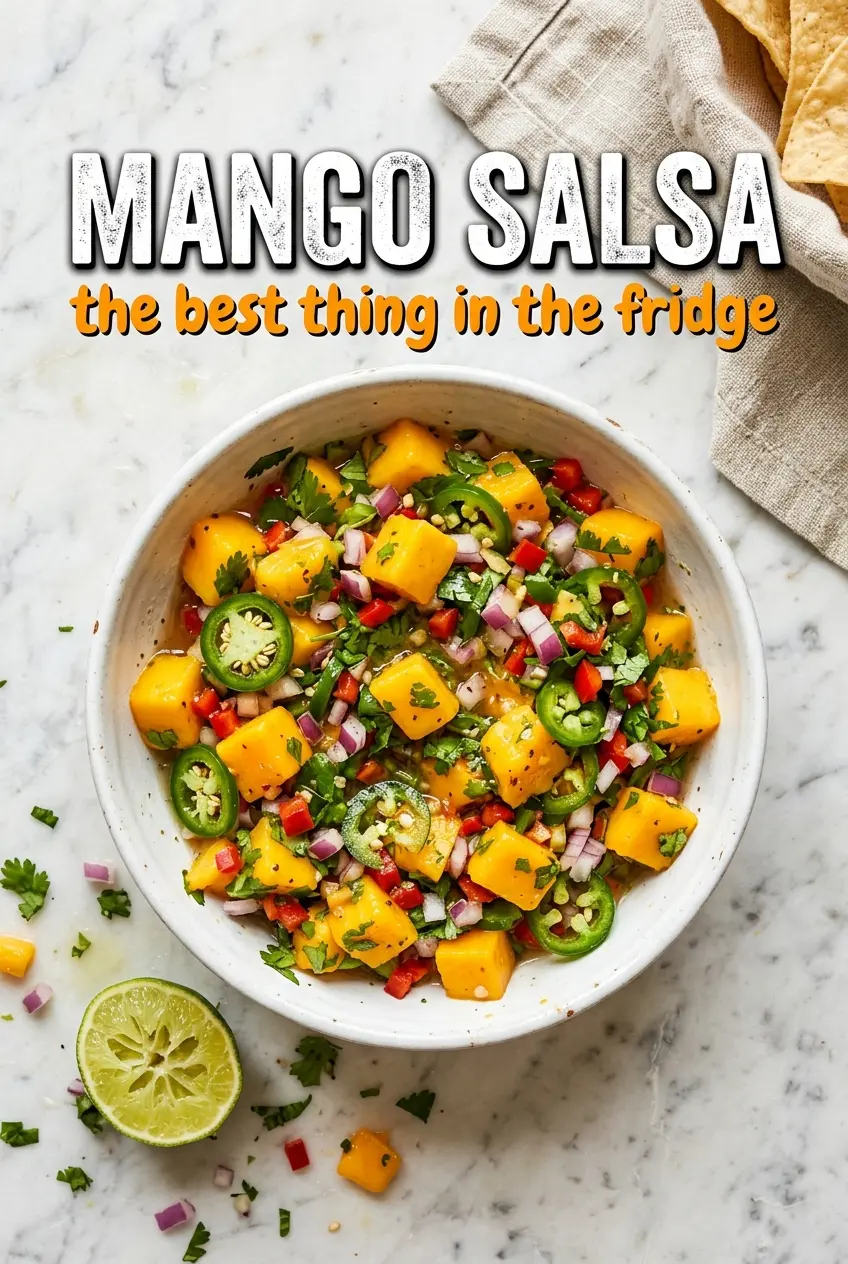
Bright mango salsa lands with that first sweet-acidic bite that wakes up everything it touches. The mango stays juicy and soft, the onion brings a clean bite, and the jalapeño keeps the whole bowl from leaning too sweet. It’s the kind of condiment that disappears fast because it works on chips, grilled fish, tacos, and plain chicken without needing anything else to carry it.
What makes this version hold together is restraint. The mango is diced small enough to scoop easily, but not so fine that it turns mushy once the lime juice hits it. A short rest in the fridge matters here, because the salt draws out a little juice and the onion mellows just enough to stop tasting sharp. Don’t skip that rest unless you want the flavors to taste separate instead of blended.
Below, I’m breaking down the one thing that keeps mango salsa from going watery, plus a few useful swaps if your mangoes aren’t perfectly ripe or you want less heat.
The mango stayed chunky after chilling, and the lime with the jalapeño hit the perfect balance. I served it with grilled shrimp and the bowl was scraped clean.
Save this mango salsa for taco night, grilled fish, or any plate that needs a bright sweet-tart finish.
The Reason Mango Salsa Turns Watery Before You Even Serve It
Mango salsa falls apart when the fruit is too soft or the pieces are cut too large. Overripe mango can’t hold its shape once salt and lime start pulling moisture from the bowl, and big chunks make it harder for the seasoning to distribute evenly. The goal is juicy, not sloppy.
The other common mistake is overmixing. Stir just until everything is coated, then stop. If you work it hard, the mango breaks down and the bowl starts looking more like fruit salad than salsa. A 30-minute rest is enough to let the onion soften and the flavors marry without giving the fruit time to collapse.
- Ripe but firm mangoes — These give you clean cubes that hold their shape after resting. If the mango gives easily when pressed, it’s probably too soft for salsa.
- Fresh lime juice — Bottled lime juice tastes flat here. Fresh juice sharpens the sweetness and keeps the salsa tasting bright.
- Red onion — It brings crunch and bite. White onion works in a pinch, but it’s sharper, so use a little less if that’s what you have.
- Jalapeño — Seeds and ribs control the heat. Leave some in for a hotter salsa, or remove them completely if you want the mango to stay front and center.
What Each Ingredient Is Doing in the Bowl
- Mango — This is the body of the salsa, so quality matters. Choose fruit that smells fragrant at the stem end and yields only slightly when pressed. Hard mango won’t taste sweet enough; oversoft mango will turn mushy once mixed.
- Red onion — It adds crunch and a little sharpness that keeps the salsa from tasting one-note. If the onion tastes aggressive, soak the diced pieces in cold water for 5 minutes, then drain well before mixing.
- Jalapeño — This gives the salsa a slow, clean heat. For a milder version, remove the seeds and pale ribs; for more kick, mince some of the ribs along with the flesh.
- Cilantro — The herb finish makes the salsa taste fresh instead of heavy. If you’re one of those people who tastes cilantro as soap, flat-leaf parsley is the best substitute, though the flavor will be less classic.
- Lime juice — It brightens everything and helps the salsa taste balanced after it rests. Add it after the mango is diced so you don’t lose any juice to the cutting board.
How to Keep the Mango Chunky and the Flavors Bright
Building the Base
Start by dicing the mango into small, even pieces so every spoonful gets a little of everything. The pieces should look neat and separate, not pulpy. Add the red onion, jalapeño, and cilantro next so the seasoning lands on all the solids before the lime goes in.
Seasoning Without Crushing the Fruit
Drizzle in the lime juice, then add the salt and black pepper. Stir with a light hand and use a folding motion instead of aggressively tossing the bowl. If you mash the mango at this stage, the salsa will leak juice fast and lose its clean texture.
Letting the Rest Time Do Its Job
Cover the bowl and chill it for at least 30 minutes. That resting time softens the onion and gives the lime enough time to round out the sweetness of the mango. When you pull it back out, stir once more and taste before serving, because chilled fruit can mute salt and acid a little.
Make It Milder for Kids or Heat-Sensitive Guests
Leave out the jalapeño entirely or use just a small amount of the flesh with the seeds and ribs removed. The salsa will taste sweeter and softer, with the mango taking center stage instead of the heat.
Make It Gluten-Free and Vegan Without Changing a Thing
This recipe already fits both diets as written, which is one reason it’s so handy for a mixed crowd. Just serve it with gluten-free chips, lettuce cups, grilled vegetables, or tacos made with your usual gluten-free tortillas.
Swap the Mango When It Isn’t Sweet Enough
If the mangoes are a little bland, add a small squeeze more lime and a pinch more salt before serving. That won’t make underripe fruit taste ripe, but it will sharpen the salsa so it still tastes balanced instead of flat.
Storage and Reheating
- Refrigerator: Store in an airtight container for up to 2 days. After that, the mango softens and the bowl turns juicier.
- Freezer: I don’t recommend freezing it. The mango loses its fresh texture and the salsa turns watery when thawed.
- Reheating: No reheating needed. Stir it straight from the fridge and drain off a little excess liquid if the bowl has pooled before serving.
Answers to the Questions Worth Asking
Mango Salsa
Ingredients
Equipment
Method
- Combine diced mango, red onion, minced jalapeño, and chopped cilantro in a medium bowl. Mix until the mango chunks are evenly distributed with the greens and aromatics.
- Add fresh lime juice, salt, and black pepper. Stir gently so the mango stays in distinct chunks rather than crushing.
- Let the salsa rest for at least 30 minutes in the refrigerator to allow flavors to meld. Cover if possible so it doesn’t pick up other fridge odors.
- Stir again before serving and taste to adjust seasonings if needed. Serve immediately for the freshest texture.
- Store in an airtight container in the refrigerator for up to two days. Give it a quick stir before serving leftovers.