Fresh cranberry orange sauce brings the kind of bright, glossy finish that cuts through rich holiday food and wakes up everything on the plate. The cranberries cook down into a thick, jewel-toned sauce while the orange keeps the flavor sharp and clean instead of flat or sugary. Fold in the orange segments at the end and you get little bursts of juicy citrus in every spoonful.
The trick is starting with orange juice and sugar before the cranberries go in. That gives the berries a hot, sweet base so they burst evenly instead of tasting harsh or undercooked. Orange zest goes in off the heat, which keeps the aroma fresh instead of bitter, and the segmented orange adds texture without turning the sauce watery.
Below, I’ve included the small details that matter most: when to stop simmering, how to keep the orange pieces intact, and a few ways to adapt this sauce if you want it less sweet or a little more citrus-forward.
I loved that the cranberries actually burst down into a thick sauce instead of staying whole, and the orange segments on top made it taste fresh instead of just sweet.
Save this bright cranberry orange sauce for turkey, roast chicken, or any meal that needs a sweet-tart side with fresh citrus.
The Part That Stops Cranberries From Tasting Sharp and Raw
Cranberries need enough heat to burst, but they also need a sweet liquid already in the pan when they go in. If you drop them into a dry saucepan and add sugar later, the berries can cook unevenly and the flavor stays jagged. Boiling the orange juice and sugar first gives you a syrup that coats the fruit as it softens, which is what turns the sauce glossy instead of watery.
Stop simmering when most of the berries have popped but a few are still intact. That little bit of texture is what keeps the sauce from turning into jam. It will look loose in the pan, then thicken as it cools.
What the Orange Is Doing in Every Layer
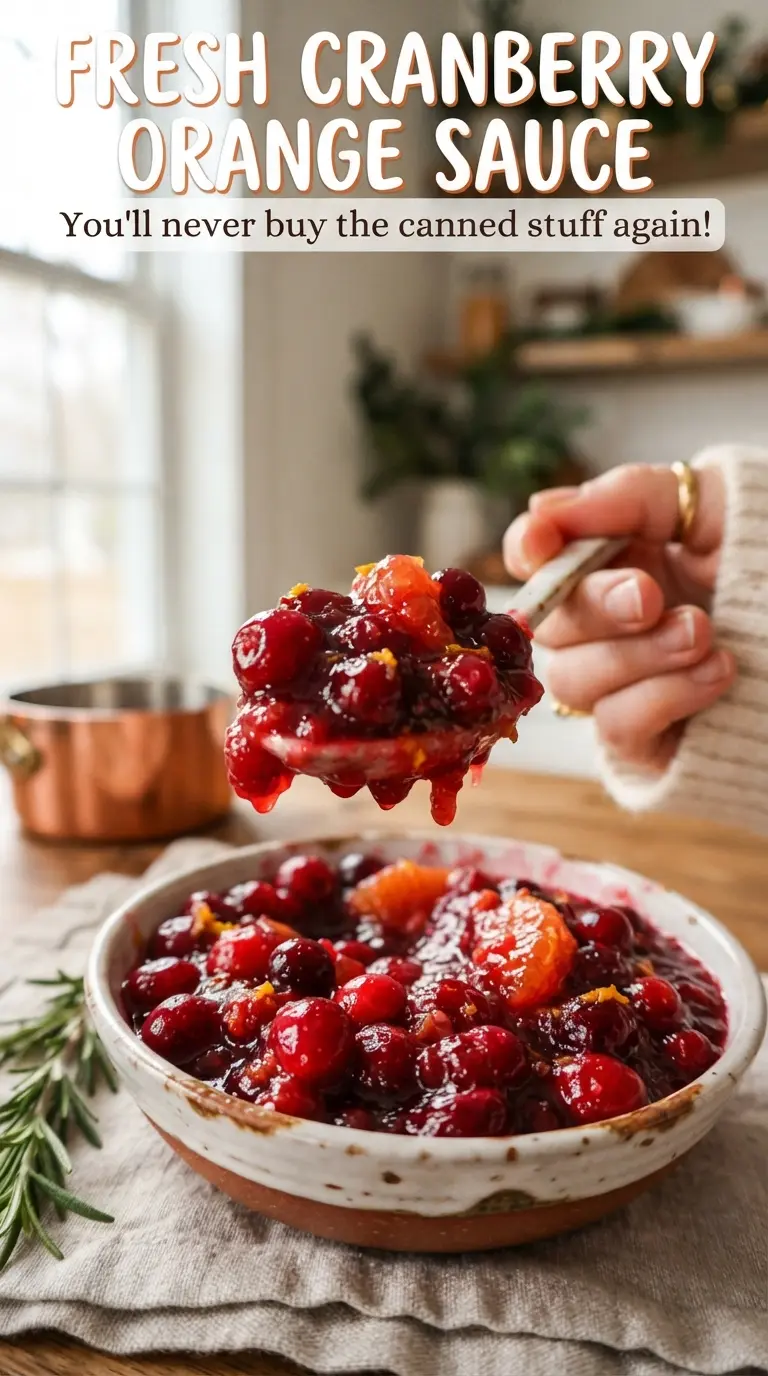
- Fresh cranberries — These are the backbone of the sauce. Frozen cranberries work too, and you don’t need to thaw them first, but they may take a minute or two longer to burst.
- Fresh orange juice — Bottled juice won’t taste as bright or clean here. Fresh juice gives you the sharp citrus note that balances the berries and keeps the sauce from tasting like candy.
- Orange zest — This carries the strongest orange aroma in the recipe. Stir it in after you take the pan off the heat so the oils stay fragrant instead of turning bitter.
- Orange segments — These are not just for looks. Folding them in at the end gives you soft, juicy pieces that contrast with the cooked berries, but add them only after the sauce cools slightly so they don’t fall apart.
- Sugar — The sugar doesn’t just sweeten; it helps the cranberries break down into a sauce with a smooth, spoonable body. If you cut it too far, the sauce can taste aggressively tart unless your oranges are especially sweet.
Cooking the Cranberries Without Turning the Sauce Thin
Building the Syrup Base
Bring the orange juice and sugar to a full boil before anything else goes in. You want the sugar fully dissolved and the liquid steaming hot, not just warm, because that helps the cranberries soften right away instead of sitting in a tepid bath and cooking unevenly. Add the pinch of salt with the berries; it sharpens the fruit without making the sauce taste salty.
Letting the Berries Burst
Once the cranberries are in, keep the sauce at a steady simmer for about 10 minutes. Stir occasionally and listen for the berries to pop; that sound means they’re breaking down the way they should. If the heat is too low, the skins stay tough. If the heat is too high, the bottom can scorch before the top finishes cooking.
Finishing With Fresh Citrus
Pull the pan off the heat before you add the zest. The residual heat is enough to release the oils without cooking them flat. Let the sauce cool for a few minutes, then fold in the orange segments gently so they stay intact and don’t bleed into the whole batch.
How to Tweak the Sweetness, Citrus, or Texture
Less-Sweet Cranberry Sauce
Cut the sugar back to 1/2 cup if you like a sharper sauce. The texture will still set as it cools, but the finished flavor will lean tart, especially if your oranges aren’t very sweet.
Dairy-Free, Gluten-Free, Naturally Vegetarian
This recipe already fits all three without any changes. That makes it an easy side for mixed holiday tables, since the flavor still feels polished without relying on butter, flour, or cream.
Strained, Smooth Sauce
If you want a smoother cranberry sauce, press it through a fine-mesh strainer before adding the orange segments. You’ll lose some body and almost all of the berry pieces, but the result is elegant and pourable.
Make-Ahead Storage
- Refrigerator: Store in a covered container for up to 1 week. It thickens as it chills, so the texture turns more spoonable after a few hours.
- Freezer: It freezes well for up to 2 months. Use a freezer-safe container and leave a little room at the top for expansion.
- Reheating: Serve it cold or let it sit at room temperature for 20 to 30 minutes. If you warm it, use low heat and stir gently; high heat can make the orange pieces collapse and loosen the sauce too much.
Answers to the Questions Worth Asking
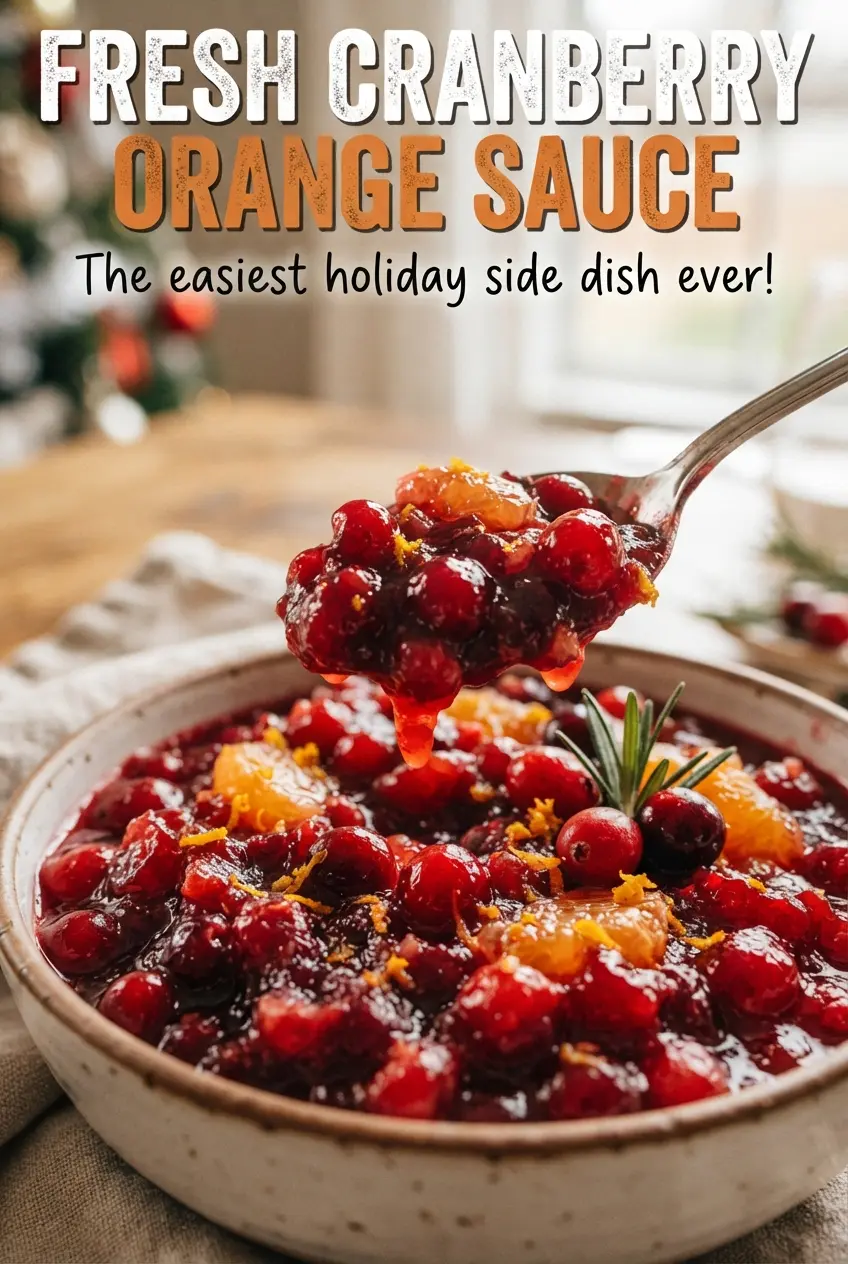
Fresh Cranberry Orange Sauce
Ingredients
Equipment
Method
- Bring sugar and fresh orange juice to a boil in a saucepan over medium-high heat. Keep the bubbles steady for 1-2 minutes so the sugar dissolves.
- Add fresh cranberries and salt to the boiling liquid. Simmer for 10 minutes, stirring occasionally, until most of the berries burst and the sauce looks glossy and thickened.
- Remove the saucepan from heat and stir in orange zest. Let it cool slightly for about 5 minutes to keep the orange segments from breaking down.
- Gently fold in the orange, peeled and segmented. Stir just until combined, leaving pieces intact.
- Chill until serving. Serve cold with a thick spoonable texture.