Rich beef stew gets a deeper, sweeter edge when the onions are cooked all the way down first. The broth turns glossy and savory, the beef goes fork-tender after a long simmer, and the toasted baguette with browned Gruyère on top gives each bowl the same satisfying finish you’d expect from French onion soup, only heartier. It’s the kind of dinner that fills the kitchen with that slow-cooked onion smell and makes the wait feel worth it.
The difference here is patience at the stove. The onions need enough time to lose their sharp bite and turn jammy and golden before anything else goes in, because that’s what builds the base of the broth. Browning the beef in batches matters too; if you crowd the pan, the meat steams instead of picking up the dark, savory crust that gives the stew more depth. A splash of dry white wine loosens all those browned bits from the pan and carries the flavor straight into the pot.
Below, I’ve included the cues I watch for when the onions are ready, the broth is balanced, and the stew is finished. The variations section also covers what to swap if you need a gluten-free version or want to skip the wine without losing the rounded, rich taste.
The onions turned deep and sweet without burning, and the broth tasted like it had simmered all day. My husband kept going back for more of the bread and cheese topping.
Save this French Onion Beef Stew for the nights when you want slow-cooked beef, caramelized onions, and bubbling Gruyère in one bowl.
The Trick to Getting French Onion Flavor into a Stew, Not a Soup
The common mistake with a dish like this is rushing the onions and expecting the broth to carry everything. It won’t. The onion flavor needs to be built in the pan first, and it needs enough time to turn sweet, dark, and almost spreadable before the liquid goes in. That step is what gives the stew its French onion character without making the pot taste flat.
Browning the beef in batches does a second job: it creates the savory fond that the wine and broth pick up later. If the pan looks dry before the onions go in, that’s fine. The butter takes over, and the onions start pulling up every browned bit left behind. By the time the broth goes in, the pot should smell deep and sweet, not sharp or greasy.
What Each Ingredient Is Actually Doing in the Pot
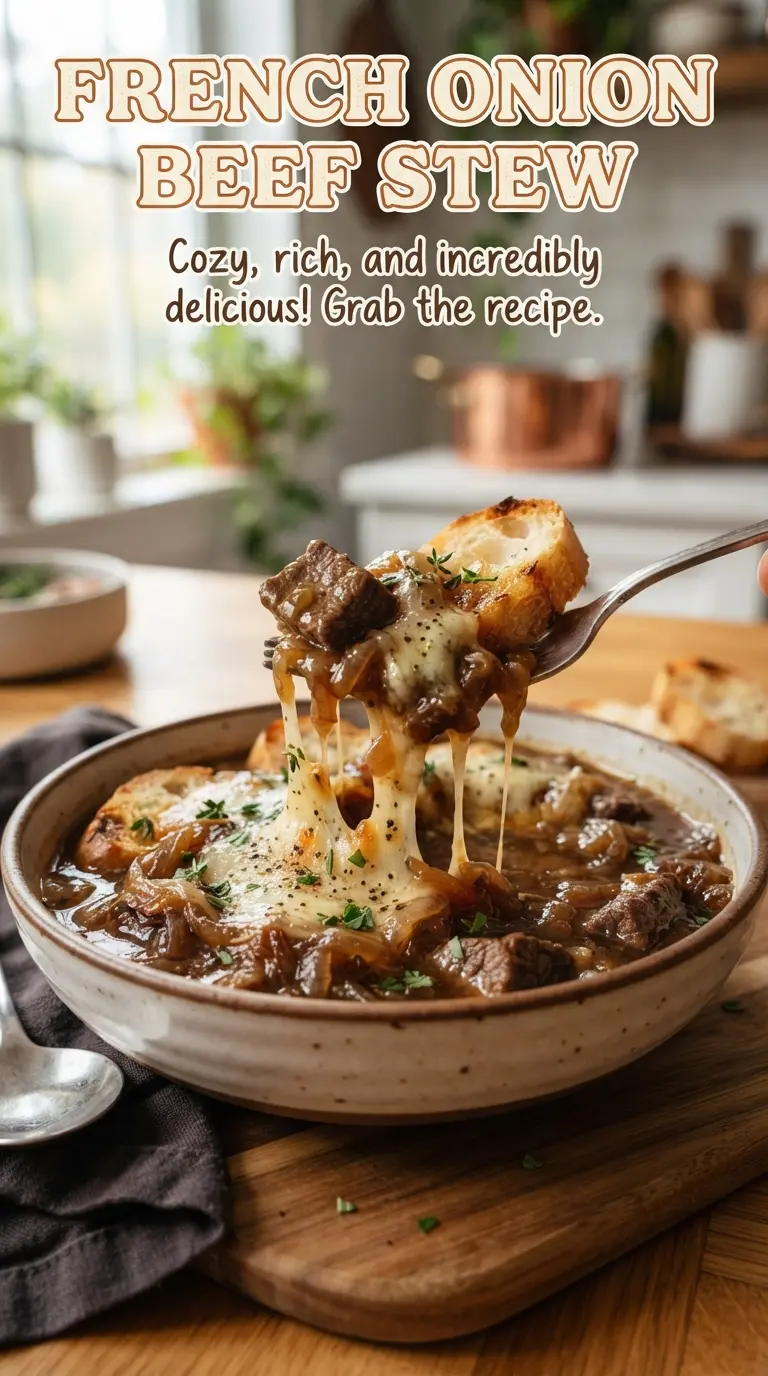
- Beef chuck — This is the cut that turns tender with a long simmer. It has enough connective tissue to soften into the broth instead of drying out the way leaner stew meat can. Cut it into larger cubes so it holds up over the full cook time.
- Yellow onions — They’re the backbone of the dish. White onions can taste sharper, and red onions can go a little muddy in a long simmer. Slice them thin so they collapse and caramelize evenly.
- Dry white wine — The wine scrapes up the browned bits and adds brightness that keeps the stew from tasting heavy. If you skip it, use extra broth with a teaspoon of white wine vinegar stirred in at the end.
- Gruyère — This is what gives the top its classic French onion finish. It melts into a stretchy, nutty cap that browns under the broiler. Swiss can work in a pinch, but the flavor will be milder.
- Baguette — Toasting matters. A soft slice will sink and disappear. A toasted slice stays intact long enough to hold the cheese and soak up broth underneath without dissolving right away.
Building the Stew So the Onions Don’t Disappear
Browning the Beef First
Season the beef, then brown it in batches in hot oil until each piece has a deep brown crust on more than one side. You’re not cooking it through here; you’re building flavor. If the pan is crowded, the meat releases moisture and turns gray instead of searing, so give each batch space. Set the beef aside while the onions go in.
Caramelizing the Onion Base
Cook the onions slowly in butter with the sugar until they turn deep golden and soft enough to collapse into a mound when stirred, about 30 to 35 minutes. Stir often enough to prevent scorching, but not so constantly that they never take on color. If the bottom starts to darken too fast, lower the heat and splash in a spoonful of water to loosen the pan. This stage should smell sweet and rich, not burnt.
Deglazing and Simmering
Add the garlic and flour, stir for about a minute, then pour in the wine and scrape the bottom of the pot hard. The flour thickens the broth later, but only if it cooks briefly first so the stew doesn’t taste raw. Add the broth, Worcestershire, thyme, bay leaf, and beef, then cover and simmer until the meat gives easily when pressed with a spoon. If it still feels chewy at two hours, keep going; chuck gets tender on its own schedule.
Finishing Under the Broiler
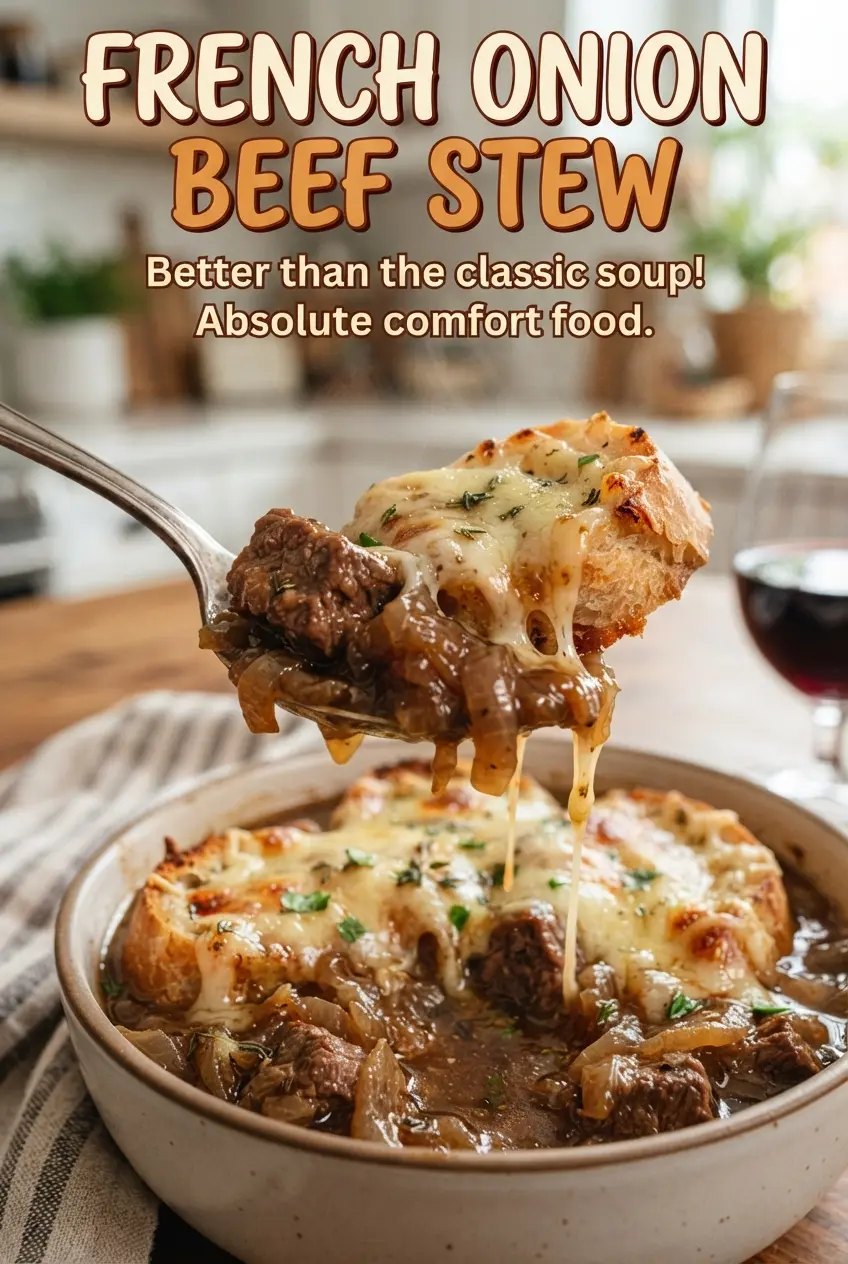
Ladle the stew into oven-safe bowls, top each one with toasted baguette, and pile on the Gruyère. Broil just until the cheese is melted, bubbling, and browned in spots. Stay close, because the line between bronzed and burned is short. The bowls should be hot enough to keep the cheese from setting before it reaches the table.
How to Adjust This Bowl for What You Have on Hand
Make It Gluten-Free Without Losing the Brothy Body
Skip the flour and thicken the stew by simmering it uncovered for the last 20 to 30 minutes, or use a small cornstarch slurry near the end. Swap the baguette for gluten-free toast or a thick slice of gluten-free bread. The Gruyère topping still gives you that French onion feel even without the wheat.
Skip the Wine, Keep the Depth
Use extra beef broth in place of the wine and add a small splash of vinegar or lemon juice at the end to wake up the flavor. The stew will be a little rounder and less bright, but it still works because the onions and browned beef carry most of the character.
Use a Different Cheese if Gruyère Is Hard to Find
Swiss cheese melts well and gives you a similar texture, while Comté leans a little nuttier and sharper. Mozzarella melts nicely but tastes too mild for the stew, so it’s a backup rather than the best choice. Whatever you use, shred it yourself so it melts smoothly under the broiler.
Storage and Reheating
- Refrigerator: Store the stew without the baguette and cheese for up to 4 days. The onions will deepen further overnight, which actually helps the flavor.
- Freezer: The stew base freezes well for up to 3 months. Freeze it without the bread and cheese topping, then thaw overnight in the fridge before reheating.
- Reheating: Rewarm gently on the stovetop over low heat until hot. If the broth has thickened in the fridge, loosen it with a splash of beef broth or water. Add the bread and cheese only when you’re ready to broil, not before.
Answers to the Questions Worth Asking
French Onion Beef Stew
Ingredients
Equipment
Method
- Season the beef chuck cubes with salt and black pepper. Brown the beef in batches in olive oil over medium-high heat until well browned, then set aside.
- Melt the butter in a Dutch oven and add the sliced yellow onions with sugar. Cook, stirring often, for 30-35 minutes until deep golden and fragrant.
- Add the minced garlic and cook for 1 minute, stirring, until fragrant. Sprinkle in the all-purpose flour and cook for 1 minute more, then pour in the dry white wine and scrape the bottom to loosen browned bits.
- Add the beef broth, Worcestershire sauce, thyme sprigs, bay leaf, and the browned beef to the pot. Cover and simmer for 2 hours, stirring once or twice, until the beef is tender.
- Ladle the stew into oven-safe bowls and top each with a toasted baguette slice and a generous layer of shredded Gruyere. Broil for 2-3 minutes until the cheese is bubbly and browned.