Freezer breakfast sandwiches earn their place in the rotation because they reheat with the kind of breakfast you actually want to eat: warm English muffins, set eggs that stay tender, melted cheese, and a savory sausage patty tucked into the middle. They’re the difference between grabbing something decent on a rushed morning and settling for a granola bar that leaves you hungry an hour later.
The trick is building each layer with the freezer in mind. Baked eggs hold their shape better than skillet eggs, toasted muffins stay from getting soggy, and the cheese melts back into everything once the sandwich is warmed through. Wrapping each one individually before freezing keeps them from drying out and makes it easy to pull out exactly as many as you need.
Below I’ve included the small details that keep the texture right after freezing, plus a few ways to switch up the fillings without ending up with a watery or stiff sandwich.
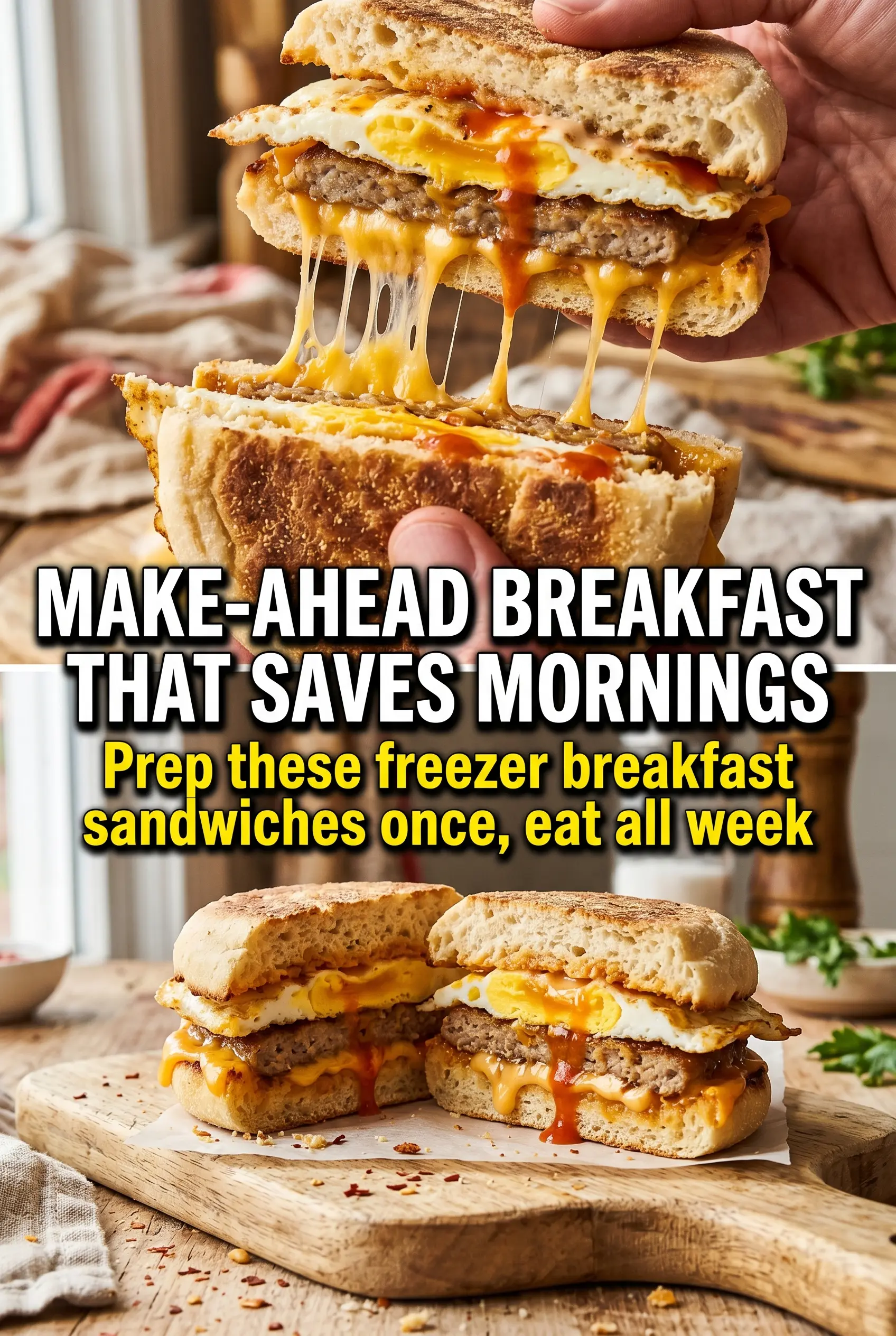
The eggs stayed tender after freezing and the cheese melted back perfectly. I made a batch on Sunday and my husband took one every morning before work all week.
These freezer breakfast sandwiches stay fluffy, cheesy, and ready to reheat in minutes — perfect for busy mornings.
The Egg Layer That Keeps These Sandwiches From Turning Rubbery
The biggest mistake with freezer breakfast sandwiches is cooking the eggs like you’re making a fresh omelet. Eggs that are soft and glossy in the pan can turn tough after freezing and microwaving, which is why baking them in a muffin tin works so well here. The shape is tidy, the texture stays even, and each egg fits the muffin without sliding around.
Don’t pull them from the oven while the centers still look wet. They should be fully set with no shiny raw spots, but not browned around the edges. That balance keeps them tender after reheating instead of spongy or overcooked.
What Each Layer Is Doing in the Freezer
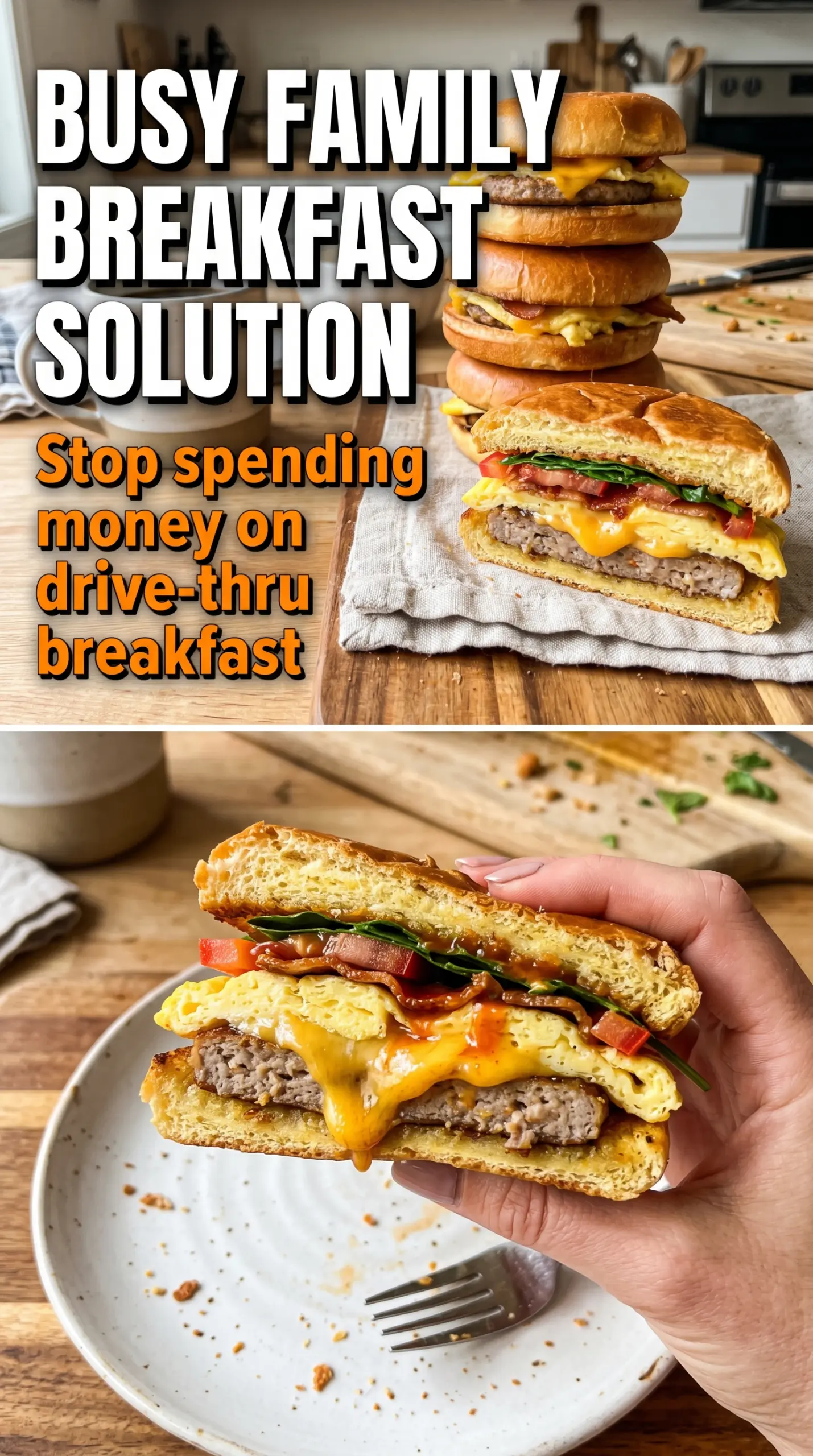
- English muffins — These hold up better than most breads because of their sturdy crumb and nooks and crannies. Toast them lightly first so they don’t go soft once the sandwich is wrapped and frozen.
- Eggs — Baked eggs freeze cleaner than scrambled eggs for this sandwich because they keep a compact shape. If you want a softer bite, whisk each egg before baking, but keep the cook time the same so they set through.
- Breakfast sausage patties or bacon — Sausage brings the strongest savory flavor and reheats with less risk of drying out. Bacon works too, but use it crisp rather than floppy or it can get chewy after microwaving.
- American or cheddar cheese — American melts the smoothest and gives you that classic diner-style finish. Cheddar has a sharper taste, but choose slices instead of shredded cheese so the sandwich holds together cleanly.
Building the Sandwiches So They Reheat Instead of Dry Out
Cooking the Egg Base
Spray the muffin tin well, then crack one egg into each cup and break the yolk if you want a flatter sandwich layer. Bake just until the whites are set and the centers no longer jiggle loosely; that’s the point where they’ll finish gently when reheated instead of seizing up. If the eggs puff a little in the oven, that’s fine. They settle once they cool.
Toast, Then Assemble in Order
Lightly toast the English muffins before you build anything. That extra bit of drying keeps steam from soaking into the bread during freezing, which is what causes that gummy texture later. Stack each sandwich with muffin bottom, egg, sausage, cheese, and muffin top so the cheese sits directly against the warm layers and melts fastest.
Wrap for the Freezer, Not the Fridge
Wrap each sandwich tightly in plastic wrap before putting them in freezer bags. The individual wrap keeps freezer burn away and makes the sandwiches easy to grab one at a time. Press out as much air as you can from the bag before sealing it, because extra air is what gives frozen bread that stale, frosty edge.
Three Ways to Make These Sandwiches Fit Your Morning
Swap the Sausage for Bacon
Bacon gives you a saltier, smokier sandwich, but it should be cooked crisp before freezing so it doesn’t turn chewy in the microwave. Pat it dry after cooking if it renders a lot of fat, or that grease can soak into the muffin.
Make It Vegetarian
Skip the sausage and add a thin layer of sautéed spinach or a meatless breakfast patty. Just cook any vegetables until most of the moisture is gone, because wet fillings are the fastest way to end up with a soggy freezer sandwich.
Use Cheddar for a Sharper Finish
Cheddar brings more bite than American and works well if you want a stronger cheese flavor. It melts a little less smoothly, so keep the egg warm when assembling and let the sandwich sit for a minute after microwaving so the cheese can finish melting.
Gluten-Free Version
Use sturdy gluten-free English muffins and toast them a little longer than standard ones. Gluten-free breads tend to soften faster in the freezer, so the extra toast helps them keep their shape once reheated.
Storage and Reheating
- Refrigerator: Store for up to 4 days. The muffins soften a bit, but they still hold together well.
- Freezer: Freeze for up to 3 months. Wrap each sandwich tightly and keep them in a freezer bag to prevent freezer burn.
- Reheating: Unwrap first, then microwave on medium power for 1 to 2 minutes until hot in the center. If you microwave on high the whole time, the egg can turn rubbery while the bread stays cold.
Questions I Get Asked About This Recipe
Freezer Breakfast Sandwiches
Ingredients
Equipment
Method
- Cook the breakfast sausage patties according to package directions and set aside, using a skillet until fully cooked and browned. Transfer to a plate so they’re ready to assemble.
- Spray a muffin tin with cooking spray and crack one egg into each cup, breaking yolks if desired. Make sure the yolks sit flat for even baking.
- Season the eggs with salt and pepper to taste. Add seasoning evenly so every sandwich has consistent flavor.
- Bake at 350°F for 12-15 minutes until the eggs are set in the cups. Look for firm centers with no wet wobble when the tin is gently tapped.
- Toast the English muffins lightly until warmed and lightly browned. Keep them flexible so they stack cleanly.
- Assemble sandwiches with muffin bottom, baked egg, sausage patty, cheese slice, and muffin top. Press lightly so the cheese starts melting from the hot egg.
- Wrap each sandwich individually in plastic wrap, keeping the sandwich fully covered. Seal snugly to prevent freezer burn.
- Place the wrapped sandwiches in freezer bags and freeze for up to 3 months. Store them flat so they freeze in compact stacks.
- To reheat, unwrap and microwave for 1-2 minutes until heated through. Stop once the center is hot and the cheese looks melted again.