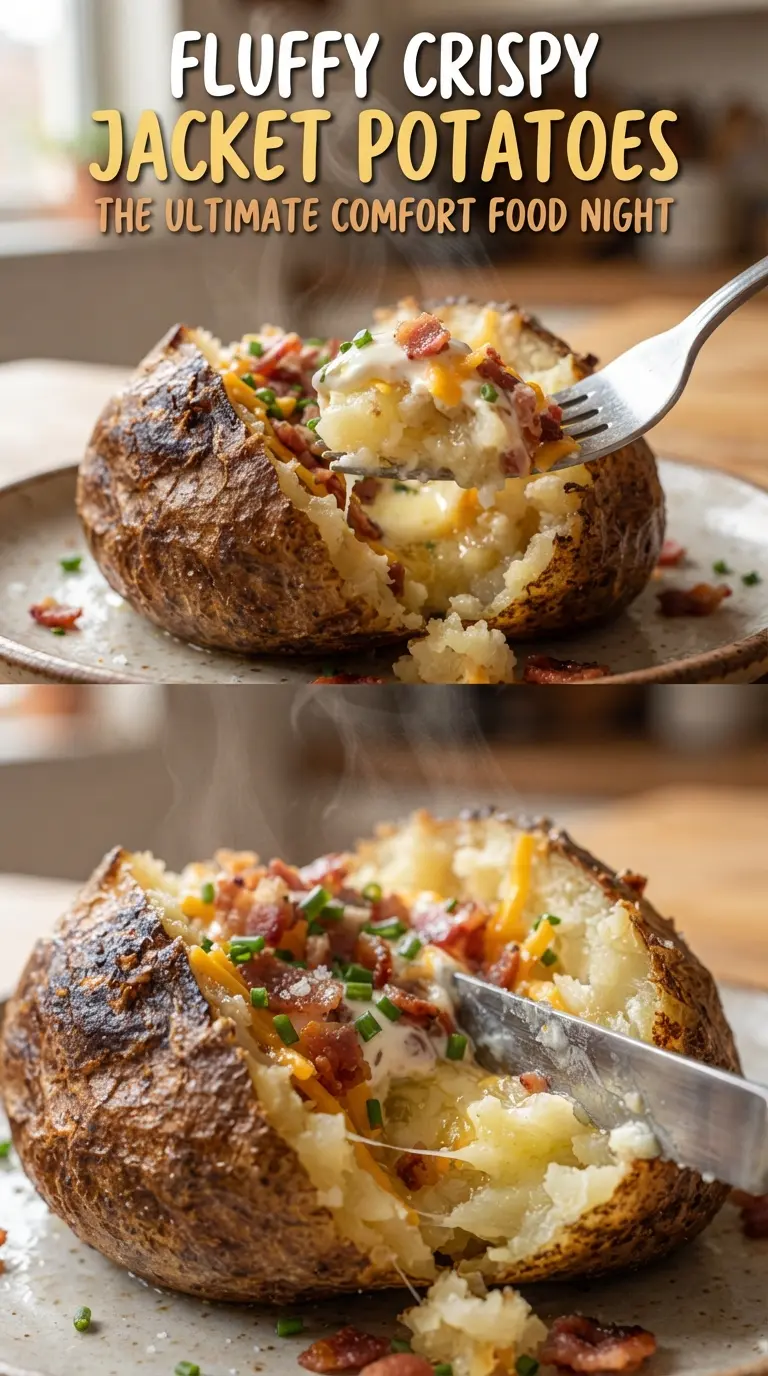
Shatteringly crisp skin and a cloud-soft center are what make a proper jacket potato worth the wait. The best ones don’t just get cooked through; they crack open with a salted crust that gives way to steamy, fluffy insides that are perfect for melting butter into every ridge.
This version gets there faster without sacrificing texture. A short microwave head start jumps the potato along before it goes into a hot oven, which means you get that creamy interior in less time than a straight bake. The olive oil helps the skin blister and darken, and the flaky salt does double duty: it seasons the flesh and encourages the skin to dry out into something crisp enough to shatter under the knife.
Below, I’ve included the few details that matter most, including how to tell when the skin is done and why the final squeeze makes all the difference. Once you’ve made jacket potatoes this way, it’s hard to go back.
The skin went shattery-crisp and the centers were fluffy all the way through. I loved that the microwave start kept the oven time down, and the salted butter melted right into the open tops.
Like these fluffy crispy jacket potatoes? Save them to Pinterest for the nights when you want a proper crisp skin and buttery, cloud-soft centers.
The Reason Jacket Potatoes Go Soft Instead of Crisp
The mistake most people make is baking the potato from start to finish without drying the skin first. Potatoes hold a lot of moisture, and if the surface stays damp, the skin steams instead of turning crisp. The microwave head start cooks the inside, but the oven time is what drives off moisture and builds that firm, almost brittle shell.
Pricking the potatoes helps release steam so they don’t burst, but the real texture change comes from the oil and salt. Oil conducts heat across the skin, and flaky salt pulls the surface toward dryness while adding bite. If the skin feels leathery or pale at the end, the potatoes need more time directly on the rack, not under foil or in a dish.
What Each Ingredient Is Doing in These Jacket Potatoes
- Maris Piper or russet potatoes — These are the right potatoes for a fluffy jacket because they’re starchy and dry enough to go light inside while the skin turns crisp. Waxy potatoes stay denser and won’t give you that cloud-like middle.
- Olive oil — This helps the skin roast properly and gives it that deep, crisp finish. Neutral oil works in a pinch, but olive oil adds a little more flavor and browning.
- Flaky sea salt — This is what gives the skin its salty crunch instead of just an evenly seasoned surface. Fine salt works, but it dissolves faster and won’t give you the same textured finish.
- Salted butter — Butter belongs in the hot split potato because it melts straight into the steam-softened center. Unsalted butter works too, but you’ll want a little extra salt at the end.
How to Get a Crisp Shell and a Fluffy Middle at the Same Time
Starting the Potato From the Inside Out
Prick each potato a few times, then microwave them until they’ve lost that raw, heavy feel. You’re not trying to cook them through in the microwave; you’re jump-starting the center so the oven time can focus on the skin. If you skip this, the outside tends to overbake before the inside gets properly fluffy. The potatoes should be warm and slightly softened before they ever meet the oven.
Drying and Seasoning the Skin
Rub the potatoes with olive oil, then shower them with flaky salt so the surface looks evenly coated. The salt should cling to the skin, not disappear into a wet patch, so dry the potatoes well after washing. This is the stage that builds the crust, and it works best when the potatoes go straight onto the oven rack instead of into a tray where trapped steam can soften the bottoms.
Baking Until the Skin Turns Hard
Bake the potatoes at 400F until the skins look deeply dry, crisp, and slightly wrinkled, with no softness when pressed. If you can squeeze the sides and they still feel squashy, they need more time. A proper jacket potato should sound a little hollow when tapped and feel firm enough that the skin resists your knife.
Splitting and Fluffing the Center
Cut a cross in the top, then squeeze gently from the bottom so the flesh opens upward. That push matters because it loosens the interior and gives the butter somewhere to melt in. Add the butter immediately while the potato is piping hot, then finish with black pepper. If you wait too long, the steam drops and the butter just sits on top instead of soaking in.
How to Adapt These Jacket Potatoes Without Losing the Good Part
Dairy-Free Jacket Potatoes
Skip the butter and finish with a drizzle of good olive oil or a dairy-free spread while the potatoes are still steaming hot. You’ll lose a little of the classic creamy finish, but the crisp skin and fluffy interior stay exactly the same.
Extra-Crisp Skins
If you want a tougher, more crackly shell, leave the potatoes in the oven for an extra 10 to 15 minutes and set them directly on the rack with a little space between each one. The tradeoff is a slightly drier interior, so pull them as soon as the centers are fluffy enough to split cleanly.
Using Sweet Potatoes
Sweet potatoes work, but they won’t give you the same dry, fluffy interior or shattery skin. They soften faster and tend to collapse instead of opening into those neat, lifted centers, so watch them closely and expect a sweeter, softer result.
Storage and Reheating
- Refrigerator: Store leftovers for up to 3 days. The skin softens in the fridge, but the interior stays good.
- Freezer: Freeze the cooked potatoes without butter for up to 1 month, wrapped tightly. The texture won’t be quite as fluffy after thawing, but it still works for a quick side.
- Reheating: Reheat on a baking sheet in a 400F oven until the skin crisps back up and the center is hot. The biggest mistake is microwaving the finished potato, which turns the skin rubbery and undoes the whole point.
Answers to the Questions Worth Asking

Fluffy Crispy Jacket Potatoes
Ingredients
Equipment
Method
- Preheat the oven to 400F so it’s hot and ready for a crisp finish.
- Prick each potato a few times, then microwave for 8 minutes to jump-start the cooking.
- Rub the potatoes with olive oil and sprinkle generously with flaky sea salt for a crackly, salty skin.
- Bake the potatoes directly on the oven rack for 1 hour to 1 hour 15 minutes until the skin is crisp and hard.
- Cut a cross in the top and squeeze from the bottom to push the fluffy insides up, creating a cloud-like center.
- Add the butter and black pepper, then serve right away while the crust stays shatteringly crisp.