Sticky, caramelized Filipino BBQ pork has a way of disappearing fast once it comes off the grill. The edges pick up just enough char to taste smoky, while the marinade turns glossy and tacky in the best possible way. Each bite lands sweet, salty, garlicky, and a little tangy, which is why these skewers earn a permanent spot in my grilling rotation.
What makes this version work is the balance in the marinade and the way the pork is cut. Thin slices of pork shoulder soak up the soy, banana ketchup, soda, and vinegar quickly, then cook fast enough over medium-high heat to stay juicy. The sugar and ketchup help the glaze darken and cling, but the vinegar keeps it from tasting flat or candy-sweet. That’s the difference between barbecue that tastes layered and barbecue that just tastes sugary.
Below, I’ve included the timing that matters most, the reason the sawsawan belongs on the table, and a few smart swaps if banana ketchup isn’t in your pantry.
The marinade clung to the pork beautifully and the edges got that sticky char I was hoping for. I used the vinegar dipping sauce with garlic rice and my husband kept going back for another skewer before dinner was even served.
Like the sticky sweet-savory glaze on these Filipino BBQ pork skewers? Save it to Pinterest for the next grilling night.
The Marinade Needs Time to Work, Not Just a Quick Coat
A lot of grilled pork skewers go wrong because the marinade is treated like a sauce instead of a soak. With thin-sliced pork shoulder, the surface picks up flavor fast, but the real payoff comes from letting the vinegar, soy, and sugar work for several hours so the meat seasons all the way through. If you rush this part, the skewers still brown, but the flavor stays shallow and one-note.
Another common problem is heat that’s too high for too long. You want the grill hot enough to char the outside, but not so aggressive that the sugar burns before the pork is cooked. Medium-high heat gives you that glossy lacquer and keeps the edges crisp instead of bitter.
- Thin pork shoulder — This cut stays tender on the grill and absorbs the marinade better than thick chops would. Slice it about 1/4 inch thick so it cooks quickly and threads easily onto the skewer.
- Banana ketchup — This is what gives the glaze its classic Filipino sweetness and color. Regular ketchup works if that’s what you have, but the flavor will be a little less round and slightly more tomato-forward.
- Lemon-lime soda — The soda helps soften the pork and adds a light sweetness that keeps the marinade from tasting heavy. Don’t swap in plain water here; you’d lose both the tenderizing effect and the slight lift it gives the glaze.
- Bamboo skewers — Soaking them keeps them from scorching on the grill. Thirty minutes is enough; if they’re still floating, weigh them down with a plate so the ends stay submerged.
What Each Ingredient Is Actually Doing in This BBQ Pork Recipe

- Pork (selected cut: ribs, shoulder, or butt) — Choose the right cut for the method. Fatty cuts work better for BBQ.
- Dry rub (spices, sugar, and salt) — This creates a crust and layers flavor. Let it sit before cooking.
- Smoke or cooking method (oven, grill, or slow cooker) — Low and slow renders fat and tenderizes. High heat toughens pork.
- BBQ sauce (sweet, smoky, tangy) — This glazes and adds flavor. Apply at the end so it doesn’t burn.
- Acid (vinegar, citrus, or tomato) — This prevents overly sweet sauce and brightens flavors.
- Temperature control (low and slow) — Pork needs gentle heat to stay moist. Fast cooking dries it out.
- Resting time (10-15 minutes) — This allows juices to redistribute. Cutting too soon makes it dry.
- Proper internal doneness (160-165°F) — Use thermometer. Pork is fully cooked and safe at this temperature.
Building the Glaze So It Clings Instead of Sliding Off
The best Filipino BBQ pork starts before the meat ever hits the grill. The marinade should taste balanced on its own: salty from soy sauce, bright from vinegar, sweet from brown sugar and banana ketchup, and sharp with garlic. If it tastes flat in the bowl, it’ll taste flat after grilling too.
When the skewers cook, the sugar and ketchup caramelize into that sticky coating people chase around the plate. Reserve enough marinade to baste, but don’t use anything that has touched raw pork unless you boil it first. That’s the cleanest way to get extra glaze without risking an off taste or contamination.
Mixing the Marinade Until the Sugar Disappears
Stir the soy sauce, banana ketchup, soda, brown sugar, vinegar, garlic, and black pepper until the sugar dissolves and the mixture looks smooth. If you can still feel grit at the bottom, keep stirring a little longer; undissolved sugar tends to settle and can leave some skewers sweeter than others. The marinade should look glossy and smell punchy, with the vinegar still distinct under the sweetness.
Threading the Pork for Even Cooking
Lay the pork slices flat and fold them slightly as you thread them onto the soaked skewers. Packing them too tightly slows the cooking and traps steam, which keeps you from getting those browned edges. You want the pieces touching but not compressed, so the heat can reach every side.
Grilling and Basting for Charred Edges
Oil the grates, then place the skewers over medium-high heat. Grill for 3 to 4 minutes per side, basting as they turn, until the pork is cooked through and the glaze has darkened into a sticky sheen. If the flames flare, move the skewers to a cooler spot for a minute; sugar burns fast, and burnt sugar tastes harsh instead of smoky.
Serving With the Vinegar Dip
The sawsawan cuts through the richness of the pork and wakes everything up. Mix it while the pork marinates so the garlic and chili have time to infuse the vinegar. Spoon it into small bowls and serve it on the side, because the acid is part of what makes each bite taste fresh instead of heavy.
How to Adapt These Skewers for Different Kitchens and Different Crowds
Use ketchup instead of banana ketchup
Regular ketchup works well when banana ketchup isn’t available. The skewers will still caramelize, but the finished glaze will taste a little less sweet and slightly more tomato-based, so keep the brown sugar in place to preserve that classic sticky finish.
Make it gluten-free
Use a certified gluten-free soy sauce or tamari. That swap keeps the same salty backbone and caramelization, and nobody will miss the flour-based fillers that sometimes show up in standard soy sauce.
Swap in chicken thighs
Boneless chicken thighs take this marinade nicely and stay juicy on the grill. Cut them into even pieces and cook until the juices run clear; they won’t need quite as much time as pork, so watch for browning before you judge doneness.
Storage and Reheating
- Refrigerator: Store cooked skewers in an airtight container for up to 3 days. The glaze will loosen a little as it sits, but the flavor holds well.
- Freezer: Freeze the marinated raw pork on the skewers if you want to prep ahead. Once cooked, the texture softens after freezing, so I’d keep leftovers out of the freezer if possible.
- Reheating: Warm the skewers in a covered skillet over medium-low heat or in a 325°F oven until heated through. High heat will dry the pork out and make the sugars on the outside go bitter.
The Things That Trip People Up With This Dish
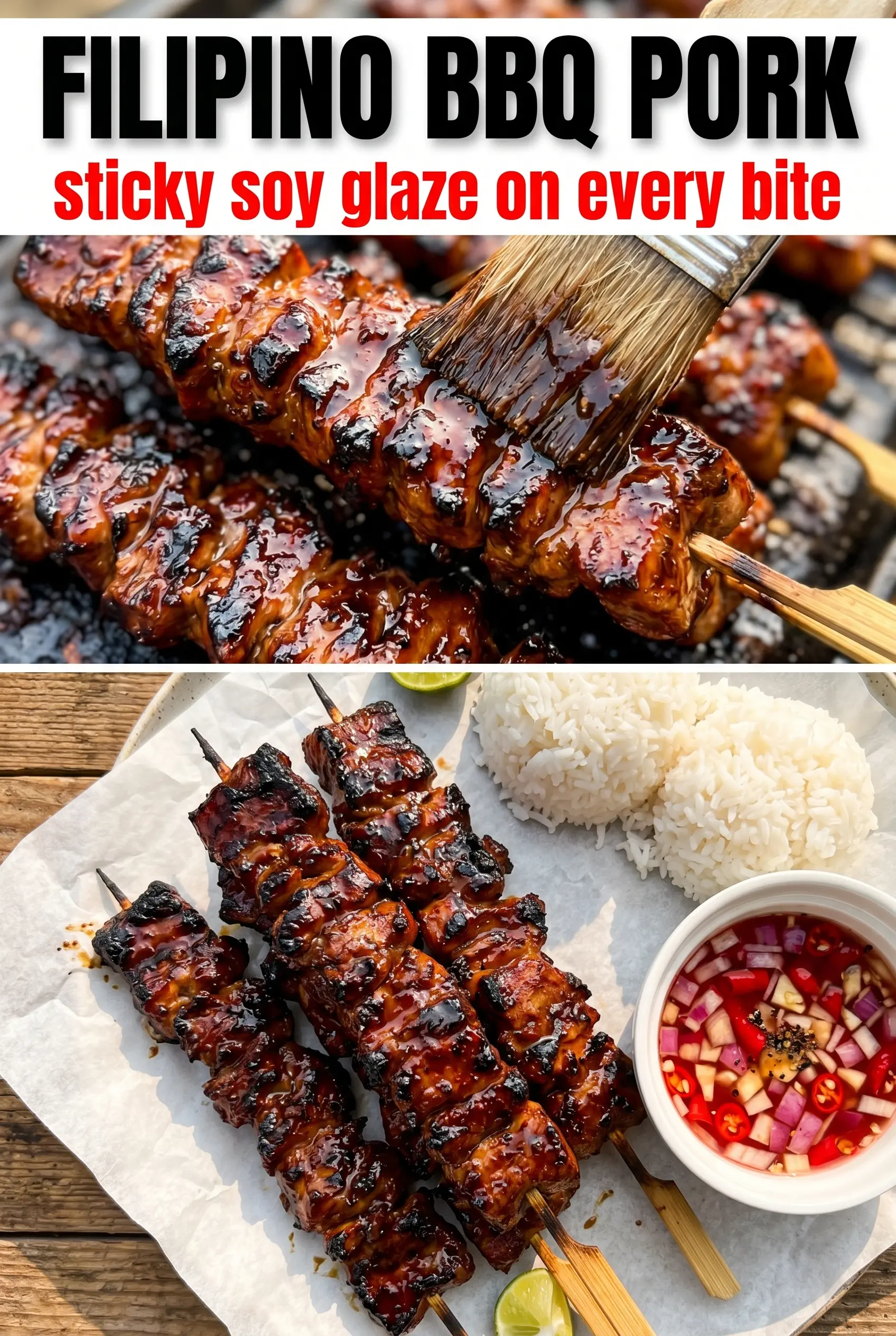
Filipino BBQ Pork Skewers (Inihaw na Baboy) with Sticky Sweet Soy Glaze
Ingredients
Equipment
Method
- In a bowl, mix soy sauce, banana ketchup, lemon-lime soda, brown sugar, white vinegar, minced garlic, and black pepper until the sugar dissolves.
- Thread the sliced pork onto soaked bamboo skewers, then submerge in the marinade and refrigerate 4–8 hours.
- In a bowl, mix white vinegar, minced garlic, sugar, and bird's eye chili, then set aside.
- Preheat the grill to medium-high and oil the grates.
- Grill the skewers 3–4 minutes per side, basting with the reserved marinade each time, until caramelized and cooked through.
- Serve the Filipino pork skewers with garlic fried rice and the sawsawan dipping sauce.