Egg roll soup tastes like the best part of a takeout egg roll turned into a bowl: savory pork, tender cabbage, sweet carrots, and a ginger-soy broth that lands light but still feels satisfying. The crispy wonton strips on top give you that familiar egg-roll crunch without the fuss of wrapping and frying anything. It’s the kind of dinner that comes together fast and still tastes layered, which is exactly why it ends up back in the rotation.
What makes this version work is the order. Browning the pork first builds the base, and cooking the garlic and ginger in the same pot wakes up the broth before it ever hits the cabbage. The vegetables stay in the sweet spot too — tender, but not cooked until they disappear. A little rice vinegar sharpens the broth, and sesame oil gives it that unmistakable egg-roll finish.
Below you’ll find the small details that matter, including how to keep the cabbage from going limp and how to adjust the soup if you want it milder, richer, or a little more filling.
The broth had that egg-roll flavor right away, and the cabbage stayed tender without turning mushy. I added the wonton strips at the table and they stayed crunchy to the last bite.
Love the savory ginger-soy broth and crispy wonton topping in this egg roll soup? Save it to Pinterest for an easy takeout-style dinner night.
The Part People Get Wrong: Letting the Cabbage Cook Too Long
Egg roll soup falls apart when the vegetables are treated like they need a long simmer. They don’t. The broth is already flavored from the pork, garlic, ginger, soy sauce, and sesame oil, so the cabbage only needs enough time to soften and soak up the seasoning. If you let it go too long, it turns dull and watery instead of staying sweet and a little crisp at the edges.
The other place people lose the egg-roll effect is skipping the browning step. You want the pork to pick up color before the liquid goes in, because that’s where the deeper savory flavor comes from. Once the broth is added, the soup should move quickly: bring it up, drop in the vegetables, and simmer only until they’re tender. That keeps the broth bright and the texture in balance.
- Ground pork or chicken — Pork gives you the closest egg-roll flavor because it brings more richness. Ground chicken works well if you want something lighter, but it needs the sesame oil and ginger to carry more of the flavor.
- Cabbage — Thin shreds cook evenly and soften fast. Bagged coleslaw mix can stand in when you want speed, but skip mixes that are heavy on purple cabbage unless you want the broth tinted.
- Rice vinegar — This is what keeps the soup from tasting flat. If you leave it out, the broth can feel heavy, especially with pork.
- Crispy wonton strips — Add them at the end or serve them on the side. If they sit in the soup too long, they disappear fast, so the crunch belongs right before eating.
Building the Broth Before the Vegetables Go In
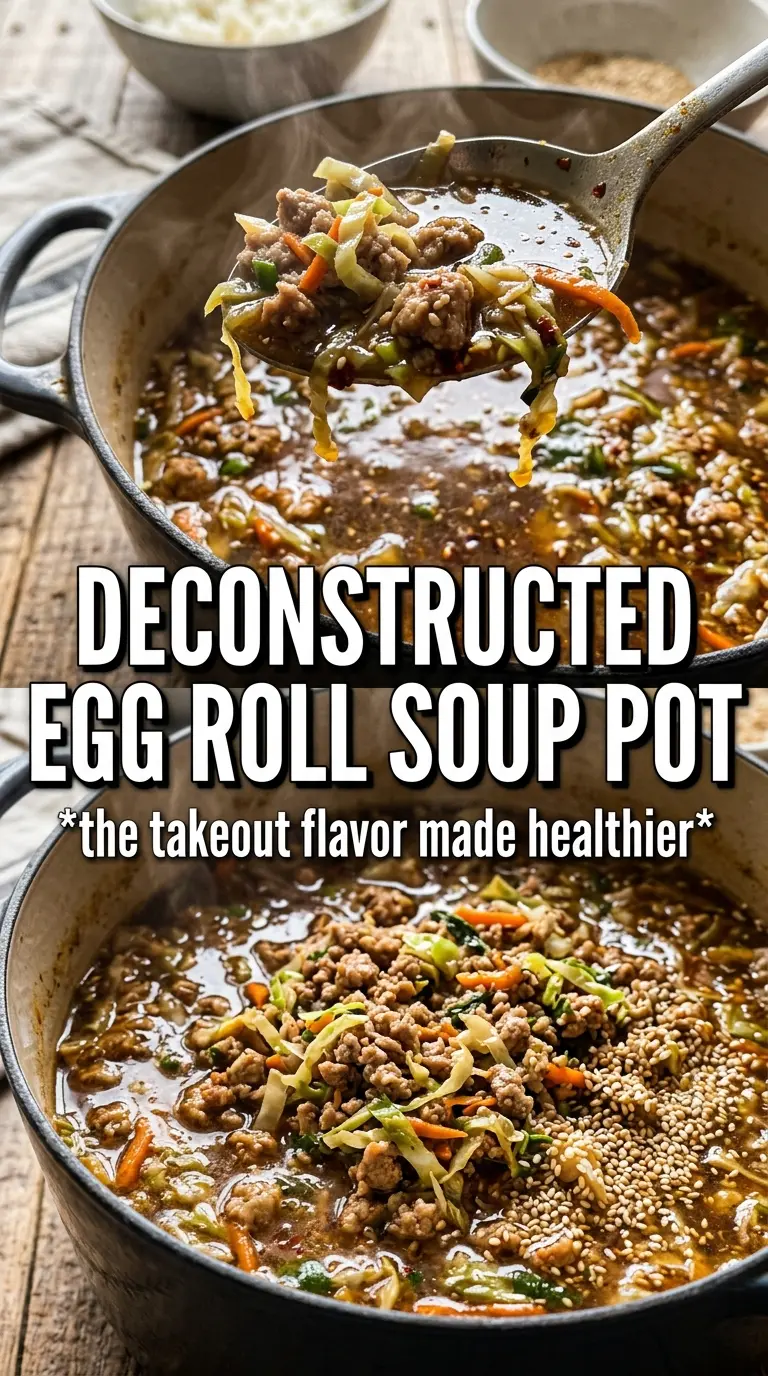
Ground pork: Use ground pork for the richest, most takeout-style result. If you use chicken, choose ground thigh meat if you can find it, because very lean chicken can taste thin unless you season more assertively.
Fresh ginger and garlic: Fresh is worth it here. Powder won’t give the same sharp, aromatic hit, and the soup depends on that first bloom in the pot to taste lively instead of just salty.
Chicken broth: A good boxed broth is fine. If yours is low-sodium, that’s even better, because soy sauce brings plenty of salt and you’ll have more control at the end.
Sesame oil: Don’t cook it hard. It’s there for aroma, not frying, so stir it in with the broth and let the heat carry the scent through the soup.
Brown the Meat First
Heat the vegetable oil in a large pot over medium-high heat, then add the ground pork or chicken and break it into small pieces as it cooks. You want real browning, not just gray crumbles, because those caramelized bits are what give the broth depth. If the pot starts to collect a lot of fat, spoon off the excess before moving on so the soup doesn’t turn greasy.
Wake Up the Aromatics
Add the garlic and ginger straight into the cooked meat and stir for 1 to 2 minutes, just until fragrant. They should smell warm and sharp, not dark or bitter. If the heat is too high here, garlic burns fast, so pull the pot back a little if you see it color too quickly.
Build the Soup and Simmer Briefly
Pour in the broth, soy sauce, sesame oil, rice vinegar, and sriracha, then bring everything to a boil before adding the cabbage and carrots. Once the vegetables go in, lower the heat and simmer until they’re tender but still hold their shape. The soup should look slightly glossy and full-bodied, not cloudy and overcooked.
Finish with Freshness and Crunch
Stir in the green onions at the end so they stay bright instead of melting into the broth. Taste and season with salt and pepper only after the simmer, since soy sauce and broth already carry salt. Serve right away with crispy wonton strips and sesame seeds on top so the contrast stays intact.
Three Ways to Bend This Soup Without Breaking It
Make it gluten-free
Use a gluten-free soy sauce or tamari and swap the wonton strips for crispy rice crackers or toasted sesame seeds. The broth stays punchy and savory, but you lose the wheat-based crunch of classic wontons.
Make it lighter with ground chicken
Ground chicken gives you a cleaner, leaner soup. It’s a good swap when you want something less rich, but the broth benefits from an extra drizzle of sesame oil at the end because chicken doesn’t bring the same built-in savoriness as pork.
Make it heartier with mushrooms or rice
Add sliced mushrooms with the cabbage for more body, or serve the soup over a scoop of steamed rice if you want it to eat like a full meal. Mushrooms deepen the broth, while rice soaks it up and turns the bowl more filling.
Storage and Reheating
- Refrigerator: Store in an airtight container for up to 4 days. The cabbage softens more as it sits, but the flavor stays good.
- Freezer: It freezes reasonably well without the wonton strips. Freeze the soup base only, then add fresh garnish after reheating for the best texture.
- Reheating: Warm gently on the stove over medium-low heat until hot. Don’t boil it hard, or the cabbage will go mushy and the broth can taste dull.
Answers to the Questions Worth Asking
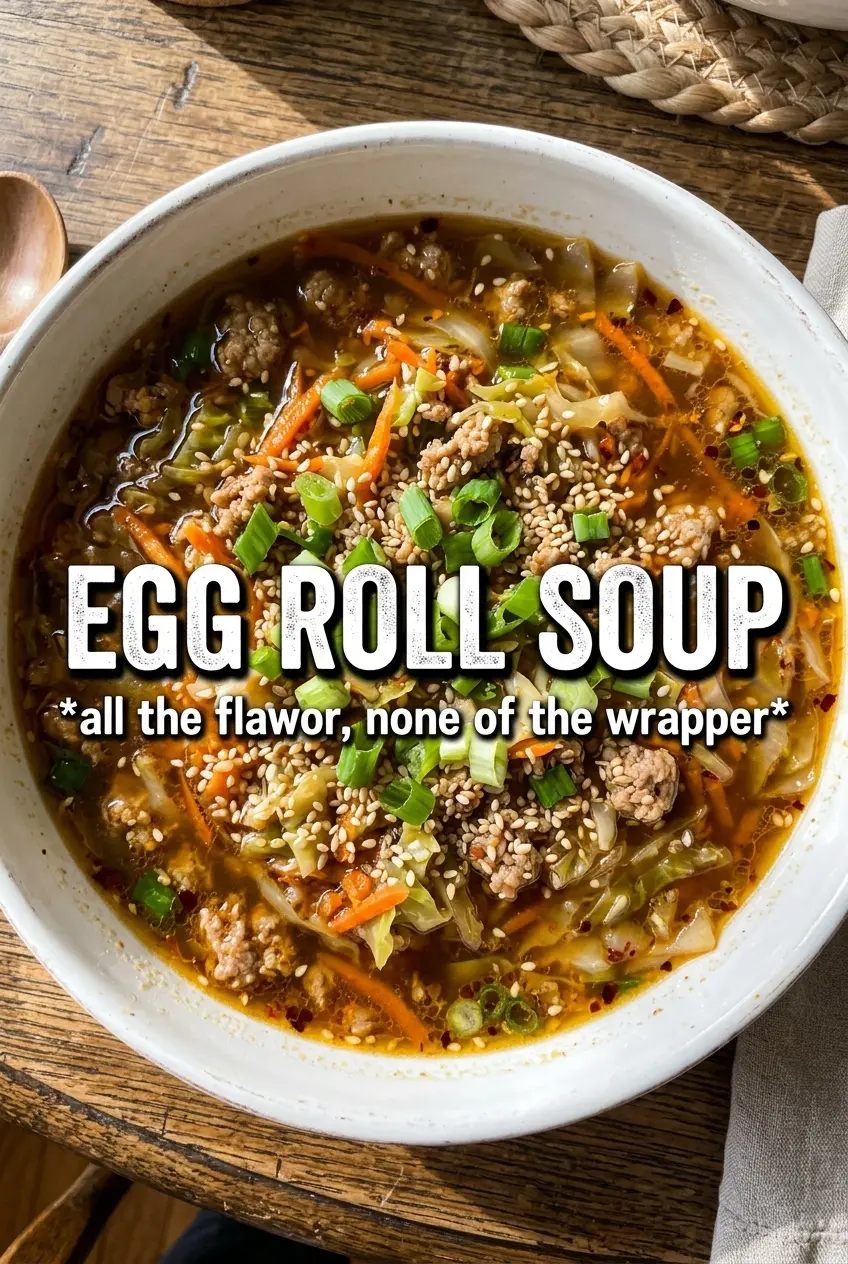
Egg Roll Soup
Ingredients
Equipment
Method
- Heat a large pot over medium-high heat. Add the ground pork (or chicken), breaking it up as it browns, then drain excess fat.
- Add the vegetable oil to the pot and swirl to coat. Stir in the garlic and ginger and cook for 1-2 minutes until fragrant.
- Pour in the chicken broth, soy sauce, sesame oil, rice vinegar, and sriracha. Bring the mixture to a boil, then keep it bubbling.
- Add the shredded cabbage and carrots to the pot. Simmer for 8-10 minutes until the vegetables are tender.
- Stir in the sliced green onions. Season with salt and black pepper to taste.
- Ladle the soup into bowls. Top each serving with crispy wonton strips, sesame seeds, and additional green onions for a fresh finish.