
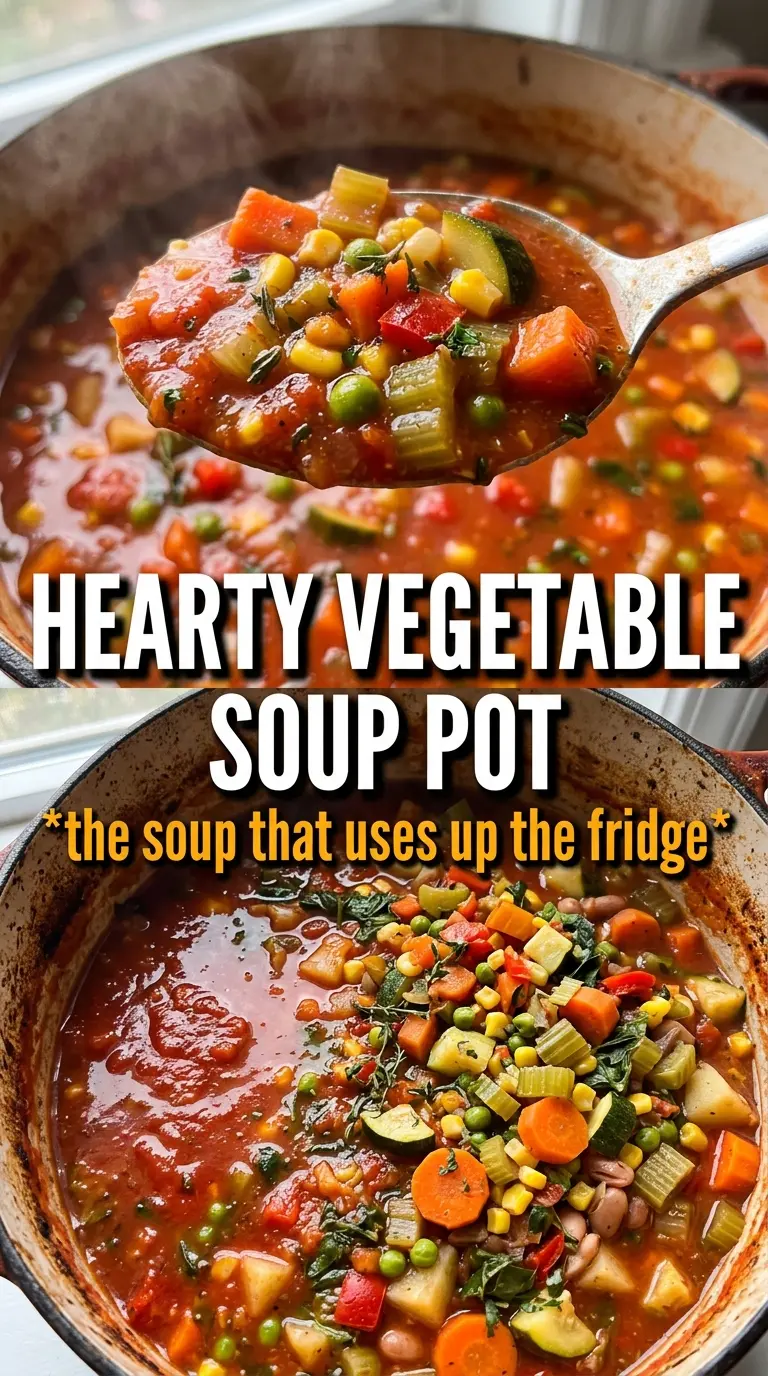
Clear broth, tender potatoes, and a full mix of vegetables make this vegetable soup the kind of pot that disappears fast at the table. It’s light enough to feel clean and comforting, but still hearty enough to count as dinner, especially when the potatoes go in at the right time and hold their shape instead of turning chalky. The vegetables stay distinct, the broth picks up sweetness from the carrots and corn, and every spoonful tastes like it came from an actual kitchen, not a can.
The trick here is building the base in stages. Onion, carrots, and celery go first so they can soften and season the oil before the broth goes in. Potatoes need enough simmering time to become tender without falling apart, while the peas and corn are added at the end so they stay bright and don’t lose their snap. A bay leaf and dried thyme do a lot of quiet work in the background, which is why this soup tastes deeper than the ingredient list might suggest.
Below, I’ve included the one timing detail that keeps the vegetables from going soft, plus a few easy swaps if you want to use what’s already in your kitchen.
The broth stayed clear and the potatoes were tender but not mushy. I also loved that the peas went in at the end and kept their color instead of turning dull.
Save this vegetable soup for a brothy, vegetable-packed dinner that stays clear, bright, and hearty.
The One Timing Mistake That Turns Vegetable Soup Soft
Vegetable soup falls flat when every vegetable goes in at once. The potatoes need time to become tender, but peas and corn only need a few minutes or they lose their color and end up tired. This recipe fixes that by building the pot in layers, which keeps the broth clear and each vegetable looking and tasting like itself.
The other thing that matters is the sauté at the beginning. When onion, carrots, and celery cook in the oil first, they take on a little sweetness and give the broth a deeper base before the liquid even goes in. Skip that and the soup can taste thin, even if the seasoning is technically right.
- Potatoes — Use a waxy or all-purpose potato if you can. They hold their shape better than starchy baking potatoes, which can start breaking down and clouding the broth.
- Vegetable broth — This is the backbone of the soup, so use one that tastes good on its own. A bland broth gives you a bland soup, no matter how much seasoning you add later.
- Dried thyme and parsley — Dried herbs are fine here because they simmer with the broth long enough to soften and spread through the pot. Fresh herbs can be stirred in at the end, but they won’t replace the background flavor these dried herbs bring.
- Frozen peas and corn — Frozen is the right choice here. They’re picked at peak ripeness and go into the pot at the end with their texture intact, which is exactly what you want.
What Each Ingredient Is Actually Doing in This Recipe
- Primary ingredient (the star) — Quality matters most. Choose the best you can find.
- Cooking medium (oil, butter, or broth) — This carries flavors and prevents dryness.
- Seasonings (salt, pepper, spices, herbs) — Layer flavors so nothing overpowers. Build depth gradually.
- Aromatics (garlic, onion, herbs) — Cook with fat to bloom flavors. Become the foundation.
- Supporting ingredients — Complement the main ingredient without overpowering it.
- Sauce or liquid (if applicable) — Brings flavors together. Balance richness with acid.
- Acid (lemon, vinegar, wine, or other) — Brightens and prevents flat-tasting results.
- Final finish (garnish, glaze, or sauce) — Prevents one-dimensional taste and adds visual appeal.
Building the Soup in Stages So Every Vegetable Stays Bright
Softening the Aromatics
Warm the olive oil in a large pot, then cook the onion, carrots, and celery until the onion looks translucent and the carrots start to lose their raw edge. You’re not trying to brown them hard; you’re giving them enough time to release flavor into the oil. If the pot starts looking dry before the vegetables soften, lower the heat instead of adding a splash of broth too early. Garlic goes in last for just a minute so it doesn’t burn and turn bitter.
Simmering the Base
Once the broth, tomatoes, potatoes, thyme, parsley, and bay leaf are in, bring the pot to a boil only long enough to get it moving, then drop it to a steady simmer. A hard boil can rough up the potatoes and make the broth cloudy. You want the potatoes to cook until they can be pierced with a fork but still hold their shape. That usually takes about 15 minutes, depending on how small you cut them.
Adding the Quick-Cooking Vegetables
Green beans need a little more time than peas or corn, so they go in next and simmer until they’re tender but still green. Add the corn and peas at the very end and cook just until they’re hot through. If you let them ride along for too long, the peas lose their sweetness and the corn turns dull. Pull out the bay leaf before seasoning, then taste the broth and add salt and pepper until the flavor pops.
How to Change This Soup Without Losing the Brothy, Fresh Finish
Make It Heartier With Beans
Stir in a can of drained white beans or chickpeas with the corn and peas. You’ll get a thicker, more filling soup without changing the broth-based character of the dish. The beans add body, but they still let the vegetables stay front and center.
Use What’s in the Freezer
Swap in frozen mixed vegetables for the green beans, corn, and peas if that’s what you have. Add them near the end so they don’t turn soft. The flavor stays close to the original, but the texture will be a little softer because mixed vegetables often include smaller cuts.
Make It Vegan and Gluten-Free Without Trouble
This soup already fits both needs as long as your broth is certified gluten-free. That’s one reason it works so well for mixed diets: the body comes from vegetables and starch, not cream or flour. Just check the broth label, since that’s the ingredient most likely to hide a problem.
Storage and Reheating
- Refrigerator: Store for up to 4 days. The potatoes will keep soaking up broth, so expect the soup to thicken a bit.
- Freezer: It freezes well for up to 3 months. Cool it completely first, then freeze in portions. The potatoes may soften a little after thawing, but the soup still reheats well.
- Reheating: Warm it gently on the stove over medium-low heat until steaming. A hard boil can break down the potatoes and make the vegetables mushy, especially after they’ve already been chilled.