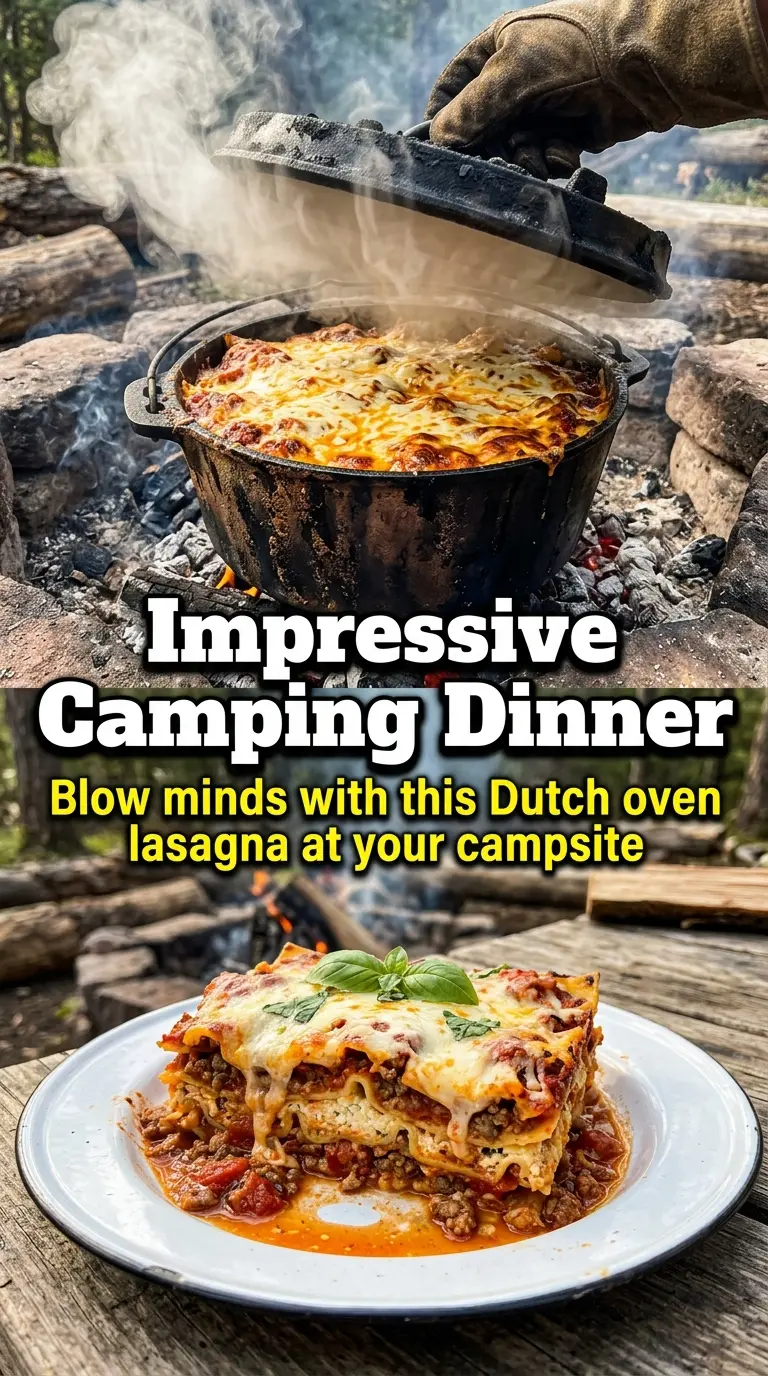
Layers of tender noodles, rich meat sauce, and melted cheese come out of a Dutch oven with the kind of deep, bubbling comfort that makes people hover near the pot before dinner is even called. The top turns golden and the edges crisp just enough to give each serving a little structure, while the center stays saucy and soft. It eats like classic lasagna, but the Dutch oven gives it a smoky, camp-style finish that a baking dish just can’t match.
What makes this version work is the balance between moisture and heat. The noodles go in uncooked, so the sauce has to be loose enough to soften them without turning the whole pan watery. The ricotta mixture is seasoned and bound with egg, which keeps the layers from collapsing when you scoop them out. Once it’s covered and set over coals, the lasagna cooks from both the bottom and the lid, so the top melts into a proper cheesy blanket instead of drying out.
Below, I’ve included the small details that matter most: how to keep the layers from slipping, what kind of sauce works best, and the one rest period that makes the slices hold together instead of spreading across the plate.
The noodles cooked through perfectly in the Dutch oven, and the top got that browned, cheesy crust without the bottom sticking. I was surprised how well it held together after the 10-minute rest.
Save this Dutch oven lasagna for camp dinners or backyard cookouts when you want bubbling layers and a crisp, cheesy top.
The Coals Matter More Than the Timer
With Dutch oven lasagna, the biggest mistake is treating it like a regular baked casserole. The heat has to come from both the bottom and the lid, and it needs to stay even. If the bottom is too hot, the noodles at the edge will soften before the center catches up. If the lid isn’t hot enough, the cheese just sits there pale and stubborn instead of melting into that bubbling top you’re after.
The sauce also has a job here beyond flavor. It has to do enough work to hydrate the noodles while the lasagna cooks, but not so much that the layers slide apart when you cut in. That’s why a standard jarred sauce works well here; it already has enough moisture and body. Thin tomato sauce can turn the pan loose and soupy, while an overly thick sauce can leave the noodles undercooked in the middle.
- Covering with coals: This is what gives you top-down heat. Without it, the cheese melts unevenly and the upper noodles stay dry.
- Uncooked noodles: They save time and hold their shape better than fully cooked noodles, but they need enough sauce around them to soften properly.
- Rest time: Ten minutes is not optional. That pause lets the layers settle so the lasagna serves cleanly instead of collapsing into a scoopable pile.
What Each Ingredient Is Doing in the Dutch Oven
- Ground beef: Builds the savory base and gives the sauce enough richness to stand up to the cheese. Lean beef works fine, but if it’s very lean, drain it lightly and don’t skip the sauce.
- Spaghetti sauce: This is the moisture source that cooks the noodles. A thicker jarred sauce is better than a watery one, and if yours is very thick, loosen it with a splash of water before layering.
- Ricotta cheese: Creates the creamy middle layer that keeps the lasagna from feeling heavy. Whole-milk ricotta gives the best texture, but part-skim will still work.
- Mozzarella: Melts into those stretchy layers and finishes the top with that familiar lasagna pull. Shredding it yourself gives a cleaner melt than pre-shredded, though either works.
- Parmesan: Sharpens the filling and gives the top more depth. The finely grated shelf-stable kind is fine here since it gets mixed in rather than served on its own.
- Egg: Holds the ricotta layer together so it slices instead of running. Don’t leave it out unless you want a softer, looser center.
- Uncooked lasagna noodles: These soak up sauce as they cook in the Dutch oven. Break them to fit the pot snugly so the layers stay even.
Building the Layers So They Cook Evenly
Brown the Beef Until the Pan Is Dry Enough
Cook the ground beef until it’s fully browned and no pink remains, then stir in the spaghetti sauce and let it simmer just long enough to come together. The meat sauce should look loose and glossy, not thick and paste-like, because the noodles need that liquid to soften. If the sauce clings too tightly to the spoon, add a splash of water before you start layering.
Mix the Cheese Layer Until It Holds Its Shape
Stir the ricotta, one cup of mozzarella, Parmesan, egg, and Italian seasoning until the mixture looks evenly combined and thick. Don’t beat it into a soupy filling; you want a spreadable layer that stays put when the hot sauce goes around it. If the ricotta is watery, drain off any excess liquid first or the center will get loose.
Stack the Noodles Tight, Not Loose
Spray the Dutch oven, add a thin layer of meat sauce, then lay in the noodles broken to fit the pot. The first sauce layer keeps the bottom from scorching and helps the noodles begin softening right away. Build the layers snugly so there aren’t big gaps, because open spaces create dry spots that never fully cook.
Finish Under the Lid Until the Cheese Bubbles
Top with the remaining mozzarella, cover the Dutch oven, and set it over campfire coals with coals on the lid for 45 to 50 minutes. You’re looking for bubbling sauce at the edges and a melted, lightly bronzed top. If the bottom starts cooking too fast, pull a few coals from underneath and let the top finish more gently.
How to Adapt This for Camp Nights, Meat Swaps, and Different Eaters
Make it with Italian sausage
Swap the ground beef for sweet or hot Italian sausage for a deeper, more seasoned filling. Sausage brings more fat and spice, so the lasagna tastes a little richer and needs less help from extra seasoning. If you use sausage, drain off excess grease after browning so the sauce doesn’t turn oily.
Go meatless with sautéed vegetables
Use a mix of mushrooms, zucchini, and spinach in place of the beef for a vegetarian version. Cook the vegetables long enough to drive off their moisture first, or the lasagna will turn watery in the center. You’ll lose some of the savory heft of meat, but the texture stays hearty if the vegetables are browned well.
Use gluten-free noodles
Gluten-free lasagna noodles work here, but they need a little more sauce and a watchful eye because they can soften faster than wheat noodles. Keep the sauce loose and check for tenderness near the end of the cook time. The texture will be slightly more delicate, but the layering method still holds up.
Storage and Reheating
- Refrigerator: Store leftovers covered for up to 4 days. The noodles will firm up a bit as they chill, but the flavor gets even better by day two.
- Freezer: Freeze in portions once cooled completely. Wrap tightly and freeze for up to 2 months; the texture will be softer after thawing, but it still reheats well.
- Reheating: Warm covered in a 325°F oven until hot in the center, or microwave individual portions with a splash of sauce or water. The main mistake is blasting it uncovered, which dries out the top before the middle heats through.
Answers to the Questions Worth Asking
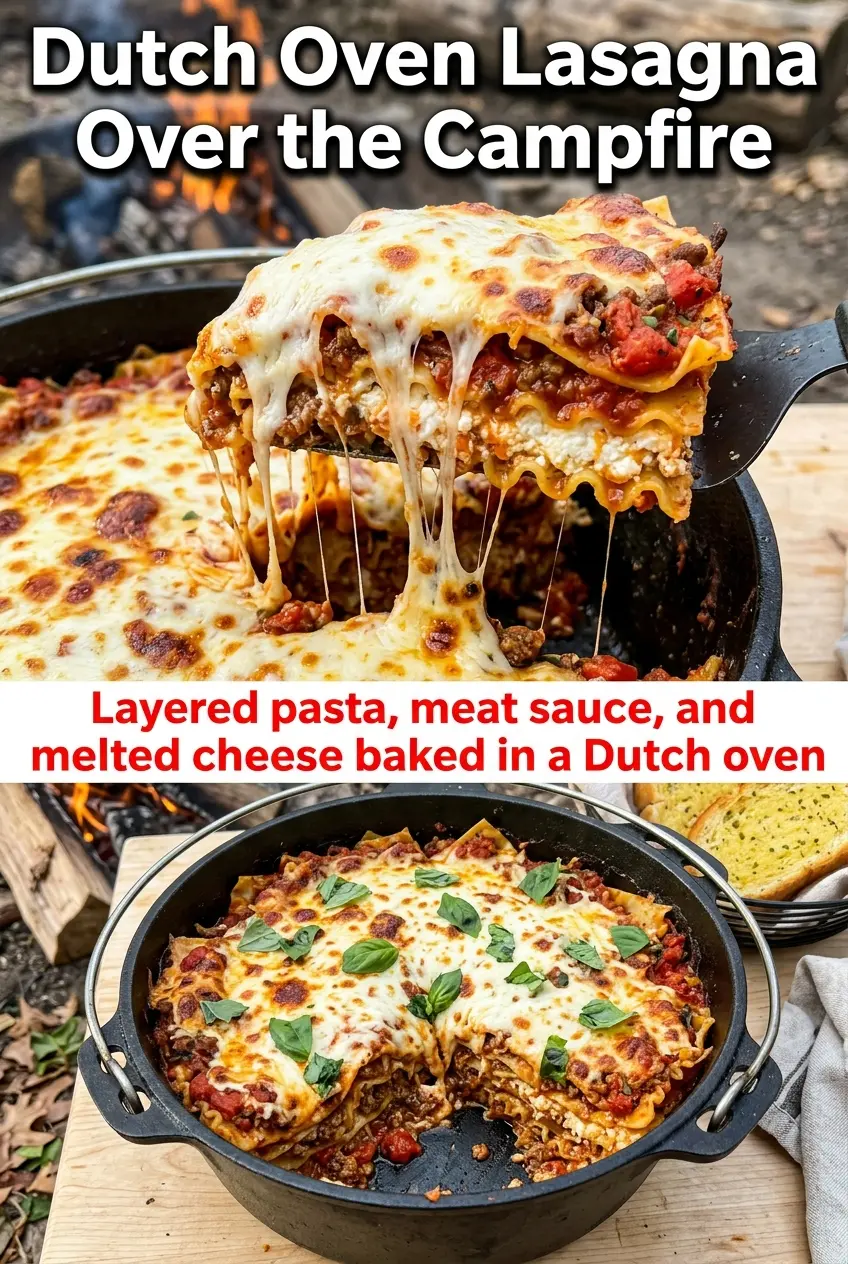
Dutch Oven Lasagna
Ingredients
Equipment
Method
- Brown the ground beef in a skillet, then mix it with spaghetti sauce until combined. Keep it bubbling lightly so the sauce coats the beef evenly.
- Mix ricotta cheese with 1 cup shredded mozzarella cheese, Parmesan cheese, egg, and Italian seasoning until smooth and evenly combined. Stir until no egg streaks remain.
- Spray the Dutch oven with cooking spray, then spread a thin layer of meat sauce on the bottom. This helps prevent sticking and anchors the first noodle layer.
- Layer 3 lasagna noodles (broken to fit) over the sauce. Arrange them so they lay as evenly as possible in the curved base.
- Spread half of the ricotta mixture over the noodles, then add half of the remaining meat sauce. Cover the surface so the next layer won’t dry out.
- Repeat the layers using another 3 lasagna noodles (broken to fit). Press gently so the noodles touch the sauce.
- Add the remaining ricotta mixture, then spread the remaining meat sauce on top. Keep the layer level for even melting.
- Top with the final 3 lasagna noodles (broken to fit) and cover with the last of the sauce, then sprinkle with the remaining shredded mozzarella cheese. The surface should look thick and cheesy.
- Cover the Dutch oven and place it on campfire coals, then set additional coals on the lid and cook for 45-50 minutes. Look for a bubbling, golden top layer and set edges.
- Let the lasagna rest for 10 minutes before serving. The layers should firm up so you can scoop clean portions.