Double Crunch Orange Chicken lands with the kind of shattering crust that stays crisp long enough to make it to the table, even after it gets tossed in a glossy orange sauce. The chicken stays juicy inside, the coating clings in crunchy layers, and the sauce hits that sweet-tart spot that makes takeout orange chicken so hard to resist. What sets this version apart is the double dredge and the way the sauce is cooked until it’s thick enough to glaze, not soak.
Chicken thighs are the right choice here because they stay tender through frying and hold up better than breast meat once the sauce goes on. The cornstarch-flour mix gives the crust structure, while the second dip builds those rugged edges that fry up extra crisp. The sauce leans on fresh orange juice and zest, so it tastes bright instead of candy-sweet, and the cornstarch slurry gets added only at the end so it turns glossy without going gluey.
Below, I’ve laid out the part that matters most: how to get that crunch to survive the sauce and how to keep the orange coating balanced instead of sticky-sweet. There’s also a few smart swaps if you want to adjust the heat, skip the fryer, or make the dish work with what you already have.
The double coating stayed crunchy even after I tossed it in the sauce, and the orange glaze thickened up just like you said. My husband kept picking at the crispy pieces before I could even get it to the table.
Save this Double Crunch Orange Chicken for the nights when you want a crispy orange glaze that clings instead of sinking into the coating.
The Double Dredge That Keeps the Coating from Going Soft
The mistake most people make with orange chicken is stopping at one coating. A single dredge gives you a thin shell that fries up, but it doesn’t have enough texture to stay crisp once the sauce hits. The second dip in egg and flour builds those craggy bits that hold up better and give you that real takeout-style crunch.
Heat matters too. If the oil is too cool, the coating drinks it in and turns heavy. If it’s too hot, the outside browns before the chicken cooks through. Aim for 375°F and keep the pieces moving gently so they brown evenly instead of sticking together or tearing off their crust.
What Each Ingredient Is Actually Doing in the Sauce and Crust
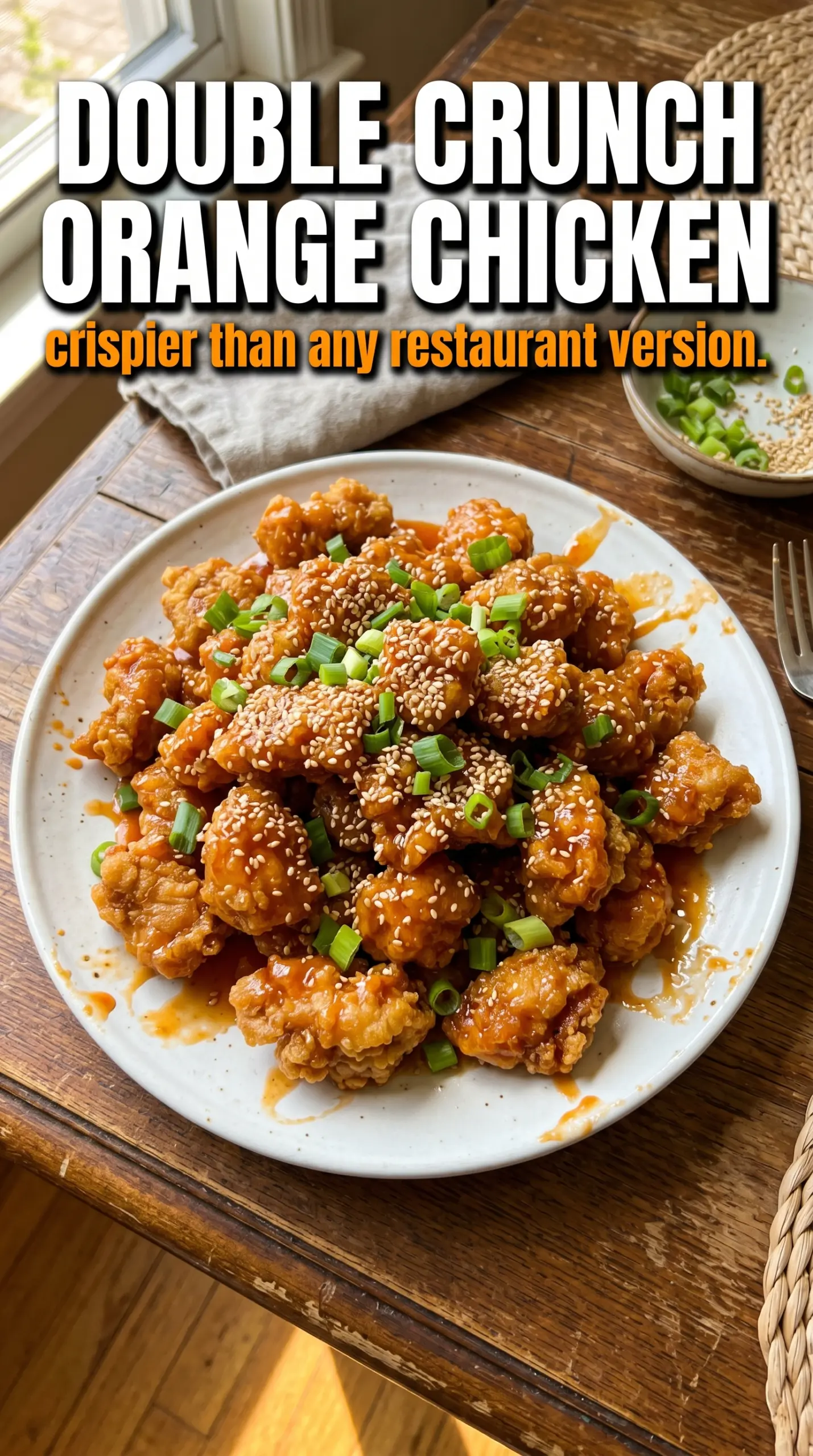
- Chicken thighs — Thigh meat stays juicy during frying and gives you a little forgiveness if the oil runs hot for a moment. Breast meat works, but it dries faster and won’t feel as plush under the sauce.
- Cornstarch and flour — Cornstarch gives the crust that brittle, crackly bite, while flour helps it cling and brown evenly. You need both for the best texture; all cornstarch alone can feel a little delicate, and all flour tastes more like standard fried chicken.
- Orange zest and juice — The juice brings the brightness, but the zest is what makes the sauce taste like orange instead of just sweet syrup. Fresh zest matters here because bottled juice alone tastes flat.
- Soy sauce, hoisin, and brown sugar — Soy adds salt and depth, hoisin gives the sauce a little body and dark savoriness, and brown sugar rounds out the sharp citrus. The balance keeps the sauce sticky and bold instead of one-note sweet.
- Rice vinegar and ginger — Vinegar sharpens the sauce so it doesn’t taste heavy, and ginger keeps the orange from becoming candy-like. If you’re missing rice vinegar, use apple cider vinegar in the same amount.
- Cornstarch slurry — This is what turns the sauce from thin and watery into a glaze that coats the chicken. Stir it in only after the sauce boils, then let it cook for a couple of minutes so the starch thickens fully and loses that raw taste.
Getting the Chicken Crisp Before the Sauce Goes On
Building the Double Coating
Mix the dry ingredients first so the garlic powder and seasoning spread evenly through the dredge. Coat each piece in egg, then press it into the flour mixture, then repeat the egg-and-flour dip for that second layer. The chicken should look rough and shaggy, not smooth; that uneven surface is what fries into crunch.
Frying to a Deep Golden Finish
Work in batches so the oil temperature doesn’t crash. The pieces should sizzle right away and float with steady bubbling around the edges. Pull them when they’re deeply golden and the chicken is cooked through, then drain on a rack or paper towels. If they look pale, they’ll soften faster once sauced.
Cooking the Orange Glaze
Combine everything except the slurry in a saucepan and bring it to a real boil so the sugar dissolves and the garlic and ginger bloom in the heat. Once the sauce is bubbling, stir in the cornstarch mixture and cook until it turns thick, glossy, and able to coat the back of a spoon. If it still looks loose, give it another minute; if it gets too thick, splash in a little water or orange juice.
Tossing Without Losing the Crunch
Add the chicken to the sauce right before serving and toss just until coated. Don’t let it sit in the pan; the longer it rests in the glaze, the faster the crust softens. Serve it over hot rice so the bottom stays saucy while the top pieces keep some of their crunch.
How to Adapt This for the Way You Cook
Bake It Instead of Frying
For a lighter version, arrange the double-dredged chicken on a wire rack set over a baking sheet, spray with oil, and bake at 425°F until crisp and cooked through. You won’t get the same shattering crust as frying, but you’ll still get a good crunch if you use enough oil spray and don’t crowd the pan.
Gluten-Free Orange Chicken
Swap the all-purpose flour for a gluten-free all-purpose blend and use tamari in place of soy sauce. The texture will still be crisp because the cornstarch does most of the heavy lifting, but the crust may be a little more delicate, so handle the fried pieces gently when tossing.
Make It Sweeter or Sharper
If you like a sweeter orange chicken, add another tablespoon of brown sugar. If you want it brighter and less sticky, bump the rice vinegar up by a teaspoon or two. Change one direction at a time so you don’t lose the balance that makes the sauce work.
Storage and Reheating
- Refrigerator: Store leftovers in an airtight container for up to 3 days. The coating will soften, but the flavor stays strong.
- Freezer: Freeze the fried chicken pieces without sauce for the best texture. Reheat from frozen in the oven or air fryer, then toss with freshly made sauce.
- Reheating: Warm the chicken on a rack in a hot oven or air fryer so steam can escape. Microwaving makes the crust go limp fast, and once the sauce is on, that texture loss is hard to undo.
Questions I Get Asked About This Recipe
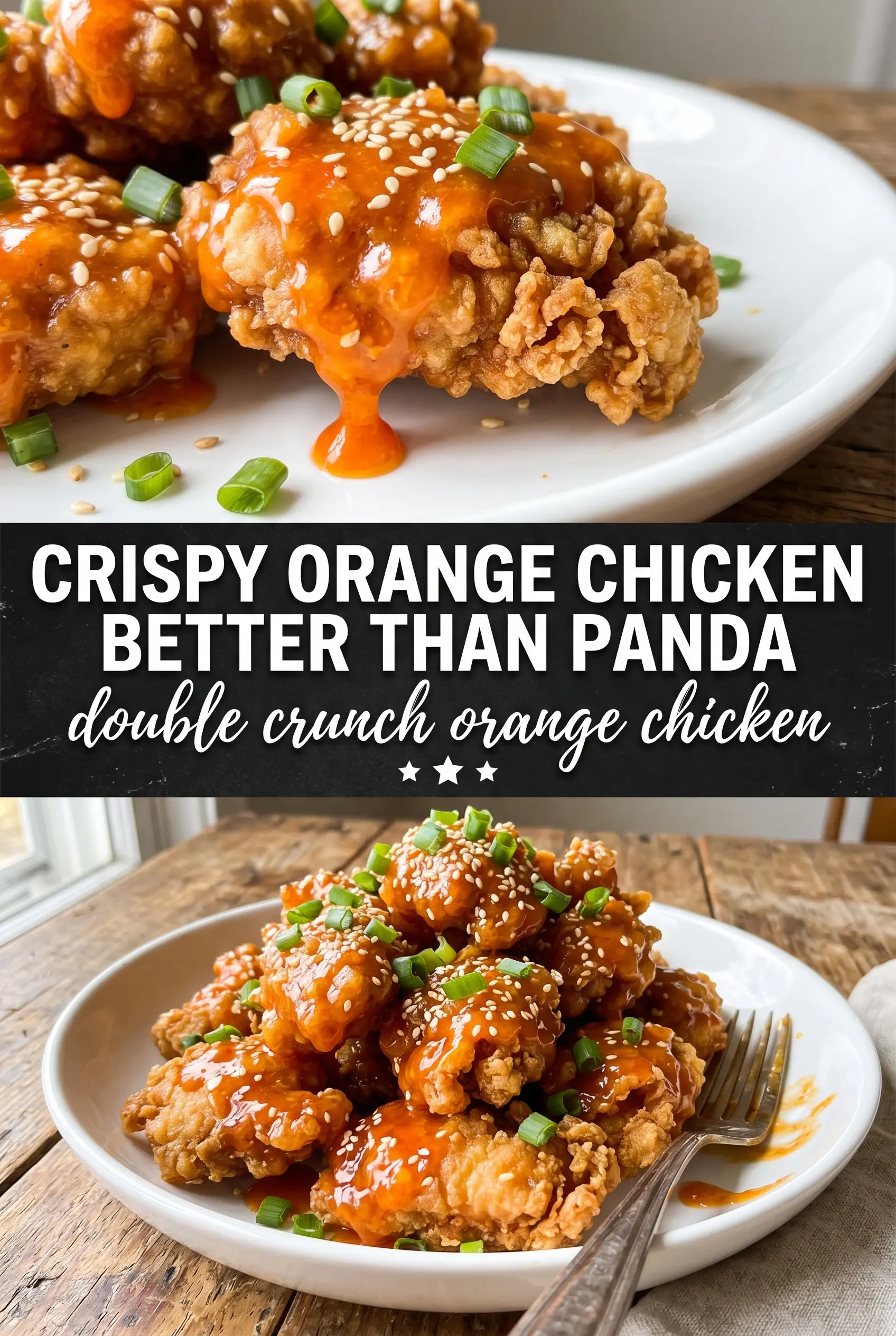
Double Crunch Orange Chicken
Ingredients
Equipment
Method
- Mix cornstarch, flour, garlic powder, salt, and pepper in a bowl until evenly combined.
- Dip chicken pieces into beaten eggs, letting excess drip off.
- Dredge the egg-coated chicken in the flour mixture, pressing lightly for full coverage.
- Double-dip each piece by returning it to the beaten egg, then back into the flour mixture for maximum crunch.
- Heat vegetable oil to 375°F in a Dutch oven.
- Fry chicken at 375°F for 5-6 minutes, until deeply golden and cooked through, turning once if needed.
- Drain fried chicken on a rack or paper towels until ready to sauce.
- In a saucepan, combine orange juice, orange zest, soy sauce, brown sugar, rice vinegar, hoisin sauce, garlic, ginger, and sesame oil.
- Bring the orange sauce to a boil, stirring to dissolve the sugar.
- Stir in the cornstarch slurry and cook 2-3 minutes until thick and glossy.
- Toss the crispy chicken in the orange sauce until evenly coated and glossy.
- Serve the double crunch orange chicken over steamed rice, topped with sesame seeds and sliced green onions.