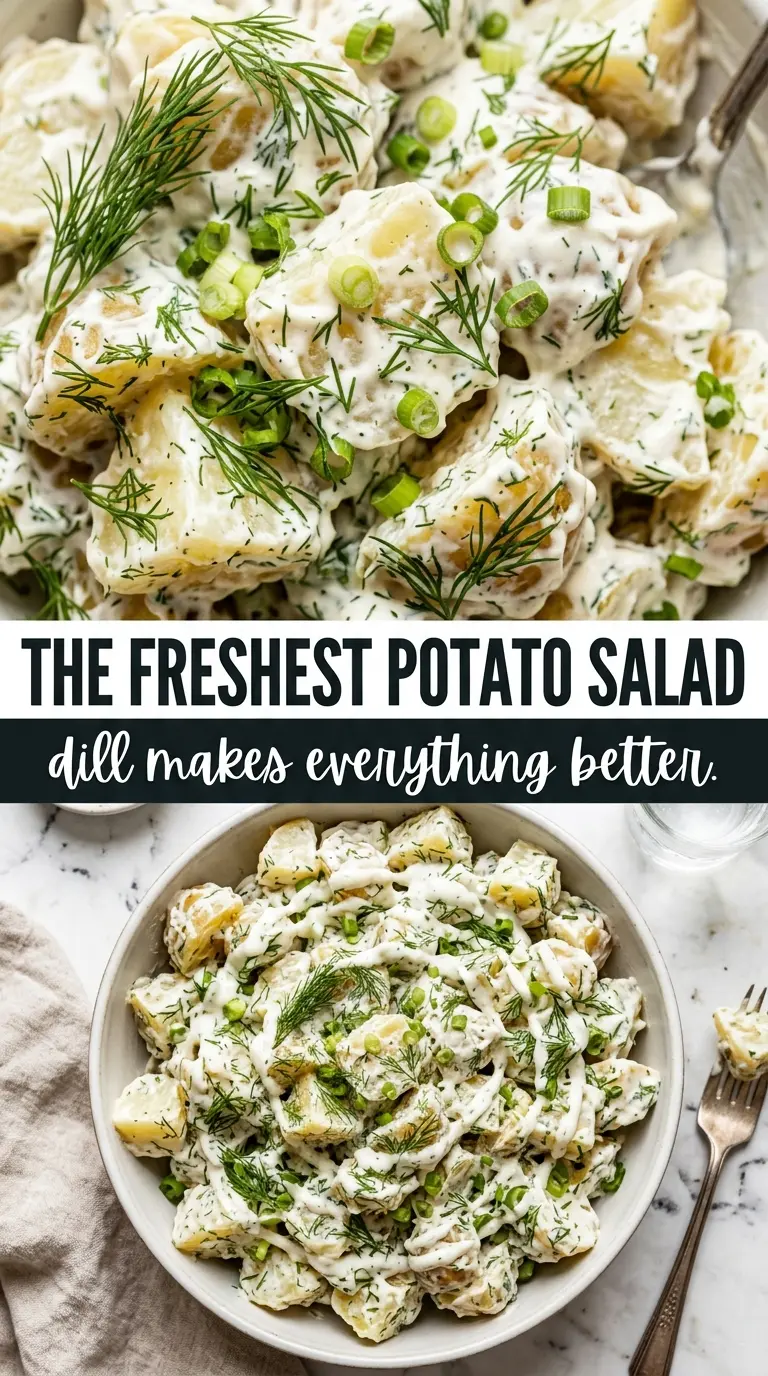
Tender baby potatoes coated in a cool, creamy dill dressing always disappear fast, but this version earns its place because it stays bright instead of heavy. The potatoes hold their shape, the celery brings a clean crunch, and the fresh dill cuts through the richness so each bite tastes fresh all the way through.
The trick is cooling the potatoes completely before the dressing goes on. Warm potatoes soak up flavor, but if they’re still hot, the sour cream can loosen too much and the mayo turns oily around the edges. A little Dijon and white wine vinegar keep the dressing sharp enough to wake up the potatoes without pushing it into mustard-potato-salad territory.
Below, I’ll show you how to keep the potatoes intact, how to balance the dressing if it tastes flat after chilling, and a few swaps that still keep the salad creamy and herb-forward.
The potatoes stayed in neat halves and the dill dressing got even better after an hour in the fridge. I added a little extra vinegar at the end and it tasted just like the potato salad my mom used to make for cookouts.
Love a creamy dill potato salad with real herb flavor? Save this one for cookouts, picnics, and make-ahead side dishes.
The Part That Keeps the Potatoes From Turning Mushy
Baby potatoes are the right choice here because they hold their shape better than starchy russets. Cutting them in half before boiling gives you plenty of surface area for the dressing to cling to without turning the salad into mashed potatoes with herbs. The real mistake is boiling too hard; a lively simmer is enough. If the water is rolling aggressively, the edges break down before the centers are tender.
Salt the cooking water well. Potatoes absorb seasoning from the inside, and this is your best chance to build flavor that doesn’t just sit on top of the dressing. Drain them as soon as a fork slips in easily, then let them cool all the way down before mixing. That pause matters more than most people think.
- Baby potatoes — Waxy potatoes keep their shape and give you those tidy halves that stay intact after chilling. Yukon Golds also work if that’s what you have.
- Red onion — Finely diced red onion adds bite without overpowering the dill. If yours tastes sharp, soak it in cold water for 10 minutes and drain well.
- Celery — This is the clean crunch that keeps the salad from feeling soft. Slice it thin so it blends into the mix instead of fighting the potatoes.
What Each Ingredient Is Actually Doing in the Dressing
- Sour cream — This gives the dressing its cool tang and thicker body. Full-fat sour cream makes the salad cling better and keeps it from tasting thin after chilling.
- Mayonnaise — Mayo rounds out the sour cream so the dressing feels rich instead of sharp. You can swap in more sour cream if you want it tangier, but the texture will be looser.
- White wine vinegar — Vinegar keeps the salad bright and stops the dairy from tasting heavy. Add it a little at a time if you want a softer finish, especially after the salad has chilled.
- Dijon mustard — Dijon doesn’t make this taste like mustard potato salad; it adds depth and helps the dressing taste balanced. If you skip it, the dressing will still work, but it loses some backbone.
- Fresh dill — Fresh dill is the point of the recipe. Dried dill won’t give the same green, lifted flavor, and you’ll notice the difference immediately.
How to Fold It Together Without Breaking the Potatoes
Cooling the Potatoes the Right Way
Drain the potatoes and spread them out for a few minutes so steam can escape. If you pile them in a bowl while they’re still hot, the bottoms keep cooking and the pieces get soft at the edges. You want them just warm enough to be handled, then fully cooled before the dressing goes in. That’s how you keep the halves neat and the salad creamy instead of loose.
Whisking a Dressing That Stays Smooth
Stir the sour cream, mayonnaise, vinegar, Dijon, garlic powder, salt, and pepper until the mixture looks completely smooth. If it seems too thick, a tiny splash of vinegar loosens it without watering it down. Taste it before it hits the potatoes. The dressing should taste a little punchy on its own because the potatoes will calm it down.
Gently Folding, Not Stirring Hard
Add the potatoes, celery, onion, and dill to a large bowl, then pour the dressing over the top. Use a spatula and fold from the bottom instead of stirring in circles. If you go rough here, the potatoes start to crumble and the salad turns pasty. Once everything is coated, stop. It doesn’t need to look perfectly uniform before chilling; the flavors settle in as it rests.
How to Adapt This for a Different Table
Dairy-Free Version
Swap the sour cream for a thick dairy-free sour cream and use a mayonnaise made without eggs if needed. The result will still be creamy, but the tang can be slightly different, so taste and add a touch more vinegar or dill at the end.
Lighter, More Tangy Salad
Replace half the mayo with extra sour cream for a fresher, sharper finish. The dressing will be a little less plush, but it tastes brighter and works well when you’re serving the salad alongside richer mains.
No Mustard at All
If you want a no-mustard potato salad, leave out the Dijon and add another teaspoon of vinegar plus a pinch more salt. You’ll lose a little depth, but the dill and sour cream still carry the salad nicely.
Storage and Reheating
- Refrigerator: Keeps for 3 to 4 days. The dill will soften a little, but the flavor holds up well.
- Freezer: I don’t recommend freezing this salad. The sour cream dressing separates and the potatoes turn grainy after thawing.
- Reheating: Serve it cold or let it sit at room temperature for 15 to 20 minutes before serving. Don’t microwave it; the dressing breaks and the potatoes get mealy.
Answers to the Questions Worth Asking

Dill Potato Salad
Ingredients
Equipment
Method
- Add halved baby potatoes to a Dutch oven filled with well-salted water and bring to a boil; cook for 12-15 minutes until fork-tender, stirring once or twice. Visual cue: the cut sides should feel soft when pierced with a fork.
- Drain the potatoes and spread them on a sheet pan to cool completely. Visual cue: they should stop steaming and feel room temperature before dressing.
- Whisk sour cream, mayonnaise, white wine vinegar, Dijon mustard, garlic powder, salt, and cracked black pepper until smooth. Visual cue: the dressing should look glossy and evenly combined with no streaks.
- Add cooled baby potatoes, celery, red onion, and fresh dill to a large bowl and fold gently to distribute. Visual cue: herb flecks and onion should be visible throughout the potato pieces.
- Pour the dressing over the potato mixture and fold gently until every piece is coated without breaking up the halves. Visual cue: the potatoes should look lightly creamy with clinging dressing.
- Taste and adjust by adding more white wine vinegar, fresh dill, or salt as needed for balance. Visual cue: the flavor should taste bright, not flat or overly rich.
- Cover and refrigerate for at least 1 hour to firm up the texture and blend the flavors. Visual cue: it should look thicker and more cohesive when you remove it from the fridge.
- Serve chilled and garnish with extra fresh dill. Visual cue: add a few fresh dill fronds on top for a vivid green finish.