Slow-roasted Cuban mojo marinated pork earns its place at the center of the table because it gives you two things at once: a deeply caramelized crust and meat that shreds in juicy, citrus-scented strands. The garlic and lime do more than season the outside. They work their way into the scored pork shoulder and turn a tough cut into something rich, tender, and full of clean, bright flavor.
The key is giving the marinade enough time to do its job and then roasting the pork low and covered long enough for the shoulder to soften before the final uncovered blast builds the crust. Orange juice brings sweetness, lime keeps the whole thing lively, and cumin and oregano give it that unmistakable Cuban backbone. If you rush the roast or skip the rest, you lose the texture that makes mojo pork worth making in the first place.
Below, you’ll find the small details that keep the pork from drying out, how to get that bark-like exterior without burning the garlic, and the easiest ways to serve it for a simple family dinner or a bigger spread.
The pork came out with that perfect caramelized crust on the outside and shredded so easily after the rest. I used the juices over rice and nobody left the table without going back for seconds.
Save this mojo marinated pork for the nights when you want a smoky citrus crust and tender shredded pork with almost no stovetop work.
The Part Most People Miss: Let the Pork Turn from Braise to Roast
The first long stretch under foil is doing the heavy lifting. It softens the shoulder and keeps the garlic and citrus from scorching before the meat has time to relax. The final uncovered roast is where the magic changes from tender to memorable: the surface dries, the fat renders, and the marinade on top caramelizes into a dark, sticky crust.
If the pork goes uncovered too early, the outside can dry out before the center is ready. If it stays covered the whole time, you get tender meat but lose the crust that makes mojo pork taste finished. The texture you want is a clean, browned exterior that pulls apart with little resistance underneath.
- Score the pork — Those shallow cuts give the marinade more surface to cling to and help the seasoning reach past the outer layer.
- Cover tightly for the first roast — This traps steam and keeps the shoulder from tightening up while the connective tissue breaks down.
- Uncover for the finish — That last 30 to 45 minutes is where the top turns golden and the edges crisp.
What the Marinade Is Actually Doing in This Pork

The orange juice gives the pork a round sweetness that keeps the lime from reading sharp. Fresh lime juice is important here; bottled juice tastes flatter and can make the whole marinade feel dull. Garlic is the backbone, and with a full 8 cloves it should taste bold, not shy.
- Fresh orange juice — This softens the citrus edge and helps the pork taste balanced instead of aggressively sour.
- Fresh lime juice — Use real limes. You need the brightness and aroma, especially after a long roast.
- Olive oil — It carries the garlic and spices across the meat and helps the surface brown instead of drying out.
- Cumin, oregano, and smoked paprika — These build the warm, savory base that makes the pork taste like mojo instead of plain citrus roast pork.
- Cilantro — Stir it into the marinade near the end so it stays fresh and grassy rather than turning muddy.
Getting the Marinade, Roast, and Rest in the Right Order
Build the Mojo Until It Looks Emulsified
Blend the marinade until the garlic is finely broken down and the oil looks cloudy rather than separated. That tells you the citrus, oil, and spices are suspended together and ready to coat the pork evenly. If you leave big chunks of garlic, they tend to scorch in the oven and taste harsh instead of mellow.
Let the Shoulder Sit Long Enough to Change
Score the pork all over, slide it into a zip-top bag or a covered dish, and pour the marinade over every surface. Four hours gives you good flavor, overnight gives you better flavor, and the difference shows up most in the center of the roast. Turn the pork once if you can so the marinade doesn’t pool on just one side.
Roast Covered Until the Meat Starts to Relax
At 325°F, covered tightly with foil, the pork should slowly turn tender without the outside drying out. Around the 2.5-hour mark, the shoulder will start to feel looser when you probe it with a fork. If it still feels tight or springs back hard, keep roasting covered a little longer before uncovering it.
Finish for Color, Then Let It Rest
Once uncovered, roast until the top is deeply golden and the internal temperature reaches about 190°F. That higher temperature is what gives you shreddable pork shoulder instead of sliceable pork loin texture. Rest it for 15 minutes before pulling it apart so the juices stay in the meat instead of running out onto the cutting board.
How to Adapt This Mojo Pork for Different Dinners
Serve It Shredded for Bowls or Sandwiches
Pull the pork apart while it’s still warm and spoon some of the pan juices back over it. That keeps the meat moist and turns it into an easy filling for rice bowls, sandwiches, or tacos-style plates with beans on the side.
Make It Dairy-Free and Naturally Gluten-Free
This recipe already fits both diets as written, which is part of why it works so well for a crowd. Just check your serving sides and keep the marinade simple; there’s no need for butter, flour, or any thickener here.
Use a Pork Picnic Roast if That’s What You Find
Picnic roast has a little more fat and can be just as good here, though it may take a bit longer to shred cleanly. Keep the same roast-and-rest method and judge by tenderness, not the clock.
Storage and Reheating
- Refrigerator: Store the shredded pork with its juices for up to 4 days. The flavor deepens overnight, and the meat stays much juicier when it’s kept in the pan juices.
- Freezer: It freezes well for up to 3 months. Pack it in flat, airtight portions with some juices so it reheats without drying out.
- Reheating: Warm it covered in a low oven or in a skillet with a splash of the juices. The most common mistake is blasting it on high heat, which dries out the leaner shreds before the fat has a chance to soften again.
Questions I Get Asked About This Recipe
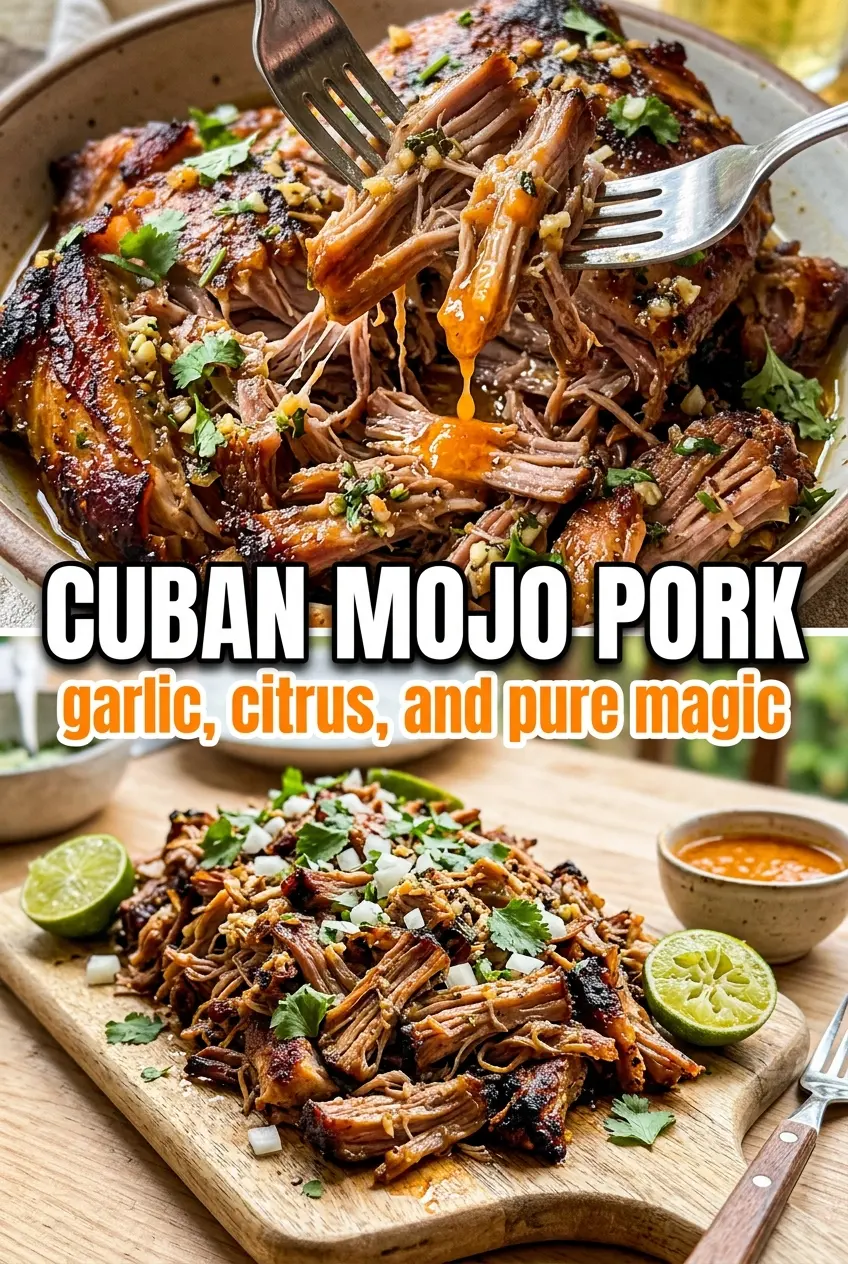
Cuban Mojo Marinated Pork
Ingredients
Equipment
Method
- Blend the garlic, orange juice, lime juice, olive oil, cumin, oregano, smoked paprika, and salt and black pepper until smooth, then stir in the chopped cilantro for even distribution.
- Score the pork shoulder all over, place it in a zip-lock bag, and pour in the marinade to coat thoroughly.
- Refrigerate the pork 4–8 hours or overnight to let the citrus and garlic penetrate deeply.
- Preheat the oven to 325°F.
- Place the pork in a roasting pan, pour any marinade over it, cover tightly with foil, and roast for 2.5 hours.
- Uncover and roast 30–45 minutes more at 325°F until the outside is golden and caramelized and the internal temperature reaches 190°F.
- Rest the pork 15 minutes before shredding or slicing so the juices redistribute.
- Serve with lime wedges and cilantro, using the caramelized crust as the most flavorful topping.