Cheesy, saucy Crockpot Ravioli Lasagna gives you the layered comfort of lasagna without boiling noodles or babysitting a pan on the stove. The ravioli does double duty here: it stands in for both pasta and a built-in cheese layer, so every bite comes out soft, rich, and coated in meat sauce with pockets of ricotta and a melted mozzarella top.
The trick is keeping the sauce loose enough to move through the layers while still clinging to the ravioli. Draining the diced tomatoes keeps the slow cooker from turning watery, and starting with a thin layer of sauce on the bottom helps prevent sticking and gives the pasta some moisture right away. I also like using frozen ravioli straight from the bag, which holds its shape better during the long cook and makes the layering easy.
Below, I’ve included the small details that keep this from turning soupy, plus a few swaps for sausage, beef, and make-ahead prep.
The ravioli stayed intact, the cheese melted into perfect layers, and the sauce thickened up instead of turning watery. My husband went back for seconds before I even sat down.
Save this Crockpot Ravioli Lasagna for the nights when you want layered pasta comfort with almost no hands-on work.
The Trick That Keeps Ravioli Lasagna From Turning to Mush
Slow cookers are great at melting cheese and blending sauce, but they’re also famous for over-softening pasta if you give them too much liquid or too much time. Ravioli makes this dish easier than traditional lasagna, but it still needs structure. A drained tomato base, a single sauce layer under the ravioli, and a modest cook time are what keep the pasta tender instead of collapsing.
The other mistake is packing the layers too tightly. Ravioli needs a little room for heat to circulate, and the cheese needs space to melt down into the sauce instead of sealing the top too early. That’s why the final layer is generous but not piled sky-high.
- Frozen ravioli — This is the safest choice because it holds its shape better in the slow cooker. Fresh ravioli works too, but it can go soft faster, so check it a little earlier.
- Ricotta — This gives you the creamy lasagna bite you’d expect from the oven version. Whole-milk ricotta tastes richer and stays smoother after cooking.
- Marinara sauce — Use one with enough body to coat the meat, not a thin sauce that tastes watery after hours of heat. If your sauce is very thick, add a splash of water so it spreads easily between layers.
- Diced tomatoes — Drain them well. The tomato pieces add brightness and keep the dish from tasting flat, but excess liquid is what makes the bottom layers slump.
What Each Layer Is Doing in the Slow Cooker
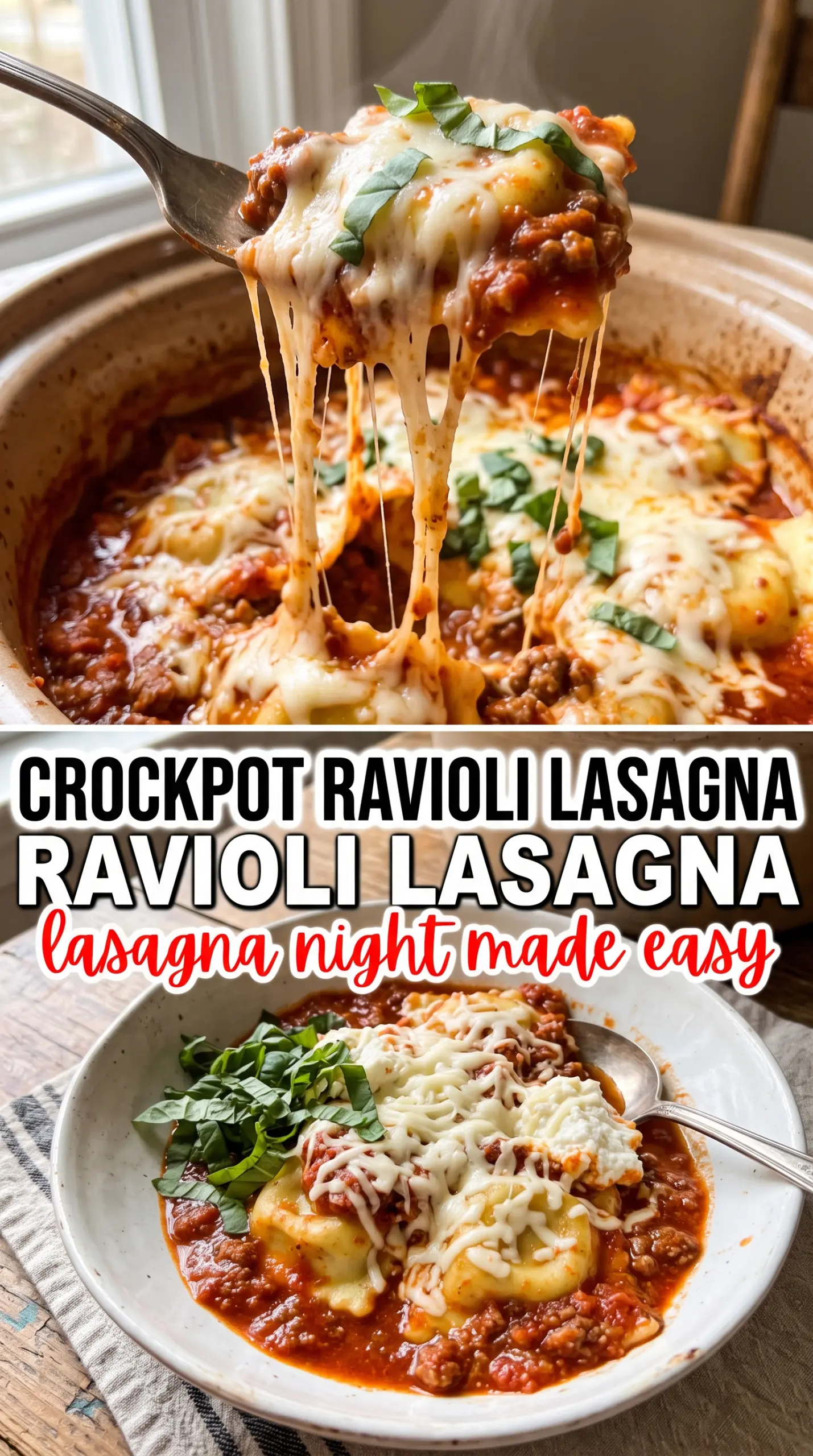
- Ground beef or Italian sausage — Beef gives you a mellow, classic lasagna flavor. Italian sausage adds more seasoning and a little fat, which makes the sauce taste fuller. If you use sausage, drain it well so the finished dish doesn’t feel greasy.
- Ricotta, mozzarella, and Parmesan — These three cheeses do different jobs. Ricotta gives creaminess, mozzarella gives the stretch, and Parmesan sharpens the whole dish so it doesn’t taste one-note.
- Italian seasoning, garlic powder, and onion powder — These help the sauce taste like it simmered longer than it did. Garlic powder is especially useful here because it disperses evenly through the slow cooker and doesn’t burn the way fresh garlic sometimes can.
- Fresh basil — Add it at the end. It cuts through the richness and makes the finished dish taste brighter, not heavier.
Layering It So the Cheese Melts Before the Ravioli Falls Apart
Build the Sauce First
Mix the cooked meat with marinara, drained tomatoes, and seasonings before anything goes into the slow cooker. That gives every layer flavor instead of making you rely on the cheese to carry the dish. Spread a thin layer on the bottom first, because that moisture protects the ravioli from sticking and starting out dry.
Stack the Ravioli in a Single, Loose Layer
Add the ravioli in a single layer, even if a few pieces overlap a little. Overcrowding is what causes uneven cooking, while too much space leaves some pieces exposed and dry on top. The ravioli should be covered with sauce and cheese, but not buried under a dense mound.
Use the Cheese as a Binder, Not a Blanket
Dollop ricotta over the ravioli, then scatter mozzarella and Parmesan across the surface. The ricotta melts into pockets, while the shredded cheese helps hold the layers together as the sauce bubbles underneath. If you dump all the ricotta in one heavy layer, it tends to stay in clumps instead of spreading through the dish.
Stop Cooking When the Ravioli Is Tender
Cook on low until the ravioli is tender and the cheese is fully melted, then let the dish rest for 10 minutes before serving. That rest time matters because it lets the sauce settle and thicken enough to scoop clean portions. If you cut in too early, the layers slide apart and the bottom looks looser than it really is.
Make It With Sausage Instead of Beef
Italian sausage gives the sauce more seasoning and a little more richness. Mild sausage keeps the dish balanced, while hot sausage brings some heat without needing extra red pepper flakes. Just brown and drain it well, since too much rendered fat can make the bottom layer feel oily.
Make It Gluten-Free Without Changing the Texture
Use gluten-free ravioli if you can find it, and keep the cook time on the shorter end so the pasta doesn’t get fragile. The sauce and cheese already do most of the work here, so the swap doesn’t change the flavor much. Check the ravioli early, since gluten-free pasta can soften faster than standard versions.
Make It Meatless
Skip the meat and use a thicker marinara, then add sautéed mushrooms or spinach if you want more body. The dish stays creamy and filling, but it tastes a little lighter and less rich. If you add greens, cook off their moisture first so they don’t thin the sauce.
Storage and Reheating
- Refrigerator: Store leftovers in an airtight container for up to 4 days. The ravioli softens a little more as it sits, but the flavor gets even better.
- Freezer: This freezes well in portions. Cool completely, wrap tightly, and freeze for up to 2 months, though the pasta will be softer after thawing.
- Reheating: Reheat covered in the oven at 325°F or in the microwave with a splash of sauce or water to keep it from drying out. The common mistake is blasting it uncovered until the cheese tightens and the edges turn rubbery.
Questions I Get Asked About This Recipe
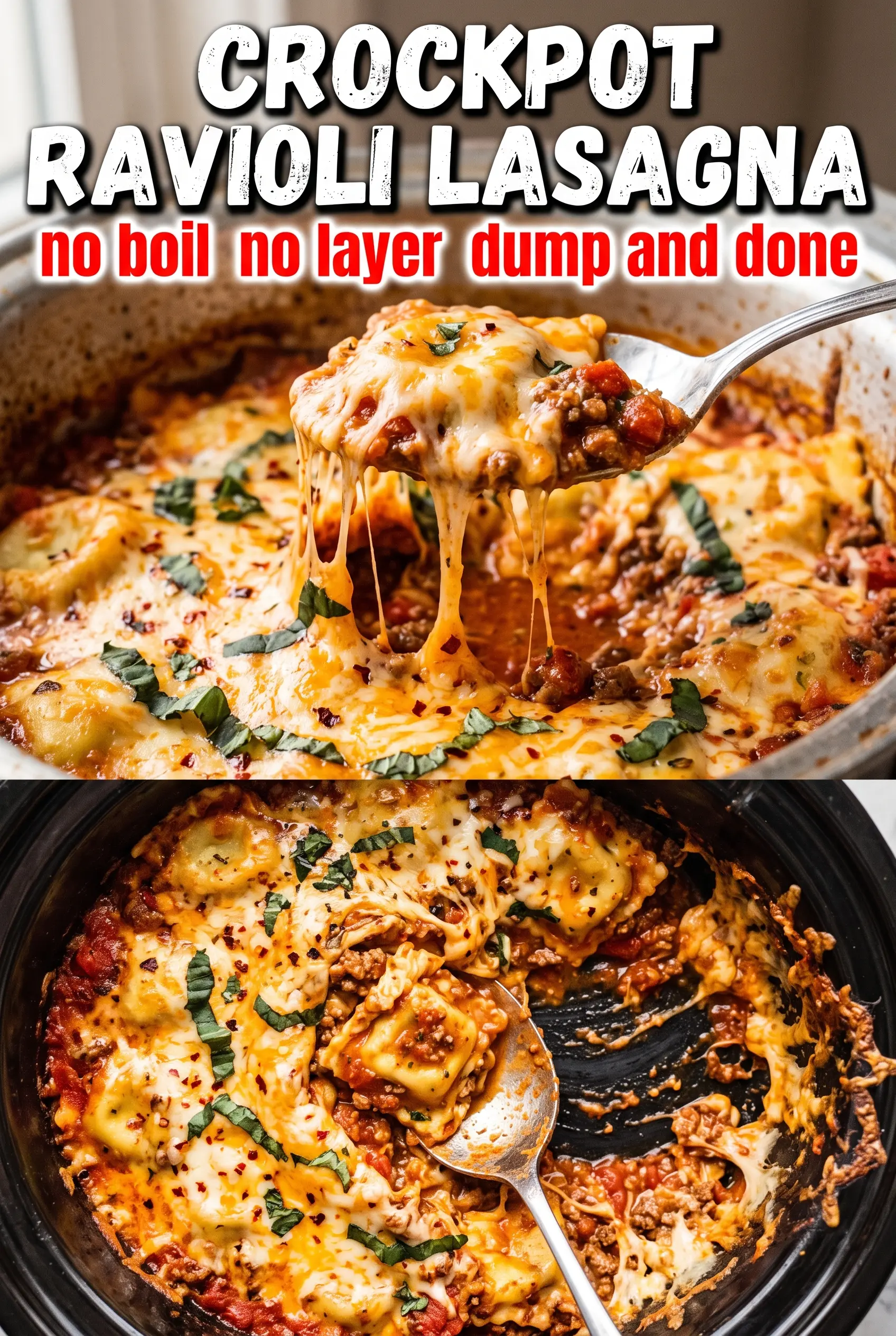
Crockpot Ravioli Lasagna
Ingredients
Equipment
Method
- Brown the ground beef or Italian sausage, then drain if needed and transfer to a mixing bowl.
- Stir the browned meat with marinara sauce, diced tomatoes, Italian seasoning, garlic powder, onion powder, salt, and black pepper until evenly combined.
- Spread a thin layer of the meat sauce in the bottom of the slow cooker.
- Add a single layer of frozen or fresh cheese ravioli on top of the sauce.
- Dollop ricotta cheese over the ravioli, then sprinkle with shredded mozzarella cheese and grated Parmesan cheese.
- Repeat layers of meat sauce, ravioli, ricotta, and mozzarella/Parmesan until all ingredients are used, finishing with a generous layer of cheese on top.
- Cook on low for 4–5 hours, or until the ravioli are cooked through and the cheese is melted and bubbling.
- Let the crockpot ravioli lasagna rest for 10 minutes before serving.
- Garnish with fresh basil for garnish and serve.