Slow-cooked birria turns beef chuck into something deeply savory, spoon-tender, and built for dunking. The meat shreds cleanly after hours in the slow cooker, but the real payoff is the consommé: glossy, chile-rich, and strong enough to stand up to a tortilla that’s been crisped in the rendered fat. Every bite gets that contrast of crackly edges, melted cheese, and a broth that tastes like it’s been simmering all day because, in this case, it has.
The sauce works because the dried chiles are toasted just enough to wake up their oils before they’re soaked and blended with tomatoes, vinegar, and spices. That little bit of vinegar matters more than people think; it keeps the sauce from tasting flat and helps the beef taste fuller, not heavier. I also like adding the cinnamon stick and bay leaves to the slow cooker instead of the blender, which keeps those flavors present without making the sauce taste dusty or overworked.
Below, I’ve included the detail that matters most for birria tacos: how to handle the fat from the consommé so the tortillas fry up with real color and crunch, not sogginess. There’s also a few swaps and storage notes, because this is the kind of recipe worth making once and eating twice.
The consommé was rich and silky, and the tacos got perfectly crisp when I dipped the tortillas in the fat first. My husband kept going back for “just one more” because the beef stayed juicy all night.
Save these crockpot birria tacos for the nights when you want tender shredded beef, crispy cheese edges, and a consommé worth dunking into.
The Step That Keeps Birria Broth Bold Instead of Bitter
The biggest mistake with birria is blasting the dried chiles too long in a hot pan. They should smell fragrant and a little smoky in under a minute; if they darken too much, the broth picks up a burnt edge that never fully disappears. A quick toast, followed by a proper soak, gives you depth without harshness.
Blending the sauce until completely smooth matters just as much. Any bits of chile skin left behind turn the consommé grainy, and a grainy sauce never clings to the beef the way it should. The blender is doing more than pureeing here. It’s building the body of the dish.
- Beef chuck roast — This cut has enough fat and connective tissue to turn silky in the slow cooker. Leaner beef will shred, but it won’t give you the same rich mouthfeel in the meat or broth.
- Dried guajillo, ancho, and pasilla chiles — This trio gives the sauce color, sweetness, and gentle heat. If you can’t find pasilla, use another ancho in its place, but don’t skip the dried chiles and rely on chili powder alone.
- Fire-roasted tomatoes — They add a little charred sweetness that balances the chiles. Regular diced tomatoes work in a pinch, but the broth tastes flatter.
- Apple cider vinegar — This keeps the sauce from tasting heavy and helps the beef flavor pop. White vinegar is harsher, so use it only if that’s what you have and cut it back a little.
- Cinnamon stick and bay leaves — These should perfume the broth, not dominate it. Leave them whole in the slow cooker so they infuse slowly and are easy to remove later.
What Each Ingredient Is Actually Doing in This Recipe

- Primary ingredient (the star) — Quality matters most. Choose the best you can find.
- Cooking medium (oil, butter, or broth) — This carries flavors and prevents dryness.
- Seasonings (salt, pepper, spices, herbs) — Layer flavors so nothing overpowers. Build depth gradually.
- Aromatics (garlic, onion, herbs) — Cook with fat to bloom flavors. Become the foundation.
- Supporting ingredients — Complement the main ingredient without overpowering it.
- Sauce or liquid (if applicable) — Brings flavors together. Balance richness with acid.
- Acid (lemon, vinegar, wine, or other) — Brightens and prevents flat-tasting results.
- Final finish (garnish, glaze, or sauce) — Prevents one-dimensional taste and adds visual appeal.
How to Build the Consommé in the Slow Cooker Without Losing the Texture
Toast and soak the chiles
Set the dried chiles in a dry skillet over medium heat and turn them just until they smell toasty and pliable, about 30 seconds per side. If they blister black, the sauce turns bitter, so keep them moving. Soak them in hot water until soft enough to blend without resistance. If the skins still feel leathery, give them a few more minutes; tough chiles leave tiny flecks in the sauce.
Blend the sauce until it looks like velvet
Add the soaked chiles, tomatoes, onion, garlic, broth, vinegar, and spices to the blender and run it long enough that the mixture loses all graininess. Pause and scrape down the sides if needed. The sauce should pour like a thick soup, not like a chunky salsa. If it looks too thick to blend cleanly, add a splash more broth now instead of watering it down later.
Cook the beef low and leave it alone
Place the beef in the slow cooker, tuck in the cinnamon stick and bay leaves, then pour the sauce over the top. The slow cooker should stay on low for the full cook time so the collagen breaks down gradually. High heat can tighten the meat before it becomes tender, which leaves you with fibers that shred reluctantly instead of falling apart.
Skim the fat before you build the tacos
Once the beef is done, shred it and pull out the cinnamon stick and bay leaves. Skim the fat from the top of the consommé and reserve it in a bowl, because that’s what gives the tortillas their color and crisp edges. If you skip this step and use the broth alone, the tacos brown unevenly and never get that signature fried finish.
Make it spicier
Leave the seeds in one or two of the dried chiles, or add a dried chile de árbol to the blender. That pushes the heat forward without changing the deep red color or the savory base.
Dairy-free birria tacos
Skip the cheese in the tortilla and use the consommé fat alone to crisp the shells. You’ll lose the stretchy center, but the tacos still taste rich because the meat and broth carry the dish.
Gluten-free serving style
Corn tortillas are already the right choice here, so the main adjustment is keeping the griddle clean and hot. If the tortillas tear, they’re too cold or overloaded, not the wrong brand.
Use it for quesabirria bowls
Skip the tortilla frying step and serve the shredded beef over rice or in a bowl with consommé spooned over the top. This keeps the same flavor but gives you a looser, less hands-on dinner.
Storage and Reheating
- Refrigerator: Store the beef and consommé separately for up to 4 days. The broth will thicken and the fat will set on top, which actually makes it easier to skim and use later.
- Freezer: Freezes well for up to 3 months. Cool it completely first, then portion the beef and broth into containers so the texture stays better when thawed.
- Reheating: Warm the beef and consommé gently on the stove or in the microwave until hot. Don’t boil it hard, or the meat dries out and the broth can taste greasy instead of rich.
Questions I Get Asked About This Recipe
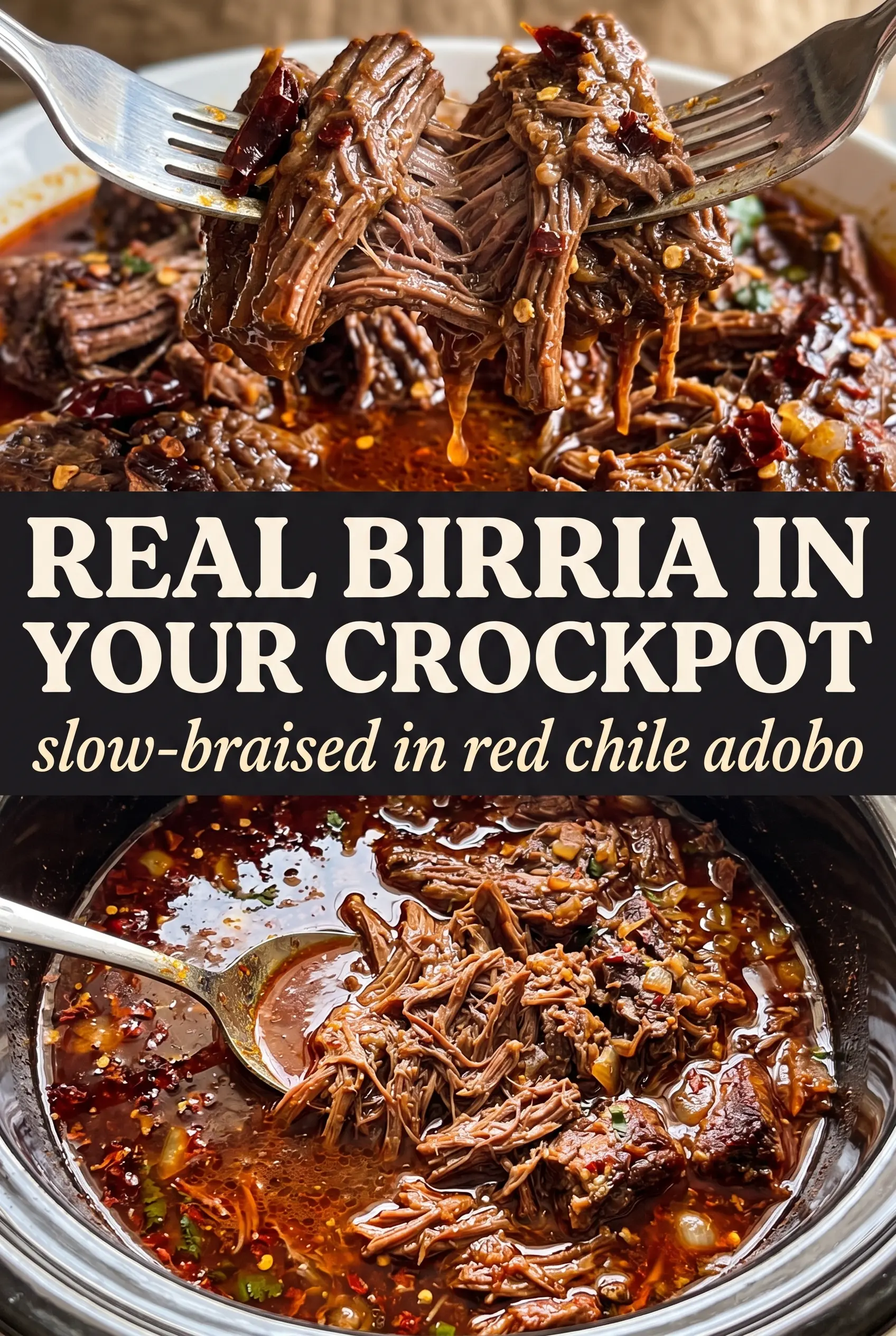
Crockpot Mexican Birria
Ingredients
Equipment
Method
- Toast the dried guajillo chiles, dried ancho chiles, and dried pasilla chiles in a dry skillet over medium heat for 30 seconds per side until fragrant, then transfer them to a bowl of hot water to soak for 15 minutes.
- Drain the soaked chiles, keeping a little moisture so they blend smoothly.
- Blend the soaked chiles, fire-roasted tomatoes, onion, garlic, beef broth, apple cider vinegar, cumin, dried oregano, smoked paprika, and salt until completely smooth.
- Place the beef chuck roast in the slow cooker with the cinnamon stick and bay leaves, then pour the chile sauce over everything.
- Cook on low for 8–10 hours until the beef is completely fall-apart tender.
- Remove the beef, shred it with two forks, and discard the cinnamon stick and bay leaves.
- Skim fat from the surface of the consommé and reserve it in a separate bowl.
- Dip corn tortillas in the reserved consommé fat, fill with shredded beef and shredded mozzarella or Oaxaca cheese, fold, and cook on a hot griddle until crispy on both sides.
- Serve with small cups of warm consommé, diced white onion, and fresh cilantro.