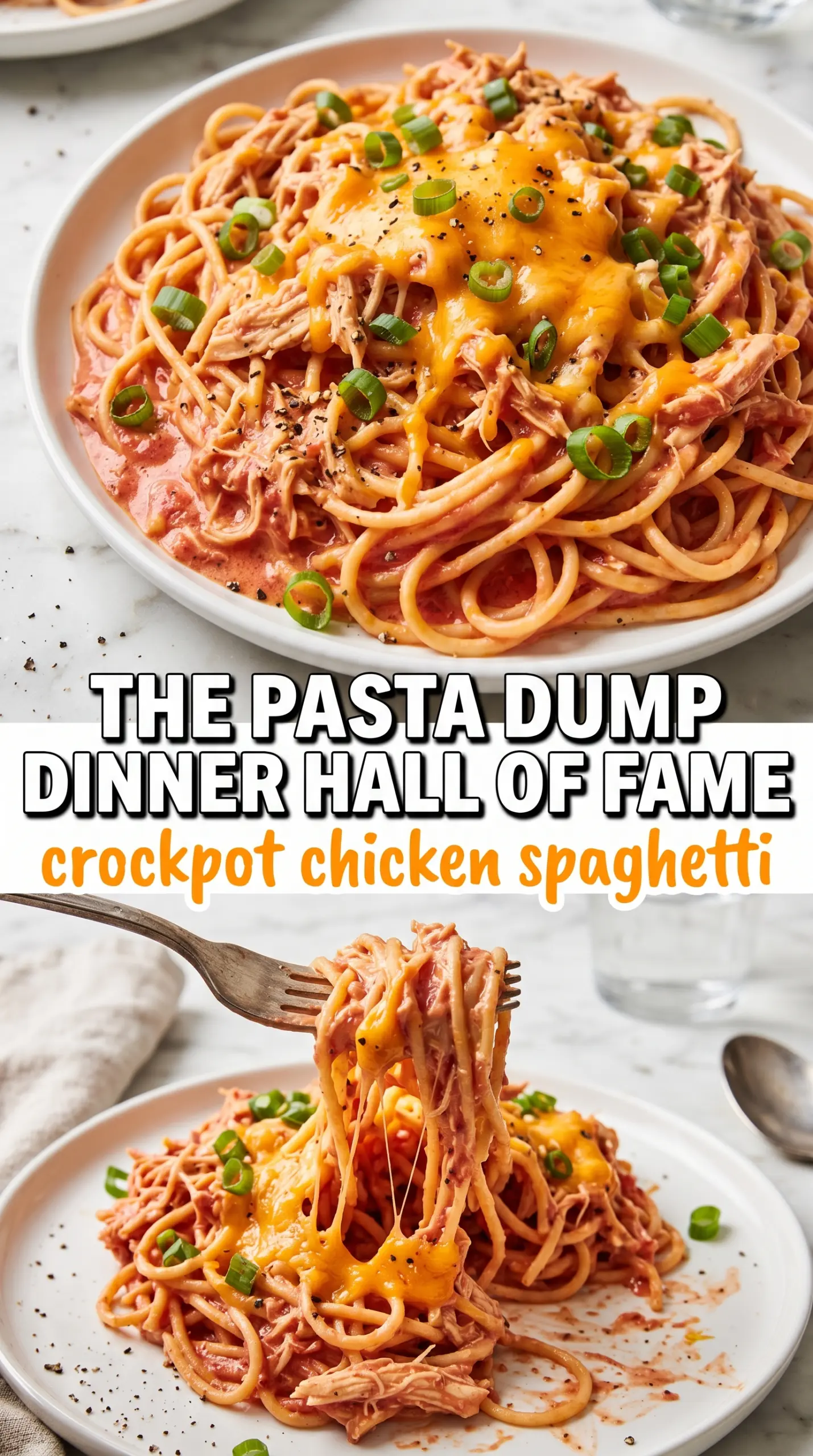
Crockpot chicken spaghetti comes out creamy, cheesy, and deeply comforting, with tender shredded chicken tucked into every forkful. The slow cooker does the heavy lifting here, but the real payoff is how the sauce clings to the pasta instead of sliding off it. That’s the difference between a bowl that eats like dinner and one that just looks rich from a distance.
This version leans on a few smart shortcuts that actually work: cream soups for body, Rotel for brightness, and cooked spaghetti added at the end so it stays intact. The chicken cooks low and slow until it shreds without resistance, which means it soaks up the sauce instead of tasting boiled or dry. A little onion and bell pepper build the base, but they stay in the background where they belong.
Below you’ll find the details that matter most: when to shred the chicken, why the pasta goes in last, and how to swap the cheese without losing that creamy finish.
The sauce turned out silky and the spaghetti stayed perfect instead of getting mushy. I used sharp cheddar and the whole pot disappeared fast.
Save this cheesy Crockpot Chicken Spaghetti for a creamy slow cooker dinner with tender chicken and a no-fuss pasta finish.
The Trick to Keeping the Pasta from Going Soft
The biggest mistake with chicken spaghetti is letting the noodles sit in the slow cooker for hours. Pasta keeps absorbing liquid long after it looks done, and that’s how you end up with a soft, heavy casserole instead of a creamy spaghetti dish. Cooking the spaghetti separately and stirring it in at the end keeps the texture right where it should be.
The other thing that matters is shredding the chicken before the pasta goes in. Once the chicken is shredded, it mixes back into the sauce and helps thicken the pot naturally. If you leave the breasts whole too long, they’ll be harder to break down and the dish won’t coat evenly.
What the Soup, Cheese, and Rotel Are Each Doing Here
- Cream of chicken soup — This gives the sauce its body and the familiar comfort-food flavor people expect from this dish. It’s hard to replicate that exact texture with broth alone.
- Cream of mushroom soup — This adds a deeper, savory note that keeps the sauce from tasting flat. If you don’t like mushroom pieces, use a smooth version or blend it with the other liquids before cooking.
- Rotel — The tomatoes and green chilies cut through the richness and keep the dish from feeling too heavy. Regular diced tomatoes work in a pinch, but you’ll lose the little hit of heat that makes the sauce pop.
- Velveeta or sharp cheddar — Velveeta melts into the smoothest sauce. Sharp cheddar gives a stronger cheese flavor, but it can turn grainy if the heat is too high, so stir it in after the chicken is shredded and the slow cooker is turned to warm.
- Cooked spaghetti — This is one place where timing matters more than ingredient quality. Slightly undercooked pasta holds up best once it hits the sauce.
Building the Sauce Before the Chicken Is Shredded
Layer the liquids first
Put the chicken breasts in the slow cooker, then pour the soups, Rotel, broth, onion, bell pepper, and seasonings over the top. The chicken should be mostly covered so it braises gently instead of drying out on the edges. Don’t stir hard at this stage; the ingredients will settle into a better cooking pattern if you leave the chicken buried in the sauce.
Cook until the chicken pulls apart easily
Low for 6 to 7 hours gives the best texture, but high works if you’re short on time. The chicken is ready when it shreds without resistance and the center is fully opaque. If it still feels rubbery, it needs more time; rushing this part gives you stringy chicken that won’t blend into the sauce.
Finish with pasta and cheese off the heat
Remove the chicken, shred it, then return it to the slow cooker with the cooked spaghetti and cheese. Stir until the cheese melts and the pasta is coated. If the slow cooker is running hot, turn it to warm before adding the cheese so the sauce stays smooth instead of getting greasy or grainy.
How to Adapt This for Different Kitchens and Different Eaters
Use gluten-free pasta without changing the sauce
The sauce itself is naturally close to gluten-free, but the canned soups and pasta should be checked carefully. Cook the gluten-free spaghetti just shy of done so it doesn’t fall apart when stirred in. It usually softens faster than regular pasta, so add it right before serving.
Swap in chicken thighs for richer meat
Boneless thighs stay a little more tender during long cooking and bring a deeper chicken flavor. They shred beautifully and hold up well in the sauce. The dish ends up a touch richer, which pairs nicely with sharp cheddar.
Make it milder for kids or heat-averse eaters
Use mild diced tomatoes instead of Rotel, or drain the Rotel and add a little extra chicken broth. You’ll lose some of the tang and peppery bite, but the dish stays creamy and balanced. This is the easiest way to keep the recipe friendly without changing the texture.
Storage and Reheating
- Refrigerator: Store for up to 4 days. The pasta will absorb more sauce, so it gets thicker by day two.
- Freezer: It freezes, but the pasta softens after thawing. For best results, freeze the chicken and sauce separately from the pasta if you know you’ll make it ahead.
- Reheating: Reheat gently on the stove or in the microwave with a splash of broth. High heat tightens the sauce and can make the cheese separate.
Questions I Get Asked About This Recipe
Crockpot Chicken Spaghetti
Ingredients
Equipment
Method
- Place the boneless skinless chicken breasts in the slow cooker, spreading them out in an even layer for uniform cooking. Add a lid and keep the cooker closed so the temperature stays steady.
- Add the cream of chicken soup, cream of mushroom soup, Rotel diced tomatoes with green chilies, chicken broth, onion, diced, and green bell pepper, diced. Sprinkle in garlic powder, onion powder, salt, and black pepper, then press everything down gently into the liquid.
- Cook on low for 6–7 hours or high for 3–4 hours until the chicken is tender and easily shreds with minimal resistance. Visual cue: the surface should be bubbling around the edges and the chicken should look fully cooked.
- Remove the chicken from the slow cooker and shred it with two forks until you have bite-size pieces. Return the shredded chicken to the slow cooker.
- Add the spaghetti, cooked and drained and the shredded Velveeta or sharp cheddar cheese to the slow cooker. Stir until the pasta is submerged and the cheese starts to melt into the sauce.
- Stir everything together until the cheese is fully melted and the pasta is evenly coated. Visual cue: the sauce should look creamy and glossy with no unmelted cheese lumps.
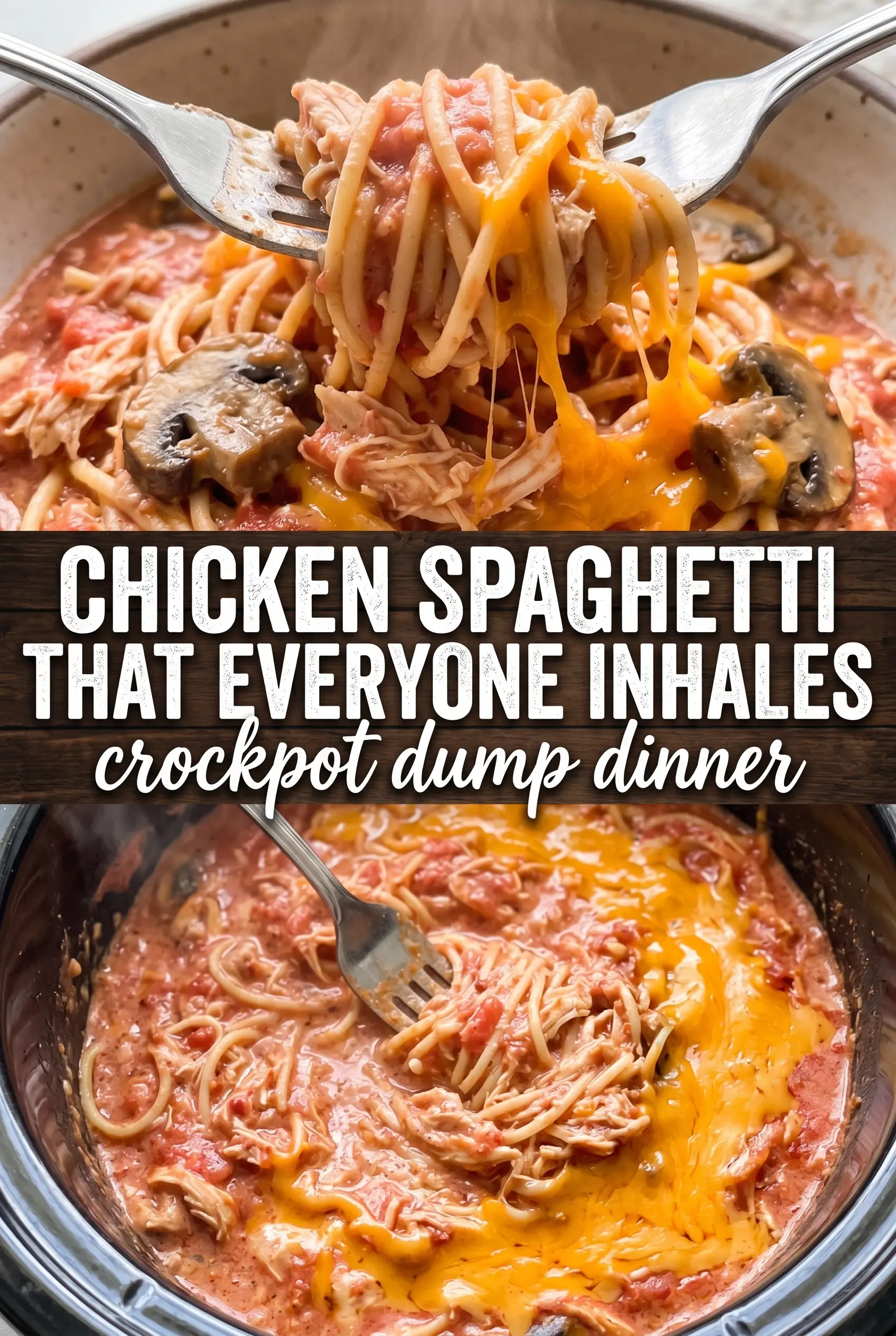
- Serve hot directly from the slow cooker. Visual cue: a scoop should show creamy sauce strands clinging to the spaghetti and shredded chicken.