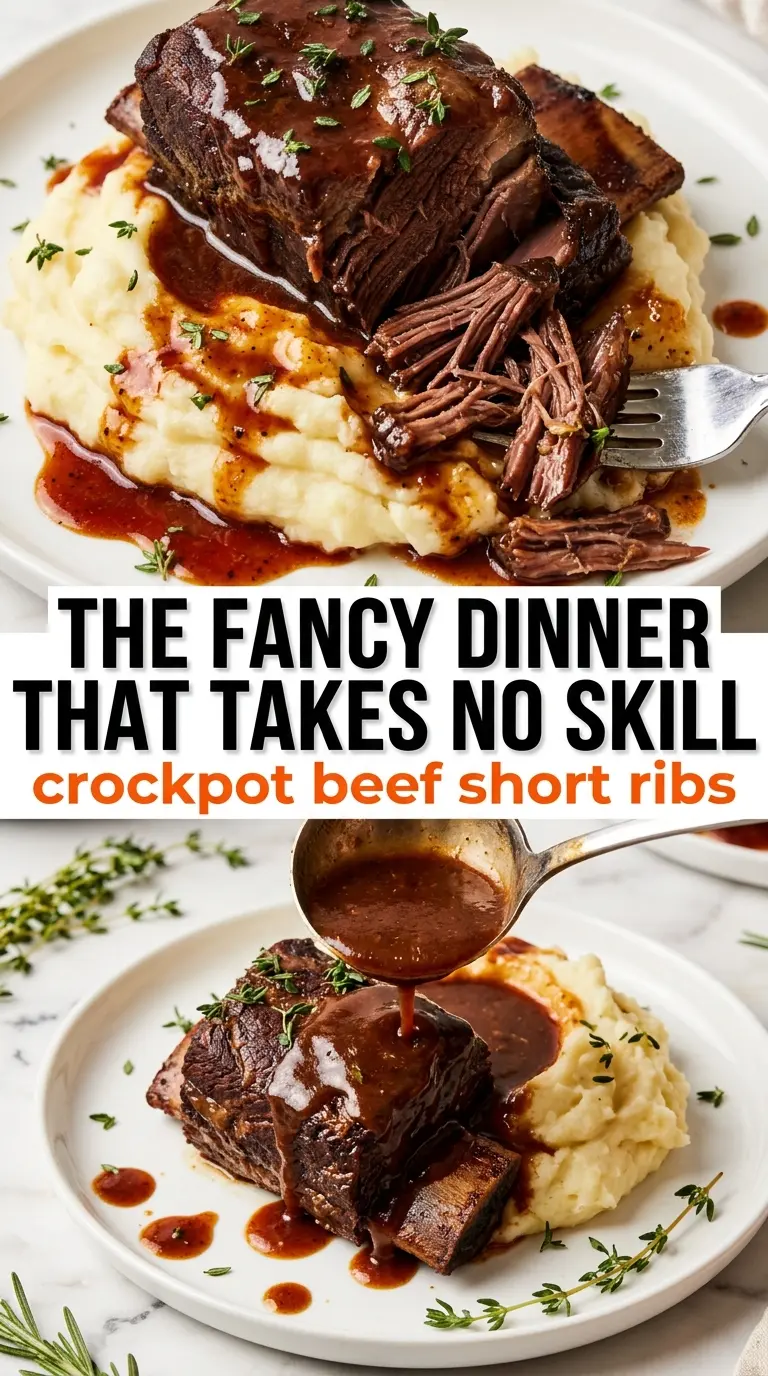
Fall-apart Crockpot Beef Short Ribs turn the slow cooker into a braise pot that does the hard work for you. The meat comes off the bone with almost no coaxing, and the sauce cooks down into something deep, glossy, and spoon-worthy enough to pile over mashed potatoes or creamy polenta. What makes this version worth keeping is that the sauce isn’t thin or one-note; it gets body from tomatoes, wine, and tomato paste, then finishes with a savory richness that clings to every bite.
The key is starting with bone-in short ribs and giving them a proper seasoning before they go into the cooker. The wine and broth bring structure, but the crushed tomatoes and tomato paste are what keep the braising liquid from tasting flat after eight hours. A little brown sugar rounds out the acidity, while thyme, rosemary, and smoked paprika keep the whole pot tasting like something that’s been tending itself all day.
Below, I’ve included the one thing that keeps the sauce from turning greasy at the end, plus a few smart swaps for when you want to stretch the recipe or make it fit what’s already in your kitchen.
The ribs were falling apart after 8 hours and the sauce had that rich, winey gravy thing going on without tasting too sweet. I served it over mashed potatoes and there wasn’t a spoonful left.
Save these Crockpot Beef Short Ribs for the night you want tender braised beef and a wine-dark sauce without standing over the stove.
The Shortcut That Ruins Slow Cooker Short Ribs
Short ribs can turn greasy and muddy in the slow cooker if the braising liquid is built like an afterthought. The fat from the meat has nowhere to go, so if the sauce starts too thin or too plain, it ends up tasting heavy instead of rich. This version avoids that by giving the liquid enough backbone from wine, tomato paste, and crushed tomatoes that it still tastes balanced after hours of cooking.
The other trap is seasoning too lightly at the start. Short ribs need more salt than leaner cuts because they’re braised for a long time, and the sauce has to carry that seasoning all the way through. Smoked paprika gives the meat a deeper color and a faint edge of warmth without making the dish taste smoky in a barbecue way.
What Each Ingredient Is Actually Doing In This Pot
- Bone-in beef short ribs — These are the whole point of the recipe. Bone-in ribs bring better flavor and a softer, silkier texture than boneless pieces, which can cook up a little flatter in the slow cooker.
- Dry red wine — Cabernet or Merlot gives the sauce depth and helps the tomato base taste more rounded. Use something you’d actually drink; harsh wine can leave the sauce with a sharp edge.
- Crushed tomatoes and tomato paste — The crushed tomatoes add body, and the paste concentrates everything so the sauce finishes rich instead of watery. If you skip the paste, the sauce will taste thinner and less developed.
- Beef broth — This stretches the braising liquid without diluting the flavor. Low-sodium broth works best if you want control over the salt level.
- Worcestershire, brown sugar, thyme, rosemary, and smoked paprika — Worcestershire brings savory depth, brown sugar softens the tomato acidity, and the herbs keep the dish tasting like a proper braise. The paprika is subtle, but it helps the sauce look and taste fuller.
- Onion, garlic, celery, and carrots — This is the vegetable base that melts into the sauce over time. Dice them fairly small so they disappear into the finished braising liquid instead of hanging on in big chunks.
Building the Braise So the Sauce Stays Rich
Season the ribs before they ever hit the slow cooker
Coat the short ribs generously with salt, pepper, and smoked paprika, then place them straight into the slow cooker. That first layer of seasoning matters because the meat sits in the braising liquid for hours, and it needs a head start to taste seasoned all the way through. If the ribs look pale at the start, the finished dish will taste flat no matter how good the sauce is.
Whisk the braising liquid until the tomato paste disappears
Mix the wine, broth, crushed tomatoes, tomato paste, Worcestershire sauce, and brown sugar until the paste is fully dissolved. You’re looking for a smooth, rust-colored liquid with no streaks of tomato paste clinging to the bottom of the bowl. Those streaks don’t just look sloppy; they can leave pockets of concentrated paste that never fully blend into the sauce.
Let the vegetables sink under the liquid
Add the onion, garlic, celery, carrots, thyme, and rosemary around the ribs, then pour the sauce over everything. The vegetables should be mostly submerged so they soften into the braise instead of steaming dry on top. If the cooker looks crowded, press the vegetables down gently with a spoon before putting the lid on.
Cook until the meat gives up without resistance
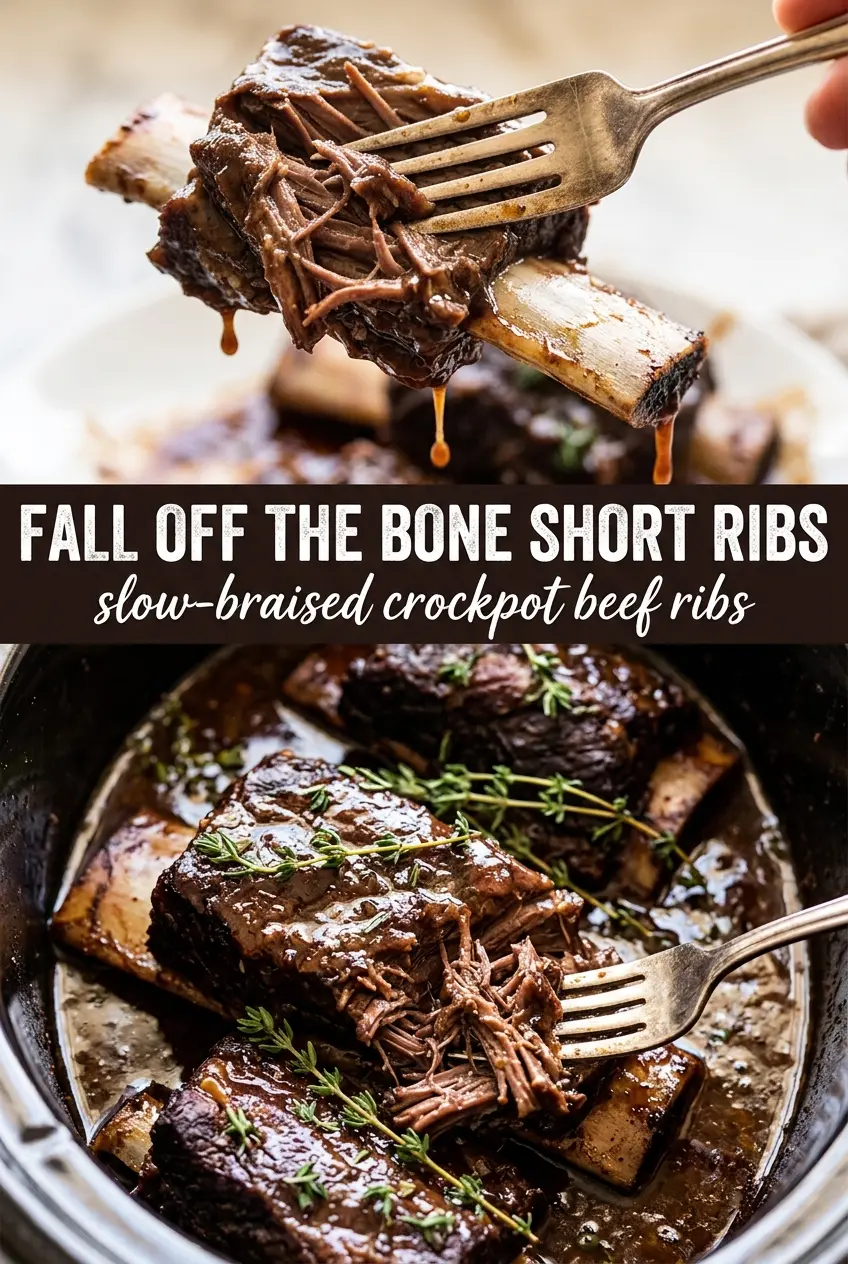
Set the slow cooker to low for 8 to 9 hours and don’t rush it. The ribs are done when the meat pulls back from the bone and a fork slides through with almost no resistance. If you try to lift them out before they’re truly tender, they’ll hold together in a tough, stringy way instead of melting apart.
Skim the fat before serving
Remove the ribs carefully, then skim the excess fat from the surface of the sauce before spooning it over the meat. This step keeps the sauce glossy instead of greasy. If the top looks especially oily, let it sit for a few minutes after the ribs come out; the fat will rise and become easier to remove.
How to Adapt These Short Ribs Without Losing the Braised Feel
Make it dairy-free by keeping the sides simple
The short ribs themselves are already dairy-free, so the only adjustment is what you serve underneath them. Mashed potatoes made with olive oil or creamy polenta with broth instead of milk keep the whole plate rich without changing the braise at all.
Use boneless short ribs if that’s what you can find
Boneless short ribs work, but they usually cook a little faster and can taste less luxurious than bone-in. Start checking them around the 7-hour mark so they don’t go past tender into shred-like softness.
Swap the wine if you need a no-alcohol version
Replace the wine with extra beef broth plus 1 tablespoon red wine vinegar to keep some brightness in the sauce. It won’t taste exactly the same, but it keeps the braise from feeling heavy or flat.
Make it gluten-free without changing the method
As written, the recipe is naturally gluten-free as long as your Worcestershire sauce and broth are certified gluten-free. That’s the only place hidden gluten usually shows up in a braised recipe like this.
Storage and Reheating
- Refrigerator: Store the ribs and sauce in an airtight container for up to 4 days. The sauce thickens as it chills, which is a good sign for this dish.
- Freezer: Freeze for up to 3 months in a freezer-safe container. For the best texture, freeze the ribs with plenty of sauce so they don’t dry out when reheated.
- Reheating: Warm gently on the stovetop or in a covered baking dish at 300°F until hot. Don’t boil the sauce hard, or the meat can tighten up and the fat can separate out again.
Questions I Get Asked About This Recipe
Crockpot Beef Short Ribs
Ingredients
Equipment
Method
- Season the short ribs generously with salt, black pepper, and smoked paprika, coating all sides for deep flavor. Set them aside while you mix the sauce ingredients.
- Place the seasoned short ribs in the slow cooker so they sit in a single layer as much as possible. Leave space around them for the sauce to circulate.
- Whisk together the red wine, beef broth, crushed tomatoes, tomato paste, Worcestershire sauce, and brown sugar until the tomato paste disperses. The mixture should look evenly combined.
- Add the diced onion, minced garlic, diced celery, and diced carrots to the slow cooker. Stir in the dried thyme and dried rosemary as well.
- Pour the sauce over the ribs and vegetables to ensure everything is mostly covered. Tap the insert gently to help the liquid settle.
- Cook on low for 8–9 hours until the meat is fall-off-the-bone tender. The sauce should darken and thicken slightly as it cooks.
- Remove the ribs and skim any excess fat from the surface of the sauce. Discard the skimmed fat to keep the sauce clean and rich.
- Serve the ribs over mashed potatoes or polenta, spooning the sauce generously over the top. Garnish with fresh thyme and parsley for a bright herbal finish.