Fork-tender pork roast with a deep, savory gravy is the kind of slow cooker dinner that disappears fast once it hits the table. The pork turns soft enough to shred with a spoon, but if you slice it instead, it still holds together in thick, juicy pieces. The gravy comes out rich and dark, with enough body to coat the meat without turning gluey.
The trick here is starting with a hard sear and building the gravy around onion soup mix, mushroom soup, and beef broth. That combination gives you a sauce that tastes like it cooked all day because it did, but it still has real depth from the browned pork and the drippings in the pot. The slow cooker does the long work, but the skillet step is what keeps the finished dish from tasting flat.
Below, I’ve included the small details that matter most: which cut gives you the most forgiving texture, when to thicken the gravy, and how to keep the pork from drying out if it sits a little too long after cooking.
The pork was fall-apart tender and the gravy actually thickened up beautifully with the cornstarch. I used the high setting for 4 hours and it was perfect over mashed potatoes.
Crock Pot Pork Roast and Gravy is the kind of slow cooker dinner worth keeping close for busy nights and Sunday suppers.
The Sear Is What Keeps the Pork from Tasting Boiled
Slow cooker pork can go bland fast if it skips the skillet. Browning the roast first gives you a crust with actual flavor, and those browned bits left in the pan carry into the gravy instead of staying trapped behind. That step also tightens the surface of the meat a bit, which helps the roast hold together better during the long cook.
If the pan seems dry after searing, that’s fine. The goal isn’t to cook the pork through; it’s to get a deep golden surface before the slow cooker takes over. A pale roast in a creamy gravy can taste one-note, but a well-browned roast tastes like it had a lot more work behind it.
What the Onion Soup Mix and Mushroom Soup Are Doing Here

- Pork loin roast or shoulder — Shoulder gives you the softest, most shreddable result because of the extra fat and connective tissue. Pork loin is leaner and slices nicely, but it dries out faster if you push the cook time too far. Either works, but shoulder is the safer choice if you want that fall-apart texture.
- Cream of mushroom soup — This is the base that gives the gravy body without needing a separate roux. A standard can works fine; the goal here is consistency, not gourmet mushroom flavor. If you use a low-sodium version, expect to season more at the end.
- Beef broth — This deepens the gravy in a way water can’t. Chicken broth works in a pinch, but the sauce tastes lighter and less rounded. Use a broth you’d drink on its own, because there isn’t much else to hide behind.
- Worcestershire sauce — It adds the savory edge that keeps the gravy from tasting like soup. A little goes a long way, and it’s worth keeping in the recipe because it wakes up the mushroom and onion flavors. There isn’t a real substitute that hits the same sweet-salty tang.
- Onion soup mix — This pulls the whole dish together with concentrated onion flavor and extra seasoning. It’s salty, so don’t go heavy-handed with added salt until the very end. If you swap it out, the gravy loses a lot of its built-in depth.
- Cornstarch slurry — Optional, but useful if you want the gravy spoon-coating thick instead of broth-thin. Mix it with cold water first or you’ll get little lumps in the pot. Stir it in on High and give it a few minutes to thicken before deciding whether to add more.
The Slow Cooker Hours That Matter Most
Seasoning and Browning the Roast
Season the pork generously on all sides before it hits the pan. You want enough salt, pepper, garlic powder, and onion powder to leave a visible coating, not a dusting. Sear it in hot oil until each side is deeply golden; if the heat is too low, the meat will steam and the crust won’t develop. Don’t rush this part, because it’s where the finished gravy gets its backbone.
Building the Gravy Base
Spread the onion and garlic across the bottom of the slow cooker first, then mix the soup, broth, Worcestershire, and onion soup mix until smooth. Pouring a well-mixed sauce over the roast helps the seasoning distribute evenly, instead of leaving salty pockets in one spot. If the soup mix sits in clumps, stir a little longer before it goes into the pot.
Cooking Until the Pork Pulls Cleanly
Set the slow cooker on Low for the most forgiving result, or High if you need it faster. The roast is done when a fork slides in easily and the meat starts to separate with almost no resistance. Pork loin can go from tender to dry if it cooks too long, so start checking earlier than the full window if you’re using a smaller roast.
Finishing the Gravy
Lift the pork out first, then thicken the gravy only if it needs it. Turn the slow cooker to High and stir in the cornstarch slurry slowly; the sauce will look thin at first, then tighten after a few minutes of heat. If you dump in too much slurry at once, the gravy turns pasty, so add it in stages and stop when it coats the spoon.
How to Stretch This Roast for Different Dinners
Use pork shoulder for the most shreddable result
Pork shoulder gives you richer meat and a softer texture because it has enough fat to stay juicy through the long cook. It’s the best choice if you want to pile the pork over mashed potatoes or spoon it onto sandwich rolls. The tradeoff is a slightly less tidy slice, which is usually a good exchange for tenderness.
Use pork loin when you want neat slices
Pork loin is leaner and holds its shape better, so it’s the better pick for clean slices and a slightly lighter finish. It needs a little more attention near the end because it dries out faster than shoulder. Pull it as soon as it’s tender instead of waiting for it to fall apart.
Make it gluten-free with two label checks
Use a gluten-free cream of mushroom soup and a gluten-free onion soup mix, then keep the broth and Worcestershire sauce verified as gluten-free too. The method doesn’t change at all, and the gravy still thickens the same way with cornstarch. This is the easiest adaptation in the recipe because the texture comes from the slow cooking, not from flour.
Skip the cornstarch for a looser gravy
If you want a thinner, spoonable sauce for rice or buttered noodles, leave out the slurry completely. The gravy will stay more brothy, which some people prefer because it soaks into sides better. If it ever feels too thin after cooking, reduce it for a few minutes on High before serving.
Storage and Reheating
- Refrigerator: Store in an airtight container for up to 4 days. The gravy thickens as it chills, and the pork stays tender.
- Freezer: Freezes well for up to 3 months. Cool it first, then pack the pork and gravy together so the meat doesn’t dry out when thawed.
- Reheating: Reheat gently on the stove or in the microwave with a splash of broth to loosen the gravy. Don’t blast it on high heat for too long or the pork can turn stringy and the gravy can separate.
Answers to the Questions Worth Asking
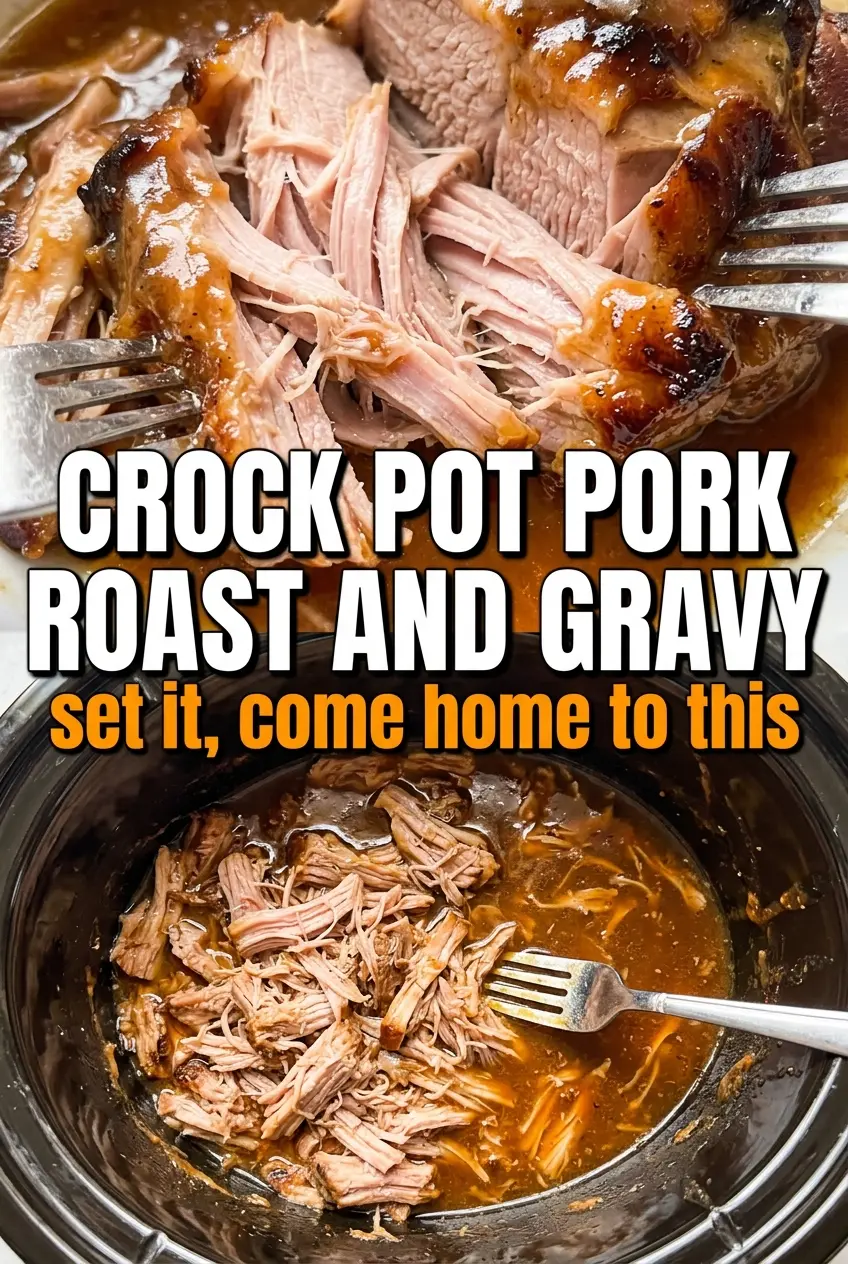
Crock Pot Pork Roast and Gravy
Ingredients
Equipment
Method
- Season the pork loin roast or shoulder generously with salt, pepper, garlic powder, and onion powder. Heat oil in a skillet over medium-high heat and sear the pork on all sides until golden, about 3–5 minutes per side.
- Add diced onion and minced garlic to the bottom of the slow cooker. Whisk cream of mushroom soup, beef broth, Worcestershire sauce, and onion soup mix until smooth, then pour the mixture over the pork.
- Cook on Low for 8–9 hours until the pork is tender and pulls apart easily, or cook on High for 4–5 hours. Keep the lid closed during cooking so the pork steams evenly.
- Remove the pork from the slow cooker and return the gravy to High heat. If desired, stir in the cornstarch slurry (cornstarch mixed with water) until smooth and thickened, about 5–15 minutes, then turn off the heat.
- Slice or shred the pork and serve it smothered in the thickened gravy.