Slow cooker pasta fagioli lands in the bowl with a rich tomato broth, tender vegetables, creamy beans, and just enough pasta to make it feel like a full meal. The best versions don’t taste flat or muddy; they taste layered, with the beef or sausage giving the broth depth and the beans softening into the sauce-like base without disappearing completely.
This version works because the meat is browned first, which builds flavor before anything goes into the slow cooker. The pasta gets cooked separately and added at the end, so it stays firm instead of turning the whole pot starch-thick and gummy. That one step makes a big difference when you’re cooking a soup for hours instead of minutes.
Below, I’ll walk through the small choices that matter here: when to add the pasta, why the broth amount works, and how to adjust the texture if you want it a little thicker or more brothy.
The broth had a deep, slow-cooked taste and the pasta stayed perfectly tender because I added it at the end. Even my picky eater went back for a second bowl.
Save this Crock Pot Pasta Fagioli for a hearty soup night with rich broth, tender beans, and pasta added at the end.
The Reason This Soup Doesn’t Turn Watery After Hours in the Slow Cooker
Pasta fagioli can go wrong in two predictable ways: the broth tastes thin, or the pasta turns the whole pot starchy and soft. The fix starts before the slow cooker ever comes out. Browning the meat adds the savory base that canned tomatoes and broth alone can’t give you, and adding the pasta only at the end keeps the soup tasting like soup instead of a pot of swollen noodles.
The other thing that matters here is balance. Cannellini beans soften into the broth and give it body, but they don’t break down enough to turn it into a puree. That means you get a hearty spoonful without losing the clear tomato-and-herb character that makes pasta fagioli taste like itself.
- Browning the meat — This is where the depth comes from. Drain the excess fat after cooking, but don’t skip the browning itself, or the broth will taste flatter.
- Cannellini beans — They hold their shape better than softer beans and give the soup a creamy feel without any dairy. Great northern beans can work in a pinch, but they’re a little less plush.
- Crushed tomatoes — They create the right texture for a slow-cooked soup because they melt into the broth without turning it chunky. Tomato sauce makes the soup smoother and less rustic.
- Ditalini — Cook it separately. If it goes in raw, it drinks up broth and turns mushy before the soup is done.
What Each Ingredient Is Doing in the Pot

- Ground beef or mild Italian sausage — Beef gives you a cleaner, classic minestrone-style base. Sausage adds fennel and extra seasoning, so use mild sausage if you want a little more character without making the soup spicy.
- Onion, celery, carrots, and garlic — This is the backbone of the soup. Dice them fairly small so they soften fully during the long cook and blend into the broth instead of staying sharp or chunky.
- Beef broth — This does the heavy lifting for the savory flavor. A good boxed broth is fine here, but if yours tastes weak straight from the carton, the soup will taste weak too.
- Dried basil, oregano, thyme, and red pepper flakes — These season the broth from the start, which is important in a slow cooker because the flavors need time to wake up. The red pepper flakes shouldn’t make it hot; they just give the finish a little lift.
- Parsley and Parmesan — Don’t toss these on at the start. Fresh parsley brightens the bowl, and Parmesan adds the salty finish that makes the soup taste complete.
Building the Soup So the Broth Stays Rich
Brown the Meat First
Cook the beef or sausage in a skillet until it loses its pink color and starts to pick up browned bits on the bottom of the pan. That color is flavor, and it gives the soup a deeper taste that a slow cooker alone can’t create. Drain off the excess fat so the finished broth doesn’t feel greasy. If you’re using sausage, taste the broth at the end before adding extra salt because sausage usually brings more seasoning than plain beef.
Layer Everything Into the Slow Cooker
Add the meat, vegetables, beans, tomatoes, broth, and seasonings to the slow cooker and stir well. The vegetables should be cut small enough that they soften by the end of the cook; oversized chunks can stay a little too firm in a soup this long-cooked. Stir once after about an hour if you’re nearby, but don’t keep lifting the lid. Every time the lid comes off, the cooking time stretches.
Cook Until the Vegetables Collapse Slightly
Let the soup cook on low for 7 to 8 hours or on high for 3 1/2 to 4 hours. You’re looking for carrots and celery that are fully tender and broth that smells rounded, not raw or acidic. If the soup tastes sharp at the end, it usually just needs salt and a little more time for the tomatoes to mellow. Slow cookers vary, so trust the vegetables more than the clock.
Stir In the Pasta at the End
Cook the ditalini separately, then stir it into the soup right before serving. This keeps the pasta from absorbing too much liquid and turning bloated. If you plan to have leftovers, keep some of the pasta aside and add it to each bowl individually, which keeps the next day’s soup from going soft. Finish with parsley and Parmesan while the soup is hot so the cheese melts lightly into the top.
How to Adjust Crock Pot Pasta Fagioli for a Different Pantry or Crowd
Make It with Italian Sausage
Swap the ground beef for mild Italian sausage if you want a more seasoned, fennel-kissed broth. It gives the soup a richer finish, but it also makes the bowl a little heavier, so I’d keep the Parmesan light at the end.
Gluten-Free Version
Use your favorite gluten-free small pasta and cook it separately, then add it to individual bowls. Gluten-free pasta softens faster than regular ditalini, so keeping it out of the slow cooker matters even more here.
Vegetarian Pasta Fagioli
Skip the meat and use vegetable broth, then add an extra can of beans for body. The soup will be lighter and less savory, so a generous shower of Parmesan at the end matters more than it does in the meat version.
Storage and Reheating
- Refrigerator: Store for up to 4 days. The pasta will continue to soften, so the soup thickens a bit as it sits.
- Freezer: Freeze the soup without the pasta for best texture. Pasta gets mushy after thawing, so cook a fresh batch when you reheat.
- Reheating: Warm it slowly on the stove over medium-low heat or in the microwave in short bursts, adding a splash of broth if needed. If it seems thick, that usually means the pasta absorbed more liquid overnight.
Answers to the Questions Worth Asking
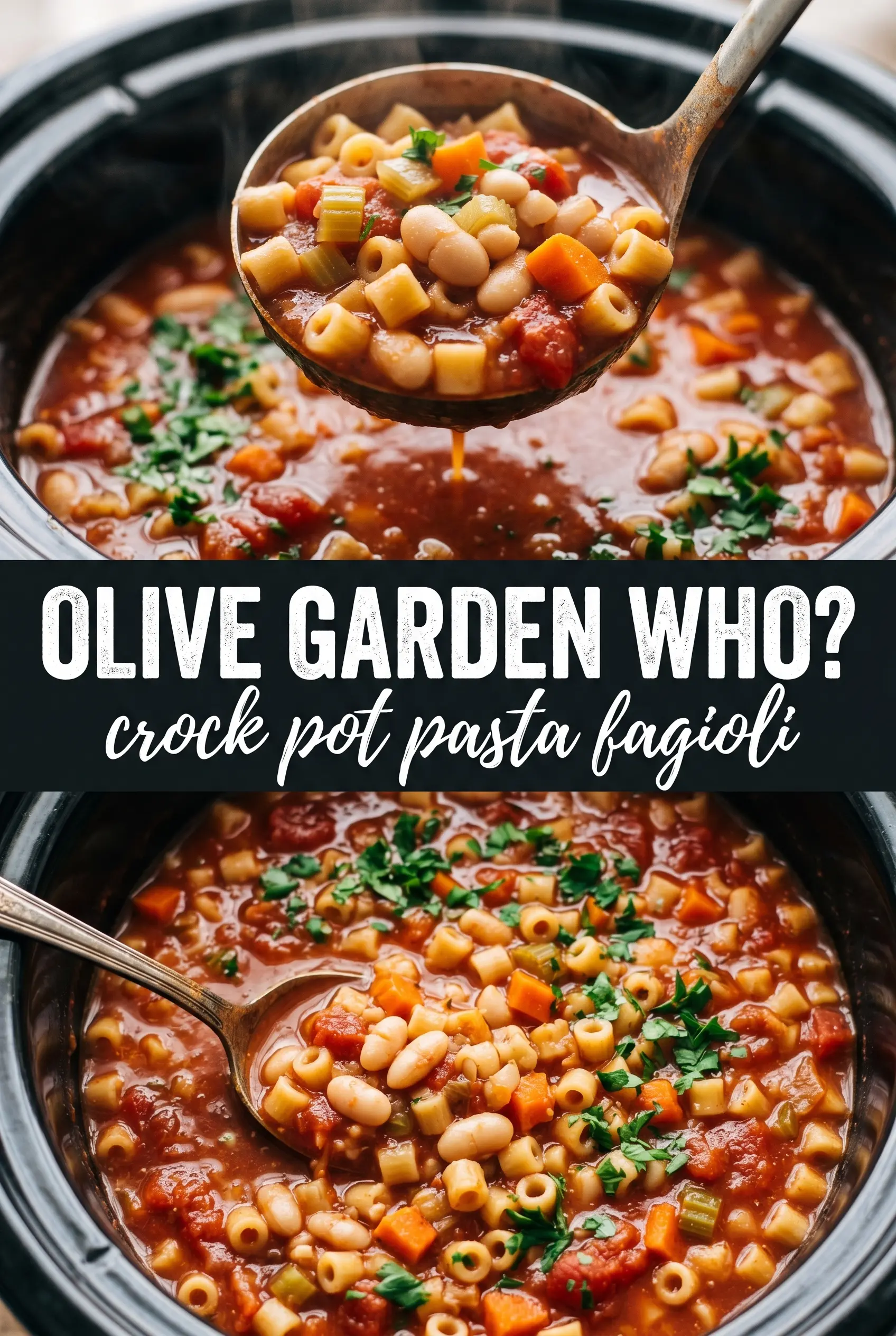
Crock Pot Pasta Fagioli
Ingredients
Equipment
Method
- Brown the ground beef or mild Italian sausage in a skillet over medium-high heat, then drain excess fat.
- Add the browned meat to the slow cooker.
- Add onion, garlic, celery, and carrots to the slow cooker.
- Add cannellini beans and crushed tomatoes to the slow cooker.
- Pour in beef broth, then add dried basil, dried oregano, dried thyme, red pepper flakes, salt, and black pepper.
- Stir to combine all ingredients, scraping down the sides so everything is evenly distributed.
- Cook on low for 7–8 hours until vegetables are very tender and flavors have melded.
- If using high heat, cook for 3.5–4 hours until vegetables are very tender and flavors have melded.
- Stir in the cooked ditalini pasta just before serving so it stays tender but not mushy.
- Ladle into bowls and top with fresh parsley and freshly grated Parmesan.