Slow-cooked beef stew pays off in a way stovetop versions usually can’t: the beef turns spoon-tender, the potatoes hold their shape, and the broth thickens into something rich enough to coat every bite. After eight hours in the slow cooker, the vegetables take on the flavor of the beef and herbs instead of tasting like they were cooked separately and stirred in at the end.
This version leans on a few smart choices that matter. Browning isn’t required here, so the stew stays weeknight-friendly, but the tomato paste, Worcestershire, and red wine build depth fast. The cornstarch slurry goes in only after the meat is tender, which keeps the broth from getting pasty while the stew cooks and lets you control the final texture right at the end.
Below, I’ll walk through the little details that keep the vegetables from turning mushy and the broth from staying thin. If you’ve ever had slow cooker stew that tasted flat or watery, the fixes are all here.
The beef was fall-apart tender and the broth thickened up beautifully at the end. I loved that the potatoes held together and didn’t turn mealy after all those hours.
Save this Crock Pot Beef Stew for a deep, savory broth and tender beef that cooks itself while you get on with the day.
The Trick to Keeping Slow Cooker Stew Rich Instead of Watery
The biggest problem with slow cooker beef stew is that the vegetables and meat release moisture as they cook, and if the broth starts out too thin, it never really catches up. That’s why the tomato paste matters here: it adds body right from the start, and the diced tomatoes bring acidity that keeps the stew tasting balanced instead of heavy.
Layering the vegetables on the bottom helps them soften evenly, but the beef goes on top so its juices drip down through the pot as it cooks. The other thing that makes a difference is waiting to thicken the stew until the end. If you add cornstarch too early, the liquid can go from thin to gluey before the beef is tender.
What Each Ingredient Is Actually Doing in This Stew
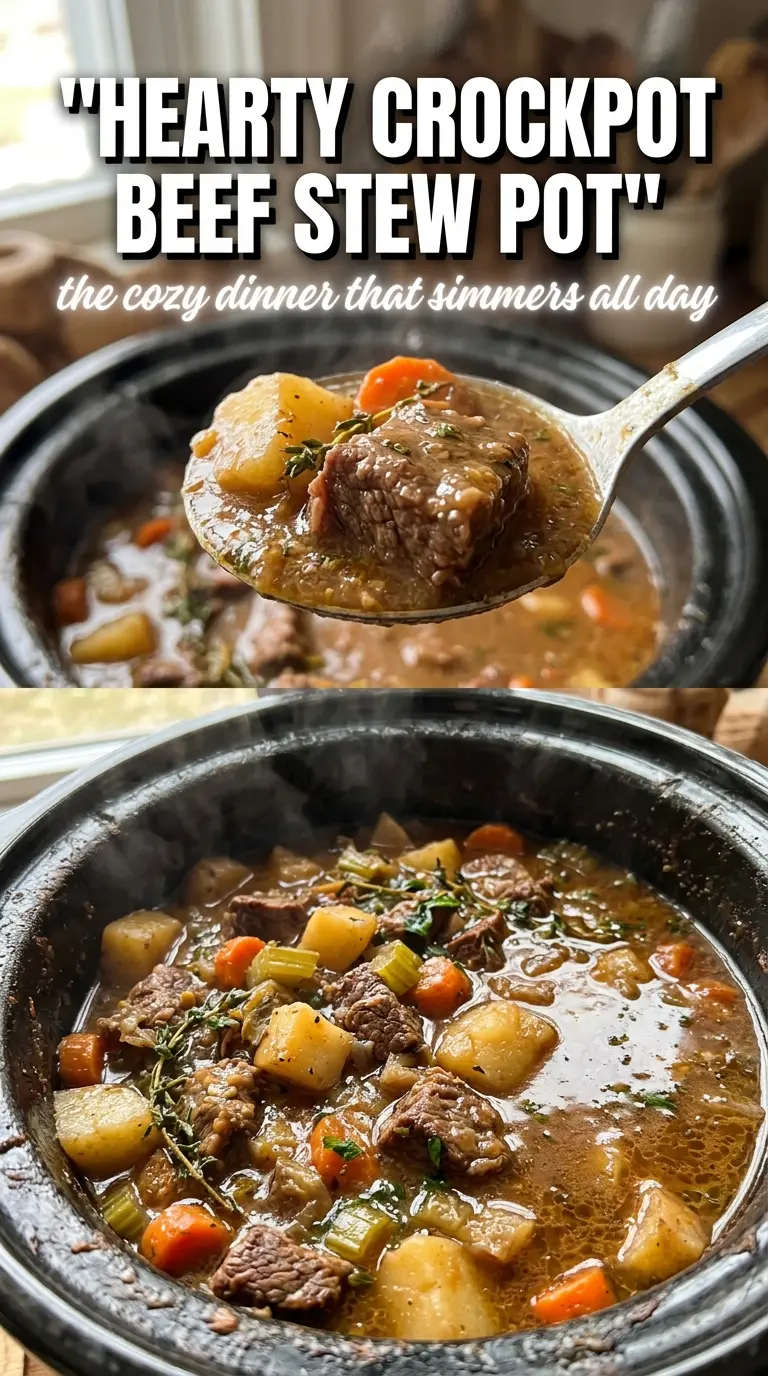
- Beef chuck — This is the cut that earns the long cook. It has enough connective tissue to turn silky and rich after hours in the slow cooker, while leaner cuts dry out or go stringy. If you swap it, choose another braising cut like stew meat from chuck, not sirloin.
- Red wine or extra broth — Wine gives the stew a deeper, rounder finish and helps loosen the browned, savory notes from the tomato paste and Worcestershire. If you don’t cook with wine, plain beef broth still works; the stew will be a little softer in flavor, but still hearty.
- Tomato paste and diced tomatoes — The paste is there for body and concentration, while the diced tomatoes add enough brightness to keep the broth from tasting flat. Don’t skip the paste unless you plan to reduce the liquid another way.
- Baby potatoes — These hold up better than larger peeled potatoes cut into random chunks. Halving them gives you enough surface area to absorb flavor without turning the stew starchy.
- Worcestershire sauce — This is one of those ingredients you can taste if it’s missing. It adds savory depth and a little tang that plain salt can’t replace.
Building the Stew So the Beef Turns Tender, Not Tough
Layer the vegetables first
Start with the potatoes, carrots, celery, and onion on the bottom of the slow cooker. They form a bed that keeps the beef from sitting directly on the hot insert, which helps everything cook more evenly. If you pile the meat straight on the bottom, the vegetables under it can turn too soft before the beef is ready.
Season and nestle the beef on top
Season the beef generously before it goes in. The salt needs time to move into the meat, and the slow cooker won’t pull that seasoning in for you. Nestle the cubes across the top of the vegetables instead of stirring them down into the liquid; that keeps the texture of the vegetables cleaner and gives the meat room to braise gently.
Finish with the thickener at the end
When the beef is fork-tender, remove the bay leaves and stir in the cornstarch slurry. The broth should look thin at first, then turn glossy after 20 to 30 minutes on High. If it still seems loose, give it a little more time with the lid off for the last few minutes rather than dumping in more starch all at once.
Make it without wine
Use extra beef broth in place of the wine. You’ll lose a little of the stew’s depth and brightness, but the Worcestershire, tomatoes, and long cook still build a strong savory base.
Gluten-free beef stew
This recipe is naturally gluten-free as written if your Worcestershire sauce is certified gluten-free. The cornstarch slurry thickens the broth without flour, so you don’t need any extra adjustment.
Add mushrooms or parsnips
Sliced mushrooms or chopped parsnips fit this stew well. Add them with the other vegetables so they have time to soften and absorb the broth, but don’t overload the pot or the stew can turn too dense.
Storage and Reheating
- Refrigerator: Store in an airtight container for up to 4 days. The broth thickens as it chills, so it may look a little set the next day.
- Freezer: Freezes well for up to 3 months. Cool completely, portion it into freezer-safe containers, and leave a little headspace for expansion.
- Reheating: Reheat gently on the stove over medium-low or in the microwave in short bursts, stirring between each one. Add a splash of broth or water if the stew looks too thick, because the potatoes will soak up liquid as it sits.
Answers to the Questions Worth Asking
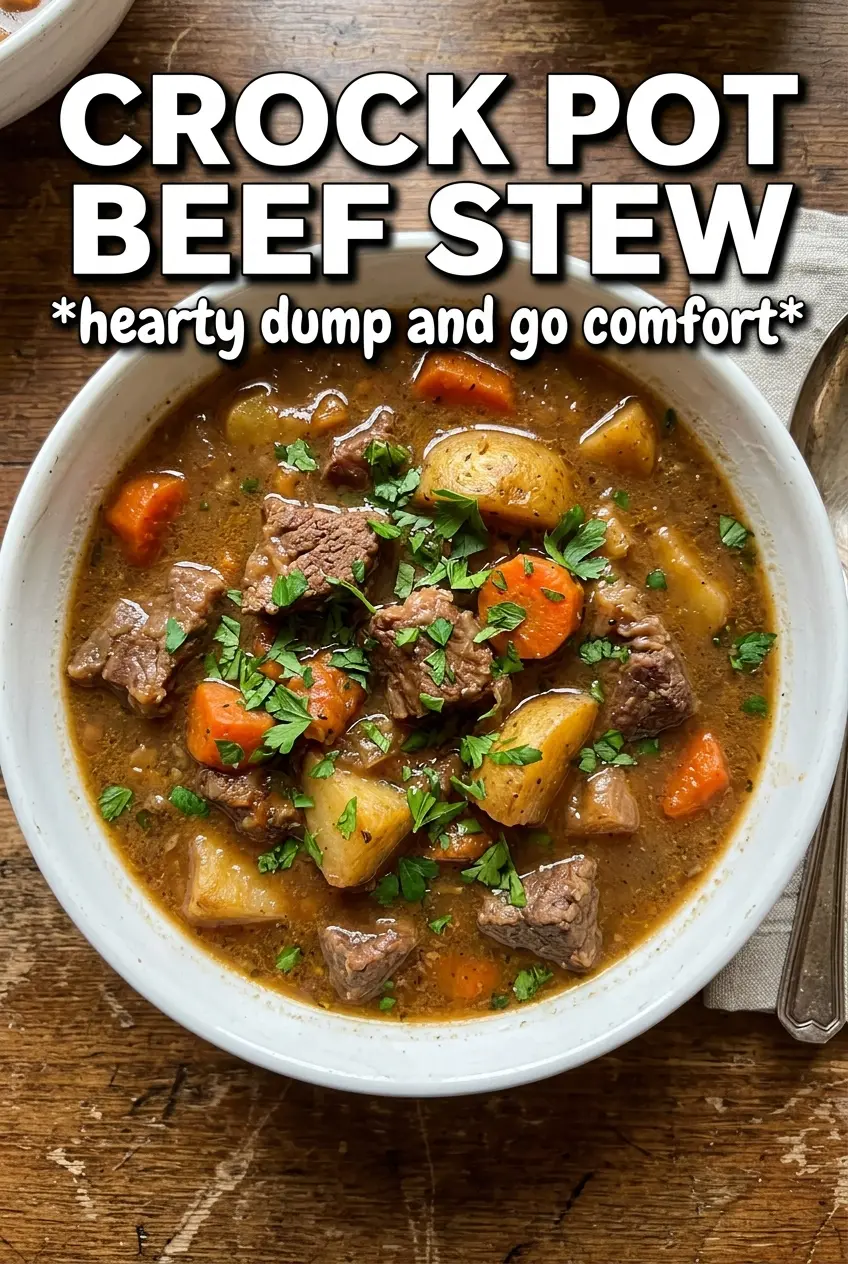
Crock Pot Beef Stew
Ingredients
Equipment
Method
- Season the beef generously with salt and pepper, rubbing to coat all sides. Visual cue: beef cubes look evenly speckled all over.
- Add the potatoes, carrots, celery, and onion to the bottom of the slow cooker in an even layer. Visual cue: vegetables cover the base so they steam as the stew cooks.
- Nestle the beef on top, then add the garlic, beef broth, red wine (or extra beef broth), diced tomatoes, tomato paste, Worcestershire sauce, dried thyme, dried rosemary, and bay leaves. Visual cue: the liquid should rise around the beef and vegetables.
- Cook on Low for 8-10 hours (or High for 4-5 hours) until the beef is fall-apart tender. Visual cue: a fork easily pulls apart a beef chunk.
- Remove the bay leaves, then stir the cornstarch slurry (cornstarch mixed with water) into the stew. Visual cue: streaks of slurry disappear and the broth starts to look slightly cloudier.
- Cook on High for 20-30 minutes until the broth thickens. Visual cue: the surface looks glossy and a spoon drawn through it leaves a brief trail.
- Season with salt and pepper to taste before serving. Visual cue: flavors pop and the broth tastes balanced, not flat.