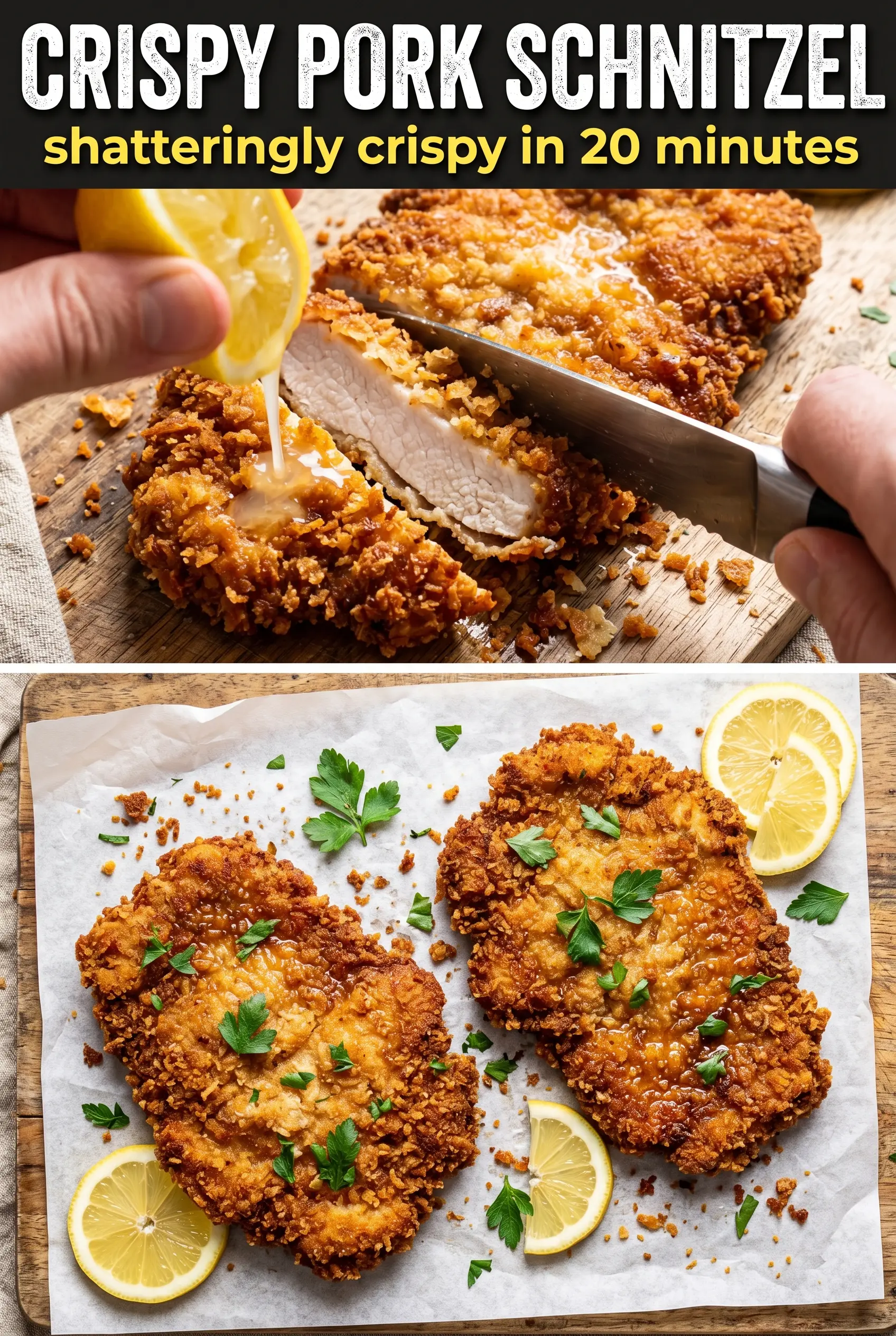
Golden pork schnitzel earns its place in the dinner rotation because the crust stays light and crisp while the pork underneath stays juicy and tender. When it’s done right, you get that satisfying crackle as the fork cuts through the breading, then a clean hit of lemon that wakes up every bite.
The trick is in the prep, not the frying. Pounding the pork to an even 1/4-inch thickness keeps it cooking fast and evenly, and that matters because thick spots overcook before the center is ready. A simple flour-egg-breadcrumb coating works best here, but the real difference is pressing the breadcrumbs on firmly so they cling without sliding off in the oil.
Below, I’ll walk through the small details that keep schnitzel crisp instead of greasy, plus the few swaps that still give you a proper shatteringly crunchy cutlet.
The breading stayed crisp and golden, and the pork was cooked through in just a few minutes. I squeezed lemon over the top like you suggested and it tasted just like the schnitzel I had in Munich.
Save this pork schnitzel for the night you want a crisp, lemony cutlet with a golden crumb and almost no fuss.
The Crust Stays Crisp Because the Pork Cooks Fast
Schnitzel goes wrong when the coating waits around for the meat to catch up. Thin cutlets solve that problem, but only if they’re pounded evenly. A cutlet with one thick end and one thin end will give you a burned edge and a pale center in the same pan, which is the fastest route to a soggy crust.
The other common failure is crowding the skillet. Once the cutlets sit on top of each other or the pan cools down too much, the breading starts soaking up oil instead of crisping in it. You want a steady sizzle the moment the pork hits the pan and a crust that turns deep golden in just a few minutes per side.
- Even thickness keeps the pork tender and helps every piece finish at the same time.
- Hot oil gives the breadcrumb coating a fast set, which is what keeps it from shedding.
- Room in the pan matters just as much as temperature. If the schnitzels touch, they steam.
What Each Ingredient Is Actually Doing in This Pork Schnitzel

- Pork loin chops are lean enough to stay tender when pounded thin, but they still have enough structure to hold a breaded crust. Boneless is the easiest route here because bone-in chops don’t pound as evenly.
- Fine breadcrumbs give you the classic schnitzel crust. Panko works if you want more crunch, but the coating will be a little looser and less compact than traditional fine crumbs.
- Egg and milk create the glue between the flour and crumbs. The milk loosens the egg just enough so the coating spreads evenly instead of setting up in thick patches.
- Garlic powder adds a little savory depth without overpowering the pork. Fresh garlic would burn in the pan and leave bitter spots in the breading.
- Lemon wedges are not garnish here. The acid cuts through the fried coating and makes the whole cutlet taste brighter and less heavy.
How to Build the Coating So It Doesn’t Fall Off in the Oil
Season the Pork Before It Meets the Breading
Salt and pepper go on the pork first, while the meat is still bare. That seasoning reaches the cutlet itself instead of sitting in the crust, and it keeps the first bite from tasting flat. After pounding, pat the pork dry if it looks damp; excess moisture is what turns flour into paste and makes the coating patchy.
Set Up the Breading in the Right Order
Use three shallow dishes and keep one hand for dry ingredients and one for wet. The flour gives the egg something to grip, the egg gives the breadcrumbs something to cling to, and the final breadcrumb layer should cover the cutlet in a thin, even coat. Press the crumbs on with your fingertips instead of patting hard enough to flatten them, or the crust will compact and fry up dense instead of crisp.
Fry Fast and Leave the Schnitzels Alone
Heat about 1/4 inch of oil until it shimmers and a breadcrumb sizzles on contact. Fry each cutlet 2 to 3 minutes per side, just until deep golden, then move it out of the pan. If the oil smokes, it’s too hot; if the schnitzel sits there absorbing oil, the pan is too cool. Drain briefly on paper towels and serve right away, because schnitzel loses its crunch as it cools.
Three Ways to Work This Schnitzel Around What You Have
Use panko for a rougher crunch
Panko gives you a lighter, more jagged crust that crackles a little louder when you bite into it. It’s not the most traditional schnitzel texture, but it works well if you like a bigger crunch and don’t mind a less delicate coating.
Make it gluten-free with GF flour and crumbs
A good 1:1 gluten-free flour and gluten-free breadcrumbs both work here, as long as the cutlets are fully coated and the oil is hot enough to set the crust quickly. The texture is a little less airy than classic schnitzel, but the finished cutlet still comes out crisp and sturdy.
Swap the pork for chicken cutlets
Thin chicken cutlets fry up the same way and make a good alternate if that’s what you have on hand. Chicken needs the full golden finish to taste right, so don’t pull it early just because the crust looks done; the center should register safely cooked before you serve it.
Bake it for a lighter finish
You can bake the breaded cutlets on a well-oiled rack in a hot oven, but the crust won’t get the same blistered, pan-fried crunch. It’s a workable option when you want less oil on the stove, just expect a drier, more even crumb instead of that shattery fried exterior.
Storage and Reheating
- Refrigerator: Store leftovers in an airtight container for up to 3 days. The crust softens in the fridge, but the pork stays usable for another meal.
- Freezer: Freeze after cooling completely, separated with parchment, for up to 2 months. Reheat from frozen in the oven or air fryer for the best texture; the microwave turns the crust limp.
- Reheating: Set the schnitzel on a wire rack in a 375°F oven until hot and crisp again. If you heat it in a covered pan or microwave, the breading steams and loses the crunch you worked for.
Answers to the Questions Worth Asking
Pork Schnitzel
Ingredients
Equipment
Method
- Season the pounded pork cutlets generously with salt and pepper.
- Set up three shallow dishes: all-purpose flour, beaten egg mixed with milk, and breadcrumbs seasoned with garlic powder and salt.
- Dredge each cutlet in flour, then dip it in egg, then coat with breadcrumbs, pressing firmly for even coverage.
- Heat 1/4 inch of oil in a large skillet over medium-high heat until shimmering.
- Fry the schnitzels for 2–3 minutes per side until deep golden brown, working in batches and not crowding the pan.
- Drain briefly on paper towels, then serve immediately with lemon wedges and fresh parsley.