Pork chops under a sharp parmesan-panko crust bring the kind of crunch that makes baked pork chops worth repeating. The coating turns deeply golden in the oven, while the mustard-mayo layer underneath keeps the crumbs anchored and the meat underneath juicy instead of dry. It’s a simple setup, but the texture payoff is big: crisp edges, savory cheese, and a clean pork chop center that stays tender.
The trick is in the order of operations. Dijon gives the coating a little bite and helps the crumb mixture cling, while mayonnaise adds enough fat to brown the crust without turning it heavy. Panko matters here because its larger flakes stay crisp in the oven, and a light spray of oil is what helps the top go from pale crumbs to a true shattering crust. If you’ve had baked breaded pork chops go soft or slide off the meat, this version fixes that.
Below you’ll find the exact point where the crust turns from loose to locked on, plus a few smart swaps if you need to work with what’s in the pantry.
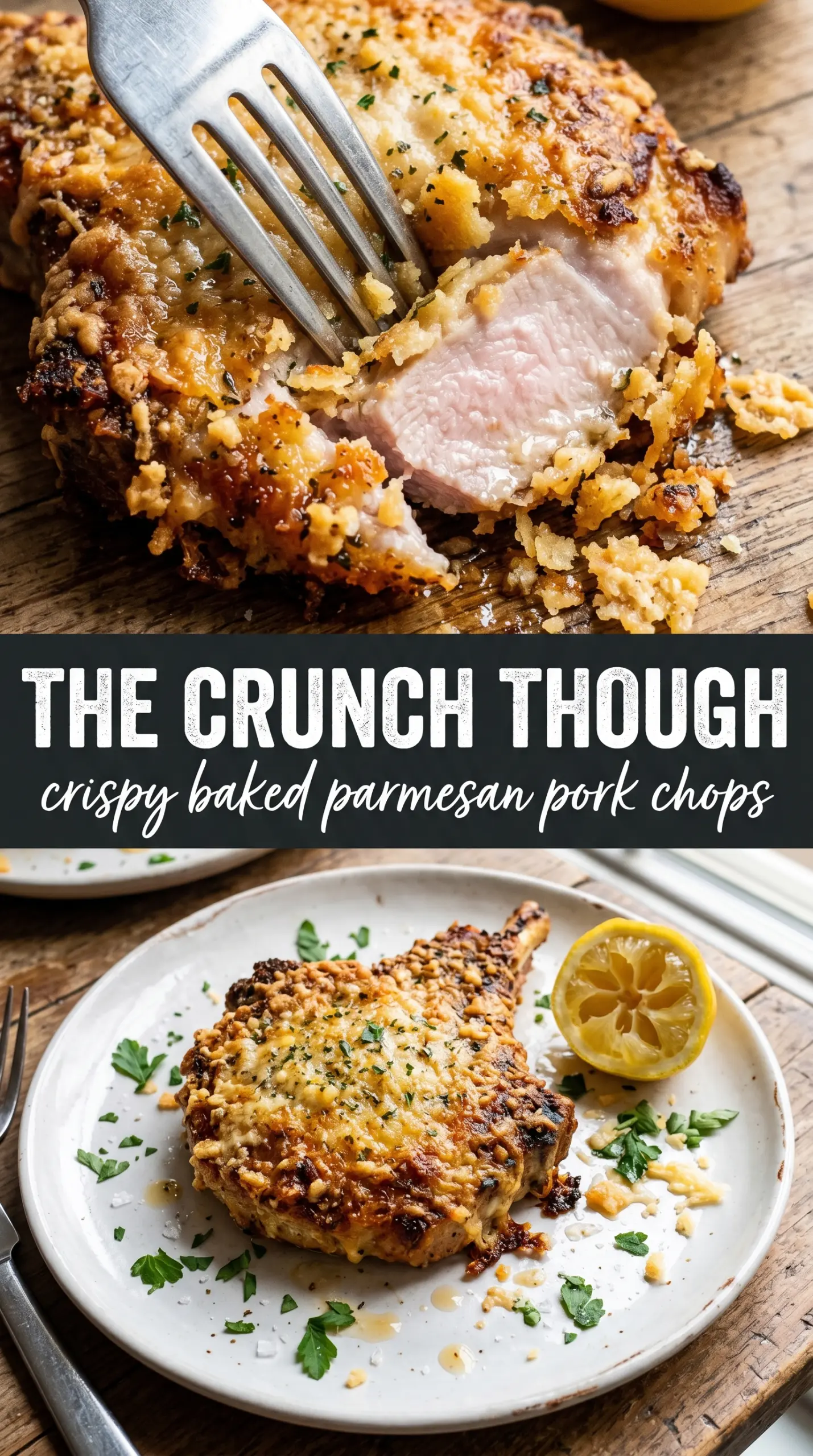
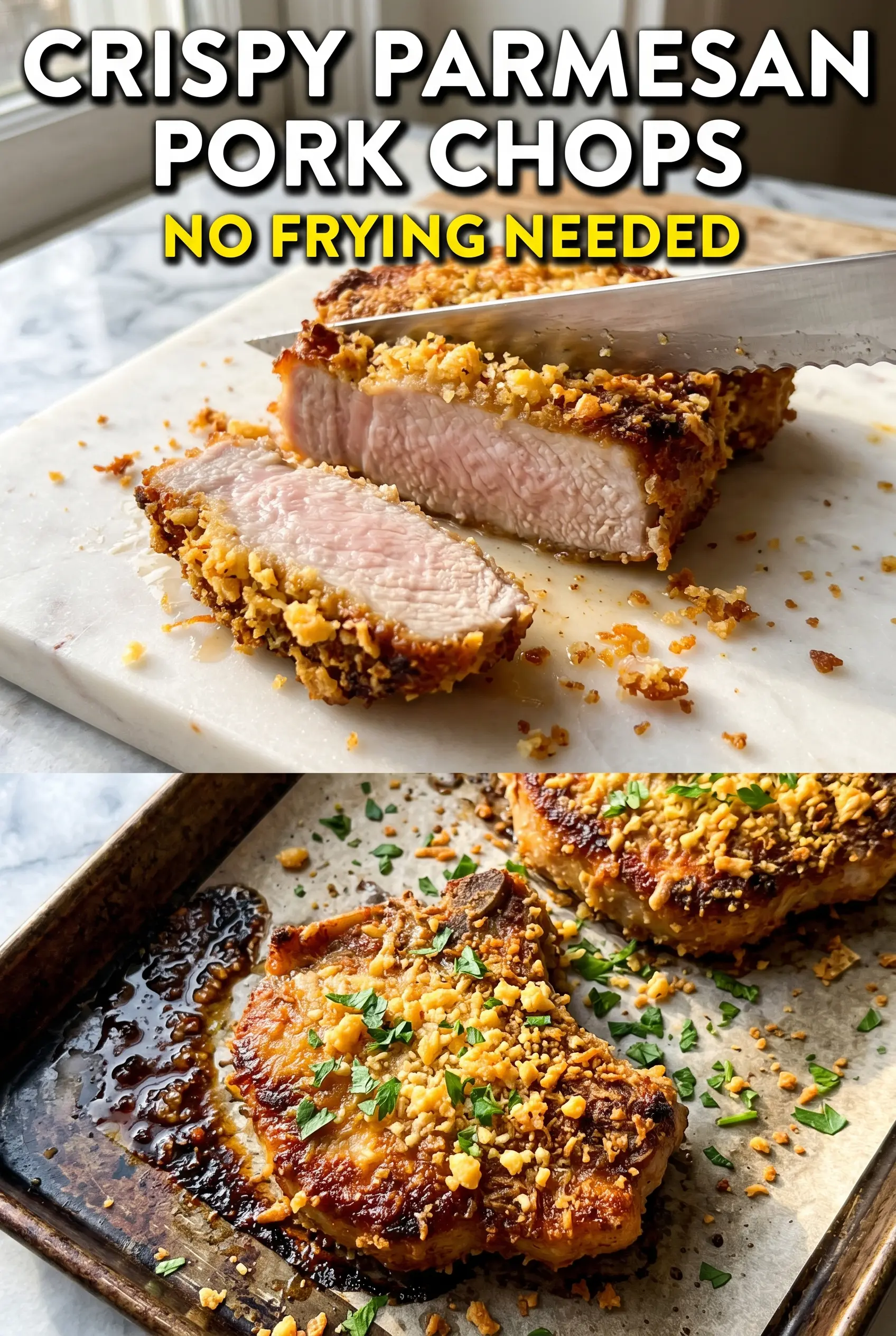
The crust stayed on the pork chops the whole time, and the center was still juicy at 18 minutes. That mustard layer makes all the difference.
Crispy baked parmesan pork chops with a golden crust and juicy center are the kind of dinner you’ll want to keep on repeat.
The Crust Only Works If You Press It On Like You Mean It
The biggest mistake with baked breaded pork chops is treating the crumb layer like a loose topping. It needs pressure. Once the mustard-mayo mixture is on the meat, press the panko-parmesan mixture firmly onto both sides so it actually bonds with the surface instead of sitting there waiting to fall off in the oven. That’s what keeps the crust intact when you move the chops to the plate.
Heat matters too. A hot oven gives you browning before the pork dries out, which is why 425°F works better here than a gentler bake. If the crust looks pale at the end, it usually means the oven ran cool or the chops were crowded and steamed instead of roasted. Give them space on the pan and use a light coating of oil spray so the breadcrumbs crisp instead of turning sandy.
What Each Ingredient Is Doing In This Parmesan Pork Chop Coating
- Boneless pork chops — A 3/4-inch chop is the sweet spot here. Thin chops dry out before the crust gets deep enough, and thick chops need a longer bake that can overwork the coating. If your chops are much thicker, pound them to an even thickness so they cook at the same rate.
- Dijon mustard — This gives the crust grip and a little tangy backbone. Yellow mustard won’t taste quite the same, and plain mayo alone can make the coating feel flat. Dijon’s sharpness disappears into the finished pork, but it keeps the flavor awake.
- Mayonnaise — This is the quiet helper. It spreads easily, helps the crumbs stick, and carries fat to the crust so it browns instead of drying out. Greek yogurt can work in a pinch, but the coating won’t brown quite as evenly.
- Panko breadcrumbs — Panko is what gives you that craggy, crunchy finish. Regular breadcrumbs make a denser crust that reads more like breading than crunch. If you need gluten-free, use a gluten-free panko; the shape and texture matter more than the brand.
- Parmesan cheese — Grated parmesan adds salt, nuttiness, and extra browning. Freshly grated melts and crisps better than the shelf-stable stuff, which can stay a little dusty. If you only have pre-grated, it still works, but the crust will be less dramatic.
- Olive oil spray — The spray is what pushes the top from dry crumbs to a baked, golden crust. A drizzle of oil can leave uneven spots; a fine spray coats the surface more evenly without making it greasy.
Getting These Pork Chops Crisp Without Drying Them Out
Mix the Coating Before You Touch the Pork
Stir the panko, parmesan, garlic powder, Italian seasoning, salt, and pepper together first so the seasoning is distributed evenly. If you season each chop only after the crumbs are on, the flavor stays patchy and some bites taste plain. A wide shallow bowl works best because you can press the pork straight into the mixture without clumping the crumbs.
Use the Mustard-Mayo Layer as Glue
Season the chops, then spread the mustard-mayo mixture over both sides in a thin, even coat. Too much and the crust turns pasty; too little and the crumbs won’t hold. The surface should look coated, not frosted. If the mix is sliding around, the chops were damp, so pat them dry before you start.
Press, Set, and Bake Hot
Set each chop on the parchment-lined sheet and press the crumb mixture on firmly with your hand. Don’t just dip and drop. Once they’re coated, give the tops a light spray of oil and bake until the crust is deep golden and the thickest part reaches 145°F. Pull them from the oven right away if they hit temp early; carryover heat will finish the job while they rest.
Let the Meat Rest Before You Cut
Three minutes on the counter is enough. Cut too soon and the juices run straight out, which leaves the center drier than it should be. Resting also gives the crust a minute to set so it doesn’t flake apart the second your knife touches it.
How to Adapt These Crispy Baked Parmesan Pork Chops
Gluten-Free Crunch
Swap in gluten-free panko and keep everything else the same. You’ll still get a light, crisp crust without the dense finish that comes from almond flour or crushed crackers. Check the seasoning on your parmesan, since some pre-grated cheeses contain anti-caking agents that can dull the coating a bit.
Dairy-Free Version
Use a dairy-free parmesan-style cheese and keep the mayo in place if you tolerate eggs. The crust won’t taste exactly the same, but you’ll still get good browning and a savory finish. If your dairy-free cheese is very salty, cut back on added salt in the crumb mixture.
Bone-In Pork Chops
Bone-in chops work, but they usually need a few extra minutes in the oven. Start checking early at the thickest part near the bone, since that area cooks slower than the rest. The crust stays just as crisp, but the timing is a little less forgiving than with boneless chops.
Storage and Reheating
- Refrigerator: Store leftovers in an airtight container for up to 3 days. The crust softens a little, but the pork stays usable for lunches or a quick second dinner.
- Freezer: These freeze, but the coating loses some of its crunch after thawing. Freeze in a single layer first, then wrap well and reheat from thawed for the best texture.
- Reheating: Reheat on a rack in a 375°F oven or air fryer until hot. The common mistake is microwaving, which steams the crust and makes it leathery instead of crisp.
Questions I Get Asked About This Recipe
Crispy Baked Parmesan Pork Chops
Ingredients
Equipment
Method
- Preheat the oven to 425°F and line a baking sheet with parchment for easy release and crisping.
- Mix Dijon mustard and mayonnaise together in a bowl until smooth and creamy.
- Combine panko breadcrumbs, parmesan cheese, garlic powder, Italian seasoning, salt, and pepper in a bowl.
- Seasoning cue: the mixture should look evenly speckled with herbs and parmesan for a consistent crust.
- Season the pork chops with salt and pepper to taste.
- Spread the mustard-mayo mixture over both sides of each pork chop.
- Press the panko-parmesan mixture firmly onto both sides so it adheres in an even layer.
- Place the coated pork chops on the baking sheet, then spray lightly with olive oil for browning.
- Bake for 18–20 minutes, until the crust is deep golden and the pork reaches 145°F (visual cue: the crust looks crisp and browned).
- Rest the pork chops for 3 minutes to help juices settle and the crust stay crisp.
- Serve with lemon wedges and fresh parsley for brightness and color.