Golden seared chicken breasts tucked into a silky sun-dried tomato and spinach cream sauce earn their place in the dinner rotation fast. The chicken stays juicy under a deeply savory crust, and the sauce clings to every slice instead of pooling thinly on the plate. Fresh basil on top keeps the whole skillet from tasting heavy.
What makes this version work is the order of operations. The chicken sears first, then the same pan builds the sauce so every browned bit gets scraped up and turned into flavor. The cream goes in after the broth, and the Parmesan melts gently over lower heat, which keeps the sauce smooth instead of grainy. Sun-dried tomatoes bring concentrated sweetness and a little tang, while spinach wilts at the end so it stays bright.
Below, you’ll find the small details that matter most: how to keep the sauce from breaking, which swaps still give you that restaurant-style finish, and what to do if your chicken breasts are uneven and one side always cooks faster than the other.
The sauce thickened up perfectly and didn’t turn grainy, and the sun-dried tomatoes gave it that restaurant taste my husband kept talking about.
Save this Creamy Tuscan Chicken for the nights when you want a silky skillet dinner with a real sear and a sauce that clings to every bite.
The Secret to Keeping the Parmesan Cream Sauce Smooth
Parmesan is the ingredient most likely to turn this skillet from glossy to grainy. The fix is heat control. Once the cream and broth are in the pan, let the sauce come up to a gentle simmer, then drop the heat before the cheese goes in. If the pan is boiling hard, the dairy can separate and the Parmesan won’t melt into the sauce cleanly.
The other thing that matters is how you add the cheese. Stir it in gradually and keep the sauce moving. A handful all at once can clump before it melts, especially if the cheese is finely grated from a shaker instead of freshly grated. Freshly grated Parmesan melts with a smoother finish, while pre-shredded cheese often contains anti-caking agents that make the sauce less silky.
What Each Ingredient Is Actually Doing in the Skillet
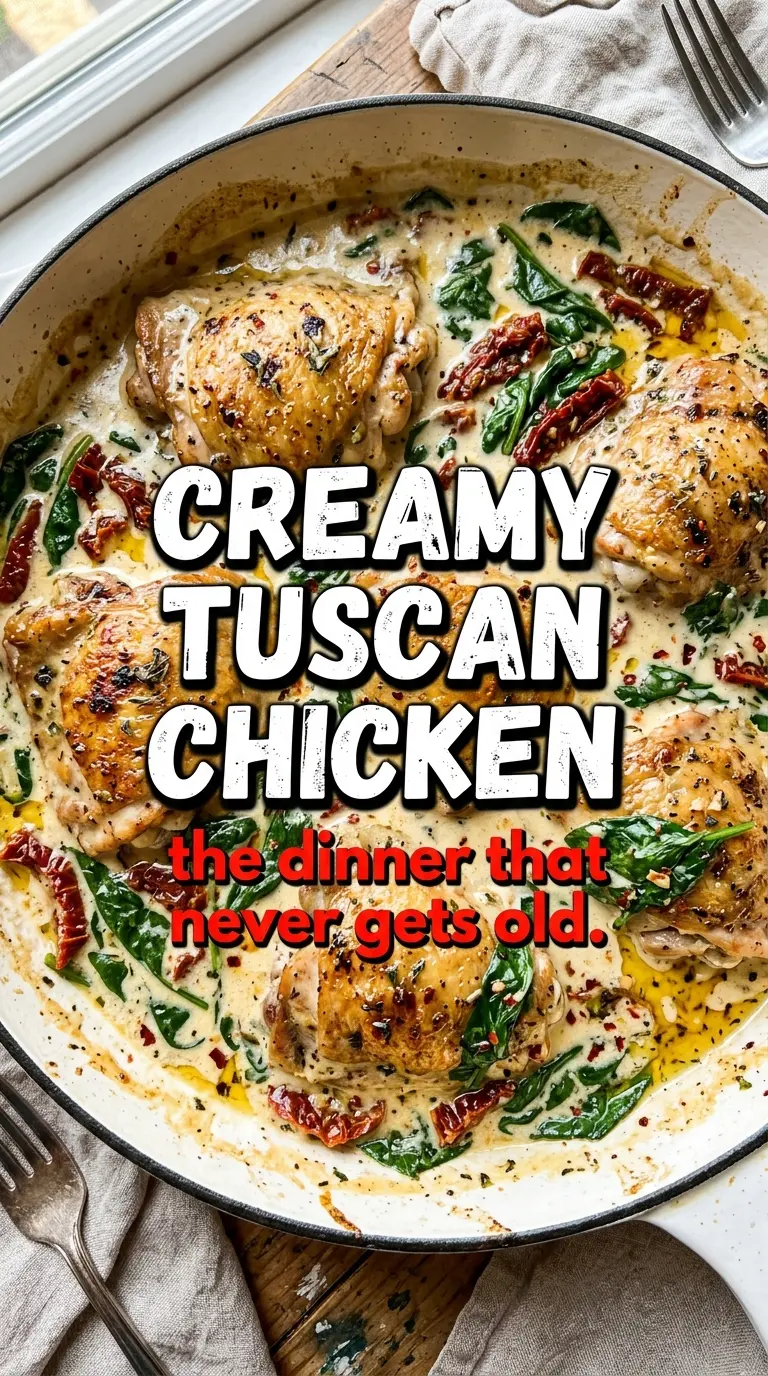
- Chicken breasts — Boneless, skinless breasts give you the lean, restaurant-style base here. If yours are thick on one end, pound them to an even thickness so the thinner side doesn’t dry out while the thicker side finishes cooking.
- Sun-dried tomatoes in oil — These bring concentrated tomato flavor and a little richness from the oil-packed version. If you use dry-packed sun-dried tomatoes, soak them in hot water for 10 minutes first, then drain well so they soften enough to blend into the sauce.
- Heavy cream — This is what gives the sauce its body and that velvety finish. Half-and-half will work in a pinch, but the sauce will be thinner and a little more likely to break if you boil it.
- Parmesan cheese — It thickens the sauce and adds the salty, nutty backbone that makes this taste like more than cream and garlic. Grate it yourself if you can; it melts cleaner and gives you better control over the final texture.
- Fresh spinach — Spinach doesn’t just add color. It softens the richness and gives the sauce some lift, but it should go in at the end so it wilts without turning swampy or dull.
How to Build the Sauce After the Chicken Comes Off the Pan
Get the Sear Before You Touch the Sauce
Season the chicken generously, then sear it in hot olive oil until the outside is deep golden and the center reaches 165°F. If the pan is crowded, the chicken steams instead of browning, and you lose the flavor that makes the sauce taste layered. Let the chicken rest on a plate while you build the sauce; that rest keeps the juices in the meat instead of running into the pan.
Wake Up the Garlic and Tomatoes
Once the chicken is out, add the garlic to the same pan and stir for about 30 seconds, just until it smells fragrant. Garlic burns fast in a hot skillet, so keep it moving and don’t walk away. Add the sun-dried tomatoes next and let them sizzle for a minute so they soften and release their flavor into the fat already in the pan.
Turn the Pan Drippings Into a Cream Sauce
Pour in the broth and scrape up every browned bit from the bottom of the skillet. That’s where the savory depth lives. Add the cream, Parmesan, Italian seasoning, and red pepper flakes, then let the sauce simmer gently until it thickens enough to coat a spoon. If it looks thin at first, keep it at a low simmer; rushing it with high heat is the fastest way to split the dairy.
Finish With Spinach and the Chicken
Stir the spinach into the sauce just until it wilts, then return the chicken and spoon sauce over the top. The spinach should look glossy and tender, not collapsed into dark strands. Once the chicken is back in, give it a minute or two in the sauce so it warms through and picks up all that flavor before you garnish with basil.
Three Smart Ways to Adjust This Skillet Without Losing the Point
For a Dairy-Free Version
Use full-fat coconut cream instead of heavy cream and a dairy-free Parmesan-style cheese if you have one that melts well. The sauce will taste a little different — richer and slightly sweeter — but it still gives you a creamy skillet finish. Keep the heat low, because coconut-based sauces can separate if they boil hard.
For Chicken Thighs Instead of Breasts
Boneless thighs work well and stay juicy, especially if you like a richer bite. They usually need a little longer to cook through, so sear until the outside is well browned and check the center carefully before pulling them from the pan. The sauce benefits from the extra drippings, which makes the whole dish taste deeper.
For a Thicker, Lower-Carb Serving
This dish is already naturally low in carbs, so the main adjustment is serving it over zucchini noodles, cauliflower mash, or sautéed mushrooms instead of pasta. If you want the sauce even thicker, simmer it a minute or two longer before the spinach goes in, but don’t reduce it until it turns paste-like or it’ll taste salty.
Storage and Reheating
- Refrigerator: Store leftovers in an airtight container for up to 3 days. The sauce will thicken as it chills.
- Freezer: Not ideal. Cream sauces can separate after thawing, and the spinach turns soft in a way that doesn’t recover well.
- Reheating: Warm gently in a skillet over low heat with a splash of broth or cream to loosen the sauce. High heat is what causes the dairy to break, so keep it slow and stir often.
Answers to the Questions Worth Asking
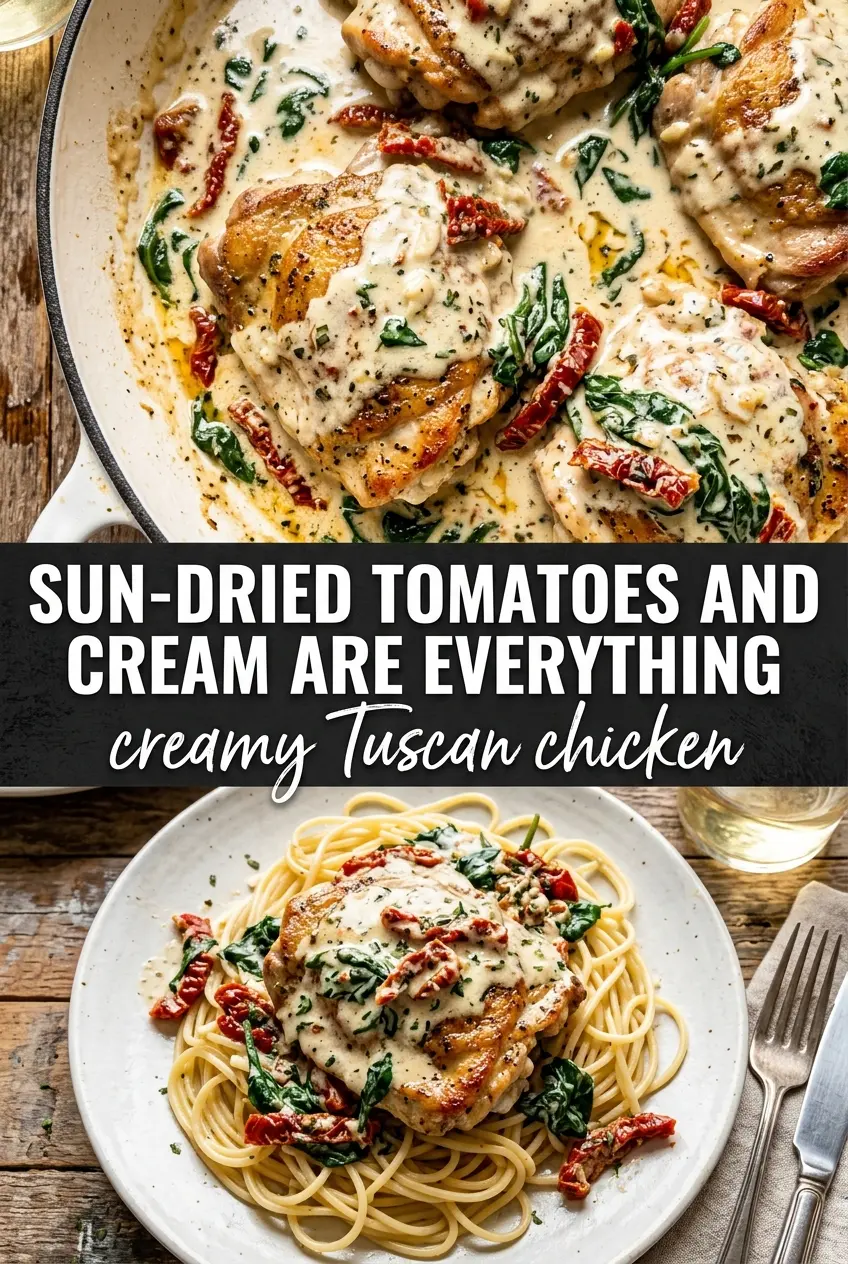
Creamy Tuscan Chicken
Ingredients
Equipment
Method
- Season the chicken breasts generously with salt, pepper, garlic powder, Italian seasoning, and smoked paprika. Heat olive oil in a large cast iron skillet over medium-high heat until shimmering, then add chicken and sear 5-6 minutes per side until golden and an instant-read thermometer reaches 165°F, then remove.
- In the same skillet, cook minced garlic over medium-high heat for 30 seconds until fragrant, then add sun-dried tomatoes and cook 1 minute. Pour in chicken broth and deglaze, scraping up browned bits.
- Stir in heavy cream, grated Parmesan, Italian seasoning, and red pepper flakes, then simmer 4-5 minutes until thickened. Keep the sauce at a gentle simmer for a silky texture.
- Stir in fresh baby spinach and cook just until wilted. Return the chicken breasts to the pan and spoon the sauce over each breast.
- Garnish with fresh basil and serve immediately. Spoon extra sauce over the chicken for the best back-of-spoon coating.