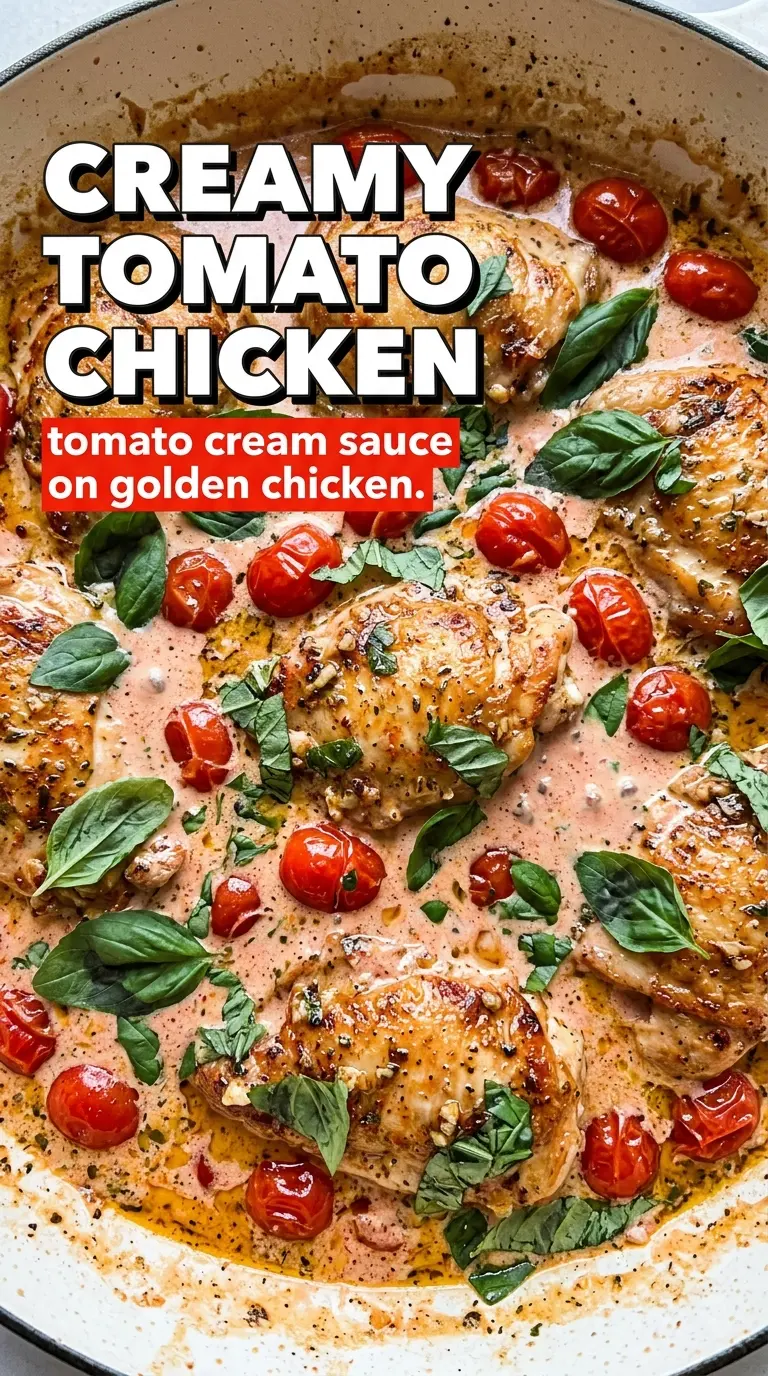
Golden seared chicken breasts tucked into a silky tomato cream sauce hit that sweet spot between cozy and bright. The sauce clings to every slice, with enough Parmesan to make it rich and enough tomato to keep it lively instead of heavy. When it’s done right, you get browned edges on the chicken, a rosy sauce that actually coats the spoon, and basil on top that wakes up the whole pan.
The trick is keeping the sear intact before the sauce goes in. That first hard browning gives you flavor, and the same pan carries those caramelized bits straight into the tomato base. Cream and Parmesan go in after the tomatoes have had a few minutes to cook down, which keeps the sauce smooth instead of grainy or split. A short simmer is all it needs; push it too hard and the cream loses its silky finish.
Below, I’m walking through the parts that matter most: how to keep the chicken juicy, how to turn a simple tomato sauce into something lush, and the small finish that makes the whole skillet taste restaurant-worthy.
The sauce turned a perfect rosy pink and stayed smooth the whole time. I served it over gnocchi and my husband asked if we could put this on the weekly rotation.
Save this creamy tomato chicken for the nights when you want a glossy skillet sauce that tastes like it took much longer than 25 minutes.
The Sear Is What Keeps This Sauce from Going Flat
With a dish like this, the sauce gets all the attention, but the chicken has to earn its place first. A proper sear creates the browned bits that give the tomato base depth, and it also helps the chicken hold onto its juices when it goes back into the skillet. If the pan is crowded or the heat is too low, the chicken steams instead of browning and the whole dish tastes softer and less defined.
Give the chicken time on the first side before turning it. If it sticks, it’s not ready yet. Once it releases cleanly and the crust has turned deep golden, it’s ready to flip. Pull it from the pan as soon as it reaches 165°F, then let the sauce do the finishing work instead of overcooking it while the tomatoes simmer.
What Each Ingredient Is Doing in the Pan
- Chicken breasts — Boneless, skinless breasts stay lean and slice neatly once they’re sauced. If yours are thick on one end, pound them into an even shape so they cook at the same pace and don’t dry out before the center is done.
- Crushed tomatoes — These give you body and a little texture. Tomato puree works in a pinch, but the sauce will be smoother and less rustic. I wouldn’t use diced tomatoes unless you want a looser finish with chunks in it.
- Heavy cream — This is what turns the tomato base from sharp to plush. Half-and-half can work, but the sauce will be thinner and more likely to split if you boil it hard.
- Parmesan — Grated Parmesan adds salt, nuttiness, and thickness all at once. Use the real grated kind if you can, because pre-shredded cheese often melts less smoothly and can leave the sauce slightly gritty.
- Dry white wine or chicken broth — The wine adds a sharper edge and helps lift the browned bits from the pan. Broth is the easy swap, and it keeps the sauce savory, just a little less bright.
- Butter — Stirred in at the end, it gives the sauce a glossy finish. That last swirl matters more than it looks; it smooths out the acidity and makes the sauce cling better to pasta or gnocchi.
Building the Sauce So It Stays Smooth and Rosy
Season and Sear the Chicken
Pat the chicken dry before it hits the pan. Moisture on the surface blocks browning, and browning is the difference between a flat sauce and one that tastes like it came from a skillet with history. Season the chicken well, then cook it in olive oil over medium-high heat until both sides are deeply golden and the center reaches 165°F. If the chicken is pale, keep going; if the heat is smoking aggressively, it’s too high and the outside will darken before the inside cooks through.
Use the Same Pan for the Tomato Base
Don’t wash out the skillet. Those browned bits are the backbone of the sauce. Add the garlic and cook it just until fragrant, about 30 seconds, then deglaze with wine or broth and scrape the bottom of the pan clean. Once the crushed tomatoes go in, let them simmer long enough to lose their raw edge and concentrate a little before the cream joins in.
Add Cream and Cheese at a Gentle Simmer
Lower the heat before you pour in the cream and Parmesan. High heat is what breaks a cream sauce or makes the cheese seize into tiny grains. Stir slowly until the sauce turns a soft rose color and thickens enough to coat a spoon. The red pepper flakes belong here, too, where they can bloom in the sauce instead of tasting sharp on top.
Finish with Butter and Return the Chicken
Swirl in the butter off to the side of the burner or over very low heat. That final movement gives the sauce shine and a smoother mouthfeel. Slide the chicken back into the pan and spoon the sauce over the top so the meat warms through without overcooking. Fresh basil goes on at the end, not earlier, so it stays bright and doesn’t disappear into the sauce.
How to Adapt This Creamy Tomato Chicken Without Losing the Point
Dairy-Free Version with a Silky Finish
Use full-fat coconut cream instead of heavy cream and skip the Parmesan, then add a little extra salt at the end. The sauce won’t taste the same, but it will still turn rich and velvety. Keep the heat low, because coconut-based sauces can look split if they boil hard.
Gluten-Free Serving Ideas
The recipe itself is naturally gluten-free as long as your broth is certified gluten-free. Serve it over mashed potatoes, rice, or gluten-free pasta. The sauce is thick enough to coat all of them without needing any extra flour.
Using Chicken Thighs Instead
Boneless chicken thighs work well if you want a juicier, richer result. They may need a few extra minutes in the pan, but they’re more forgiving than breasts and stay tender even if the sauce simmers a little longer. Expect a slightly deeper savory flavor and a less lean final dish.
Storage and Reheating
- Refrigerator: Store leftovers in an airtight container for up to 3 days. The sauce thickens as it chills, so it may look a little dense straight from the fridge.
- Freezer: It freezes, but the cream sauce can separate slightly when thawed. Freeze in portions for up to 2 months and stir well while reheating if you’re okay with a less perfectly smooth texture.
- Reheating: Warm gently on the stovetop over low heat with a splash of broth or water. Don’t boil it, or the cream can break and the chicken can turn dry before the sauce loosens back up.
Questions I Get Asked About This Recipe
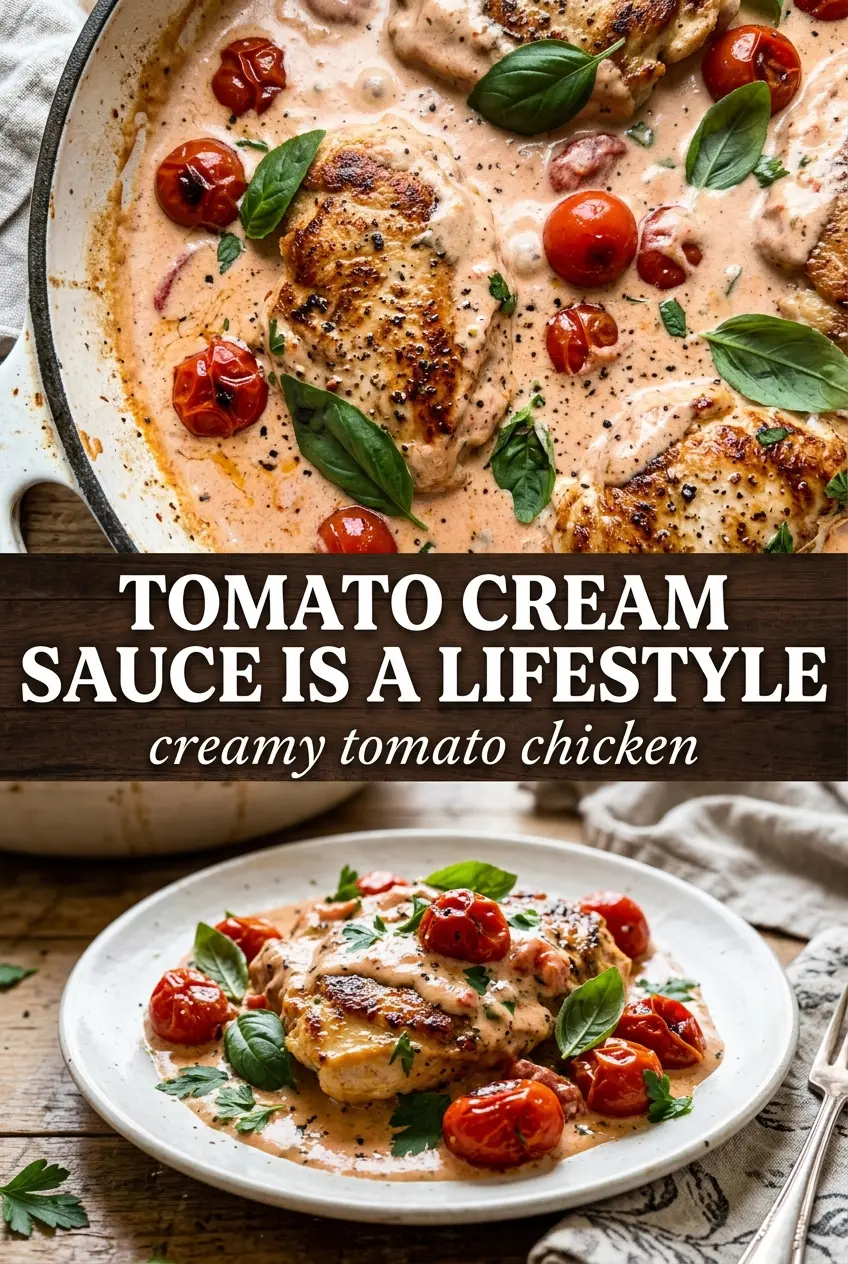
Creamy Tomato Chicken
Ingredients
Equipment
Method
- Season the chicken breasts with salt, pepper, garlic powder, and Italian seasoning to taste. Heat the olive oil in a wide skillet over medium-high heat until shimmering.
- Place the chicken in the pan and sear until golden, about 5-6 minutes per side, until the internal temperature reaches 165°F. Remove the chicken to a plate.
- Cook the minced garlic in the same pan for 30 seconds, stirring so it doesn’t brown. Deglaze with the white wine or chicken broth and scrape up the browned bits.
- Add the crushed tomatoes and Italian seasoning, then simmer for 5 minutes to meld the flavors. Keep the simmer steady so the sauce thickens slightly.
- Stir in the heavy cream, Parmesan, and red pepper flakes. Simmer for 4-5 minutes until the sauce is thick and rose-colored.
- Swirl in the butter until fully melted and glossy. Taste and adjust seasoning if needed.
- Return the chicken to the skillet and spoon the tomato cream sauce over each breast. Simmer briefly just to reheat the chicken, if needed.
- Garnish with fresh basil and serve over pasta or gnocchi. Spoon extra sauce over the top so it pools thickly.