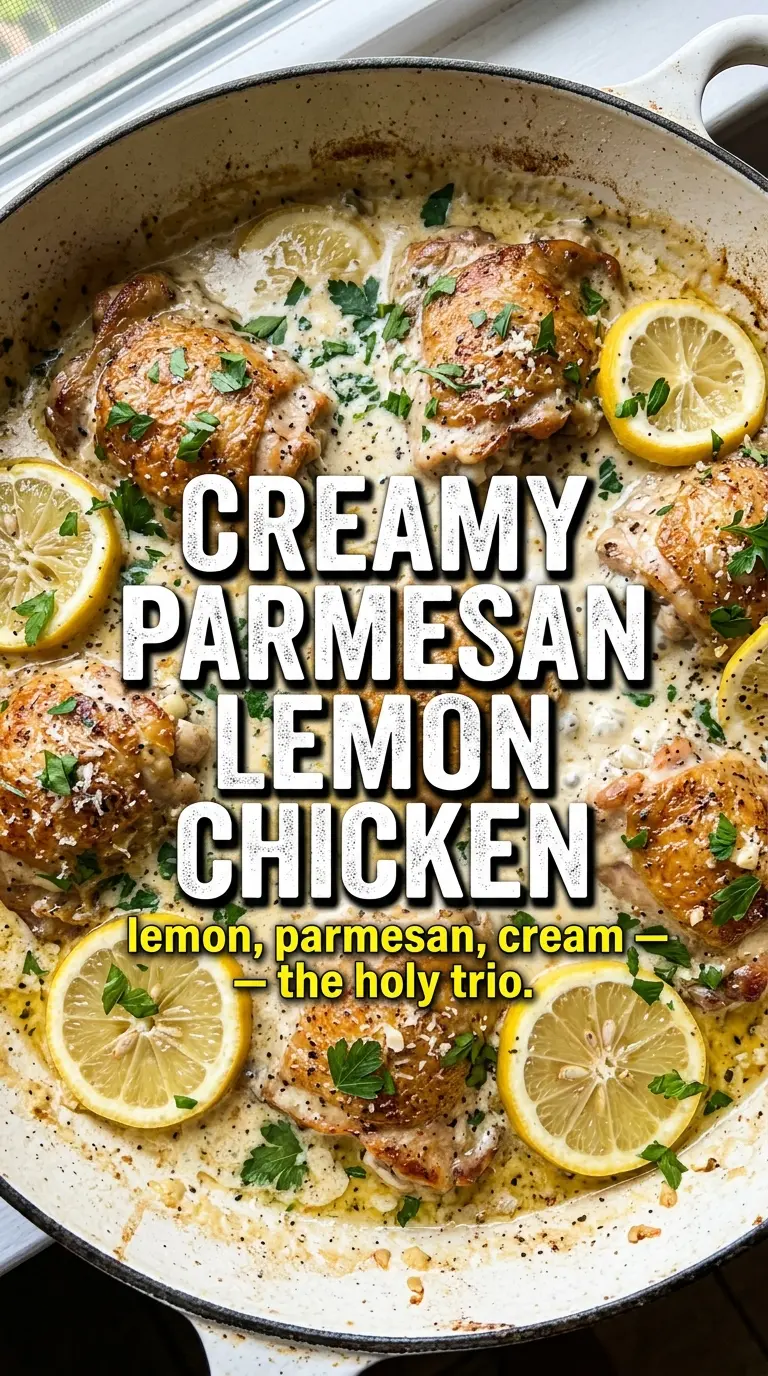
Golden seared chicken breasts in a silky lemon Parmesan cream sauce are the kind of skillet dinner that disappears fast and still feels special enough to put on repeat. The chicken stays juicy, the sauce turns glossy and spoonable, and the lemon cuts through the richness just enough to keep every bite bright instead of heavy.
What makes this version work is the order. The chicken gets a proper sear first, which builds flavor in the pan before the sauce goes in. Then the garlic, wine, cream, Parmesan, and lemon are added in a way that keeps the sauce smooth and gives it enough time to thicken without breaking. Freshly grated Parmesan matters here because pre-shredded cheese can melt grainy, and a little butter at the end gives the sauce that polished finish you taste right away.
Below you’ll find the exact cues I use to know when the sauce is ready, plus a few smart swaps for making this creamy lemon chicken work with what you’ve got on hand.
The sauce thickened up beautifully and stayed smooth when I stirred the Parmesan in off the heat. My husband kept spooning extra over the chicken and asked if I could make it again next week.
Save this creamy Parmesan lemon chicken for the nights when you want a glossy skillet sauce, bright lemon, and a fast chicken dinner with almost no cleanup.
The Sear Is What Keeps the Sauce Worth Eating
The biggest mistake in a skillet chicken dinner is rushing straight to the sauce. If the chicken doesn’t get a real sear, you miss the browned bits that make the pan sauce taste like it simmered all afternoon, even though it comes together in minutes. A pale chicken breast in cream sauce tastes flat. A well-seared one gives you depth before the first spoonful.
Keep the heat high enough to color the chicken, but don’t crowd the pan. If the breasts sit too close together, they steam and the surface stays soft, which also means the sauce never picks up those browned drippings. If your chicken breasts are thick in the middle, pound them to an even thickness so they cook at the same pace and stay juicy instead of drying out while you wait for the center to catch up.
- Chicken breasts — Boneless, skinless breasts work best here because they sear quickly and give you enough surface area for the sauce to cling to. If yours are very large, split them horizontally or pound them thinner so they finish cooking without the outside going too far.
- Dry white wine or chicken broth — Wine adds more sharpness and helps lift the browned bits off the pan, but broth still works if that’s what you have. Use a broth you actually like drinking; bland broth makes a bland sauce.
- Heavy cream — This is what keeps the sauce stable. Half-and-half can work in a pinch, but it won’t thicken as confidently and it has a better chance of turning thin when the lemon goes in.
- Freshly grated Parmesan — This matters. Pre-grated cheese often has anti-caking agents that make the sauce gritty instead of smooth. Grate it yourself and add it over low heat so it melts into the cream instead of clumping.
- Lemon juice and zest — The juice brings brightness, while the zest gives the sauce a stronger lemon aroma without extra acidity. Use both, and add the juice after the cream has had a moment to settle so the sauce doesn’t taste sharp or broken.
What Each Ingredient Is Actually Doing in This Chicken Recipe
- Chicken (the protein star) — Choose the right cut for the cooking method. Thighs stay moister; breasts cook faster.
- Cooking medium (oil, butter, or broth) — This prevents the chicken from drying out. Quality matters here.
- Seasonings (salt, pepper, spices, herbs) — Don’t hold back. The chicken carries the entire flavor profile.
- Aromatics (garlic, onion, herbs) — Cook these first to bloom the flavors. They become the foundation of the dish.
- Sauce or liquid (the moisture keeper) — This prevents the chicken from drying and adds flavor. Balance richness with acid.
- Acid (lemon, vinegar, wine, or tomato) — This brightens and prevents heavy dishes from tasting flat.
- Optional vegetables (if using) — Layer by cooking time so everything finishes together. Hard vegetables first.
- Proper doneness (165°F internal temperature) — Use a thermometer. Overcooked chicken is dry; undercooked is unsafe.
Building the Sauce Without Breaking It
Searing the Chicken First
Heat the oil until it shimmers, then lay the chicken in the pan and leave it alone long enough to develop a deep golden crust. If it sticks at first, it usually isn’t ready to turn yet. Give it a full 5 to 6 minutes per side, depending on thickness, and pull it once it reaches 165°F in the center. The chicken will finish resting while the sauce comes together, and that carryover heat helps keep it juicy.
Deglazing the Pan
After the chicken comes out, the pan should still have browned bits stuck to the bottom. That is flavor, not debris. Add the garlic and cook it just until fragrant, about 30 seconds, then pour in the wine or broth and scrape the pan with a wooden spoon. Let it simmer until the liquid reduces slightly; if you dump the cream in too soon, you dilute the base instead of concentrating it.
Finishing With Cream, Cheese, and Lemon
Lower the heat before the cream goes in. Cream doesn’t need a hard boil to thicken, and high heat is what makes Parmesan clump or the sauce split. Stir in the cream and Parmesan gradually, then add the lemon juice and zest once the sauce looks cohesive and lightly coats the spoon. Finish with butter off the heat for shine, then return the chicken and spoon the sauce over the top so every piece gets coated.
Make It Lighter With Half-and-Half
You can swap the heavy cream for half-and-half, but the sauce will be thinner and a little less velvety. Keep the heat low and simmer it a few extra minutes so it has time to reduce. This works best if you serve it right away, because the sauce won’t hold its body as long as the original.
Dairy-Free Version
Use a full-fat unsweetened coconut cream or a dairy-free cooking cream, then finish with a dairy-free Parmesan alternative if you have one that melts well. The sauce won’t taste exactly the same, but the lemon and garlic still carry the dish. Keep expectations on texture a little looser, since dairy-free substitutes don’t always thicken as smoothly.
Gluten-Free by Default
This dish is naturally gluten-free as written, as long as your broth is certified gluten-free. The sauce gets its body from cream and Parmesan, not flour, so you don’t need a separate thickener. That’s one reason this skillet comes together so cleanly.
Make It into Chicken Cutlets
If your chicken breasts are especially thick, slice them into cutlets or pound them thinner before cooking. Thin pieces brown faster and make it easier to keep the center juicy while the sauce reduces. The result is a more elegant, quicker-cooking skillet dinner with a little extra surface area for the sauce.
Storage and Reheating
- Refrigerator: Store leftovers in an airtight container for up to 3 days. The sauce thickens as it chills, so expect it to look a little tighter the next day.
- Freezer: I don’t recommend freezing this one. Cream sauces can separate after thawing, and the lemon can turn sharp in a way that throws off the balance.
- Reheating: Warm it gently in a covered skillet over low heat with a splash of broth or cream. High heat is the quickest way to make the sauce break, so keep the heat low and stir often until it’s just hot through.
Questions I Get Asked About This Recipe

Creamy Parmesan Lemon Chicken
Ingredients
Equipment
Method
- Season the chicken breasts on both sides generously with salt, pepper, garlic powder, and Italian seasoning to taste. Let the chicken sit while the skillet heats.
- Heat the olive oil in a large cast iron skillet over medium-high heat, then sear the chicken until golden, about 5-6 minutes per side. Cook until the internal temperature reaches 165°F, then remove the chicken to a plate.
- Add the minced garlic to the skillet and cook for 30 seconds, stirring constantly, until fragrant. Keep it moving so it doesn’t brown.
- Pour in the dry white wine or chicken broth and deglaze the pan, scraping up browned bits. Simmer for 2 minutes to reduce slightly.
- Stir in the heavy cream, freshly grated Parmesan, lemon juice, and lemon zest. Simmer for 4-5 minutes, stirring as needed, until the sauce thickens to a silky consistency.
- Swirl in the butter until fully melted and glossy. Turn off the heat once the sauce coats the spoon.
- Return the chicken breasts to the skillet and spoon the sauce over each breast to coat. Let them warm in the sauce for 1 minute before serving.
- Garnish with fresh parsley and lemon slices for brightness, then spoon any extra sauce from the skillet over the top.