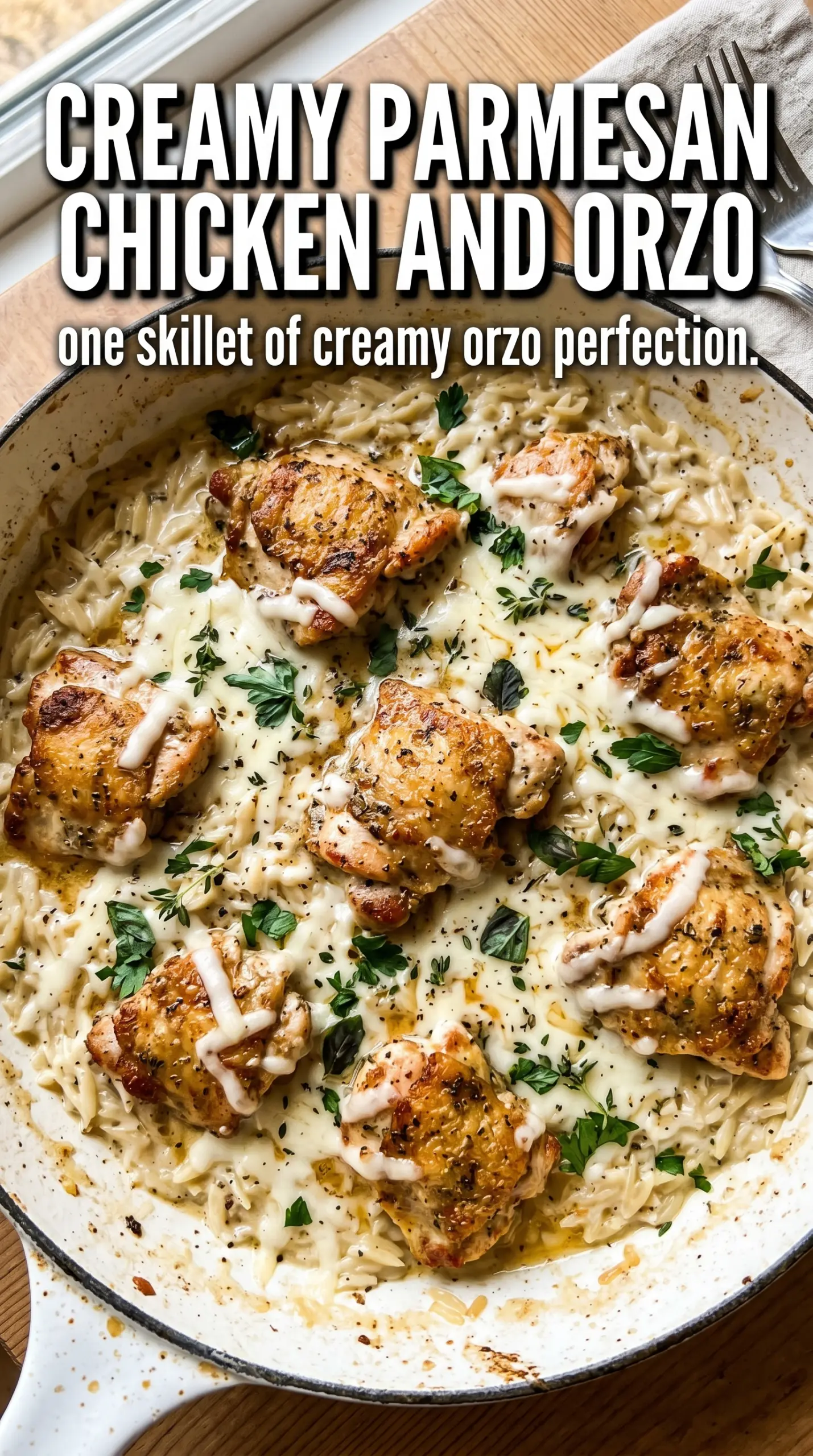
Golden chicken thighs over silky Parmesan orzo hit that sweet spot between comforting and satisfying without feeling heavy. The orzo turns plush and creamy as it simmers in broth and cream, then catches all the browned chicken drippings, spinach, and sun-dried tomatoes so every bite tastes layered, not flat.
The trick here is keeping the chicken in the pan long enough to build color, then pulling it out before the sauce starts. That first sear gives you the deep savory base this dish needs, and the orzo finishes cooking right in the same skillet so it absorbs flavor instead of just sitting in cream. Parmesan goes in off the boil at the end, which keeps the sauce smooth instead of grainy.
You’ll find a few practical notes below on getting the orzo to the right texture, plus the swaps I’d use if you need to adjust the dairy or make it work with what’s already in the fridge.
The orzo turned out creamy without getting gluey, and the chicken stayed juicy even after I put it back in the pan at the end. My husband scraped the skillet clean and asked if I could make it again next week.
Save this creamy Parmesan chicken and orzo for the nights when you want one skillet, tender chicken, and a sauce that clings to every spoonful.
The Part That Keeps the Orzo Creamy Instead of Sticky
The biggest mistake with creamy orzo is treating it like plain pasta. Orzo needs enough liquid to move freely while it cooks, and it needs attention near the end so the starch can thicken the sauce without turning the whole skillet into paste. The steady simmer matters more than a hard boil. If the pan is raging, the outside of the orzo softens too fast while the center stays firm.
Using the same skillet after searing the chicken is what gives this dish its depth. Those browned bits on the bottom dissolve into the broth and cream, which is where the savory backbone comes from. If the pan looks dry before the liquid goes in, that’s fine. The broth lifts everything cleanly once it hits the heat.
- Chicken thighs — Thighs stay tender even if they sit in the sauce a few extra minutes. Breasts can work, but they need a shorter sear and a gentler finish so they don’t dry out.
- Orzo — This small pasta gives the dish its risotto-like texture without the constant stirring risotto needs. Standard orzo is the right choice here; whole-wheat versions absorb more liquid and can turn firmer, so add a splash of broth if needed.
- Heavy cream — This keeps the sauce stable and rich. Half-and-half can work in a pinch, but the sauce will be lighter and a little more likely to thin out before serving.
- Parmesan — Freshly grated Parmesan melts smoothly and seasons the sauce at the same time. Pre-grated cheese often has anti-caking agents that can make the sauce a little grainy, especially if the pan is too hot.
- Sun-dried tomatoes — These add concentrated tang and sweetness that keeps the cream from tasting flat. Oil-packed tomatoes are ideal because they’re softer and more flavorful; if you use dry-packed, soak them in hot water first so they don’t stay chewy.
What Each Ingredient Is Actually Doing in This Creamy Chicken
- Chicken (the protein foundation) — Cut into uniform pieces so they cook evenly. Room temperature chicken cooks more evenly than cold.
- Butter or oil (the cooking medium) — This browns the chicken and creates pan flavor. Don’t skip browning or the sauce tastes flat.
- Wine or spirit (the flavor depth) — This adds complexity and prevents the sauce from tasting one-dimensional. Use quality wine you’d drink.
- Cream or broth (the sauce base) — This creates the luxurious sauce. Balance richness with acid so it doesn’t taste heavy.
- Cheese (the umami and binding) — This adds depth and helps the sauce cling to pasta. Add off heat so it melts smoothly.
- Aromatics (garlic, shallot, herbs) — Cook these with oil first to bloom flavors. They become the foundation of the sauce.
- Acid (lemon or vinegar) — This prevents creamy sauces from tasting flat. Add at the end to preserve brightness.
- Proper heat (low simmer, not boil) — This keeps the sauce smooth instead of breaking. High heat can cause separation.
Building the Sauce in the Same Pan
Searing the Chicken
Season the thighs well, then cook them in hot olive oil until the surface is deep golden and the chicken releases easily from the pan. If it sticks, it isn’t ready yet. Pull it out once the center is cooked through and set it aside on a plate. If you leave it in while the orzo starts cooking, the exterior can go from browned to dried out before the sauce is done.
Toasting the Orzo
Cook the garlic for just long enough to smell it, then add the orzo and stir for about a minute. You’re looking for a faint nutty smell and a light glossy coat on the pasta. That quick toast gives the orzo a better backbone, and it helps the finished dish taste layered instead of one-note. Garlic burns fast, so keep it moving as soon as it hits the skillet.
Simmering to the Right Texture
Pour in the broth and cream, then bring the pan to a steady simmer, not a boil. Stir often, especially around the edges and the bottom, because orzo likes to settle and catch. After 10 to 12 minutes, the pasta should be tender with a little bite left and the sauce should coat a spoon instead of running off it. If the skillet looks tight before the orzo is done, add a splash more broth.
Finishing with Cheese and Greens
Take the pan off the heat before adding the Parmesan. That keeps the cheese from clumping or turning gritty. Stir in the spinach and sun-dried tomatoes next, then nestle the chicken back into the sauce and warm everything through. The spinach should wilt in just a minute or two, and the chicken only needs long enough to heat through without overcooking.
How to Adapt Creamy Parmesan Chicken and Orzo Without Losing the Plot
Dairy-Light Version
Use half-and-half instead of heavy cream and add the Parmesan off the heat as written. The sauce will be a little less lush, but it still turns creamy if you keep the simmer gentle and don’t rush the reduction. If it looks thin at the end, let it sit for a minute before deciding whether it needs more broth or more time.
Gluten-Free Swap
Use a gluten-free orzo or small rice-shaped pasta and watch the liquid closely, since some gluten-free pastas soften faster and lose their shape if overcooked. Start checking a few minutes early. The sauce will still work, but you’ll want to stir more often so the pasta doesn’t settle and stick.
Chicken Breast Instead of Thighs
Chicken breast works if that’s what you have, but slice thicker pieces in half horizontally so they cook at the same speed as the sauce. They’ll dry out faster than thighs, so remove them as soon as they’re just cooked and return them only at the end to warm through.
Storage and Reheating
- Refrigerator: Store in an airtight container for up to 3 days. The orzo will absorb more sauce as it sits, so expect it to thicken.
- Freezer: I don’t recommend freezing this one. Cream-based pasta dishes tend to separate and the orzo can turn mushy after thawing.
- Reheating: Reheat gently on the stovetop with a splash of broth or water over low heat, stirring often. The common mistake is blasting it in the microwave until the sauce breaks and the chicken tightens up.
Answers to the Questions Worth Asking

Creamy Parmesan Chicken and Orzo
Ingredients
Equipment
Method
- Season the chicken thighs with salt, pepper, garlic powder, Italian seasoning, and smoked paprika to taste, then sear in olive oil in a large skillet over medium-high heat for 4-5 minutes per side until golden and cooked through. Transfer to a plate and keep warm.
- In the same pan, cook the minced garlic for 30 seconds. Add the orzo and toast for 1 minute, stirring to coat.
- Pour in the chicken broth and heavy cream, then bring to a simmer. Cook uncovered for 10-12 minutes, stirring often, until the orzo is tender and the sauce is creamy.
- Stir in the Parmesan, baby spinach, and sliced sun-dried tomatoes, then cook until the spinach wilts. Keep the heat at a gentle simmer so the sauce stays silky.
- Nestle the chicken thighs back into the orzo and heat through for 2 minutes. Spoon sauce over the chicken as needed to warm evenly.
- Garnish with fresh basil and serve immediately for the creamiest texture.